The Bacon Backlash: How Industry, Governments, and Health Organizations Responded to the Processed Meat Cancer Bombshell
The scientific consensus was clear: processed meats like bacon, ham, and hot dogs cause cancer. When the International Agency for Research on Cancer (IARC) delivered this definitive verdict, it wasn’t just a scientific announcement; it was a seismic shockwave that reverberated through kitchens, boardrooms, and legislative halls worldwide. The reaction was swift, varied, and often fiercely contentious, pitting scientific integrity against powerful economic interests.
The Genesis of IARC: A Global Commitment to Prevention
The story of the IARC is a testament to humanity’s capacity for collective action against existential threats. It began not with a grand political declaration, but with a deeply personal plea. In the early 1960s, a grieving husband, witnessing his wife’s suffering from cancer, penned a poignant letter. This letter, detailing profound personal anguish, cascaded into an open appeal published in The New York Times in 1963, urging governments to reallocate a minuscule portion – half of one percent – of their colossal military budgets to fight for life. The vision was to deploy resources against one of humanity’s most devastating plagues: cancer.
Eighteen months later, this impassioned call bore fruit. The International Agency for Research on Cancer was founded under the umbrella of the World Health Organization (WHO), driven by an overarching, noble motive: cancer prevention. As one early proponent eloquently stated, it is "rare, in the history of nations, that one finds good reasons to render homage to the generosity and altruism of governments and those in power: the birth of the International Agency for Research on Cancer presents one of those rare occasions." This nascent organization was established to be the global authority on identifying cancer-causing agents, providing the scientific bedrock for public health interventions.
IARC’s Definitive Stance: Processed Meat Declared a Carcinogen
The IARC quickly became renowned for its monographs – comprehensive, book-sized reports that meticulously evaluate whether a suspected carcinogen does, in fact, cause cancer. These monographs are widely "accepted as close to a final word" on carcinogenicity, representing the pinnacle of international scientific consensus. Their rigorous process involves convening groups of independent experts from around the world to review hundreds, sometimes thousands, of peer-reviewed studies.
The 114th IARC monograph, published in 2018, set its sights on meat. After an exhaustive review of over 800 different studies, a panel of 22 experts from 10 countries delivered its unequivocal findings in a 500-page report. Red meat consumption was classified as "probably carcinogenic to humans (Group 2A)." This category includes agents for which there is strong evidence of carcinogenicity in humans, but where other factors, such as chance, bias, or confounding, cannot be ruled out with reasonable confidence. Examples in this category include glyphosate (a common herbicide) and high-temperature frying.
However, the verdict on processed meat was even more damning. It was placed in Group 1, the highest level of certainty, meaning "carcinogenic to humans." This classification signifies that, based on the best available evidence, there is sufficient evidence that the consumption of processed meat causes cancer. This is the same category as tobacco smoking, asbestos, and plutonium. The distinction is crucial: while red meat is probably carcinogenic, processed meat causes cancer.
What constitutes processed meat? The IARC’s definition is broad, encompassing any meat that has been transformed through salting, curing, fermentation, smoking, or other processes to enhance flavor or improve preservation. This includes familiar items like bacon, ham, hot dogs, breakfast links, and various lunch meats. Crucially, even seemingly healthier options like turkey deli slices fall under this definition if they undergo these processing methods.
The Grim Reality: Colorectal Cancer and Processed Meats
The primary cancer linked definitively to processed meat consumption is colorectal cancer, which affects the colon or rectum. This particular form of cancer is alarmingly prevalent and deadly. Globally, colorectal cancer ranks as the second most fatal cancer, surpassed only by lung cancer, which is predominantly driven by smoking. The statistics are equally stark in developed nations; in the U.S., colorectal cancer is also the "second leading cause of cancer death."
Moreover, its impact is not confined to older demographics. Colorectal cancer is increasingly recognized as a leading cause of cancer and cancer-related deaths earlier in life, a trend that has prompted significant concern among public health experts. The IARC’s report highlighted a dose-response relationship: for every 50-gram portion of processed meat eaten daily, the risk of colorectal cancer increases by 18%. To put this into perspective, a single hot dog or a few slices of bacon can easily constitute a 50-gram portion. This direct, quantifiable link underscored the urgency of the IARC’s findings.
Industry Strikes Back: A Fierce Backlash
The scientific announcement was met with immediate and vociferous opposition from the meat industry. Their response was characterized by incredulity and outrage. The North American Meat Institute (NAMI) swiftly denounced the IARC’s classification as a "dramatic and alarmist overreach," attempting to downplay the gravity of the findings. The rhetoric escalated, with one agricultural group in Italy issuing a press release that dramatically declared: "Just say no to terrorism on meat." The gloves, it seemed, were well and truly off.
The industry’s reaction quickly moved beyond mere verbal condemnation to direct political pressure. In Canada, the meat industry launched a concerted effort to compel the government to cut off funding to the IARC, arguing that the agency had "dared to question meat." A similar campaign unfolded in the United States, where powerful meat lobbies sought to undermine the IARC’s financial backing and discredit its scientific integrity.
Echoes of the Past: The Tobacco Industry Playbook
This aggressive pushback was not an isolated incident but rather a strategic pattern that public health advocates have observed before. As internal documents have since revealed in other contexts, the IARC "is under siege by corporate interests" determined to challenge its cancer evaluations, not just on meat but also on products like Monsanto’s Roundup pesticide. These tactics are disturbingly familiar, drawing "classic strategies straight out of the tobacco industry playbook."
These strategies typically involve:
- Denial and Discrediting: Immediately dismissing scientific findings as flawed, biased, or exaggerated.
- Casting Doubt: Emphasizing uncertainties, even minor ones, to create an impression of ongoing scientific debate where a consensus already exists.
- Lobbying and Political Pressure: Exerting influence on governments to defund critical research agencies or to block public health policies.
- "Ghost-writing" and Industry-Funded Research: Secretly drafting scientific papers or funding studies designed to produce favorable outcomes, thereby creating an illusion of independent scientific support. For instance, internal documents related to Monsanto revealed scientists "casually discussing ‘ghost-writing’ scientific papers and suppressing science that conflicts with corporate assertions of Roundup’s safety."
- Creating Front Groups: Establishing seemingly independent organizations that, in reality, serve industry interests to amplify their message.
The chemical industry, facing its own battles with IARC classifications, quickly joined this "corporate cacophony," dismissing the IARC monographs as "dubious and misleading." Experts widely recognize that "there is little to suggest that, as a corporate actor, ‘Big Tobacco’ differs fundamentally from, eg, ‘Big Booze’ or ‘Big Food’," highlighting a systemic challenge to public health science from industries whose profits are threatened by adverse health findings.

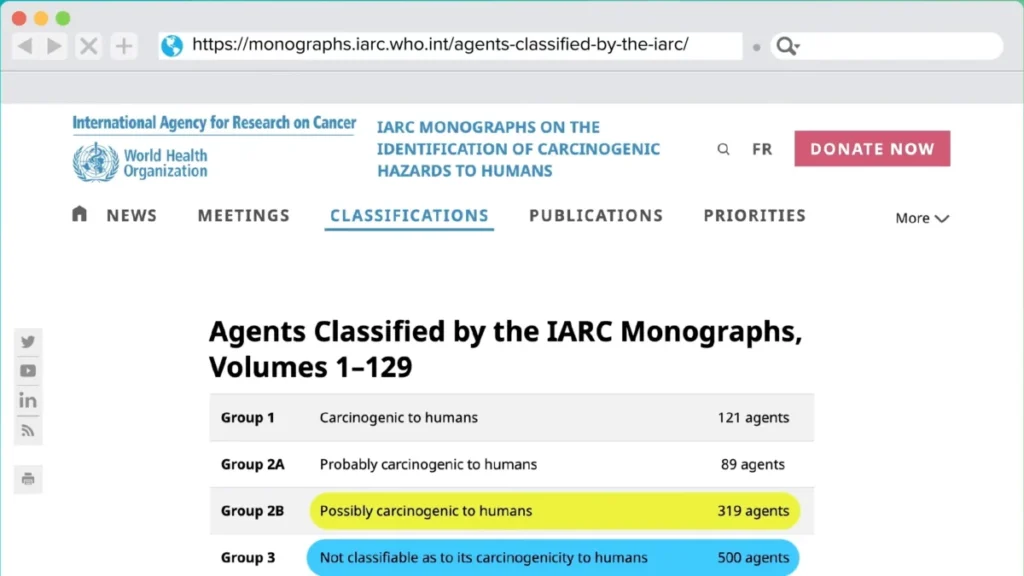
One recurring corporate talking point used to attack the IARC is the claim that the agency "never met a carcinogen it didn’t like." This narrative attempts to paint the IARC as overly alarmist or biased. However, a closer look at the IARC’s classifications reveals this to be a distortion. While many substances are indeed categorized as carcinogenic, a significant proportion end up being classified as only "possibly carcinogenic to humans," or as having "insufficient data" to make a definitive determination either way. The agency only spends time evaluating substances for which there is already "an existing body of scientific literature indicating a degree of carcinogenic hazard to humans." Therefore, it is logical that a significant number of the agents they investigate would indeed be confirmed as carcinogenic, given their pre-selection criteria.
Defending the Science: IARC’s Position and Methodology
In the face of relentless criticism, the IARC and the World Health Organization maintained their position, clarifying their role and the implications of their findings. The WHO received numerous "questions, concerns, and clarification requests" following the report’s publication. Their response was measured and reiterated a fundamental principle: the IARC conducts risk assessment, not risk management.
Essentially, the IARC’s message was: "Hey, we never told anyone to stop eating processed meat – your body, your choice." They emphasized that their role is to provide the scientific evidence, and what individuals or governments choose to do with that information is ultimately up to them. The report simply indicated that "consuming less of these products can reduce the risk of a leading cancer killer." In essence, the scientific body presented the facts, leaving the personal and policy decisions to others, implying: "So, you like cancer? You do you."
The IARC functions as a research organization dedicated to evaluating evidence on what causes cancer. Its independence and rigorous methodology are cornerstones of its credibility. The monographs are the result of transparent, peer-reviewed processes involving diverse international experts, designed to be free from commercial or political influence. Their scientific classifications are based purely on the strength of evidence regarding carcinogenicity, irrespective of the economic or social implications.
Navigating the Recommendations: Mixed Messages from Health Bodies
While the IARC’s scientific conclusion was definitive, the subsequent recommendations from various health organizations sometimes lacked the same clarity, reflecting the complex interplay of scientific advice, public perception, and economic realities.
The WHO/IARC Stance: Information, Not Prescription
The IARC itself, being a research body, does not issue dietary guidelines. When asked how much processed meat is safe to eat, their consistent reply was that it is "unknown whether a safe level exists, period." This stark answer implies that any amount carries some degree of risk, a challenging message for a society accustomed to moderation.
Differing Advice: American Cancer Society vs. European Commission
The American Cancer Society (ACS), a leading authority on cancer prevention in the U.S., demonstrated a nuanced, arguably wishy-washy, approach. When addressing alcohol and cancer, the ACS was commendably clear: "it is best not to drink alcohol" when it comes to cancer risk. However, regarding processed meat, their advice softened, merely suggesting that people could "get away with just limiting their intake." This apparent inconsistency puzzled some observers, raising questions about the differing weight given to various carcinogens, perhaps influenced by cultural acceptance or the powerful lobbying of different industries.
In contrast, the European Commission offered a more unequivocal set of recommendations. To reduce cancer risk, they advised citizens to "eat lots of whole grains, pulses (which are beans, split peas, chickpeas, and lentils), fruits, and vegetables; limit sugary, fatty, salty foods; and straight-up avoid soda, sausage, and other processed meats." This clearer, more direct guidance aligned more closely with the IARC’s underlying scientific findings, emphasizing outright avoidance rather than mere limitation for processed meats.
Broader Implications and the Path Forward
The IARC’s classification of processed meat as a Group 1 carcinogen represents a pivotal moment in public health. It underscored the profound impact of dietary choices on cancer risk and exposed the persistent challenges faced by independent scientific bodies when their findings threaten powerful industrial interests. The ensuing debate highlighted the crucial distinction between scientific risk assessment and the often-politicized process of risk management and public health messaging.
For consumers, the information presents a clear, albeit difficult, choice. While the IARC does not dictate behavior, the scientific evidence undeniably points towards reducing or eliminating processed meat consumption to mitigate colorectal cancer risk. The challenge lies in translating this scientific understanding into widespread dietary change, navigating deeply ingrained cultural habits and the pervasive marketing of processed food products.
Governments and public health agencies face the ongoing task of crafting effective dietary guidelines that are both scientifically sound and practically implementable, often against a backdrop of intense lobbying. The varied responses from different health organizations illustrate the complexities of this task, revealing the tensions between presenting stark scientific truths and offering palatable advice that might be more readily adopted by the general public.
Beyond Cancer: Other Health Concerns
It is also important to note that the health implications of processed meat extend beyond cancer. Research has linked processed meat consumption to a range of other adverse health outcomes, further underscoring the need for a re-evaluation of dietary habits. For instance, studies have explored "The Effects of Processed Meat on Lung Function," indicating broader systemic impacts that contribute to chronic diseases. This holistic view reinforces the importance of adopting dietary patterns rich in whole, unprocessed foods.
Conclusion
The IARC’s classification of processed meat as a definitive carcinogen was a landmark scientific announcement, rooted in robust, peer-reviewed evidence. While the meat industry responded with aggressive denial and political pressure, echoing tactics seen in past public health battles, the IARC steadfastly defended its scientific process. The subsequent responses from various health organizations, ranging from cautious limitation to outright avoidance recommendations, reflect the ongoing challenge of translating complex scientific findings into clear, actionable public health advice.
Ultimately, the science is clear: processed meats pose a significant and demonstrable risk of cancer, particularly colorectal cancer. As the IARC itself indicated, a truly safe level of consumption remains unknown. The responsibility now lies with individuals to make informed dietary choices and with policymakers to prioritize public health over commercial interests, fostering an environment where healthier food choices are not just possible, but actively encouraged. The battle for informed public health continues, with scientific integrity as its most vital weapon.