Terroir and the Tide: How Proximity to Water Defines the Character of Your Wine
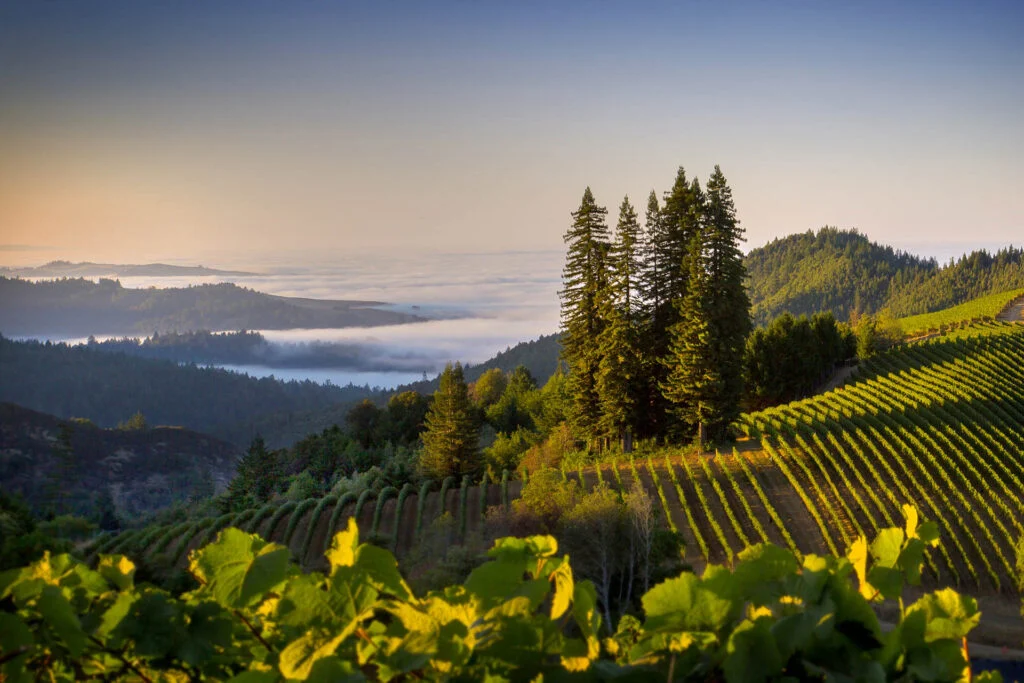
Despite the rapid technological advancements in modern viticulture—from satellite-monitored drip irrigation to robotic pruning—wine remains an agricultural product fundamentally beholden to the whims of nature. While soil composition and altitude are often cited as the primary pillars of terroir, there is a silent, pervasive architect shaping every vintage: the proximity to water.
Whether a vineyard is kissed by the cooling mists of the Pacific or baked by the arid heat of a landlocked valley, the distance from a major body of water acts as the primary dial for a region’s climate. For the average consumer, the distinction between "coastal" and "inland" may seem like a matter of geography, but it is, in fact, the defining factor in the acidity, structure, and flavor profile of the wine inside their glass.
The Geography of Influence: Defining Coastal Viticulture
A coastal vineyard is not necessarily a cliffside plot overlooking the surf. In the world of wine, the definition of "coastal" is often tied to atmospheric influence rather than literal proximity. For instance, South Africa’s famed "Coastal Region" encompasses a vast area within 100 miles of the Southern Ocean, where the maritime influence is felt across entire appellations.
"Vineyards closer to the ocean are more susceptible to the dynamic weather that comes off the water because they are less protected than lower-lying vineyards inland," explains Chantal Forthun, winemaker for the renowned Flowers Vineyards & Winery on the Sonoma Coast. "A strong gust can bring in cold air and fog, plummeting the temperature in a matter of minutes. Daily climatic conditions here change on a dime."
The Maritime Balancing Act
Coastal regions are generally characterized by a maritime climate: cool to moderate temperatures with a low annual variance between the hottest and coldest months. The ocean acts as a thermal buffer. In summer, the water remains cooler than the land, pulling in air that creates the cooling breezes and blanket-like fog layers essential for preserving acidity in grapes.
This is the "viticultural boon" of the coast. When grapes ripen too quickly in the heat, they lose their natural malic acid, resulting in flabby, overly alcoholic wines. Coastal winds—often bearing names like the South African "Cape Doctor" or the cooling currents of Chile’s Humboldt Current—act as a natural air-conditioning system, extending the growing season and allowing for complex phenolic development.
The Inland Counterpoint: The Power of the Diurnal Shift
If the coast is defined by the moderating influence of water, inland regions are defined by the lack thereof. Without the ocean to mitigate temperatures, inland vineyards are subject to greater extremes.
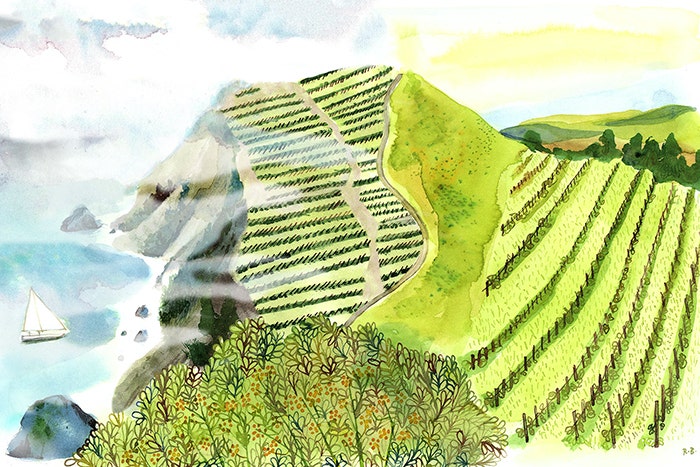
"The main differences are the cooler temperatures, fog, and wind influence on the coastline versus the warmer, 100-plus-degree days that can happen inland," says Wine Enthusiast Writer-at-Large Matt Kettmann, who extensively covers the varied landscape of Southern California.
Inland, the winemaking strategy shifts. Because these regions often lack the cooling morning fog, they rely heavily on the diurnal shift—the dramatic difference between peak daytime temperatures and the cooler nighttime lows. This temperature swing is vital for balance. Even if a region reaches 100°F during the day, a sharp drop at night allows the vine to "rest" and retain the acidity that gives a wine its backbone.
The Trade-offs of the Interior
The further one moves from the coast, the drier the environment typically becomes. While this minimizes the threat of moisture-loving pests and fungal diseases like mildew, it places a heavy burden on viticulturists to manage water resources. Inland winemaking is an exercise in precise irrigation, where the reliance on river systems and underground aquifers is a necessity for survival during the height of the summer heat.
Chronology of Climate: How Modern Viticulture Adapts
To understand the current state of coastal vs. inland winemaking, one must look at the evolution of viticultural science over the last half-century.
- 1970s–1980s (The Era of Expansion): Winemakers began pushing into cooler coastal pockets, realizing that the "fringe" climates of the coast produced more elegant, refined expressions of Pinot Noir and Chardonnay.
- 1990s–2000s (Precision Viticulture): The adoption of sensors allowed inland growers to manage irrigation with extreme precision, essentially "hacking" the climate to mimic the balanced ripening of more temperate regions.
- 2010s–Present (The Climate Crisis Response): As global temperatures rise, the industry has seen a fascinating reversal. Coastal regions are becoming the new "gold standard" for stability, while inland regions are increasingly experimenting with canopy management—using leaf cover to protect clusters from the intense, direct heat that has become more frequent.
Supporting Data: The Science of the "Fog Line"
The impact of water is most visible at the "fog line." Some of the world’s most prestigious coastal vineyards are planted at high elevations, specifically designed to sit above the fog layer.
| Feature | Coastal Vineyard | Inland Vineyard |
|---|---|---|
| Temperature | Cool/Moderate | Warm/Hot |
| Wind Influence | High (Cooling/Protective) | Low (Static heat) |
| Diurnal Shift | Low (Stable temps) | High (Extreme swings) |
| Primary Risk | Fungal/Mildew | Heat stress/Dehydration |
| Acidity | Naturally high | Requires management |
Vines positioned above the fog line enjoy consistent, unobstructed sun exposure throughout the day. This provides the energy required for sugar accumulation while the surrounding coastal topography ensures that, even at the height of the day, the air remains crisp and the vines do not "shut down" due to heat stress.
Expert Perspectives: The Winemaker’s Dilemma
When asked about the future of these regions, industry experts emphasize that neither is inherently "better"—they simply produce different expressions of terroir.

"The ocean dictates the rhythm of our work," says Forthun. "We are constantly monitoring the pressure systems coming off the Pacific. It’s a high-wire act. You get the benefit of those delicate, nuanced flavors, but you are always one heavy marine layer away from a difficult harvest."
Conversely, winemakers in the scorching inland valleys of California or Australia often speak of the "intensity" they can achieve. Without the cooling wind, the grapes reach higher sugar levels, producing bold, full-bodied wines with darker fruit profiles. The goal in these regions is not to fight the heat, but to manage it through vine architecture and shade.
Implications for the Consumer
For the wine enthusiast, understanding these geographic influences changes the way one approaches a wine list or a retail shelf.
- If you prefer elegance and acidity: Look for labels that highlight coastal proximity—Sonoma Coast, Willamette Valley, or the coastal regions of South Africa. These wines are generally more subtle, lower in alcohol, and possess a "tension" on the palate.
- If you prefer power and fruit-forward intensity: Look toward inland regions, such as the Napa Valley floor, Paso Robles, or the interior valleys of Spain and Argentina. These areas leverage the sun and the diurnal shift to create wines with deep color and plush, velvety tannins.
Ultimately, the proximity to water is not just a line on a map; it is a fundamental ingredient. Whether it is the damp, fog-laden air of a maritime climate or the dry, scorching heat of the deep interior, nature exerts its will long before the grapes ever reach the fermentation tank.
As climate patterns continue to fluctuate, the divide between coastal and inland viticulture will likely grow more pronounced. Winemakers are no longer just growing grapes; they are managing the complex, fragile relationship between the sea and the soil. For the consumer, the reward is a deeper appreciation for the story told by every bottle—a story written by the wind, the water, and the sun.
Published: July 31, 2026