The Truth About Countertop "Composters": Separating Marketing from Reality
The dream of the countertop kitchen composter is seductive: a sleek, high-tech appliance that sits quietly on your granite, swallowing eggshells, coffee grounds, and wilting spinach, only to transform them into "black gold" for your houseplants. It promises an end to the "smelly bucket" problem and a tangible way to participate in the circular economy. However, as independent testing and industry experts reveal, the reality of these devices is far more nuanced—and, in many cases, fundamentally different from what the marketing copy suggests.
Main Facts: The Great "Composting" Misconception
The primary point of friction between consumers and manufacturers is the definition of the word "compost." In the agricultural and horticultural sense, compost is the product of aerobic biological decomposition, where microorganisms break down organic matter into a stable, humus-rich soil amendment.

Most electric kitchen "composters" are not composters at all; they are grinder-and-dryer units. These machines use high-heat cycles and mechanical blades to desiccate food waste, shrinking its volume by as much as 90 percent. While this is an effective way to manage food waste—turning a pile of scraps into a sterile, shelf-stable, granular substance—it is not biologically active compost.
If you put the output of a standard grind-and-dry machine directly onto your garden beds, you are not fertilizing your plants. In some cases, you may even be introducing un-decomposed organic matter that can compete with your plants for nutrients or encourage mold growth. To turn this "pre-compost" into something usable, it must typically be mixed with soil at a specific ratio and allowed to cure for several weeks.
-Reviewer-Photo-SOURCE-Kat-Merck.jpg)
A Chronology of Kitchen Waste Innovation
The trajectory of indoor food waste solutions has moved from passive to active.
- Pre-2010s: The "passive" era. The gold standard was a simple ceramic pail under the sink, which required frequent trips to an outdoor pile or a municipal green-waste bin.
- 2010s–2020: The rise of the Bokashi method. Imported from Japan, this anaerobic fermentation process gained traction among serious home gardeners for its ability to handle meat and dairy—two things that traditional backyard piles often struggle with.
- 2021–2024: The "Smart Appliance" boom. Brands like Lomi, FoodCycler, and Reencle entered the market with aggressive marketing campaigns, promising to solve the "landfill problem" with a button press.
- 2025–2026: The current state of critical evaluation. As these units hit the 18-month to two-year mark in home testing, long-term durability issues (such as broken stir-paddles and warped lids) have become a focal point of consumer discussion, forcing manufacturers to refine their designs or face reputational decline.
Supporting Data: The Environmental Calculus
Why do we need these machines? According to the Environmental Protection Agency (EPA), food waste accounts for approximately 24 percent of all municipal solid waste. When buried in a landfill, this waste decomposes anaerobically, releasing methane—a greenhouse gas significantly more potent than carbon dioxide.

From an energy-efficiency perspective, the typical grind-and-dry machine consumes roughly 1 kilowatt-hour per cycle. While this is a modest power draw, the benefit must be weighed against the manufacturing footprint of the device itself. The true environmental value of these appliances lies in their ability to make households more conscious of their consumption. Users who employ these machines often report a significant shift in their relationship with food waste, leading to less over-purchasing and more efficient meal planning.
Official Responses and Corporate Transparency
The industry is currently experiencing a split between companies that lean into the "compost" label and those that are distancing themselves from it.

FoodCycler, for instance, has been notably firm in its communication, stating: "Our primary goal is to provide a modern food-waste solution for users who may lack access to traditional composting. The resulting byproduct cannot be labeled as ‘compost.’"
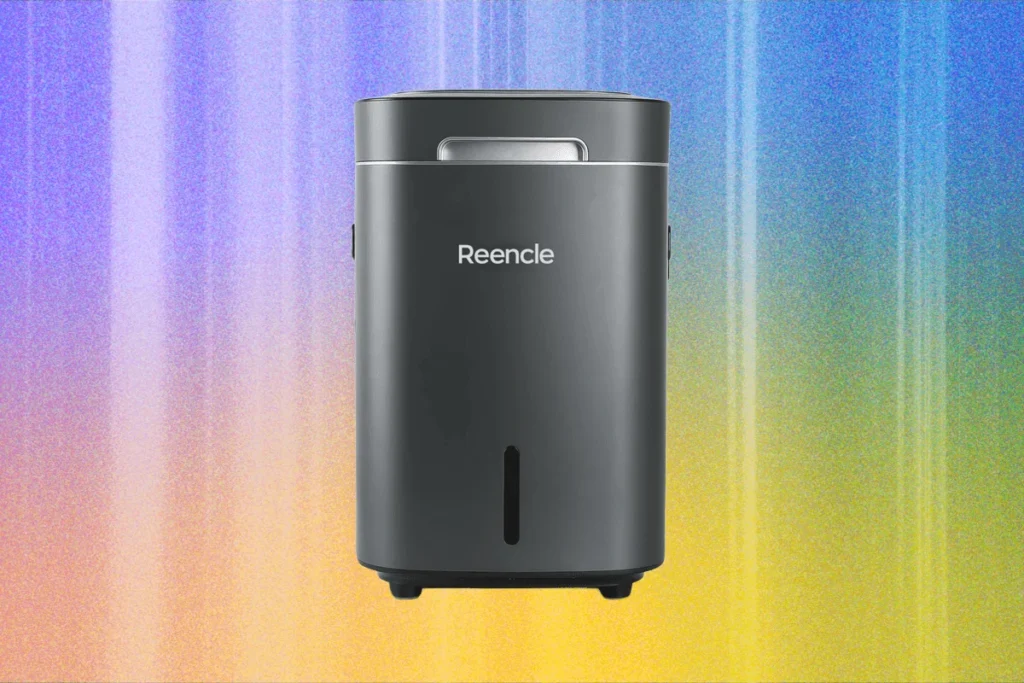
Conversely, other manufacturers rely on "compost starters"—mixtures of microbes and enzymes—to bridge the gap. The Reencle Prime, a standout in testing, provides a starter bag containing thermophilic microbes. While it doesn’t create instant compost, it is perhaps the closest consumer appliance to a true biological processor.

However, the "greenwashing" allegations persist. Critics argue that branding these machines as "composters" is a form of corporate astroturfing—creating the illusion of an environmental solution that is, in practice, merely a high-tech way to dehydrate trash.
Case Study: The Reencle Prime and the Durability Dilemma
In 18 months of intensive testing, the Reencle Prime proved to be the most capable machine for producing a soil-ready amendment. Unlike the grinder-dryers, it features a constant-feed system that feels like a "heated trash can."

However, the 18-month mark revealed a critical failure point: the stainless steel stirring paddles. User reports in community forums and personal testing confirmed that these paddles are susceptible to breakage. Reencle’s response, however, has been constructive. For units within their warranty period, the company provides a repair kit at no cost. For units out of warranty, a $35 kit is available. This suggests a shift toward a more mature service model—one where the company acknowledges the hardware’s limitations rather than ignoring them.
The Landscape of Available Tech
When choosing a device, consumers should categorize their needs:

1. The "True" Processors
The Reencle Prime and Reencle Gravity stand alone as systems that utilize microbial action. They are larger, slower, and require a bit of "brown" material (shredded paper or bread) to keep the microbes happy, but they produce a substance that is genuinely closer to finished compost.
2. The Grind-and-Dry Specialists
The Lomi 3 and FoodCycler Eco 3 are the industry leaders here. They are fast, clean, and reliable at volume reduction. They are ideal for city dwellers who have no garden space but want to avoid the "stinky bin" syndrome. The Airthereal Revive R800 serves as a budget-conscious entry point in this category, offering similar functionality at a lower price point, albeit with a less refined user experience.

3. The Capacity Giants
For larger families, the Mill Food Recycler is in a league of its own. With a capacity that only requires emptying once a month, it is designed for those who want a "set it and forget it" experience. Its unique selling point—the ability to ship processed grounds to a partner farm for chicken feed—adds a layer of circularity that other brands lack, though it comes at a premium price.
4. The Analog Alternative
For the purist, the Bokashi Bin remains the gold standard. It produces a potent, nutrient-rich "tea" and prepares food for rapid decomposition in the garden. It lacks the convenience of electricity and can be odor-intensive if not managed correctly, but it remains the most authentic way to handle food waste without the risk of mechanical failure.

Implications for the Future
The "composter" market is reaching a point of maturity. Consumers are no longer satisfied with flashy marketing; they are demanding transparency about the final product.
The future of these appliances likely lies in hybrid models—machines that combine the mechanical efficiency of grinders with the biological speed of microbial starters. However, the most important implication of this technology is not the machine itself, but the behavioral change it fosters. Whether you spend $1,000 on a top-tier Mill or $80 on a Bokashi bucket, the act of diverting waste from the landfill is a meaningful step toward sustainability.

Ultimately, if your goal is to save the planet from your banana peels, you must choose your tools wisely. Do not expect a magical machine to do the work of nature in three hours. Expect a tool that helps you manage your waste, reduce your footprint, and perhaps, with a little patience and a bit of soil, contribute to a healthier garden.