The Battle for the Beef Supply: Administration’s “Ranchers First” Initiative Sparks Safety Debate
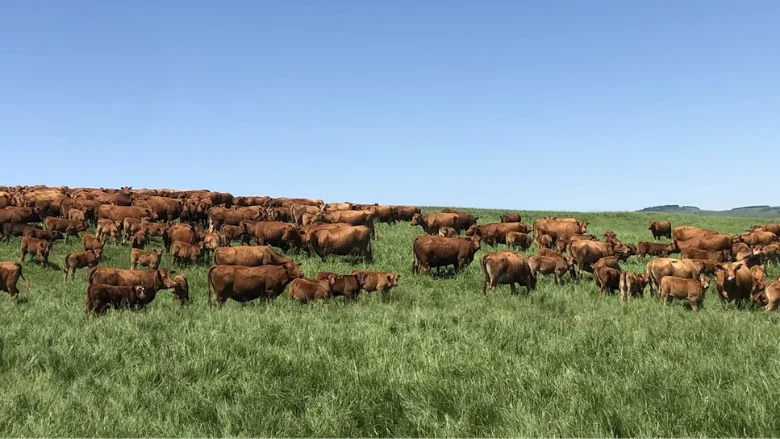
In a move that has sent shockwaves through the American agricultural landscape, the Trump administration has launched a high-stakes campaign to dismantle what it describes as a “nasty monopoly” within the nation’s meat processing sector. At the heart of this confrontation is the “Ranchers First” initiative, a sweeping policy package aimed at decentralizing the meat industry by empowering farmers to take control of their own processing. However, the proposal has hit a wall of fierce resistance from industry stalwarts, who argue that the administration’s rhetoric regarding “red tape” masks a dangerous threat to the gold standard of American food safety.
The Genesis of the Conflict: A Call to Decentralize
The controversy began on August 28, 2026, when President Donald Trump took to social media platforms X and Truth Social to declare war on the “Big 4” meat processors. For decades, the meatpacking industry has been characterized by extreme consolidation, where a small handful of corporations control the vast majority of the nation’s beef processing capacity.
“I am authorizing legal documents to be drawn in order to allow farmers and ranchers to be given the right to process their own food,” the President wrote, promising that the transition would “move quickly.”
The administration’s argument is rooted in economic populism: by allowing ranchers to bypass the massive, centralized facilities controlled by the Big 4, the government hopes to increase competition, boost profit margins for independent producers, and insulate the food supply chain from the systemic vulnerabilities that have historically plagued large-scale processors.
Chronology of a Policy Shift
The administration’s blitz began in earnest in late August:
- August 28: President Trump announces his intention to authorize on-farm meat processing, framing the effort as a liberation of the American rancher from corporate monopolies.
- August 28: U.S. Agriculture Secretary Brooke Rollins amplifies the message, promising a wave of deregulation. Her announcement included plans to waive “red tape,” expand the ability to sell across state lines, and rescind “outdated” safety guidance.
- August 31: The USDA officially launches the “Ranchers First” initiative. The policy package includes the Strengthening Processing for U.S. Ranchers (SPUR) Guaranteed Loan Program, designed to fund regional co-ops and independent processors.
- September 1: Industry groups, including the Meat Institute, issue formal rebukes, emphasizing that current pathways for on-farm processing already exist and that safety standards must remain non-negotiable.
The “Ranchers First” Initiative: What’s on the Table?
The USDA’s “Ranchers First” program is a multi-pronged approach intended to rebuild the “Great American Beef Herd” infrastructure. By providing guaranteed loans through the SPUR program, the administration hopes to lower the barrier to entry for small-scale entrepreneurs.
A central component of the plan is the Regional Processor Continuity Effort. This program is designed to shift processing capacity away from the dominant, centralized players toward smaller, American-owned independent entities. The objective is clear: to foster a more resilient, localized food system that can withstand the supply chain shocks that crippled the industry during the early 2020s.
However, the administration’s interpretation of “supporting small processors” involves a controversial rollback of federal oversight. Secretary Rollins’ stated plan to “waive red tape” has led to widespread concern among industry experts who fear that the administrative cost of safety is being conflated with the necessity of sanitation.
The Industry Pushback: Safety as the Bedrock
The reaction from the cattlemen’s associations was swift and unequivocal. Both the South Dakota Cattlemen’s Association (SDCA) and the National Cattlemen’s Beef Association (NCBA) have publicly distanced themselves from the administration’s approach to deregulation.
The SDCA Stance
The South Dakota Cattlemen’s Association issued a stark warning via social media, stating: “Food safety is NOT red tape. Consumer confidence is NOT optional.”
The association reminded the public that federal meat inspection was established over a century ago—specifically to combat the unsanitary conditions of the era. They noted that the catastrophic E. coli outbreaks of the 1990s were the catalyst for the current, rigorous pathogen-prevention controls. “Weakening them risks both public health and the market every cattle producer depends on,” the SDCA argued.
The NCBA Position
The National Cattlemen’s Beef Association, while supportive of the goal of increasing competition, drew a hard line regarding safety. In an official statement, the NCBA declared: “Beef sold to American consumers should continue to meet rigorous, science-based food safety and inspection standards, regardless of the size of the processor.”
The NCBA further warned that trading long-term consumer trust for short-term political gains is a “serious mistake.” For producers who have spent generations building the “gold standard” of American beef, the idea that safety regulations are merely an impediment to profit is seen as a fundamental misunderstanding of the market.
The Meat Institute’s Technical Critique
The Meat Institute, which represents a broad spectrum of the industry, offered a more technical rebuttal to the administration’s proposals. They pointed out that the “right” to process meat is already governed by existing, well-defined regulatory frameworks that protect consumers while providing avenues for small-scale producers.
“Allowing uninspected meat to be sold to unwitting consumers is the wrong approach,” the Institute stated. They highlighted that ranchers currently have several legal pathways to market their livestock, including:
- Custom Exemptions: Allowing for the processing of animals for personal, household, or non-paying guest use.
- State-Inspected Facilities: Utilizing state-run programs that maintain standards equivalent to federal requirements.
- Federally Inspected Small Establishments: Working with existing, small-scale federally inspected processors.
The Institute further noted that the USDA’s Food Safety and Inspection Service (FSIS) already provides extensive support to small businesses, including technical assistance, plain-language guidance, and educational outreach to help them navigate compliance without compromising safety.
Broader Implications: Distraction or Innovation?
Critics of the administration’s plan have suggested that the focus on “on-farm processing” is a tactical distraction. Both the SDCA and other industry observers have pointed out that the administration has simultaneously pursued policies that increase foreign beef imports at prices that undercut domestic producers.
Some industry analysts view the “Ranchers First” initiative as an attempt to pivot the conversation away from the impact of cheap, imported beef. By focusing on the “Big 4” monopoly, the administration frames its intervention as a battle for the “little guy,” even as those same ranchers face intense pressure from global market forces.
The Path Forward: Can Competition and Safety Coexist?
The fundamental challenge facing the U.S. agricultural sector is how to balance the need for a more decentralized, competitive market with the non-negotiable requirement of food safety.
If the administration moves forward with its plans to bypass federal inspection for certain classes of on-farm processing, it risks a permanent fracture in consumer confidence. History has shown that in the meat industry, a single major foodborne illness outbreak can devastate the reputation of the entire sector—a risk that cattlemen appear unwilling to take.
As the “Ranchers First” initiative moves into the implementation phase, the debate will likely shift from the social media arena to the halls of Congress. The NCBA and SDCA have both called on their members to lobby legislators, signaling that this fight will be decided by whether the government views food safety as a flexible regulatory burden or an essential pillar of national health.
Ultimately, the administration faces a difficult reality: while the desire for a more competitive beef market is shared by producers and consumers alike, the consensus remains that the “gold standard” of American beef is defined not just by the quality of the product, but by the rigor of the science that keeps it safe. Whether that standard can be maintained while expanding the footprint of small-scale processing remains the defining question of the year.