Echoes from the Clouds: Remembering Windows on the World 25 Years Later
By [Your Name/Journalist]
Updated: September 10, 2026
Twenty-five years after the morning that changed the world, the skyline of Lower Manhattan remains a testament to resilience. Yet, beneath the steel and glass of the modern World Trade Center, the memory of what stood before persists—not merely as a structural loss, but as a cultural one. Premiering on September 7, 2026, the CNN documentary Top of the World offers a poignant, 40-minute retrospective on the rise, the pinnacle, and the tragic final chapter of Windows on the World, the legendary restaurant that occupied the 106th and 107th floors of the North Tower.
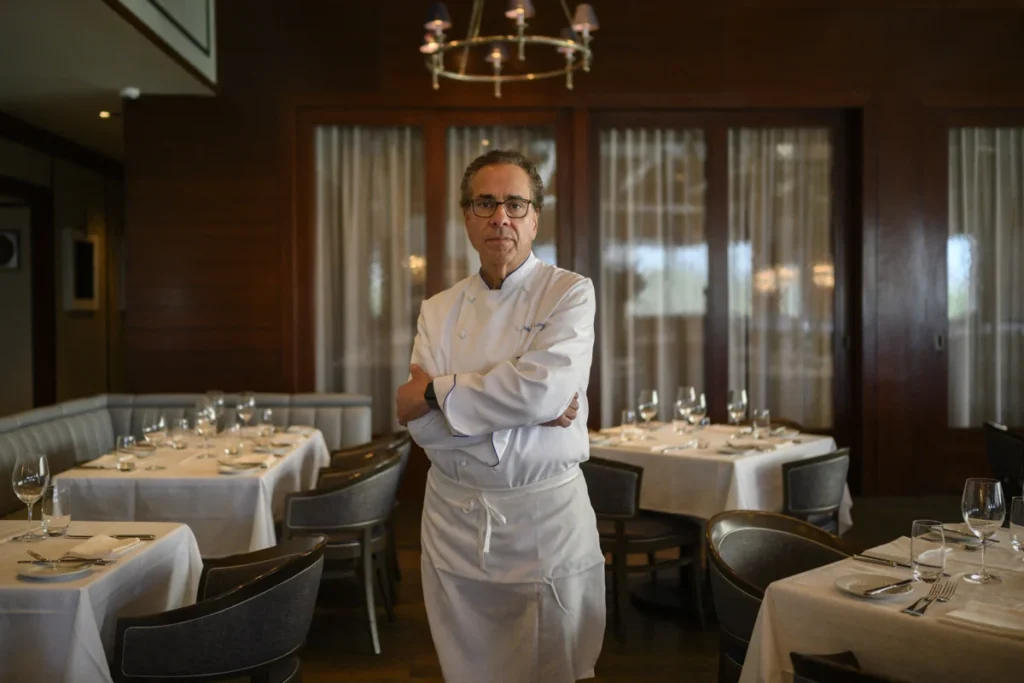
Through the voices of those who shaped its legacy—including foundational wine director Kevin Zraly, hostess Nathalie Tolentino, prep cook Sekou Siby, and executive chef Michael Lomonaco—the film reconstructs a venue that was once the beating heart of New York’s social and culinary life.
The Vision: Architecture of Optimism
Windows on the World was never intended to be just a restaurant; it was a grand statement of American ambition. When it opened its doors in 1976, the project was part of a strategic effort by the Port Authority to "humanize" the daunting, colossal Twin Towers. To accomplish this, they tapped Joe Baum, the visionary restaurateur behind Tavern on the Green and The Rainbow Room.
Baum’s mandate was simple: create the most iconic dining experience in the world. Designed by architect Warren Platner, the space sprawled across 50,000 square feet, offering panoramic vistas of Manhattan. With a logo designed by the legendary Milton Glaser and a menu conceptualized by James Beard, the restaurant was an immediate, glittering success. It became a global stage where the staff served as performers and the dinner service as a choreographed spectacle. By the time it reached its zenith, it was the highest-grossing restaurant in the United States, a feat made more impressive by its elevation.
"Baum really was a visionary in so many ways," reflects Chef Michael Lomonaco. "To put a restaurant on top of a building like that was unheard of. There weren’t a lot of buildings that had restaurants on higher floors—anywhere."
Chronology: A Quarter-Century of Service
The history of Windows on the World is a reflection of New York City itself—a narrative of boom, bust, and reinvention.
- 1976: The restaurant opens to immense fanfare, quickly becoming a symbol of glamour and civic pride.
- 1980s: Management shifts from Baum to various hotel corporations, leading to a period of decline where the restaurant is increasingly viewed by locals as a "tourist trap."
- 1993: Following the first World Trade Center bombing, the restaurant closes its doors for an extensive three-year renovation.
- 1996: The Port Authority invites Joe Baum back to restore the restaurant’s luster. Baum recruits Michael Lomonaco, a rising star from the 21 Club, to lead the culinary team.
- 1997: The "new" Windows opens. In a December 31 review, New York Times critic Ruth Reichl awards it two stars, praising Lomonaco’s menu as "nearly worthy of the view."
- September 11, 2001: The restaurant is destroyed during the terrorist attacks. 79 staff members and 91 guests are lost.
- 2001–2026: The survivors and the industry at large spend 25 years memorializing the lives lost, with relief funds and personal tributes keeping the spirit of the restaurant alive.
Supporting Data: More Than Just a Restaurant
The scale of Windows on the World was staggering. It functioned less like a single restaurant and more like a small city in the sky. At any given time, the establishment employed upwards of 500 people, ranging from cooks and porters to sommeliers and event coordinators.
The staff was a microcosm of the globe, with employees hailing from Peru, India, Morocco, and Côte d’Ivoire. Lomonaco often describes the team as the "United Nations of the restaurant world." The logistical requirements were immense; because the restaurant hosted breakfast, lunch, dinner, and late-night service, the operation ran 24 hours a day.
The versatility of the space was its greatest strength. It housed private event rooms, the famous bar—which could seat 300 guests—and various culinary iterations such as The Greatest Bar on Earth and Wild Blue. The wine program, managed by Kevin Zraly, was unparalleled in its depth and reach, acting as a cellar for the world’s elite.

The Turning Point: 1997 and the Peak Years
For Chef Lomonaco, the years between 1997 and 2001 represent the restaurant’s "heyday." After being brought on by Baum, Lomonaco faced the Herculean task of reorganizing the kitchens and elevating the culinary standard to match the prestige of the architecture.
"We had a great run, from ’97 until the end," Lomonaco recalls. "A two-star review from the New York Times was excellent! Considering that we served 600 people a night? I was thrilled. Reichl came in during the busiest time—between Thanksgiving and Christmas—to review us. It was a highlight of my career."
This era was marked by a feeling of profound stability and success. By September 2001, the team was in high spirits, actively preparing for a 25th-anniversary celebration. Kevin Zraly had even secured 500 cases of a special-labeled Veuve Clicquot Yellow Label for the occasion. Today, a single remaining bottle of that champagne rests in the Smithsonian, a silent, gilded artifact of a celebration that never happened.
Implications and Official Responses: A Legacy of Hope
The tragedy of September 11, 2001, severed the trajectory of Windows on the World, but it could not erase its influence on the hospitality industry. In the immediate aftermath, Lomonaco and other industry leaders channeled their grief into action, forming Windows of Hope. This charitable organization raised tens of millions of dollars to provide financial security for the families of the staff members who perished in the North Tower.
The impact of the loss was deeply personal for those who survived. Lomonaco, who had been on his way to the restaurant that morning, made a vow to ensure that the memory of his colleagues would remain a central part of his life.
"I devoted and dedicated my life to the job that I do to honor the memory of those we lost. That’s what the last 25 years has been for me," Lomonaco explains. During his tenure at the Porter House Bar and Grill (2005–2025), he deliberately employed former Windows staff, creating a workplace that functioned as a support system.
A Continued Commitment
Today, as he helms Brasserie Cognac Américain near Bryant Park, Lomonaco remains a fixture of the New York dining scene. For him, hospitality is not merely a profession—it is a "métier," a calling. While the towers are gone, the culture of service, diversity, and excellence that flourished on the 106th and 107th floors continues to influence his work.
The documentary Top of the World serves as a bridge between the past and the present. It reminds viewers that Windows on the World was more than a tourist destination; it was a home for hundreds of people who took pride in their craft and their community. As the world marks a quarter-century since the collapse, the story of Windows remains a testament to the fact that while buildings can be destroyed, the human connections forged within them can endure for a lifetime.
As Lomonaco notes, "[Windows] is a constant memory. Through the work I do, I’m able to honor my friends and colleagues." Twenty-five years later, that work continues, echoing from the clouds down to the streets of the city they loved.