Navigating the "Adulting" Gap: A Financial Case Study of Career Growth and Consumer Debt

Main Facts: The Paradox of High Income and Financial Insecurity
In the heart of central Connecticut, Michael and Brian, both 34, represent a growing demographic of American professionals: high-earning individuals who, despite stable careers and significant gross incomes, feel increasingly alienated from traditional markers of adulthood, such as homeownership and debt-free living.
With a combined annual gross income of approximately $167,544, the couple sits well above the national median. Michael serves as a project coordinator for a state behavioral health agency and maintains a secondary role as a disability leadership coordinator—a position born from his own resilience as a brain injury survivor. Brian operates as a quality assurance manager for a state-run hospital, a role that offers substantial long-term benefits, including a pension and lifetime healthcare.

Despite these professional triumphs, the couple finds themselves at a financial crossroads. They are currently managing $28,259 in consumer debt, primarily across three credit cards, and are grappling with a significant increase in living expenses following a forced relocation. As they approach their tenth anniversary, their story highlights the "middle-class squeeze" in high-cost-of-living areas like Connecticut, where the transition from "surviving" to "thriving" is often hindered by legacy debt and the volatile rental market.
Chronology: From Stability to a Scramble for Housing
The couple’s current financial anxiety is rooted in a turbulent 12-month period between late 2022 and 2023. For eight years, Michael and Brian lived in a 600-square-foot studio apartment, paying a modest $945 per month. This low overhead allowed them to manage their finances with relative ease, even as Brian successfully paid off $58,000 in student loans—a major financial milestone.

However, the stability of the "studio years" was upended by a series of unplanned events:
- The Housing Crisis: Unexpectedly forced to leave their long-term home, the couple entered the 2022/2023 rental market during a period of record-high inflation and limited inventory. After a frantic three-month search, they relocated to a two-bedroom, two-bathroom apartment in a refurbished industrial mill. While the move provided much-needed space and a professional home office for Michael, it more than doubled their rent to $2,000 per month.
- Personal and Veterinary Loss: During the transition, the couple lost their long-term feline companion, Rex. The subsequent adoption of two new kittens brought joy but also unforeseen financial strain due to chronic health issues, resulting in significant veterinary and specialized dietary expenses.
- The Debt Accumulation: The combination of moving costs, higher rent, car repairs for their aging vehicles (a 2007 Mercedes and a 2007 Subaru), and the emotional toll of the year led to a resurgence of consumer debt.
By late 2023, the couple realized that their dream of entering the housing market—originally projected for late 2023—had been deferred by the immediate need to service high-interest credit card balances and cover an annual spending rate of over $96,000.

Supporting Data: A Comprehensive Financial Audit
To understand the couple’s path forward, a deep dive into their balance sheet is required. Their financial profile is a mixture of robust retirement vehicles and precarious liquid savings.
Income and Cash Flow
The couple’s net annual take-home pay, after taxes and benefit deductions, is $109,455.

- Brian’s State Salary: $2,344.36 net per pay period.
- Michael’s Primary and Secondary Roles: ~$1,770 combined net per pay period.
- Total Monthly Expenses: $8,035 (inclusive of debt payments and high-cost Connecticut utilities).
The Debt Portfolio
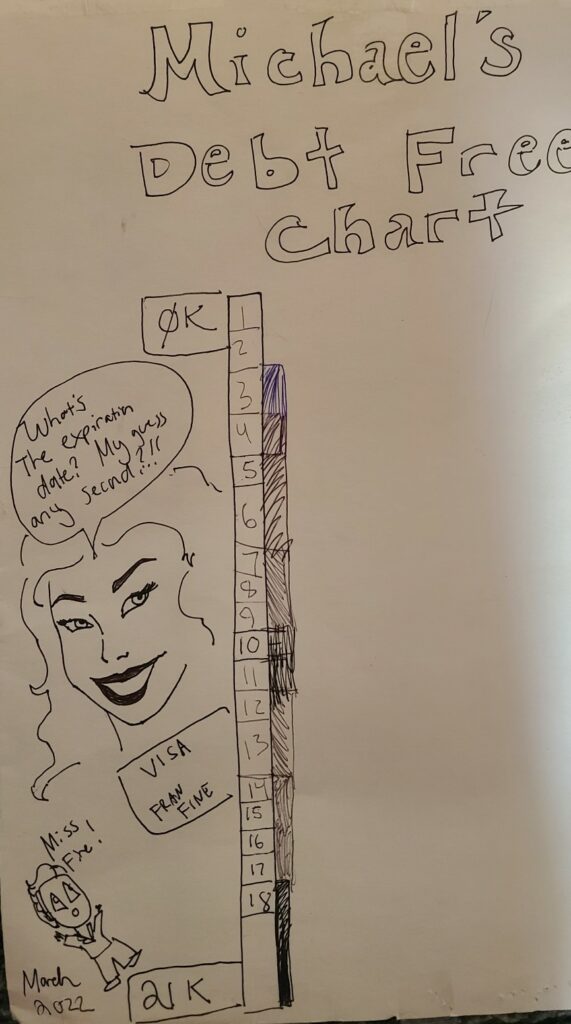
The most pressing threat to their financial health is the $28,259 in credit card debt.
- Brian’s Visa (SCU): $16,057. Currently 0%, but set to spike to 17.99% in November.
- Michael’s Visa Platinum: $9,700 at 10.99% interest.
- Brian’s Visa Platinum (NFCU): $2,503. Currently 0.99%, spiking to 17.74% in November.
Assets and Retirement
The couple has a combined net worth in assets of $91,250, though much of this is illiquid:
- Michael’s 401k: $36,992.
- Brian’s Retirement Accounts: $31,647 (split between an old 401k, a 457b, and a 403b).
- Cash Reserves: $9,000 (split between Michael’s emergency fund and Brian’s savings).
- Pension Fund: Brian’s projected state pension offers a monthly payout of $4,150 starting in 2054.
While their retirement savings are commendable for their age, their liquid "emergency fund" covers only about five weeks of their current $8,035 monthly burn rate, leaving them vulnerable to further "shocks," such as car failures or medical emergencies.
Official Responses: Expert Strategic Recommendations
Liz Frugalwoods, a prominent financial consultant and author, analyzed the couple’s situation and offered a multi-step intervention. Her primary thesis is that Michael and Brian are "in better shape than they feel," but suffer from a lack of rigorous tracking and a "feast or famine" spending cycle.

1. The Debt-Elimination Sprint
The consultant recommends an immediate "spending detox." By categorizing expenses into Fixed, Reduceable, and Discretionary, the expert suggests that the couple could temporarily slash their monthly spending from $8,035 to $6,665.
- The Strategy: By eliminating dining out ($200), gifts ($260), and personal care/subscriptions ($200+), the couple can redirect $4,456 per month toward debt.
- The Timeline: At this aggressive rate, the couple could be entirely debt-free in approximately 6.5 months, narrowly avoiding the high interest rates set to trigger in November.
2. Prioritizing the "Financial Order of Operations"
The consultant advises against immediate homeownership or Brian pursuing a Master’s degree. Instead, the hierarchy of needs should be:

- High-Interest Debt Payoff: Eliminating the credit cards.
- Emergency Fund Expansion: Building a cash reserve of 3–6 months of expenses (approx. $25,000–$40,000).
- Retirement Optimization: Maximizing Brian’s "Triple Crown" of state benefits (403b, 457b, and Pension) before saving for a down payment.
3. Education and Career
On the topic of Brian’s potential graduate degree, the advice is strictly pragmatic: unless there is a "guaranteed, iron-clad correlation" to a significant salary increase, the investment of time and capital is deemed an "unhelpful detour" from their primary goal of debt freedom and homeownership.
Implications: The Psychological Toll and the Path to "Adulting"
The case study of Michael and Brian highlights the significant psychological impact of financial "shame." Both partners expressed feeling "behind" their peers, despite having achieved career milestones that many in their age bracket still struggle to reach. This sense of failure is often exacerbated by the comparison trap of social media and the rising cost of the "American Dream."

The Millennial Housing Barrier
The couple’s struggle to move from a luxury rental to a owned home is emblematic of the current Connecticut real estate market. With high interest rates and low inventory, even a six-figure household income can feel inadequate when burdened by $28,000 in consumer debt. The "implication" for Michael and Brian is that homeownership is a 2025 or 2026 goal, not a 2023 one.
Long-term Outlook
The path forward for Michael and Brian requires a shift from reactive spending to proactive wealth building. By leveraging Brian’s state benefits and Michael’s entrepreneurial drive in advocacy and coaching, the couple has the tools to achieve their ten-year goals. However, the transition relies entirely on their ability to break the debt cycle.

As the consultant noted, "Money makes life better and easier, but it doesn’t solve life for you." For Michael and Brian, the next six months will be a test of discipline. If they can execute the "debt sprint," they will transition from a state of financial anxiety to one of strategic growth, finally unlocking the "next level of adulting" they so fervently desire.