The Evolution of the Robot Receptionist: Google’s “Call for Me” Enters the AI Arena
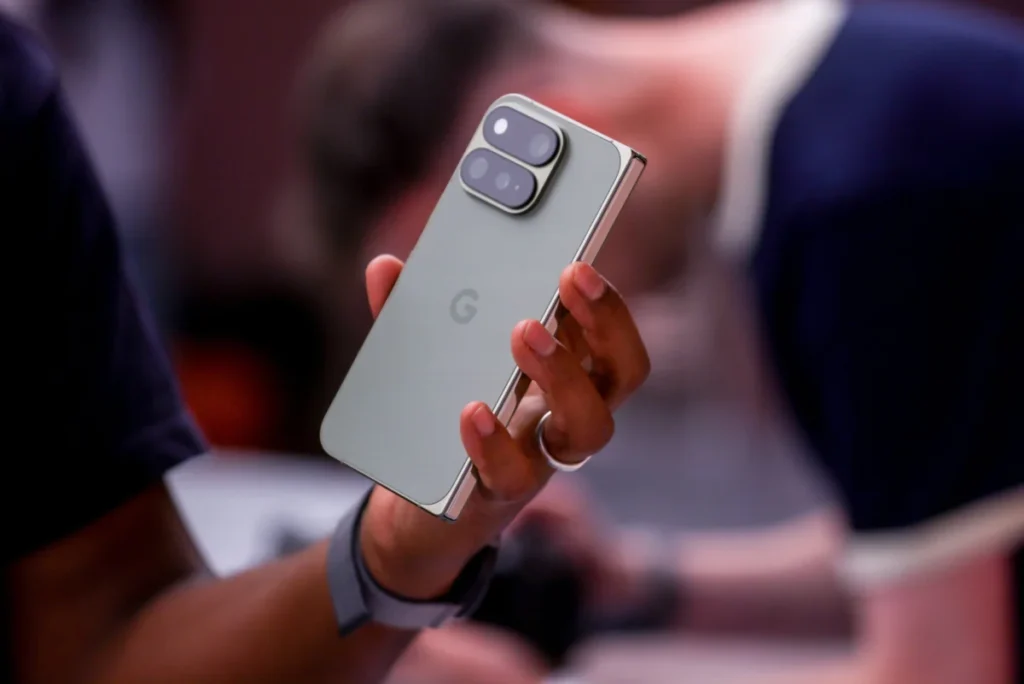
For nearly a decade, Google has been pursuing a singular, ambitious vision: the creation of a digital surrogate capable of navigating the often-frustrating world of human-to-business telephony. In 2018, that vision manifested as Google Duplex, a pioneering—and somewhat controversial—AI system that could call restaurants to book tables, mimicking human speech patterns with uncanny accuracy. While Duplex eventually faded from the spotlight, the underlying ambition never waned. Today, Google is mounting a second, more sophisticated attempt with the launch of "Call for Me," a feature that leverages the power of modern Large Language Models (LLMs) to transform how we interact with the world via phone.
The New Frontier: What is “Call for Me”?
On Thursday, Google officially unveiled "Call for Me," an experimental beta feature currently exclusive to its flagship Pixel 11 smartphones in the United States. Designed to act as a sophisticated intermediary, the feature is positioned as a powerful productivity tool for users who find themselves bogged down by the mundane logistics of daily life—scheduling a haircut, checking if a local hardware store has a specific tool in stock, or navigating labyrinthine customer service phone menus.
To utilize the feature, users must be enrolled in the "Phone by Google" app’s public beta and maintain an active Gemini subscription. The process is designed for seamless integration: a user provides a prompt, and the AI takes over. For instance, if a user needs to check availability at a business, they simply ask Gemini to handle the call. The AI then initiates the connection, introduces itself, and engages in a nuanced, back-and-forth conversation to convey the user’s request.
Crucially, the user is not left in the dark. A live transcript of the call appears on the Pixel’s display, allowing the owner to monitor the conversation in real-time and intervene—or take over the call entirely—at any moment. If the system encounters an automated directory or a period of hold music, it is equipped to navigate the menu or wait patiently, notifying the user only when a human representative is on the line.
A Chronology of the AI Calling Revolution
To understand the significance of "Call for Me," one must look back at the trajectory of Google’s AI telephony efforts.
- 2018 (The Duplex Era): Google introduced Duplex to a mix of wonder and skepticism. The demonstration of an AI making a hair appointment was a watershed moment for natural language processing, though it sparked intense debate regarding the ethics of machines mimicking humans without explicit disclosure.
- 2019–2022 (The Refinement Phase): Google pivoted away from the singular "assistant calling" model toward a suite of call-management tools. Features like "Hold for Me" and "Direct My Call" were introduced to Pixel devices. These tools didn’t replace the user; they optimized the user’s experience by saving them time during the most tedious parts of a phone call.
- 2023–2024 (The Generative AI Pivot): With the rise of Gemini and advanced LLMs, Google recognized an opportunity to revisit the Duplex concept with a more robust architecture. By replacing hard-coded scripts with generative models, the AI could handle unexpected conversational turns with far greater dexterity.
- Late 2024 (The Beta Launch): The release of "Call for Me" on the Pixel 11 marks the transition from static, rule-based automation to dynamic, context-aware AI agents.
Supporting Data: A Suite of Smart Calling Features
"Call for Me" does not exist in a vacuum. It is the latest evolution in a comprehensive ecosystem of "smart calling" features that have become a hallmark of the Google Pixel experience. These features, which utilize on-device processing and cloud-based intelligence, include:
- Call Screening: Automatically answers incoming calls from unknown numbers, asking the caller to state their purpose before the user decides to pick up.
- Hold for Me: Eliminates the frustration of waiting on hold. The assistant monitors the call and alerts the user when a live person joins the line.
- Direct My Call: A visual navigation tool for automated phone trees. Instead of listening to a list of options, users see the menu displayed on their screen, allowing them to tap their choice instantly.
- Scam Detection: A real-time analytical tool that monitors the audio of a call to detect patterns associated with fraudulent activity, providing an immediate warning to the user if it suspects a scam.
These tools, combined with the new "Call for Me" feature, represent a paradigm shift. The smartphone is no longer just a communication device; it is becoming an active agent acting on behalf of the user’s schedule and security.
Official Responses and Technical Nuances
The implementation of "Call for Me" involves complex technical considerations, particularly regarding how the AI manages its voice and behavior. A Google spokesperson confirmed that the assistant will utilize the same voice used in "Gemini Live" interactions, ensuring a consistent user experience.

When asked about the potential for failure—such as the AI being hung up on by a suspicious business owner or struggling with accents—the company remains pragmatic. "That is exactly what we want to continue testing," the spokesperson stated. "With this experiment, we look forward to users testing a variety of cases, so that we can continue to improve the feature across accents and noisy environments."
Furthermore, the company has implemented safeguards to ensure the AI behaves with a level of digital etiquette. If a business cannot accommodate a request, Gemini is programmed to "politely" terminate the call. While the feature is designed for businesses, it will not interact with emergency services, a clear boundary set to prevent potential safety risks. For businesses without a robust online presence, users can provide specific phone numbers manually, and the AI will attempt to execute the request regardless of whether the number is found via a web search.
Implications: The Future of Machine-to-Machine Communication
The introduction of "Call for Me" hints at a broader, perhaps inevitable, future: a world where AI agents communicate with other AI agents to manage the logistics of human existence.
The Efficiency Paradox
As businesses increasingly adopt their own AI tools—such as the "Jimmy the Surfer" chatbot used by the California pizza chain Pizza My Heart—we are approaching an era of "bot-to-bot" negotiation. In this scenario, a user’s AI might call a restaurant’s AI to place an order, negotiate a delivery time, and confirm payment details. While this offers unparalleled efficiency, it raises questions about the "human touch" in customer service. Will we eventually reach a point where consumers and service providers rarely speak to one another directly?
Ethical and Social Challenges
The proliferation of these tools also brings significant social challenges. If every caller is an AI, how do businesses verify the legitimacy of a request? There is a growing risk of "AI noise," where the volume of automated requests could overwhelm small businesses. Furthermore, the reliance on LLMs to interpret tone and intent introduces the possibility of misunderstandings. If a business owner is having a bad day and speaks brusquely, will the AI correctly interpret the context, or will it misjudge the interaction?
The Privacy Equation
Finally, the "Call for Me" feature underscores the massive amount of data users are willing to entrust to AI. For the system to function effectively, the AI must process the context of the user’s life, their location, and their personal preferences. As Google continues to refine these tools, the debate over data privacy and the autonomy of our personal assistants will likely intensify.
Conclusion
Google’s "Call for Me" is more than just a convenience feature; it is a testbed for the next generation of human-computer interaction. By moving from simple command-response functions to autonomous task completion, Google is pushing the boundaries of what we expect from our smartphones. While the technology is currently in its experimental infancy—limited to Pixel 11 users and requiring a subscription—the trajectory is clear.
We are transitioning away from a world where we must personally navigate the friction of daily life. Instead, we are entering a phase where the "robot receptionist" is an ever-present feature of our digital lives. Whether this future results in a frictionless utopia of perfectly scheduled appointments or a disjointed landscape of miscommunicating algorithms remains to be seen. For now, the experiment continues, one phone call at a time.