The Sand-Filled Heist: A Bizarre Twist in the Rising Tide of High-Tech Cargo Theft
By Investigative Staff
In the high-stakes world of autonomous vehicle development, where intellectual property and hardware are valued in the billions, security is typically absolute. Yet, on a quiet Thursday morning in Newark, California, the industry’s vulnerability was laid bare in a bizarre incident involving PlusAI, a frontrunner in self-driving truck technology. What began as a potential multi-million-dollar heist of proprietary equipment ended with the discovery of a cargo that was worth significantly less than the effort required to steal it: 40,000 pounds of industrial-grade sand.
The incident has since become a focal point in broader discussions regarding the vulnerability of the technology supply chain, as thieves increasingly target the specialized components powering the artificial intelligence revolution.
The Chronology of an Unlikely Crime
The sequence of events unfolded with the speed and precision typical of modern cargo theft, yet it concluded with a narrative twist that has left investigators and company officials alike scratching their heads.
On Thursday morning, a senior executive at PlusAI—a company currently collaborating with Nvidia to advance autonomous trucking systems—received a casual text message from an acquaintance. The message was intended as a compliment: “I have been proud of you for your adventure and success at Plus. Just saw two of your trucks near my work place! :)”
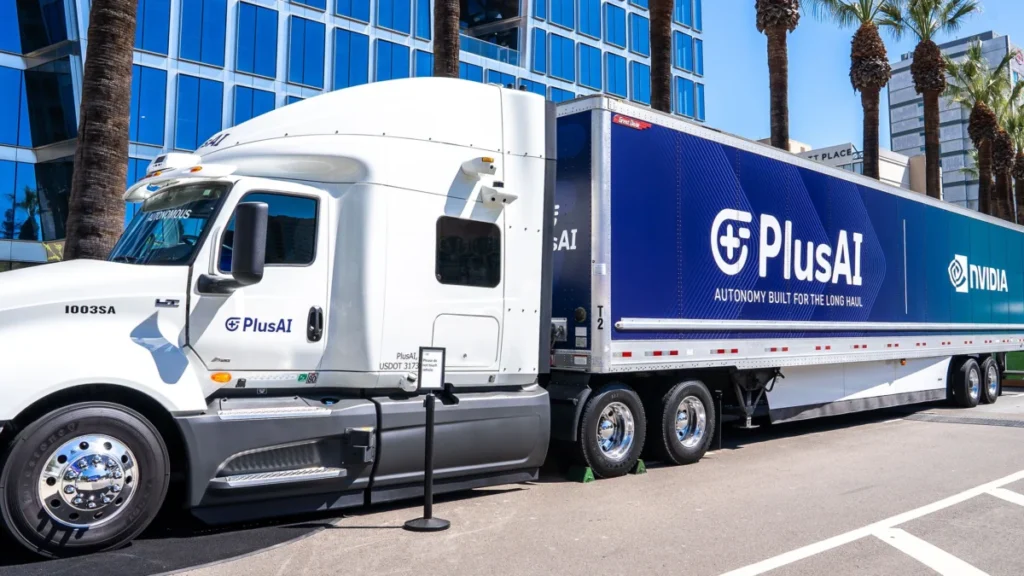
For the executive, the message triggered an immediate alarm. The company’s autonomous testing fleet, emblazoned with the logos of both PlusAI and Nvidia, was supposed to be securely docked at a company warehouse in Newark. They certainly were not intended to be roaming the streets of a commercial district half a mile away.
Within minutes, the internal logistics team confirmed that the trailers had been detached from their secure locations. The perpetrators had bypassed hand locks, hooked the trailers to their own cabs, and absconded with the assets. PlusAI personnel alerted the authorities, and the Fremont Police Department was dispatched to track the stolen cargo.
The trailers were recovered shortly thereafter, abandoned near the location mentioned by the executive’s acquaintance. When officers and company representatives arrived to inspect the scene, they found the trailers broken open—the telltale sign of a heist gone wrong. Expecting to find high-end GPUs, sensitive autonomous sensors, or prototype compute units, the thieves instead encountered massive, heavy piles of sand.
The "Simulated Load" Strategy
According to Lauren Kwan, a spokesperson for PlusAI, the trailers were never intended to carry the crown jewels of the company’s R&D department. “PlusAI uses simulated loads in its trailers to assist with research and development testing,” Kwan explained.
The 40,000 pounds of sand—split into two 20,000-pound loads—served a vital purpose in testing the physics of autonomous braking and handling. The sand mimics the weight of real cargo, allowing the company’s AI software to calibrate its decision-making under realistic heavy-load conditions. While this sand is essential for software calibration, it holds zero value on the black market, rendering the thieves’ efforts entirely futile.
The company confirmed that the actual "tech-enabled" truck cabs, which house the proprietary autonomous driving systems, were safely parked inside the warehouse and remained untouched. By Thursday afternoon, the trailers were safely returned to the facility, marking a rare "happy ending" in an industry where stolen cargo is frequently lost to the underground market forever.
A Growing Threat to the Tech Supply Chain
While the PlusAI incident concluded with a humorous discovery, it highlights a deeply serious and escalating trend in the United States: the professionalization of cargo theft.
The theft of high-value computer equipment, particularly components destined for data centers, has reached a fever pitch. In August, reports surfaced detailing two separate incidents in California where thieves utilized high-speed tactics to intercept security-escorted shipments. In those cases, the criminals deliberately rammed the security vehicles trailing the cargo trucks, forced the drivers to stop, and hijacked the primary vehicles.
These aren’t crimes of opportunity; they are calculated operations. The equipment involved in these thefts often includes thousands of AI-focused microchips, which can command astronomical prices in the secondary market due to the global shortage of high-performance computing hardware. As of late 2024, millions of dollars’ worth of equipment stolen in these high-stakes heists remains unrecovered, suggesting a sophisticated network capable of laundering tech hardware on a global scale.
Official Responses and Data Analysis
The Fremont Police Department, led by spokesperson Amy Gee, has confirmed that the investigation into the PlusAI incident is ongoing. As of this writing, no arrests have been made. The challenge for law enforcement lies in the nature of these theft rings, which often employ "burner" trucks and false documentation to mask their movements through logistics hubs.
Data from Verisk CargoNet, an organization that tracks theft trends across the North American supply chain, indicates that the targeting of tech hardware is a direct response to the "AI Gold Rush." With the massive expansion of data centers globally, the demand for enterprise-grade networking equipment, specialized processors, and even peripheral power hardware has skyrocketed.
The report highlights a shifting geography of risk. While traditional cargo theft often targeted consumer goods like electronics, clothing, or pharmaceuticals, current trends show a sharp increase in the theft of:
- Industrial Metals: Used as raw materials for battery and component production.
- Tesla Batteries: Frequently targeted before they leave manufacturing facilities.
- Bitcoin Mining Hardware: Still a high-value, portable target for organized crime groups.
The logistical complexity of these crimes suggests that criminals are performing reconnaissance on supply routes, identifying "soft" targets—trailers left in unsecured areas—and moving with a speed that often outpaces the response time of private security firms.
Implications for the Future of Autonomous Logistics
The PlusAI case serves as a cautionary tale for the industry. While the company’s autonomous technology remained secure, the incident has exposed the physical vulnerabilities inherent in the transition phase of the industry. As long as autonomous testing relies on physical trailers moving through public and semi-public spaces, they remain targets for criminals who may not know—or care—what is inside the trailer until they break the seal.
For companies like Nvidia and PlusAI, the incident underscores the need for "hardened" logistics. This includes not just digital security, but physical asset protection:
- Enhanced Surveillance: Implementing real-time GPS and geofencing for all trailers, even those carrying non-electronic loads.
- Hardened Locking Mechanisms: Moving away from standard hand locks toward high-security, tamper-evident seals and biometric locking systems.
- Logistics Intelligence: Sharing data across the industry to identify patterns in how these theft rings operate, particularly in regions known as "hotspots" for high-value cargo.
Conclusion
The "Sand Heist" is a reminder that in the world of autonomous innovation, the line between high-tech advancement and physical security is thinner than many realize. While the thieves walked away with nothing more than a back-breaking amount of sand and a wasted trip, the message to the industry is clear: the hardware required to build the future of AI is increasingly being viewed as "digital gold" by criminals.
As the Fremont Police Department continues its investigation, the tech sector must brace for more of these encounters. For now, PlusAI can rest easy knowing their cargo is safe, their software remains secure, and their trailers are back where they belong—ready to continue their simulated journeys, carrying nothing more than the weight of the road.