Navigating the "Adulting" Gap: A Case Study in Debt Recovery and Mid-Career Financial Realignment

HARTFORD, CT — For Brian and Michael, a 34-year-old couple residing in central Connecticut, the transition into their second decade together has been marked by a paradoxical financial reality. Despite a robust combined household income exceeding $167,000 and stable careers within the state’s public sector, the couple finds themselves grappling with significant consumer debt and a sense of stagnation regarding traditional milestones of adulthood, specifically home ownership and long-term fiscal security.
Their story, recently highlighted as a comprehensive financial case study, serves as a microcosm for a broader demographic of millennials: professionals who have navigated the "student loan trap" only to find themselves ensnared by the rising costs of the modern rental market and the psychological weight of "lifestyle creep."

The Core Dilemma: Income vs. Stability
Brian, a quality assurance manager for a state-run hospital, and Michael, a project coordinator and disability advocate, represent a high-earning household that feels remarkably "behind." While Brian successfully liquidated $58,000 in student loans years ago—a feat many his age still struggle to achieve—the couple’s progress was recently derailed by a series of high-impact life events.
The central conflict of their financial life is the gap between their gross earnings and their net worth. While they enjoy the benefits of public sector employment, including pensions and comprehensive healthcare, they are currently burdened by over $28,000 in high-interest consumer debt. This debt, coupled with a recent move that saw their monthly rent jump from $945 to $2,000, has created a sense of "dream deferred" regarding their goals of marriage, business ownership, and real estate acquisition.

Chronology of a Financial Pivot
The couple’s current situation is the result of a decade-long trajectory that faced a sudden "stress test" in late 2022.
- 2013–2021: The Accumulation and Liquidation Phase: Brian and Michael built their lives in a modest, 600-square-foot studio apartment. During this period, Brian aggressively targeted his student debt, eventually reaching a zero balance. This era was characterized by low overhead and a focus on career mobility within the non-profit and public sectors.
- August 2022 – Early 2023: The Catalyst Events: The couple’s stability was rocked by two unplanned occurrences: a forced relocation from their long-term home and a series of veterinary emergencies involving two new kittens with chronic health issues.
- The Rental Market Shock: Navigating the 2023 rental market in Connecticut proved grueling. After a 3.5-month search, they moved into a luxury two-bedroom apartment in a refurbished mill. While the move provided much-needed space and a professional home office for Michael, it more than doubled their housing costs and necessitated significant spending on furnishings and moving expenses.
- Late 2023: The "November Cliff": The couple now faces a looming deadline. Much of their $28,259 debt is currently held on 0% or low-interest introductory credit card offers that expire in November 2023, at which point interest rates are set to skyrocket to nearly 18%.
Supporting Data: A Deep Dive into the Ledger
To understand why a six-figure household feels financially fragile, a granular look at their cash flow is required.

Income and Deductions
The couple’s combined gross annual income is $167,544. However, after taxes and significant "forced savings" in the form of pension contributions, 403b, 457, and 401k investments, their annual net take-home pay is $109,455.
The Debt Portfolio
The couple’s liabilities are concentrated in three primary accounts:

- Brian’s Visa (SCU): $16,057 (0% interest until Nov 2023, then 17.99%).
- Michael’s Visa Platinum: $9,700 (10.99% interest).
- Brian’s Visa Platinum (NFCU): $2,503 (0.99% interest until Nov 2023, then 17.74%).
Monthly Expenditures
Their current monthly burn rate is $8,035, which includes $2,000 for rent and $2,000 in debt repayments. Significant "reduceable" expenses include $517 for pet care (due to prescription diets), $469 for groceries, and $235 for electricity—a reflection of Connecticut’s notoriously high utility rates.
Assets and Retirement
The couple’s total assets stand at $91,250. The majority of this is illiquid, held in various retirement vehicles. Michael’s 401k holds $36,992, while Brian has a fragmented portfolio consisting of an old 401k ($19,305), a 457b, a 403b, and a state pension fund. Their liquid emergency fund is approximately $8,000—covering only one month of their current expenses.
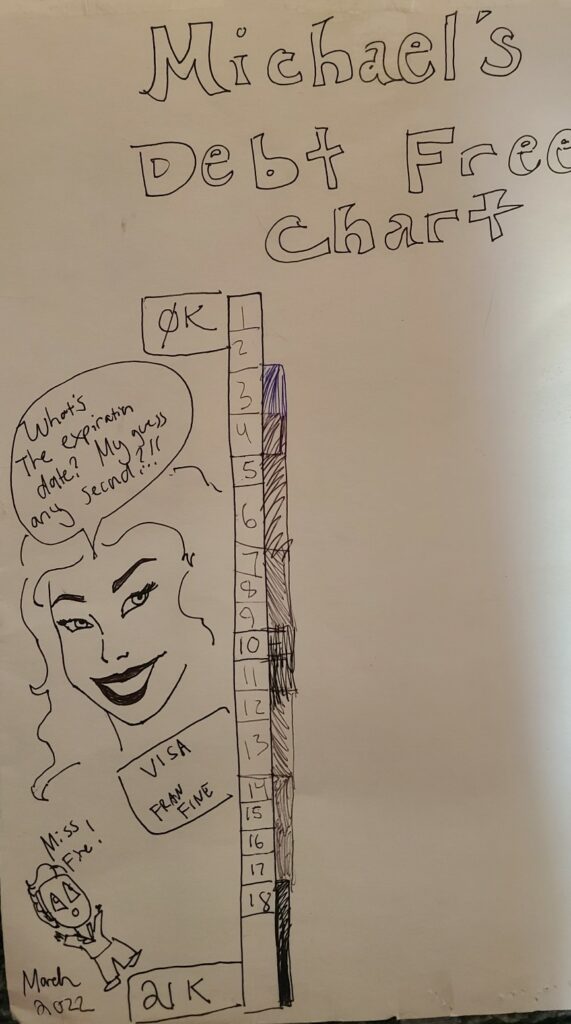
Official Recommendations: The Roadmap to Recovery
Financial expert Liz Frugalwoods provided a comprehensive analysis of the couple’s situation, offering a "triage" plan designed to achieve debt freedom within seven months. Her recommendations focus on shifting from a "feast or famine" spending cycle to a sustainable, mindful middle ground.
1. Aggressive Debt Eradication
The primary recommendation is a "short-term spending detox." By categorizing expenses into Fixed, Reduceable, and Discretionary, the expert identified $1,370 in monthly discretionary spending—including eating out, home goods, and personal care—that could be redirected toward debt.

- The Goal: Increase monthly debt payments to $4,456.
- The Timeline: At this rate, the couple would be entirely debt-free in approximately 6.5 months, narrowly beating the November interest rate "cliff."
2. The Emergency Fund Buffer
Once the debt is cleared, the expert advises the couple to prioritize a liquid emergency fund. Given their $8,000 monthly expenses, a standard three-to-six-month buffer would require $24,000 to $48,000 in cash. This is described as the "buffer from debt," preventing future veterinary or car emergencies from ending up back on credit cards.
3. Optimization of Public Sector Benefits
The expert highlighted Brian’s "Triple Crown" of retirement: access to a 403b, a 457b, and a pension. A key recommendation is to maximize the 457b plan, which allows for penalty-free withdrawals after leaving an employer, regardless of age—a crucial tool for the couple’s goal of early retirement or starting a business.

4. The "Master’s Degree" Warning
Regarding Brian’s desire to pursue a graduate degree, the advice was pragmatic: avoid further education unless there is a "guaranteed, iron-clad correlation to a significant salary increase." In the current economic climate, pursuing a degree for "academic success" without a clear ROI could jeopardize their home-ownership timeline.
Implications: The Psychology of Modern Debt
The case of Brian and Michael highlights a growing trend in American personal finance: the "shame gap." Both partners expressed feelings of inadequacy and "failure" compared to their peers, despite having higher-than-average incomes and stable careers.

The "Spreadsheet Problem"
The analysis suggests that Brian and Michael’s issues are "spreadsheet problems," not moral failings. Their debt was born of a lack of tracking and a series of external shocks, rather than chronic recklessness. However, the psychological toll of this debt—what Michael calls "financial shame"—often prevents couples from taking the necessary, austere steps to correct their course.
Home Ownership Realities
For this couple, home ownership remains a "dream deferred" until their foundational finances are stabilized. In the current Connecticut market, where inventory is low and interest rates remain elevated, entering the market with $28,000 in consumer debt and a thin emergency fund would be high-risk. The expert’s advice is clear: achieve debt freedom and cash stability first, or the "earth of their own" they crave could become a financial burden rather than an asset.

The Path Forward
The transition from a 600-square-foot studio to a luxury apartment was a symbolic move toward "adulthood," but it came with a literal price. The path forward for Brian and Michael requires a temporary retreat in lifestyle to secure a permanent advancement in wealth. By leveraging their high incomes and robust public-sector benefits, they are well-positioned to achieve their 10-year goals—provided they can navigate the next six months with extreme fiscal discipline.
As they approach their 10th anniversary in November, the couple stands at a crossroads. By following a rigorous repayment schedule and eliminating discretionary "leaks" in their budget, they can transform their looming "November Cliff" into a launchpad for the next decade of their lives.