The Sky Reimagined: Why the Antigravity A1 is Changing Aerial Cinematography
For years, the drone industry has followed a predictable trajectory: larger sensors, longer battery life, and increasingly complex mechanical gimbals. However, as drone technology has matured, so too has the burden of the pilot. The traditional aerial filming workflow—scouting, framing, stabilizing, and re-flying to catch the perfect angle—has long been the standard. But a paradigm shift has arrived in the form of the Antigravity A1.
Released in late 2025, the Antigravity A1 represents more than just a new piece of hardware; it signifies a move away from "piloting" toward "directing." By rendering the traditional mechanical gimbal obsolete and leaning into a dual-lens 360-degree capture system, the A1 has fundamentally altered how travelers and solo creators document their journeys.
Main Facts: The Tech Behind the Invisible Camera
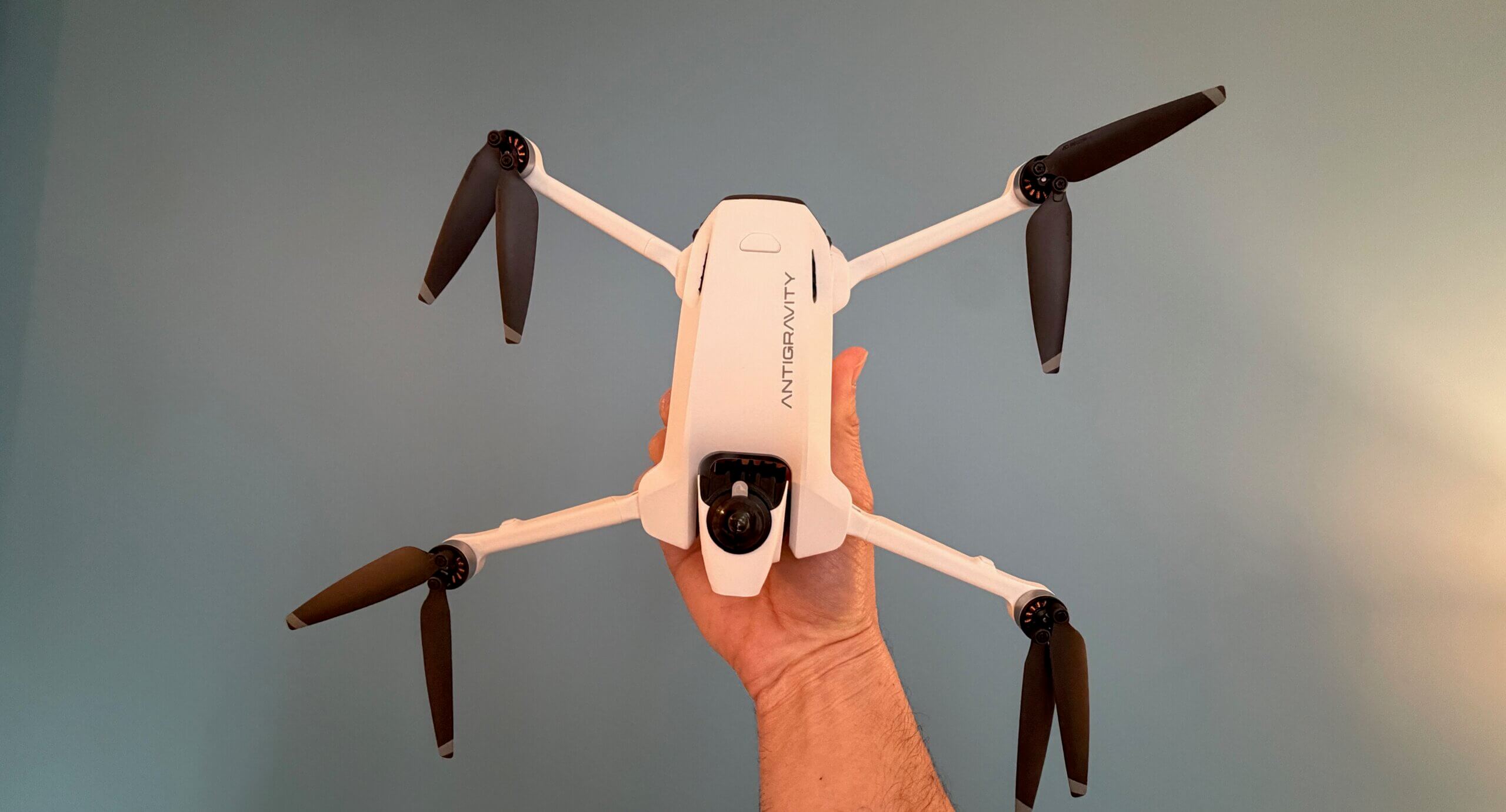
The core innovation of the Antigravity A1 lies in its dual-lens, 360-degree architecture. Unlike standard drones that rely on a single forward-facing camera, the A1 utilizes two ultra-wide-angle lenses—positioned on the top and bottom of the central fuselage. Each lens captures a 200-degree field of view, creating a seamless 360-degree sphere once the data is stitched together.
Perhaps the most impressive feat of software engineering is the "invisible drone" effect. In the final exported footage, the drone itself is digitally masked out, creating the uncanny, cinematic illusion of a camera floating untethered in mid-air.
Beyond its optics, the A1 is a masterclass in regulatory compliance. By hitting an exact weight of 249 grams with its standard battery, the drone falls just under the 250-gram threshold that triggers mandatory registration and restrictive flight regulations in many jurisdictions. This engineering choice is a major boon for international travelers who want to avoid the bureaucratic headaches of registering their gear in every country they visit.
Chronology: From Concept to Consumer Reality
The development of the A1 was shrouded in secrecy, but the timeline reveals a calculated entry into the market:
- Early 2024: Antigravity begins prototyping "Project Spherical," a high-agility drone designed to house dual 360 optics without the weight penalties of traditional mechanical stabilization.
- Q2 2025: Beta units are circulated to a select group of travel photographers and FPV (First Person View) specialists to stress-test the "FlowState" stabilization algorithms.
- Late 2025: The Antigravity A1 is officially launched. It is marketed not just as a drone, but as a "virtual camera crew" for solo travelers.
- Early 2026: Widespread adoption begins, with early reviews highlighting the drone’s durability and its surprisingly intuitive motion-controlled flight system.
Supporting Data: Optics and Performance
While professional cinematographers often prioritize 1-inch sensors, the A1 makes a compelling case for its 1/1.28-inch CMOS units. While slightly smaller, these sensors are massive compared to standard 360-degree action cameras. This size difference allows for superior low-light performance and a wider dynamic range, effectively preserving details in high-contrast environments—such as a bright desert landscape or a sunset over the ocean—that would otherwise be blown out or crushed into black shadows.
The flight dynamics are categorized as "cinewhoop," a style of drone flying that prioritizes stability and smoothness over raw, twitchy speed. The A1 features a top speed of 36 mph, which is more than sufficient for tracking subjects like cyclists, hikers, or vehicles. Furthermore, the inclusion of "Turtle Mode" is a tactical advantage: should the drone crash and flip upside down, the propellers can be reversed to flip the craft upright, saving the pilot from the dreaded "walk of shame" to retrieve a stranded aircraft.
Official Responses and Pilot Feedback
Industry experts have been quick to praise the "Antigravity Studio" app, which acts as the post-production hub. The app allows for 80MB/s wireless transfer speeds, letting creators reframe their 8K sphere footage using the gyroscope in their smartphones. By moving the phone, the creator "films" the scene as if they were actually there, effectively turning a static flight into a dynamic, multi-angle production.
"The AI-driven Auto-Frame feature is the real game-changer," says one early beta tester. "It tracks subjects automatically, meaning I don’t have to worry about framing while I’m navigating flight paths. It’s like having a dedicated camera operator who never gets tired."
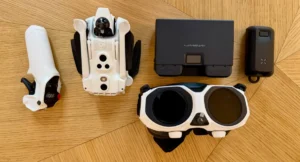
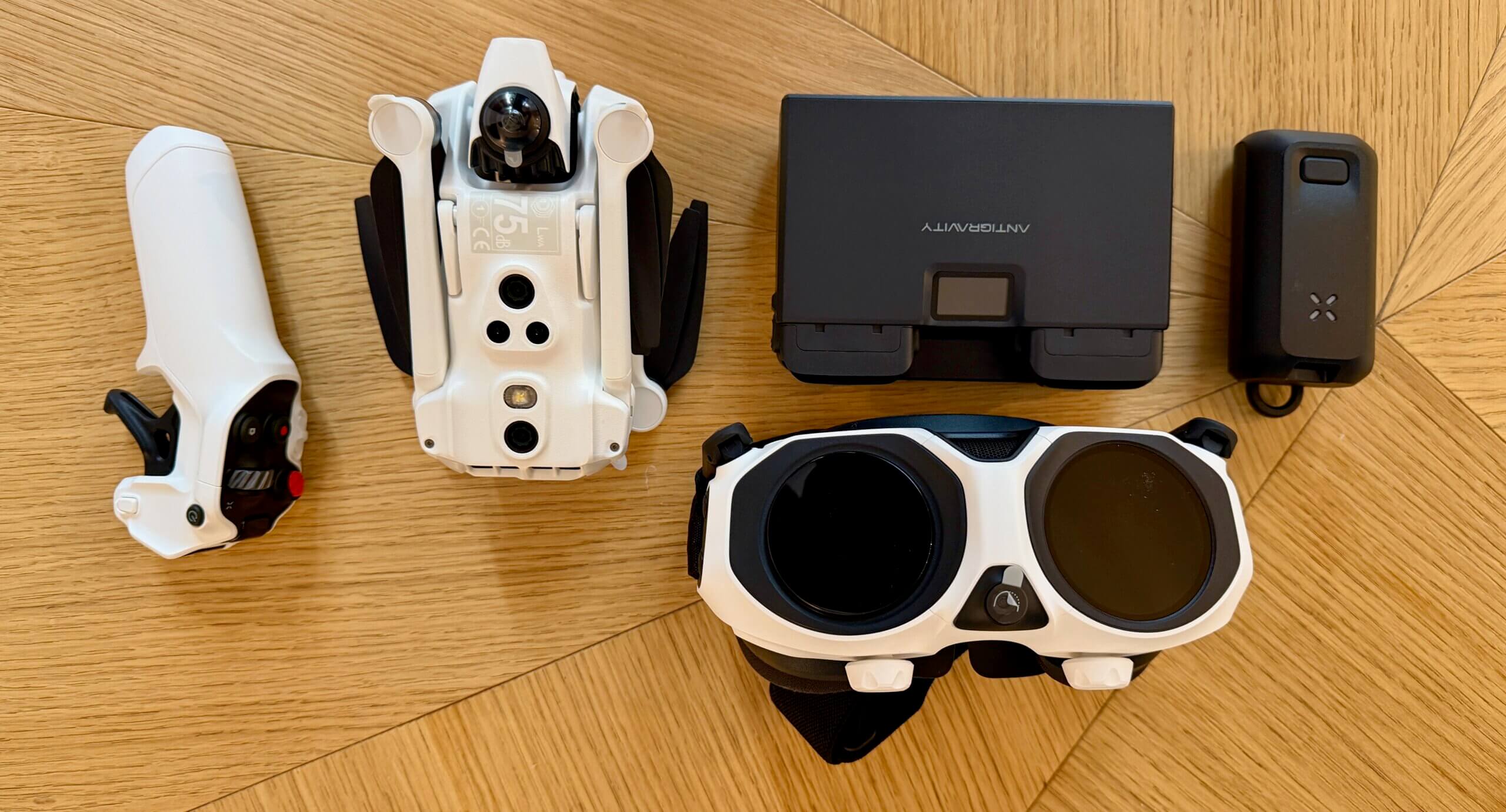
The Vision Goggles, which accompany the pro kit, offer dual 4K micro-OLED displays with a 120Hz refresh rate. By leveraging the 360-degree feed, these goggles allow for true head-tracking. When the pilot turns their head, the field of view shifts accordingly, providing an immersive, spatial awareness that is physically impossible to achieve with a standard gimbal-mounted camera.
Implications for the Travel Industry
The introduction of the Antigravity A1 has significant implications for how we document our world.
1. The Death of the "Re-do"
In the past, capturing a landscape from multiple angles required multiple battery-draining passes. With the A1, a single 20-minute flight captures the entire environment. A creator can "fly" the path once, and then spend hours in post-production finding the perfect camera angle, zoom, and sweep. This efficiency effectively triples the usable footage per flight.
2. A Lower Barrier to Entry
The motion controller is remarkably intuitive. By pointing the controller where the pilot wants to go, the A1 removes the steep learning curve associated with complex manual stick controls. This opens up professional-grade aerial cinematography to travelers who have never flown a drone before.
3. Regulatory Navigation
By meticulously designing the A1 to weigh 249 grams, Antigravity has effectively bypassed the most restrictive international drone laws. This is a crucial feature for the "nomadic" demographic—travelers who need a tool that can cross borders without triggering complex legal scrutiny.
4. The Future of Immersive Content
As VR (Virtual Reality) and spatial computing become more prevalent, the A1’s 360-degree footage is uniquely positioned to dominate. It is no longer just about creating a flat video for Instagram or YouTube; it is about capturing a space that can be revisited in an immersive format.
Final Verdict: Is it Time to Upgrade?
The Antigravity A1 is, without question, a niche product transitioning into the mainstream. While the image quality may not satisfy the most demanding Hollywood productions, it is more than enough for high-end digital storytelling. The lenses, being exposed, require a level of care, but that is a small trade-off for the creative liberation the device offers.
For the modern traveler, the A1 is not just another drone; it is a creative companion that allows the pilot to stop worrying about the mechanics of flight and start focusing on the narrative of their journey. As we look toward the future of travel media, the ability to capture everything, everywhere, all at once—and then decide the story later—is the new standard.
The Antigravity A1 has officially arrived, and it has made the sky look a whole lot more interesting.