The Smoke and the Soul: Resurrecting Umbria’s Lost Vin Santo
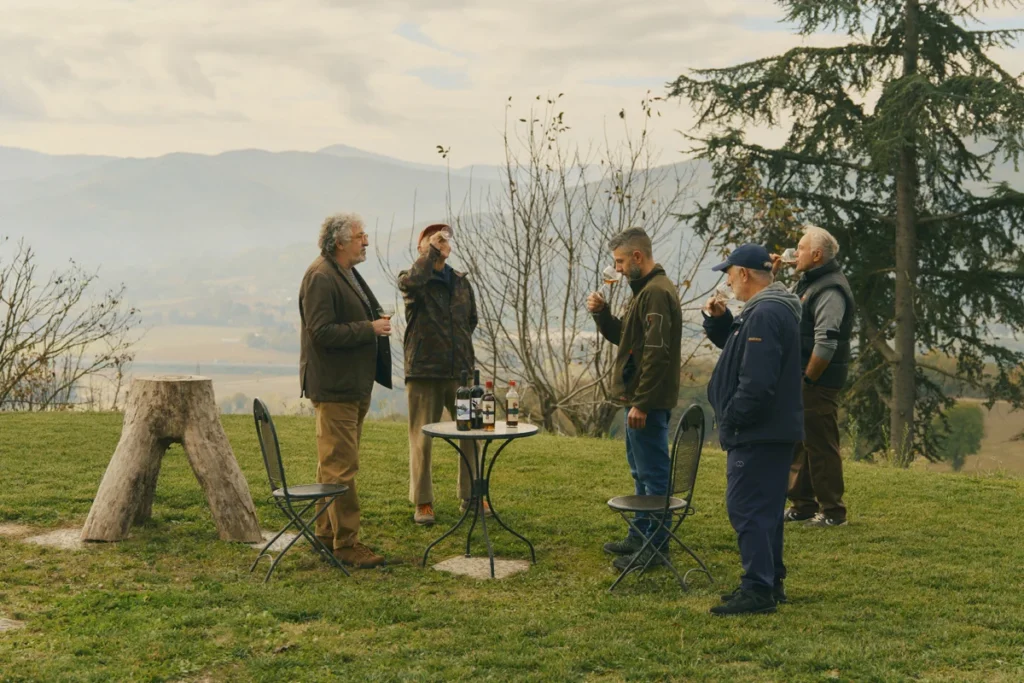
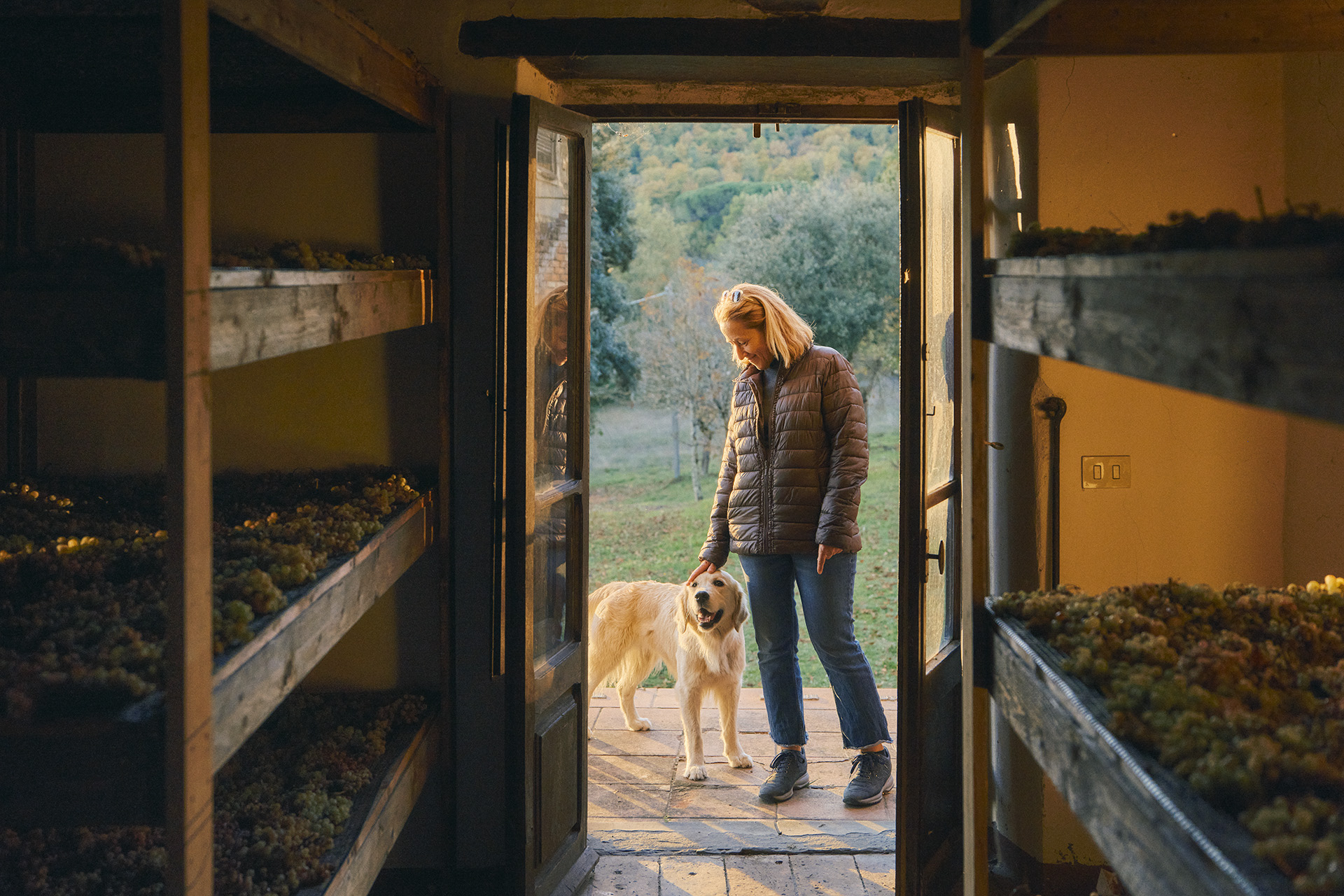
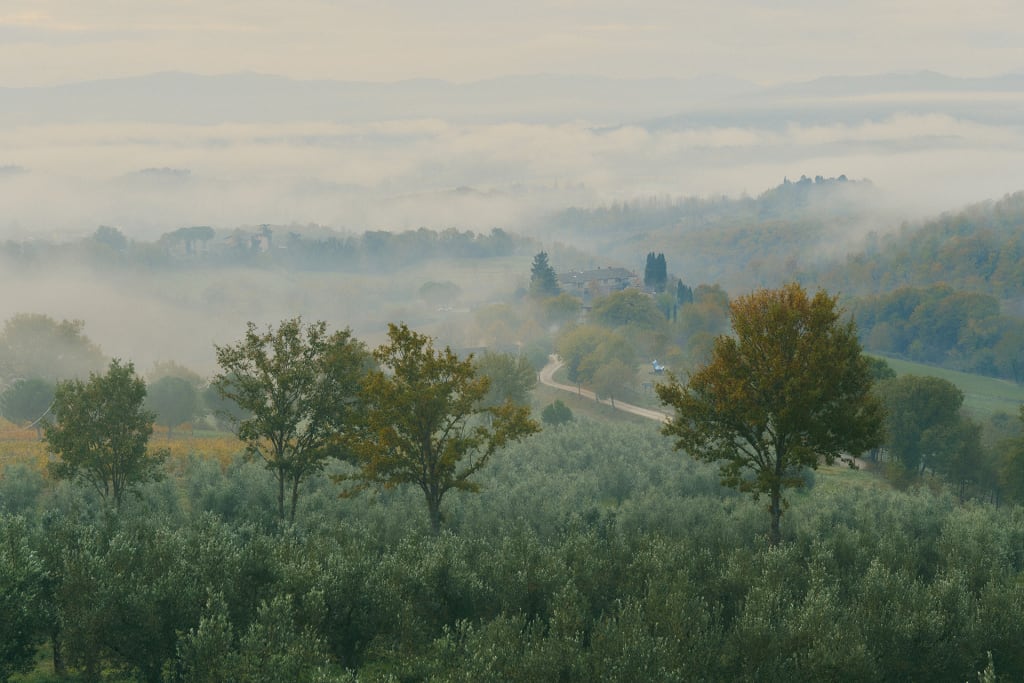
The morning air in the Upper Tiber Valley of Umbria is thick with the scent of damp earth and woodsmoke. As November mist clings to the golden, skeletal remains of autumn vines, the scene at La Miniera di Galparino is one of rhythmic, centuries-old labor. Chiara Filippi and her husband, Claudio Ceccarelli, are in the midst of the morning routine, their three yellow Labradors weaving through the fog, energized by the promise of a forest trek. But the dogs aren’t searching for truffles today; they are constant companions in a life governed by the land.
Here, in the shadow of a farmhouse that dates back to the 1100s—a structure once held by the Knights Templar—the modern world feels remarkably distant. Despite the stillness of the off-season, there is no true "downtime" on this 120-acre agriturismo. From the careful tending of olive groves to the management of heirloom grapes, the farm operates on a timeline dictated by nature and tradition. At the heart of this work is a singular, nearly forgotten pursuit: the production of vinosanto da uva affumicata, a rare, smoked sweet wine that acts as a liquid bridge to Italy’s agrarian past.
The Essence of Tradition: A Chronology of Smoke
To understand vinosanto da uva affumicata, one must look back to the intersection of necessity and innovation in the 15th century. Italy, and particularly the Umbrian region, has been a epicenter of tobacco cultivation for over 450 years. Following the introduction of tobacco from the Americas, local farmers found themselves in a unique position: they were tasked with curing the crop, yet they were often living in deep poverty.
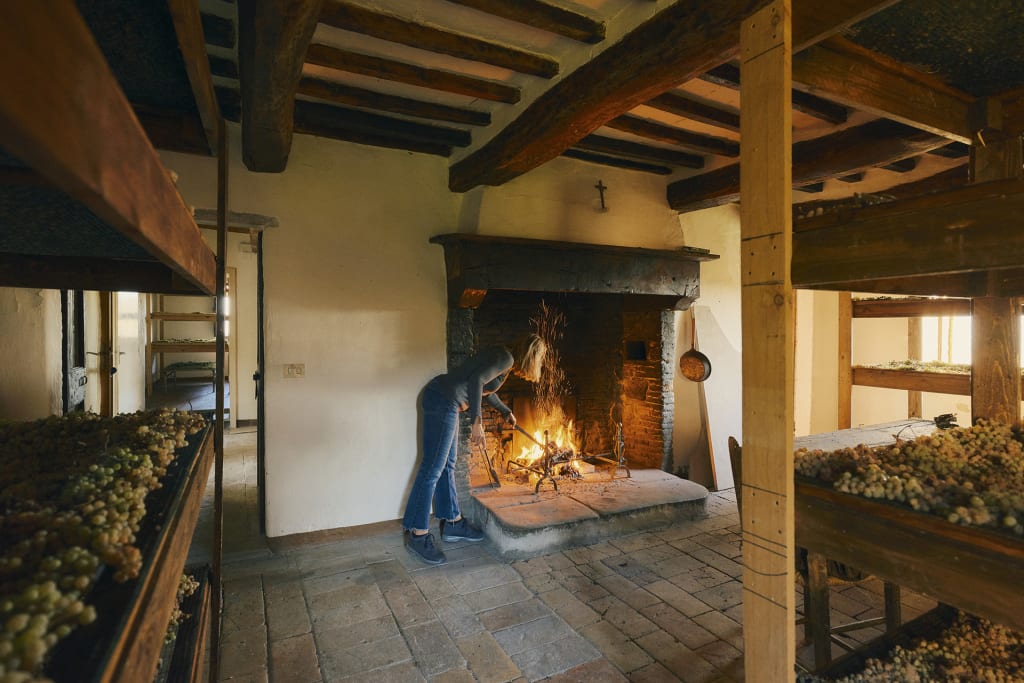
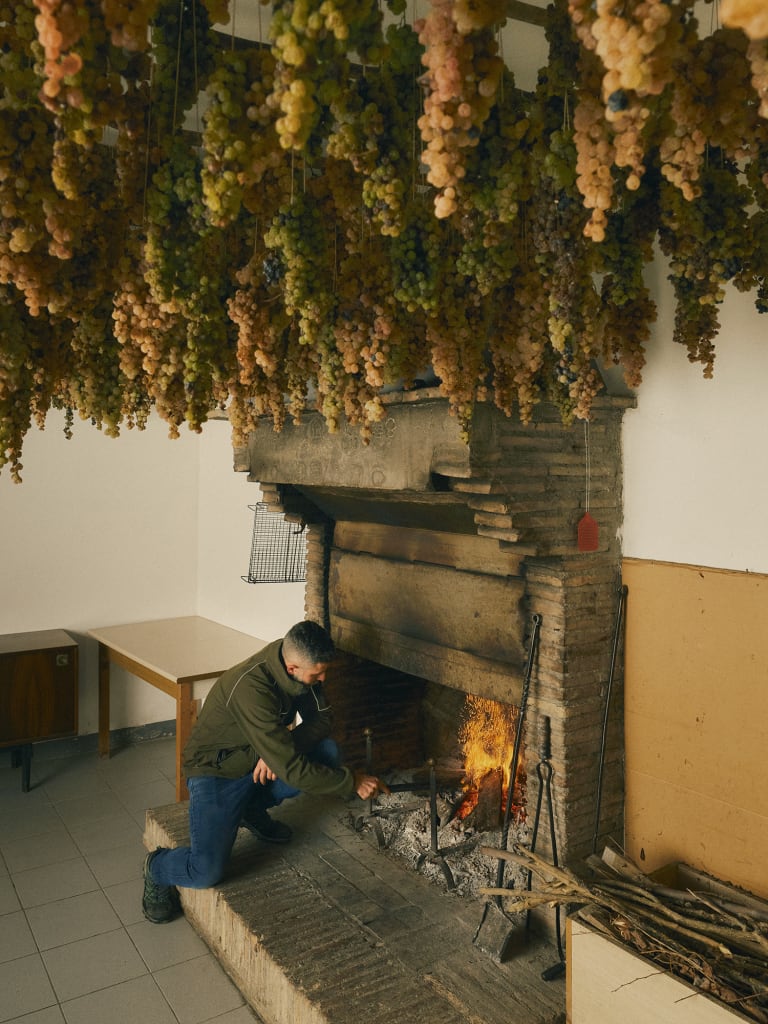
Historically, the farmhouse was the site of all production. With limited space, peasant farmers did not have the luxury of separate rooms for different agricultural processes. They were forced to hang their tobacco leaves and their grape harvests—destined for vinosanto (or "holy wine")—in the same confined spaces, typically beneath the kitchen hearth.
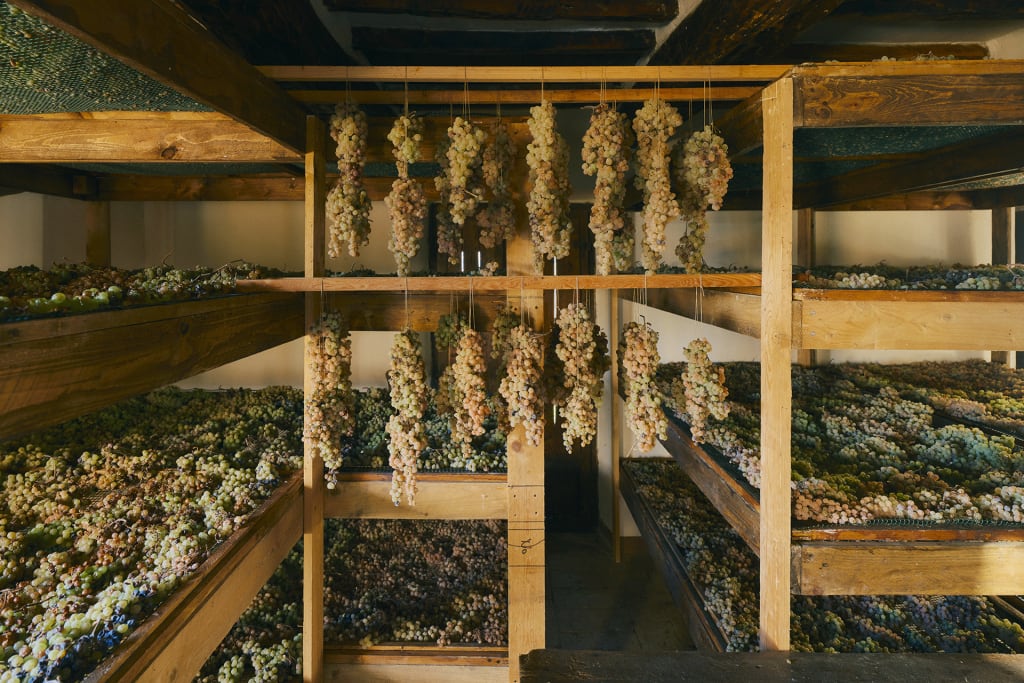
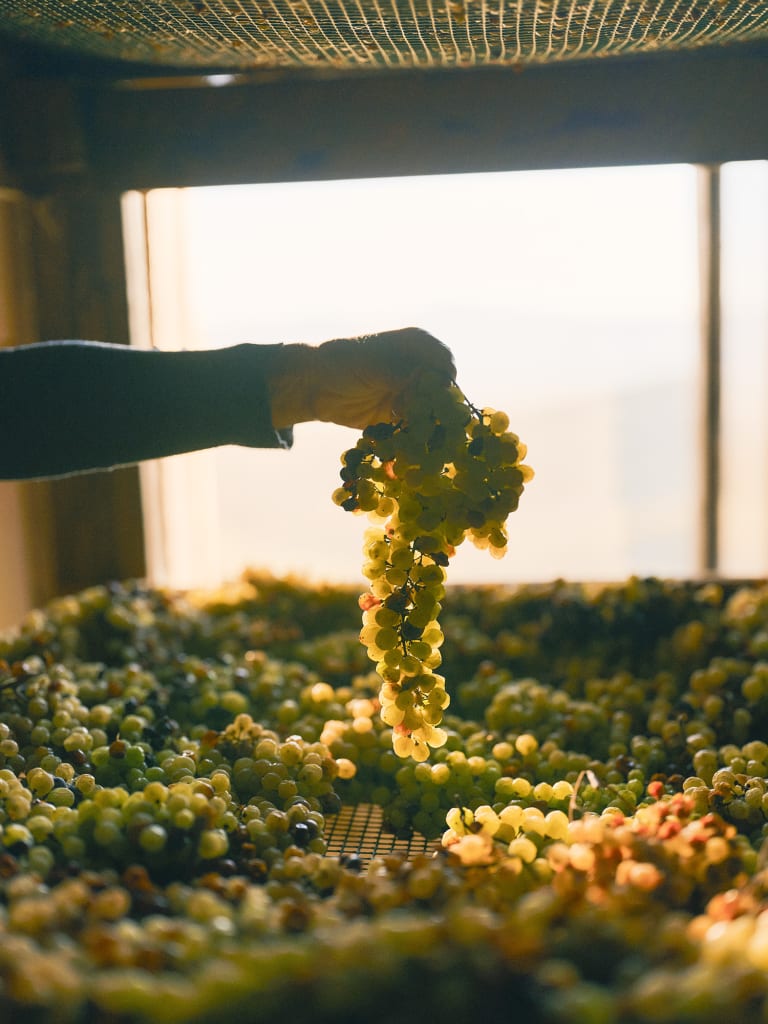
As the fires burned to heat the home and cure the tobacco, the grapes, suspended from the rafters, were enveloped in smoke. This was not a refined viticultural choice; it was a byproduct of survival. The grapes would dry into raisins, absorbing the nuances of the smoke and the arrosto—the savory, charred aromas of kitchen life. The result was a wine that stood in stark contrast to the brighter, cleaner vinosanto produced in neighboring Tuscany. It was an accidental masterpiece of terroir, a flavor profile born of a hearth, a tobacco leaf, and the sheer grit of the peasantry.
The Brink of Extinction and the Slow Food Intervention
By the turn of the 21st century, the craft of vinosanto da uva affumicata had almost entirely vanished. The process was notoriously inefficient: it required months of labor, a mastery of traditional drying techniques, and an adherence to slow, natural aging that rendered it impossible to scale for a global market. It was, quite literally, a dying art.
However, the intervention of the nonprofit organization Slow Food altered the trajectory of this regional legacy. Recognizing that this wine was an essential component of Umbrian identity, the organization began providing institutional support to 11 families in the Tiber Valley. This backing allowed the producers to continue their work despite the lack of commercial viability.
At La Miniera di Galparino, the revival is personal. Filippi and Ceccarelli have been refining their production since 2000, adhering to strict, newly codified standards: the grapes must be naturally influenced by smoke, and the final product must age for at least five years in barrels no larger than 100 liters.
Technical Mastery: The "Mother" of the Wine
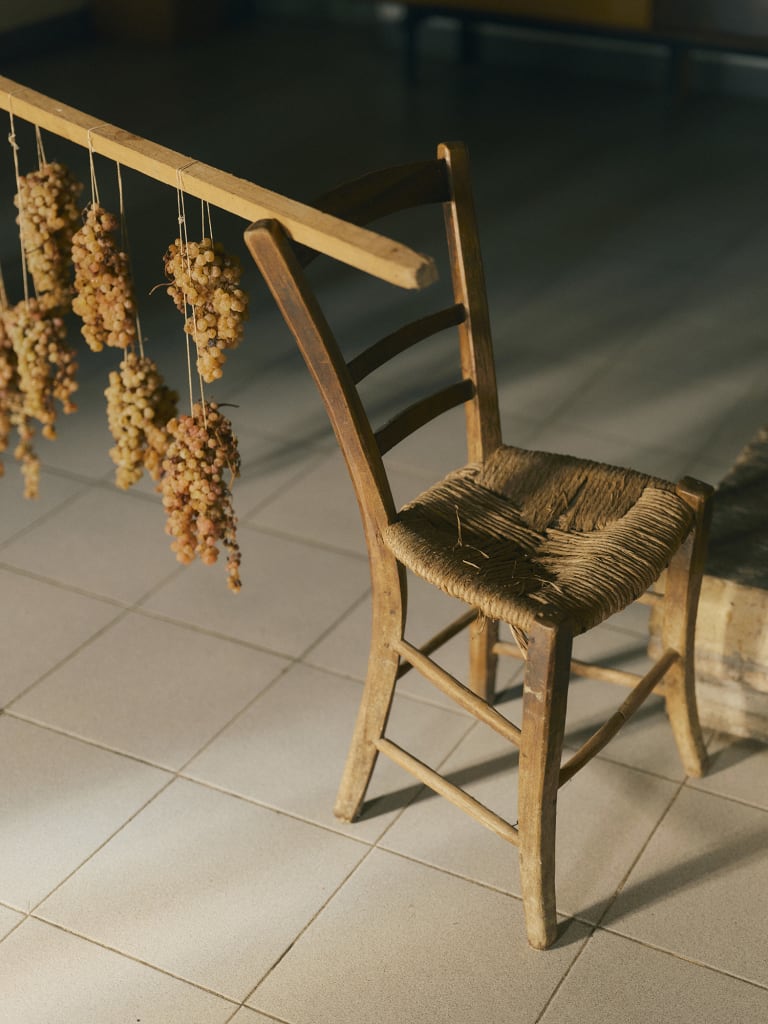
The production process is a lesson in patience. The grapes—primarily Trebbiano Toscano, supplemented by local, rare varieties like Malfiore and Dolciame Bianco—are harvested early. They are then tied with willow branches into coppiole (couples) and hung from the ceilings.
"The mother is everything to vinosanto," Filippi explains. The "mother yeast," a sourdough-like starter passed down through generations, is the soul of the wine. At La Miniera, some of these starters are over 100 years old. After the grapes are pressed in the winter, the must is placed in small barrels with the mother yeast. As the spring sun warms the farmhouse, the yeast awakens, transforming the juice into a rich, mahogany-colored nectar.
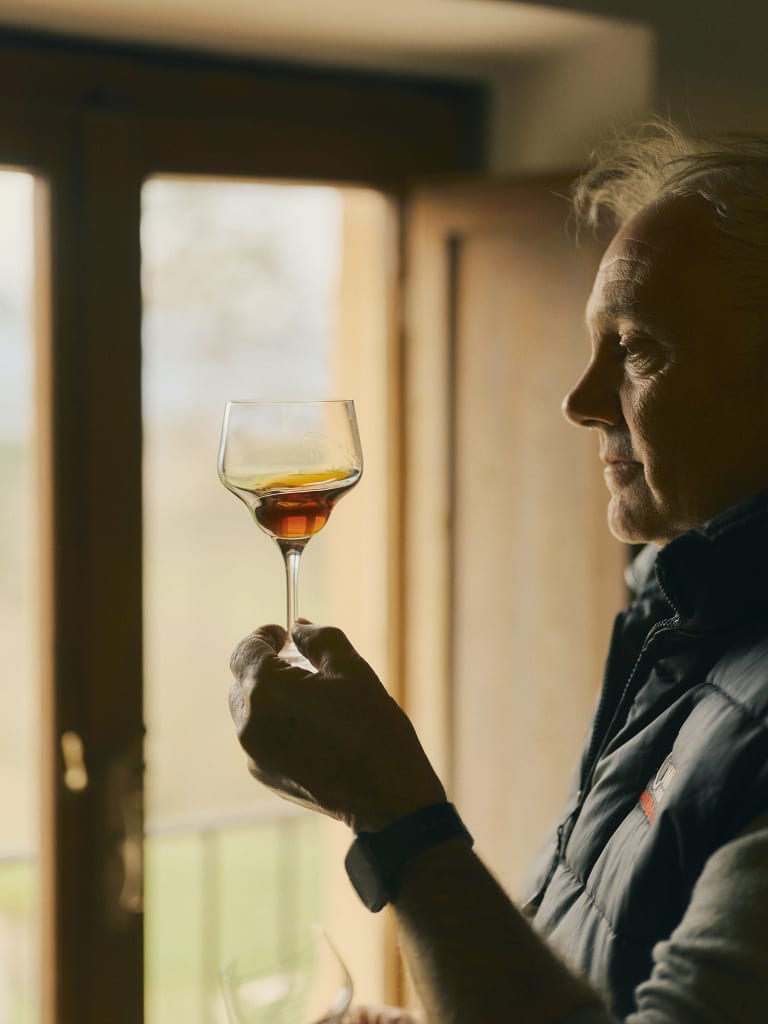
Under the guidance of the family’s son, Nicola, the farm has pushed the aging process to a decade, resulting in a complexity that defies simple description. During a tasting, one finds layers of peat, tobacco, sun-dried fig, honey, and salted caramel. It is an experience so profound that even those who helped craft the vintage are moved to silence.
The Socio-Economic Implications: A Flagship for the Future
The resurgence of this wine is not merely about the preservation of a beverage; it is about the preservation of a way of life. Davide Morganti, another local producer who labels his wine Bubbola—a tribute to the hoopoe bird—highlights the communal aspect of the craft.
"Vinosanto is the identity of this place," Morganti says. In a region where many farmers turned to factory work as agriculture became modernized and consolidated, these winemakers are reclaiming their autonomy. The wine is used as a tool of connection: it is made to celebrate births, to toast weddings, and to reward neighbors for their labor during the harvest.
Sergio Consigli, president of Slow Food Umbria, emphasizes that this product is a localized phenomenon. "This is only here—nowhere else on Earth," he notes. This exclusivity is the foundation upon which they hope to build a new economic model for the valley. By establishing vinosanto da uva affumicata as a protected, high-value regional product, the farmers are transforming the Tiber Valley from a place people "pass through" into a destination defined by its heritage.
Challenges and Sustainability
Despite the success of the Slow Food initiative, the path forward remains precarious. The labor-intensive nature of the work means that production remains minuscule; La Miniera di Galparino produces only about 150 bottles annually. The environmental risks are high, as the grapes must be perfectly spaced to prevent mold during the drying process, and the reliance on traditional methods leaves the producers vulnerable to climate fluctuations.
Yet, the family is undeterred. They are actively working with the University of Perugia to preserve the genetic diversity of rare grapes like Malfiore, which they found growing wild on their property. This scientific partnership, combined with the raw, hands-on techniques of the past, suggests a sustainable future where tradition and innovation coexist.
A Legacy of Hospitality
The true implication of this project lies in its philosophy of "valore"—value. In a global economy that prioritizes optimization and speed, the Umbrian farmers are betting on the opposite: the inherent value of the slow, the artisanal, and the deeply human.
As Chiara Filippi reflects on their journey from struggling farmers to curators of a vanishing history, she emphasizes that the wine was born from a desire to offer guests something "precious." That instinct—the drive to turn humble, local ingredients into a gift of high worth—is the hallmark of the region’s hospitality.
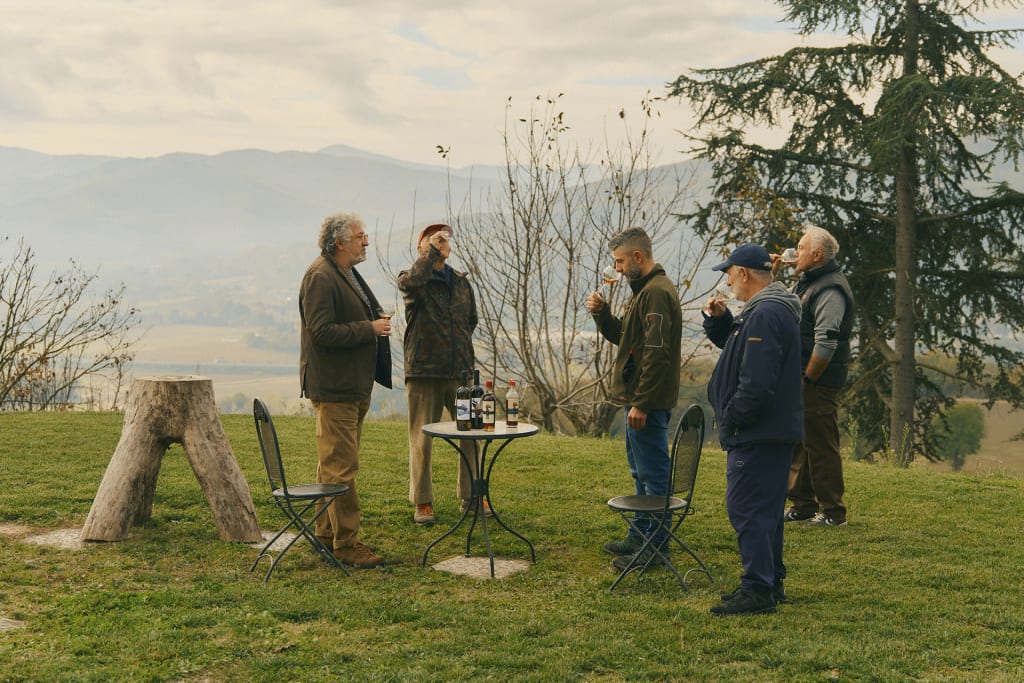
The vinosanto is no longer just a "poor person’s wine" made in the kitchen shadows; it has become a symbol of resilience. Whether sipped from a specialized dessert glass or shared in the rustic warmth of an old stable, the wine carries the flavor of the seasons and the ghosts of the past. It serves as a reminder that even in an optimized world, there is still space for things that cannot be scaled, only felt.
As the sun sets over the tobacco fields of Città di Castello, casting long shadows over the landscape, the legacy of the vinosanto feels secure. It is a testament to the fact that when a community unites to protect its identity, it does more than preserve a craft—it secures its place in the future.