The Mycelium Frontier: A Deep Dive into Home Mushroom Cultivation
Mushroom foraging is a pursuit that balances the thrill of the hunt with the meditative silence of the forest. Yet, for the home enthusiast, the reality is often less idyllic. Experienced foragers know the frustration of finding a pristine patch of chanterelles only to see them claimed by slugs or competing pickers. More critically, the risk of misidentification—collecting a toxic lookalike—poses a genuine health hazard that turns a peaceful hobby into a dangerous gamble.
The solution, for many, is to bring the forest to the living room. Growing mushrooms at home—whether it’s gourmet shiitakes, delicate lion’s mane, or earthy morels—promises a level of control and safety that wild harvesting cannot match. However, as any aspiring mycologist quickly discovers, fungal cultivation is an exacting science. It requires balancing the "Holy Trinity" of mushroom growth: specific spores, a viable food source (substrate), and a strictly regulated, humid environment.
Unlike traditional vegetable gardening, which relies on sunlight and soil, fungi are highly sensitive to contamination, temperature fluctuations, and air quality. Many coveted species, such as porcini, share complex symbiotic relationships with tree roots that are nearly impossible to replicate in a suburban backyard.
For this report, I spent the last year documenting five distinct attempts to cultivate mushrooms in a typical home environment. Balancing a full-time job and parenting duties, I tested various methods ranging from inoculated logs to automated indoor chambers. The results were a mix of triumph and disaster, offering a roadmap for anyone looking to enter the world of home mycology.
The Biological Constraints: Why Fungi Are Fickle
To understand the challenges of home cultivation, one must respect the biology of the organism. Fungi are not plants; they do not photosynthesize. Instead, they digest their environment. The "mushroom" we see is merely the fruit of a much larger, underground organism known as the mycelium.
To thrive, the mycelium needs a substrate—such as straw, wood chips, or logs—that provides specific nutrients. If the environment is too dry, the mycelium goes dormant; if it is too wet or lacks air circulation, mold and bacteria take hold, outcompeting the desired species. Achieving the perfect balance of carbon dioxide (CO2) and oxygen is the greatest hurdle for the home grower, as mushrooms "breathe" in a way that necessitates constant, gentle environmental management.

Chronology of a Failed (and Successful) Experiment
My journey into mycology was marked by trial and error. Over twelve months, I experimented with five distinct methodologies:
- The Inoculated Log (Spring/Summer): I attempted to grow shiitakes on a pre-inoculated log. Despite following instructions to soak the log, progress remained stalled for months.
- The Spray-and-Grow Box (Early Year): Using an oyster mushroom kit, I found near-instant success, marking my first victory.
- Garden Bed Spawn (Mid-Summer): I attempted to introduce wine cap spawn into my garden mulch. This was thwarted by local wildlife, specifically squirrels with a taste for mycelium.
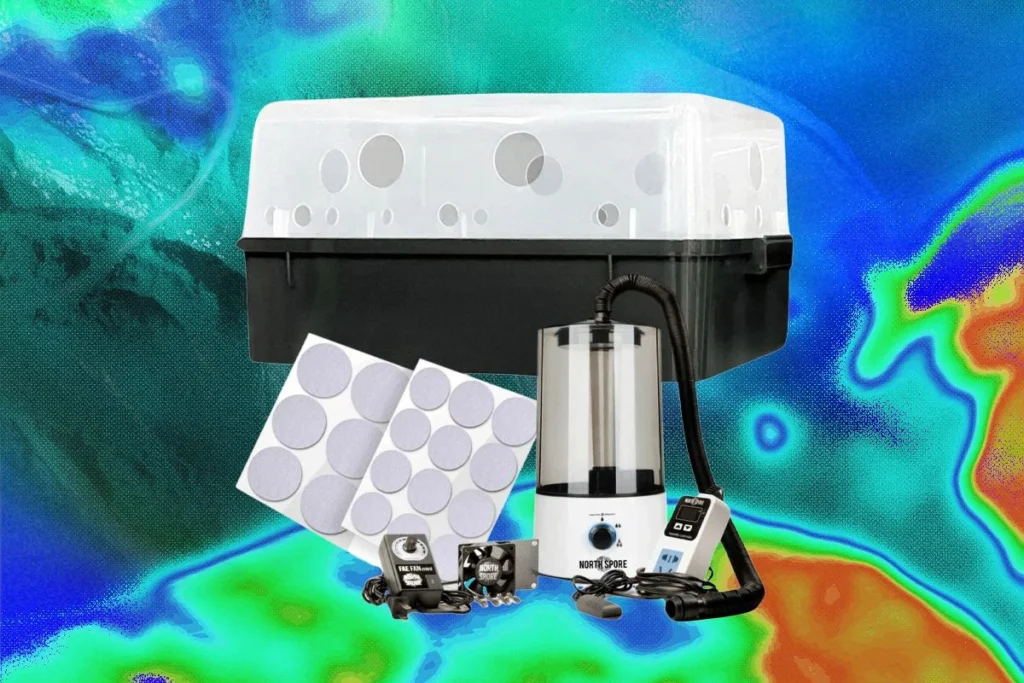
- The Monotub System (Late Year): I upgraded to an automated "Boomr Bin" from North Spore. This was the turning point in my cultivation, yielding multiple harvests of lion’s mane and oyster mushrooms.
- The Bucket Tek (Final Phase): Inspired by industrial methods, I tried the "bucket technique." Despite my efforts, the project failed due to mold colonization, likely due to insufficient pasteurization of the substrate.
Analysis of Cultivation Methods
Method 1: The Mushroom Log
The mushroom log is the most traditional method, mimicking the natural life cycle of fungi in a forest. These logs are typically hardwood, drilled and plugged with fungal spawn, and sealed with wax to prevent moisture loss.
The Experience: My test of a Williams Sonoma Shiitake Log highlighted the patience required for this hobby. These "younger" logs are designed to fruit slowly. While aesthetically pleasing as a kitchen centerpiece, the reality involves constant vigilance against opportunistic green molds. My log sat on a dining room table for months with no pinning, serving as a reminder that nature cannot be rushed, even when it is indoors.
Method 2: The Spray-and-Grow Box
For beginners, this is the gold standard. These kits arrive as a "fruiting block"—a dense brick of mycelium already fully colonized.
The Experience: Back to the Roots and North Spore provide kits that are remarkably reliable. The process is simple: hydrate, mist, and wait. The only significant complication I encountered was the arrival of fungus gnats, a common pest in indoor environments. My advice for future growers: treat the block with non-toxic preventative measures immediately, rather than waiting for an infestation to appear.
Method 3: Spawn in the Garden
Introducing mushrooms to a garden bed can serve a dual purpose: producing food and breaking down organic mulch to improve soil health. Wine caps are the premier species for this, as they are aggressive colonizers.

The Experience: This method is high-risk in suburban areas. My experience was hampered by the local squirrel population. In hindsight, protecting the spawn with hardware cloth or a weighted frame is essential if you share your garden with curious wildlife.
Method 4: The Monotub System
This is the "high-tech" approach. A monotub is a modified storage container that controls humidity and airflow. Automated versions include humidifiers and fans that mimic the ideal forest floor climate.
The Experience: This was, without question, the most successful method. The ability to monitor CO2 and humidity levels turned my bathroom into a productive micro-farm. I successfully cycled through four rounds of oyster mushrooms and three of lion’s mane. While the initial setup cost is higher, the yield justifies the investment for those who are serious about regular harvests.
Method 5: The "Bucket Tek"
The bucket technique is essentially a scaled-down version of professional mushroom farming. It involves filling a perforated bucket with layers of straw and spawn.
The Experience: My failure here was a classic case of improper preparation. The straw I used required rigorous pasteurization—boiling it at 180°F for an hour—to eliminate competing bacteria. Because I attempted a shortcut, I created a haven for mold. This method requires the most labor, but it is also the most rewarding in terms of volume if executed correctly.
Supporting Data and Best Practices
Throughout these experiments, I consulted with experts and utilized various guides. The data is clear: moisture management is the primary failure point for 80% of home growers.

- Sterility is Key: The environment must be kept clean. Even minor traces of mold spores in the air can ruin a bucket or a log.
- Substrate Choice: Different mushrooms demand different foods. Oyster mushrooms are "trash eaters"—they grow on almost anything, including coffee grounds and cardboard. Lion’s mane and shiitake, however, require specific wood-based substrates to produce high-quality yields.
- Environmental Control: A hygrometer (to measure humidity) is non-negotiable. Mushrooms need humidity levels between 80% and 90% during their fruiting stage.
Official Perspectives and Industry Insights
Industry leaders, such as the team at North Spore, emphasize that failure is part of the process. Matt McInnis, a cofounder, notes that the "Bucket Tek" grew out of a need for simplicity and scalability. Their internal data suggests that while kits are the best entry point, the move toward automated systems like the "Boomr Bin" is driven by the consumer’s desire for consistent, year-round production rather than a one-off experiment.
Furthermore, mycologists remind us that there is a distinction between "functional" mushrooms (medicinal supplements) and culinary mushrooms. The kits sold by reputable companies are lab-grown to ensure that the genetics are pure and free from contamination. Purchasing spawn from a trusted vendor is the most important step in ensuring a safe harvest.
Implications for the Future of Home Gardening
The rise of home mycology has significant implications for food sustainability. As urban dwellers seek to minimize their grocery footprint, mushrooms offer a unique advantage: they can be grown in dark, unused corners of an apartment or house, requiring very little square footage compared to a traditional vegetable garden.
Furthermore, the environmental benefits are tangible. The "spent" substrate from a mushroom kit—the leftover block of mycelium—is a goldmine for compost. It adds nitrogen and beneficial biology to the soil, turning a finished food project into an asset for the garden.
For those considering the leap, my recommendation is simple: start with a pre-colonized oyster mushroom kit to build confidence. Once you understand the sensory cues—the way a healthy mushroom smells, how the pins form, and when to harvest—you can transition to more complex methods.
Growing mushrooms is not just about the final meal. It is a lesson in patience, an exercise in biology, and, at its best, a way to reclaim a small, wild piece of the natural world in the comfort of your own home. Whether you end up with a bumper crop or a tub of mold, the process of observing the mycelial network is a fascinating window into one of the most important, and often overlooked, kingdoms of life on Earth.