The Unsung Hero: How Oatmeal is Revolutionizing Diabetes Management, From Historical ‘Mystery’ to Modern Science

FOR IMMEDIATE RELEASE
[City, State] – [Date] – Long before the advent of insulin, a simple, humble grain played a surprisingly pivotal role in prolonging the lives of individuals battling diabetes. The "oatmeal diet," championed by early 20th-century physicians, was once considered a medical marvel, an "unsolved mystery" that offered a lifeline in a desperate era. Today, a century after its initial impact and the subsequent overshadowing by pharmaceutical breakthroughs, modern science is affirming oatmeal’s profound and rapid benefits, positioning it as a powerful, evidence-based tool in contemporary diabetes management. This re-evaluation underscores a significant paradigm shift in how we understand and combat a disease that affects millions globally.
Unearthing the Past: Oatmeal’s Historic Role in Diabetes Care
The story of oatmeal in diabetes care is a remarkable journey from anecdotal wonder to scientifically validated intervention. In an era when a diabetes diagnosis often meant a grim prognosis, dietary restrictions were the primary, albeit often inadequate, line of defense. Patients faced severe carbohydrate and calorie restrictions, leading to significant weight loss and often a diminished quality of life.
It was against this backdrop that the German physician Carl von Noorden published groundbreaking findings in 1903. His research detailed an "oatmeal diet" that appeared to dramatically improve the condition of his diabetic patients. Initially met with considerable skepticism from a medical community rooted in traditional dietary dogma, the sheer weight of accumulating evidence soon began to sway opinion. The diet, which strictly excluded animal protein, seemed to achieve results that defied the conventional wisdom of the time.
One of the most influential figures to embrace von Noorden’s approach was Dr. James B. Herrick, an acclaimed American physician. Though initially doubtful, Herrick’s clinical experience with the oatmeal diet left him "astonished" by the outcomes. His advocacy contributed significantly to its growing acceptance, culminating in a striking proclamation in 1909: "no case of juvenile or adolescent diabetes should be deprived of the benefits of the oatmeal cure." This statement highlights the profound impact and hope that oatmeal offered to young patients facing a particularly aggressive form of the disease.
Another titan of diabetes care, Dr. Elliott Joslin, founder of the world’s oldest and largest diabetes clinic, also became a staunch proponent. Joslin famously described the effects of oatmeal as "sometimes magical," referring to the "oatmeal cure" as "one of the greatest puzzles in diabetes." While the precise mechanisms remained a mystery to them, these pioneering clinicians did identify a critical clue: the strict exclusion of animal protein was essential, as it seemed to "annihilate the favorable action of oatmeal-type diets." This observation, made intuitively over a century ago, now finds robust validation in modern nutritional science.
The discovery of insulin in 1921 by Banting and Best revolutionized diabetes treatment, transforming it from a fatal condition into a manageable one. While this monumental breakthrough saved countless lives, it also, perhaps understandably, led to a decline in the focus on intensive dietary therapies like the oatmeal diet. For decades, the emphasis shifted towards insulin therapy and pharmaceutical management, with diet often relegated to a secondary, less explored role. However, as the prevalence of type 2 diabetes has surged globally, and with a deeper understanding of insulin resistance, the medical community has begun to revisit the profound impact of dietary interventions, including the remarkable benefits of whole grains like oats.
The Modern Validation: Why Oatmeal Works
More than a century after its initial "magical" reputation, contemporary research has peeled back the layers of the "unsolved mystery" surrounding oatmeal’s efficacy. We now understand that the historical observation regarding animal protein was remarkably prescient. Modern science unequivocally demonstrates that animal protein intake can intensify insulin resistance – the underlying cause of prediabetes and type 2 diabetes. Conversely, plant-based foods, abundant in whole grains like oats, are known to enhance insulin sensitivity, which is the exact opposite and highly desirable metabolic state.
Current Understanding of Oatmeal’s Benefits:
- Improved Glycemic Control: Extensive research, including more than a dozen randomized controlled trials, confirms that higher consumption of whole grains, particularly oats, is consistently associated with a lower risk of developing diabetes. These trials have also shown that oats significantly improve both short-term (post-meal glucose) and long-term (HbA1c) blood sugar control in individuals already living with diabetes.
- Cholesterol Reduction: Beyond blood sugar, oats are well-documented for their ability to lower cholesterol levels, particularly LDL ("bad") cholesterol, contributing to overall cardiovascular health, which is a critical concern for people with diabetes.
- The Power of Beta-Glucan: The primary active component believed to be responsible for many of these benefits is a fermentable fiber called beta-glucan. This soluble fiber creates a viscous gel in the digestive tract, which slows down gastric emptying and the absorption of glucose, leading to a more gradual and sustained release of sugars into the bloodstream. This mechanism is crucial for preventing sharp blood sugar spikes.
- Microbiome Manipulation: One of the most exciting areas of research points to oatmeal’s "microbiome-manipulating ability." Beta-glucan acts as a potent prebiotic, selectively nourishing beneficial gut bacteria such such as Lactobacillus and Bifidobacteria. This leads to a healthier, more diverse gut microbiota, which in turn has profound systemic effects.
The Gut-Diabetes Connection: Fiber’s Critical Role
The remarkable benefits of oat fiber extend deep into our physiology, particularly through its interaction with the gut microbiome. The human gut harbors trillions of bacteria, collectively known as the gut microbiota, which play a pivotal role in digestion, immunity, and even metabolic health.
Mechanism of Action:

- Short-Chain Fatty Acid (SCFA) Production: Our beneficial gut flora thrives on dietary fiber. When these bacteria ferment fibers like beta-glucan, they produce short-chain fatty acids (SCFAs) such as butyrate, acetate, and propionate. These SCFAs are not just waste products; they are powerful signaling molecules with widespread anti-inflammatory effects throughout the body.
- Enhanced Insulin Sensitivity: SCFAs, particularly butyrate, have been shown to improve insulin sensitivity in peripheral tissues and the liver. They can also enhance the integrity of the gut barrier, reducing systemic inflammation, a known contributor to insulin resistance and type 2 diabetes progression.
- Alleviating Type 2 Diabetes: Dozens of randomized controlled trials have specifically demonstrated that the types of fiber found in oats and beans can significantly improve long-term blood sugar control in people with diabetes. This improvement is directly linked to the gut bacteria selectively promoted by dietary fiber intake, which actively help to alleviate the underlying metabolic dysfunctions associated with type 2 diabetes.
- Prebiotic Effect: Oat fiber acts as a true prebiotic, providing the ideal nourishment for the growth and proliferation of beneficial bacterial strains. This shift towards a healthier gut microbiome environment is a cornerstone of oatmeal’s therapeutic effect.
Thus, the historical "unsolved mystery" of oatmeal’s efficacy can now be understood through a sophisticated interplay of dietary fiber, gut microbiota, and systemic metabolic regulation. The combination of absent animal protein (which intensifies insulin resistance), absent animal fat (which can also contribute to insulin resistance and inflammation), and an abundance of prebiotic fiber makes oatmeal a uniquely powerful dietary intervention.
Rapid and Sustained Results: The Clinical Evidence
The clinical evidence supporting the oatmeal diet is compelling, demonstrating not only significant improvements but also surprisingly rapid and lasting effects.
Key Findings from Randomized Controlled Trials:
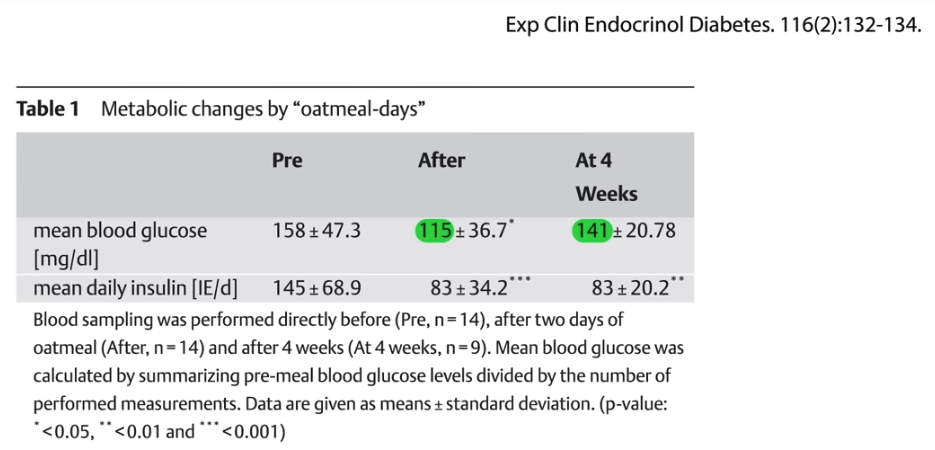
- Immediate Impact on Insulin Needs: Several studies have indicated that even a few days of consuming an oatmeal-rich diet can have beneficial effects that persist for about a month afterward. One randomized, controlled, crossover trial meticulously compared an oatmeal diet to a hypocaloric (calorie-restricted) diabetic diet. The results were striking:
- Insulin needs dropped by approximately 40% in just two days in the oatmeal group.
- This reduction was significantly greater than that observed with calorie restriction alone.
- Crucially, a measure of long-term blood sugar control (likely HbA1c or similar markers) taken four weeks later still reflected the sustained benefit.
- Lasting Benefits Beyond the Intervention: Other recent studies corroborate these findings. A mere two-day oatmeal intervention significantly reduced the required amount of insulin and improved blood sugar levels, with beneficial effects noted for up to four weeks after participants resumed their regular diets.
- Near Normalization of Blood Sugars: Patients with uncontrolled type 2 diabetes who underwent the two-day oatmeal diet experienced a 40% reduction in their insulin dose, accompanied by an almost normalization of their average blood sugars. The fact that these benefits persisted for weeks after the intervention concluded, even when participants returned to their usual eating patterns, highlights the profound and lasting metabolic reprogramming initiated by the oatmeal diet. The provided chart visually represents this dramatic reduction in blood sugar and insulin dosage immediately after the two-day diet and its persistence four weeks later.
Beyond short-term interventions, longer-term dietary changes also yield substantial results. When individuals are placed on a diet rich in oats, beans, fruits, vegetables, and nuts, the population of their gut’s "fiber-feeders" — the beneficial bacteria that produce SCFAs — dramatically increases. Within just one month, fasting diabetic blood sugars can drop by approximately 25%. Furthermore, the studies show a direct correlation: the more fiber-feeders individuals fostered, the better their blood sugar control. Participants exhibiting greater diversity and abundance of these fiber-promoted SCFA producers experienced superior improvements in their hemoglobin A1c (HbA1c) levels, a crucial indicator of average blood sugar control over the preceding two to three months. The second chart illustrates how high-fiber diets effectively alter the gut microbiome, leading to improved blood sugars in those with type 2 diabetes.
These findings collectively underscore that dietary interventions, particularly those emphasizing whole grains like oats and other plant-based foods, are not just supplementary but can be foundational in the management of type 2 diabetes, capable of producing rapid, significant, and sustained improvements in metabolic health.
Official Responses and the Need for Medical Supervision
The profound effectiveness of oatmeal in managing blood sugar levels necessitates a careful and collaborative approach from the medical community. While the historical skepticism of the early 20th century has largely given way to an understanding of whole grains’ benefits, the sheer potency of the "oatmeal diet" demands caution and close medical oversight.
Key Considerations for Healthcare Providers and Patients:
- Risk of Overmedication: The most significant "downside" of an oatmeal-rich diet is its potential to work "too well." If a patient on blood sugar-lowering medications (insulin or oral hypoglycemics) embarks on an oatmeal intervention without medical supervision, they risk becoming dangerously overmedicated. This could lead to hypoglycemia (low blood sugar), which can cause symptoms ranging from dizziness and confusion to seizures and loss of consciousness.
- Rapid Deprescription: Physicians must be prepared to "rapidly deprescribe" or significantly adjust a patient’s blood sugar medications as soon as the oatmeal diet begins to take effect. This requires close monitoring of blood glucose levels, potentially multiple times a day, to ensure patient safety.
- Patient Reporting: Oatmeal interventions should not be undertaken by patients who may have difficulties in recognizing or reporting symptoms of low blood sugar. This could include individuals with cognitive impairments, those living alone without regular check-ins, or those with certain medical conditions that mask hypoglycemia symptoms.
- Integration into Clinical Practice: Leading medical organizations, such as the American Diabetes Association (ADA) and the European Association for the Study of Diabetes (EASD), increasingly emphasize the role of diet and lifestyle modifications in diabetes management. While specific "oatmeal diets" may not be explicit in every guideline, the recommendation for high-fiber, whole-grain, and plant-forward eating patterns aligns perfectly with the principles that make oatmeal so effective. The evidence presented here reinforces the need for healthcare providers to actively counsel patients on the potential of such dietary changes and to be proactive in managing medication adjustments.
- Role of Registered Dietitians: Registered dietitians and nutritionists play a crucial role in guiding patients through these dietary changes safely and effectively, working in tandem with physicians to ensure optimal outcomes and prevent adverse events.
The overwhelming evidence points to oatmeal as a potent therapeutic food, but its integration into a patient’s treatment plan must be a carefully managed process under professional medical guidance.
Navigating Oatmeal Varieties: The Glycemic Index Explained
Not all oats are created equal when it comes to their impact on blood sugar. The processing methods significantly alter the structure of the grain, which in turn affects its glycemic index (GI) – a measure of how quickly a food raises blood glucose levels. For individuals managing diabetes, choosing lower-GI options is generally preferable.
Understanding Oat Processing and Glycemic Index:
- Whole Grains vs. Intact Whole Grains: The general rule is: whole grains are good, but intact whole grains are better. The less processed the grain, the lower its GI and the more beneficial its impact on blood sugar control.
- Oat Groats (The Wholiest): These are the oat kernels with only their inedible outer husks removed. They are the most intact form of oats, requiring longer cooking times but offering the lowest GI.
- Steel-Cut Oats (Pinhead/Irish Oats): Oat groats are sliced into two to four pieces to make steel-cut oats. This minimal processing preserves much of the grain’s integrity. Steel-cut oats are considered a low-glycemic-index food, typically averaging under 55 on the GI scale. They cook slower than rolled oats but provide sustained energy release.
- Old-Fashioned Rolled Oats: Oat groats are steamed and then flattened into flakes. This process makes them quicker to cook than steel-cut oats. Old-fashioned rolled oats generally have a glycemic index of 55, placing them at the upper end of the low-GI category.
- Instant Oats: These oats are steamed longer and rolled even more thinly, resulting in a much smaller surface area and quicker cooking time. Instant oats score around 79 on the GI scale, classifying them as a high-glycemic-index food. While still better than some highly processed breakfast cereals (which can reach into the 80s or 90s), they will cause a more rapid rise in blood sugar compared to their less processed counterparts.
For optimal blood sugar management, prioritizing oat groats or steel-cut oats is recommended. If time is a constraint, old-fashioned rolled oats are a good compromise. Instant oats should be consumed with caution, and ideally paired with other fiber-rich foods, proteins, or healthy fats to mitigate their glycemic impact.
Jazzing Up Oatmeal: Culinary Versatility for Health
Beyond its therapeutic benefits, oatmeal is a versatile and delicious foundation for a healthy diet. Its neutral flavor profile makes it amenable to a wide array of additions, transforming it from a simple breakfast into a culinary delight.
Building Your BROL Base:
Many healthy eating advocates, including Dr. Michael Greger, promote the concept of a "BROL bowl" – an acronym for Barley, Rye, Oats, and Legumes. While the core article focuses on oats, a BROL base can be expanded to include various whole grains and beans, further boosting fiber and nutrient intake. For a simple oat-based start, consider a blend of different oat types (e.g., steel-cut and rolled) for varied texture and sustained energy.
Sweet Sensations:
For those with a sweet tooth, oatmeal can be transformed into a dessert-like experience without compromising health goals. A popular option is a "chocolate-covered-cherry sensation," incorporating:
- Frozen Dark Red Cherries: Packed with antioxidants and natural sweetness.
- Cocoa Powder: For a rich chocolate flavor and additional antioxidants.
- Dates: Natural sweeteners and a source of fiber.
- Walnuts or Pumpkin Seeds: Healthy fats, protein, and crunch.
Other sweet additions could include berries, sliced banana, a sprinkle of cinnamon, a dollop of nut butter, or a touch of maple syrup (in moderation).
Savory Explorations:
For those who prefer a savory start to their day or are looking for a unique lunch or dinner option, oatmeal can be surprisingly adaptable. Think beyond breakfast cereals and explore the world of "savory oatmeal."
- Sautéed Greens: A simple yet nutritious addition.
- Mushrooms: Earthy flavor and umami.
- Herbs: Fresh or dried herbs like rosemary, thyme, or cilantro.
- Curry Powder: For an aromatic and warming dish.
- Roasted Vegetables: Bell peppers, onions, zucchini, or sweet potatoes.
- Spices: Cumin, turmeric, black pepper, or a pinch of chili flakes.
- Protein Boost: A fried egg, tofu scramble, or a handful of lentils can complete a savory oatmeal meal.
The culinary potential of oatmeal is vast, allowing individuals to enjoy its incredible health benefits in diverse and exciting ways, making it a sustainable and enjoyable part of a diabetes-friendly diet.
Implications and the Future of Diabetes Care
The story of oatmeal in diabetes management is more than just a historical anecdote; it is a powerful illustration of the enduring wisdom of whole foods and the often-underestimated capacity of diet to transform health. The journey from "unsolved mystery" to scientifically validated intervention highlights several critical implications for modern healthcare:
- Empowerment of Dietary Interventions: The evidence for oatmeal, and by extension, other whole plant foods, strongly reinforces the notion that diet is not merely a supportive measure but a primary, potent therapeutic tool in diabetes care. This empowers patients to take a more active role in managing their condition through everyday food choices.
- Reduced Reliance on Pharmaceuticals: The potential for significant insulin dose reduction and even medication deprescription offers hope for reducing the pharmaceutical burden on patients, potentially leading to fewer side effects and improved quality of life.
- Cost-Effectiveness: Dietary interventions, particularly those focusing on affordable whole grains like oats, offer a cost-effective strategy for managing a chronic disease that places an immense economic burden on individuals and healthcare systems worldwide.
- Public Health Impact: Widespread adoption of dietary patterns rich in whole grains and plant-based foods could have profound public health implications, potentially stemming the tide of the global diabetes epidemic and reducing associated comorbidities like heart disease.
- Revisiting "Food as Medicine": The rediscovery of oatmeal’s efficacy serves as a potent reminder for the medical community to look beyond pharmacology and fully integrate evidence-based nutrition into standard care protocols. It underscores the critical need for continued research into the precise mechanisms of food components and their interactions with human physiology.
- Ethical Considerations: The powerful effects of diet necessitate a renewed focus on comprehensive patient education and careful medical supervision. Healthcare professionals must be adequately trained to guide patients through dietary changes and manage medication adjustments responsibly and ethically.
In conclusion, oatmeal, once a desperate measure and then a forgotten secret, has re-emerged as a shining example of how foundational nutrition can dramatically impact chronic disease. Its journey from a turn-of-the-century "magic" to a modern scientific marvel offers not just a breakfast solution, but a compelling narrative for the future of diabetes prevention and management: a future where the simple, whole foods we eat are recognized for their extraordinary power to heal.