The Stainless Steel Revolution: Why Your Next Water Filter Might Be a Gravity-Fed Tank
For years, the rise of the industrial-style, stainless steel, gravity-fed water filter felt like a niche obsession confined to the overlapping Venn diagram of "doomsday preppers" and high-end wellness enthusiasts. Brands like British Berkefeld and Berkey occupied a curious space in the American kitchen: they were functional appliances, yes, but they were also status symbols—stately, mirror-polished monoliths that broadcast a specific set of values regarding self-sufficiency and health.
For a long time, I viewed these units with a healthy dose of skepticism. Having spent over a year rigorously testing everything from reverse-osmosis under-sink systems to standard plastic pitchers, I struggled to see the value proposition of a two-foot-tall tank that demanded counter space and slow-drip filtration. However, the conversation shifted dramatically with the emergence of a more urgent concern: microplastics.
The Microplastic Catalyst: A Shift in Filtration Priorities
The pervasive nature of microplastics has fundamentally changed how we look at the water we consume. Recent research indicates that individuals who rely on bottled water ingest tens of thousands of extra microplastic particles annually compared to those who drink tap water. For the health-conscious, the irony became impossible to ignore: many of the plastic pitchers designed to clean our water were, themselves, made of plastics that could degrade over time.
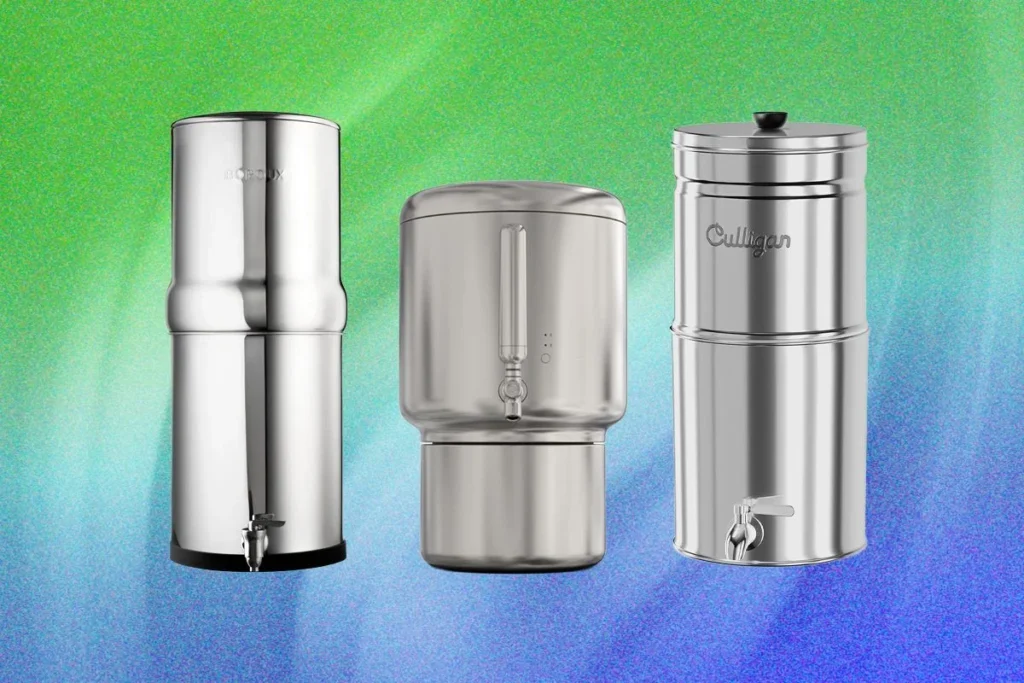
This realization paved the way for a new generation of gravity-fed filter systems. These manufacturers have prioritized the elimination of plastic contact, utilizing stainless steel housings and high-tech filtration media to ensure that the water you drink never touches a synthetic polymer. Since March, I have been stress-testing these new-school systems—specifically the Boroux Legacy, the Culligan MaxClear, and the Rorra Countertop system—to determine which truly deserves a place on your kitchen counter.
A Chronology of the Gravity-Fed Market
The modern gravity-fed category owes its existence to the legacy of British Berkefeld, a pioneer in the space that dates back to the 19th century. In 1998, a distributor began marketing a modified version of this technology under the name Berkey. These units became the gold standard for off-grid filtration.
However, the market was disrupted in 2023 when the Environmental Protection Agency (EPA) issued a "stop-sale" order on Berkey’s classic black activated-carbon filters. The EPA argued that the company’s marketing claims regarding the destruction of bacteria and viruses classified the filters as "unregulated pesticides." While Berkey has fought this order in court, the vacuum it created allowed agile, new companies to enter the fray.
Boroux, for example, was founded by a former Berkey distributor who saw their livelihood vanish overnight. They responded by engineering systems that provided similar filtration performance while meticulously aligning their marketing with regulatory requirements. They emphasize the longevity of their carbon media rather than making unsubstantiated claims about pathogen destruction in pond water. Simultaneously, legacy players like Culligan have leveraged their massive research and development budgets to enter the gravity space, applying 90 years of water treatment expertise to the countertop market.
Supporting Data: Performance vs. Convenience
To evaluate these systems, I looked beyond the marketing brochures. My testing protocol included:
- Total Chlorine/Chloramine Reduction: Measuring the chemical profile of treated water.
- Plastic Contact Points: Assessing the integrity of the housing and internal seals.
- NSF/ANSI Compliance: Examining the rigorousness of third-party laboratory certifications.
- Maintenance Effort: Calculating the "cost per gallon" and frequency of filter priming.
The Contenders
1. Boroux Legacy (The All-Rounder):
The Boroux Legacy system is my top recommendation for most households. It strikes a balance between aesthetic appeal and high-performance filtration. Using a technology nearly identical to the original Berkey black filters—but with transparent, independent testing—it excels at removing PFAS, lead, and chlorine. My tests showed a >95% reduction in total chlorine. Its primary downside is the setup; the "priming" process, which requires forcing water through the filters to activate them, is tedious. I highly recommend purchasing their $40 automatic priming pump to save yourself an hour of frustration.

2. Culligan MaxClear (The Certification King):
If your priority is "trust," the Culligan MaxClear is the clear winner. It is the only unit I tested that has undergone the exhaustive, expensive process of full NSF/ANSI certification for a wide array of contaminants, including PFAS, lead, and microplastics. However, this level of performance comes at a cost: speed. The ceramic filters operate with agonizing slowness, often requiring an overnight, or even 24-hour, wait for a full cycle. Furthermore, the cost of replacement filters ($60–$90) makes this a premium investment for those who prioritize absolute purity over convenience.
3. Rorra (The Tech-Forward Choice):
The Rorra system is designed for the modern, busy household. It features built-in sensors that monitor water levels and filter efficacy, taking the guesswork out of maintenance. Its electrostatic nanofiber filter is significantly faster than the competition. While it lacks the full NSF certifications of the Culligan, it is highly transparent with its independent test results. It is the only unit in my testing that fits comfortably in a standard refrigerator, a major plus for those who prefer chilled water without the diluting effect of ice.
Official Responses and Regulatory Realities
The "hazy world" of water filter marketing is a common theme. Many startups rely on "NSF-tested" terminology, which is a significant departure from "NSF-certified." Certification is a rigorous, multi-year process that involves ongoing audits and laboratory verification.
When I spoke with representatives from these brands, the consensus was clear: the public is demanding more transparency. Rorra, for instance, has openly acknowledged that while their current testing is comprehensive, they are actively pursuing the full NSF certification path to match industry leaders. Culligan, conversely, has used their existing infrastructure to jump to the front of the line, proving that even a 90-year-old company can pivot to address the modern anxiety surrounding forever chemicals.
Implications: Choosing the Right System
The choice of a gravity-fed filter is ultimately a reflection of your household’s relationship with water.
- The "Set it and Forget it" Family: If you have a larger family and want the best balance of performance and aesthetics, the Boroux Legacy is the most reliable partner. It handles daily cooking and drinking needs with ease, provided you build a habit of refilling the tank at night.
- The "Purity Above All" Household: If you live in an area with known water contamination or simply demand the highest level of third-party verified safety, the Culligan MaxClear is the definitive choice. You are paying for the peace of mind that comes with certified removal of everything from pesticides to pharmaceuticals.
- The "Convenience-First" Minimalist: If you hate the idea of a massive, heavy tank on your counter and want smart alerts for filter changes, the Rorra is the only logical choice. Its compact design and user-friendly sensors make it the most accessible system for those who don’t want to turn water filtration into a part-time job.
Final Thoughts: The Cost of Cleanliness
It is worth noting that all these systems require a significant upfront investment—ranging from $175 to over $500—and ongoing maintenance costs. However, when viewed against the backdrop of the long-term health risks associated with microplastics and PFAS, the value becomes more apparent.
We are moving away from the era of "good enough" tap water. Whether you choose the industrial chic of the Boroux, the clinical precision of the Culligan, or the modern efficiency of the Rorra, you are participating in a larger movement. You are opting out of the plastic-bottled economy and choosing a system that provides consistent, clean water—provided you have the patience to let gravity do its work.
In a world where we can’t always control the quality of the municipal pipes or the environmental pollutants leaching into our water tables, these stainless steel tanks provide a rare point of control. They are not merely kitchen appliances; they are a necessary, if slightly slow, response to a modern environmental challenge. Before you purchase, evaluate your space, your volume of consumption, and your tolerance for maintenance. The "stately point of pride" on your counter is only worth the space it occupies if it serves your lifestyle as well as it serves your health.