Unveiling the Optimal Posture: The Squatty Potty Put to the Test and the Broader Bowel Movement Debate
New research sheds light on the effectiveness of elevation devices like the Squatty Potty, challenging traditional Western toilet habits and reigniting a crucial debate on digestive health. While devices show promise in alleviating common bowel issues, experts emphasize that postural changes alone may not address the fundamental dietary shortcomings of modern societies.
The seemingly mundane act of defecation, often relegated to hushed whispers and unexamined routines, is increasingly becoming a subject of scientific inquiry and public discussion. For decades, Western societies have adopted a seated posture on elevated toilet seats, a stark contrast to the squatting position traditionally utilized across much of Asia and Africa. This divergence in toileting habits is now at the heart of a growing conversation about digestive health, efficiency, and the potential for simple interventions to alleviate widespread issues like constipation and straining. Recent studies, including a notable trial involving the popular Squatty Potty, are providing tangible data on the impact of body position on bowel movements, prompting a re-evaluation of our most private daily ritual.
The Unspoken Problem: A 90-Degree Dilemma in Western Toilets
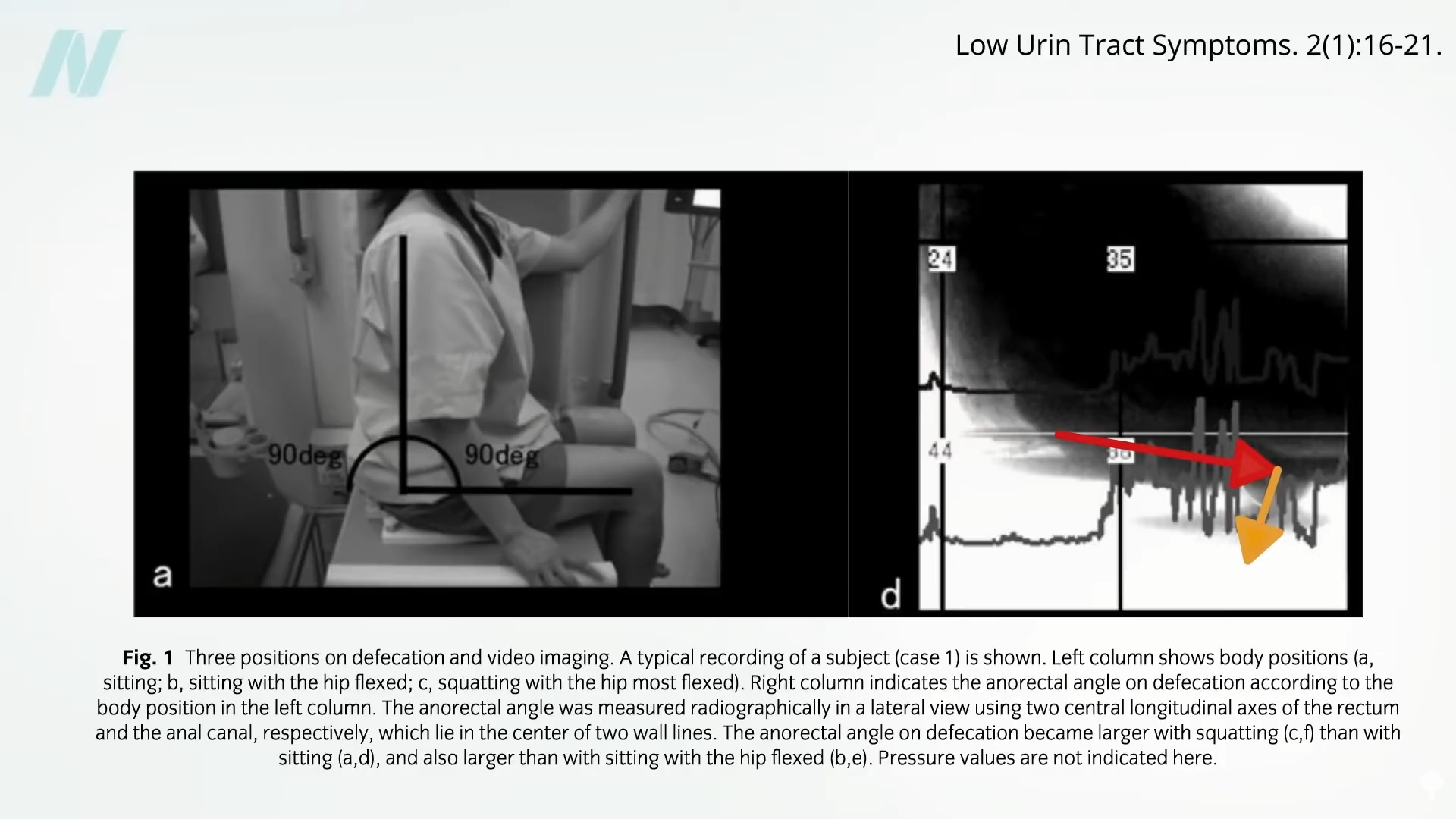
The design of the modern Western toilet, while offering convenience and a perception of hygiene, inadvertently introduces a physiological hurdle for efficient defecation. When seated upright, the human body creates a nearly 90-degree bend at the junction of the rectum and anus, commonly referred to as the "anorectal angle." This acute angle is formed by the puborectalis muscle, a sling-like muscle that wraps around the rectum. Its primary function is continence – it acts like a kink in a garden hose, preventing involuntary bowel movements when we’re standing or sitting.
However, this design feature, brilliant for maintaining continence, becomes a hindrance when it’s time to evacuate. The almost perpendicular turn forces fecal matter to navigate an unnatural pathway, often requiring significant muscular effort and straining. This contrasts sharply with the squatting posture, which naturally relaxes the puborectalis muscle, straightening the anorectal angle and creating a more direct and open channel for waste elimination.
The historical shift from squatting to sitting in the West is largely attributed to the industrial revolution and the advent of indoor plumbing in the 19th century. As sanitation improved and toilets became fixtures in homes, the elevated seat was adopted, perhaps influenced by notions of comfort, decorum, and the desire to mimic chair-like furniture. Over time, this posture became the cultural norm, pushing the more natural squatting position to the fringes of Western consciousness, despite its continued prevalence and perceived benefits in other parts of the world.
Testing the Tools: From Modest Footstools to the Squatty Potty
The idea of modifying toilet posture isn’t entirely new. For years, proponents of "natural" defecation have advocated for elevating the feet to mimic a squatting position. Early attempts often involved modest footstools, but initial research on these smaller devices yielded mixed results. For instance, some studies found that simple four-inch risers offered only marginal benefits, failing to significantly improve self-reported difficulty in defecating or reduce the average time spent on the toilet. This limited impact suggested that a more substantial change in elevation might be necessary to achieve the desired physiological effect.
Enter the Squatty Potty, a device specifically engineered to raise the knees higher than conventional footstools, typically offering an eight-inch boost. Its rise to prominence, partly fueled by viral marketing and anecdotal testimonials, underscored a growing public interest in finding practical solutions for digestive discomfort. The question then became: could this more substantial elevation truly make a difference?
Researchers embarked on studies to formally test the "Defecation Posture Modification Device" (DPDM), as the Squatty Potty is often referred to in clinical settings. The findings were compelling. Participants using the Squatty Potty reported a significant increase in feelings of complete bowel emptiness, a marked reduction in straining, and, notably, about a minute less time spent on the toilet. These outcomes suggest that by effectively straightening the anorectal angle, the device facilitates a more efficient and comfortable bowel movement.
However, the path to postural modification isn’t without its challenges. One consistent drawback identified in studies, even with six-inch risers, has been participant discomfort. Some individuals found the elevated posture to be so uncomfortable that they abandoned the trial altogether. This highlights an important consideration: while the physiological benefits may be clear, user comfort and adaptability remain crucial for widespread adoption. The body, accustomed to decades of sitting, may require an adjustment period to embrace a new, albeit more natural, posture.

Beyond Elevation: The "Thinker" Position and Physiological Insights
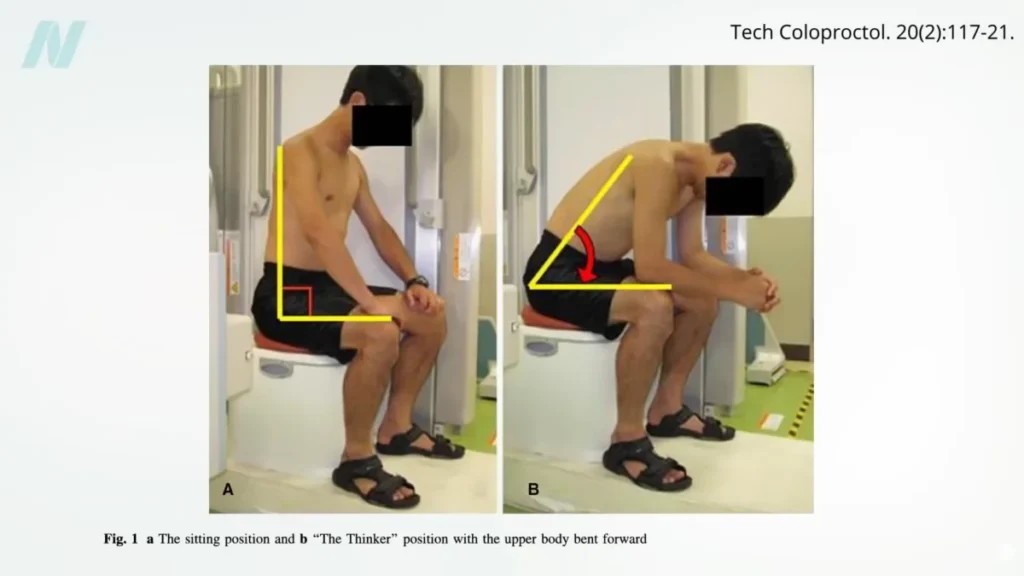
While elevating the feet is a primary method to achieve a more favorable anorectal angle, it’s not the only approach. Another intriguing alternative involves leaning forward while seated, a posture reminiscent of Rodin’s iconic sculpture, "The Thinker." This position, too, aims to reduce the acute angle and facilitate easier passage.
Cleveland Clinic researchers specifically investigated "The Thinker" position using a sophisticated diagnostic technique called cinedefecography. This advanced imaging method, essentially an "x-ray poop movie," allows doctors to visualize the internal mechanics of defecation in real-time. Through cinedefecography, they were able to demonstrate that leaning forward could open the anorectal angle to more than 130 degrees. This is a significant improvement, surpassing the approximately 90-degree angle achieved by simply raising the feet. The greater degree of straightening suggests that "The Thinker" position may indeed be an even more efficient method for defecation. While the physiological mechanism appears promising, its efficacy in directly alleviating constipation and improving bowel regularity in a clinical setting still awaits formal testing.
The insights gained from such studies underscore the intricate relationship between anatomy, posture, and bowel function. Understanding how specific body positions influence the puborectalis muscle and the anorectal angle provides a scientific basis for recommending postural adjustments as a non-pharmacological intervention for digestive issues.
The Perils of Straining: Cardiovascular Risks and Bedside Concerns
Beyond mere discomfort, the act of straining during defecation carries significant health risks, particularly for vulnerable populations. The physiological maneuver of "bearing down" to pass stool, often referred to as the Valsalva maneuver, involves holding one’s breath and contracting abdominal muscles. This action causes a rapid and transient spike in blood pressure within the heart and brain. For individuals with underlying cardiovascular conditions, this sudden surge can be exceedingly dangerous.
Medical literature has established a strong association between straining during bowel movements and serious cardiovascular events, including sudden death from heart attacks and strokes. In fact, studies from countries like Japan have identified straining during defecation as one of the daily activities most frequently occurring at the time of death. This alarming statistic highlights the critical importance of effortless bowel movements, especially for those at risk.
The risks are particularly pronounced for bedridden patients or those with limited mobility who must rely on bedpans. Lying flat on one’s back, a position that maximizes the anorectal angle and demands maximum straining, represents the worst possible posture for defecation. This extreme effort further exacerbates the cardiovascular strain. Consequently, medical guidelines often recommend that if at all possible, bedridden patients should be assisted into a more upright, seated position to minimize the risk of straining and its potentially fatal consequences. This simple intervention can significantly reduce the burden on their cardiovascular system during a vulnerable moment.
The Elephant in the Bathroom: Diet, Fiber, and the Root Cause
While the focus on postural modifications like the Squatty Potty and "The Thinker" position offers valuable insights and potential solutions, it’s crucial to step back and consider the broader context of digestive health. As a nearly 50-year-old commentary wisely noted, the debate between sitting and squatting might be missing a more fundamental point.
Squatting is often hailed as the "natural" position, championed by advocates who point to so-called "primitive peoples" who easily pass large, well-formed stools without the aid of modern plumbing. These proponents often lay blame for a myriad of "Western maladies" – including chronic constipation, hemorrhoids, and diverticulitis – squarely at the feet of the porcelain throne. However, this perspective overlooks a critical confounding variable: diet.
The commentary astutely observed, "The man who squats because he has no modern plumbing also tends to eat food that is less refined." This simple statement encapsulates a profound truth: traditional diets, often consumed by populations who naturally squat, are typically rich in whole, unprocessed foods, brimming with dietary fiber. In contrast, the standard Western diet is notoriously low in fiber, heavily reliant on refined grains, processed foods, and animal products.
Dietary fiber, the indigestible portion of plant foods, plays a pivotal role in digestive health. It adds bulk to stool, softens it, and facilitates its smooth passage through the colon. A diet deficient in fiber leads to smaller, harder stools that are difficult to pass, irrespective of body posture. Therefore, while squatting or using a Squatty Potty can certainly ease the process, it may be addressing a symptom rather than the root cause of constipation for many Westerners.
Adding adequate fiber to the diet – through increased consumption of fruits, vegetables, whole grains, legumes, and nuts – can enable constipated individuals to experience effortless bowel movements without necessarily needing to adopt a squatting position. This suggests that a fundamental redesign of our diets, rather than solely our plumbing or toilet accessories, might be the most impactful long-term solution for optimal digestive health.
A Call for Open Dialogue: Bridging the Medical Communication Gap
Despite the growing body of evidence supporting the physiological benefits of certain defecation postures, the topic often remains an "unmentionable bodily function" within medical circles. Many physicians, either due to discomfort in discussing such intimate details or a lack of specific training in this area, may not proactively address postural recommendations with their patients. This creates a significant gap in patient education and care, particularly for those suffering from chronic constipation or other bowel disorders.
However, expert voices within the medical community are beginning to challenge this silence. Dr. Michael Greger, through platforms like NutritionFacts.org, has consistently highlighted the scientific evidence surrounding optimal defecation posture, referencing his own videos like "The Best Poop Position for Constipation" and "Should You Sit, Squat, or Lean During a Bowel Movement?" He also emphasizes the foundational role of diet, as explored in "Prunes: A Natural Remedy for Constipation," framing posture as an adjunct to, rather than a replacement for, a high-fiber diet. These efforts are crucial in normalizing the conversation and equipping both healthcare providers and the public with evidence-based information.
The challenge lies in integrating these discussions into routine medical practice. Educating medical professionals about the anatomical and physiological advantages of different postures, alongside the paramount importance of dietary fiber, is essential. Only then can they confidently advise patients on a holistic approach to digestive health that encompasses both lifestyle and postural adjustments.
Redesigning Habits, Not Just Plumbing: Future Perspectives
The journey toward optimal digestive health is multifaceted, requiring a blend of scientific understanding, cultural adaptation, and personal commitment. While the Squatty Potty and "The Thinker" position offer practical, immediate solutions for improving bowel movements, they serve as potent reminders of the intricate design of the human body and how modern conveniences can sometimes inadvertently work against natural physiological processes.
Looking ahead, the implications of this research are significant. For public health, promoting awareness of ideal defecation postures could contribute to a reduction in chronic constipation, hemorrhoids, and other straining-related complications. For individuals, adopting these practices could lead to greater comfort, efficiency, and a reduced risk of serious health events.
The ultimate goal, however, should be a synergistic approach. Imagine a future where dietary guidelines universally emphasize whole, plant-based foods rich in fiber, and where conversations about optimal defecation posture are as commonplace as discussions about exercise or sleep. This holistic view acknowledges that while mechanical aids like the Squatty Potty can be beneficial tools, they are most effective when combined with a diet that supports healthy bowel function from the inside out. Perhaps, as the ancient commentary suggested, if we truly change the design of our diets to embrace more natural, fiber-rich foods, we might find that the design of our plumbing becomes less of a critical factor, allowing our bodies to function as brilliantly as they were intended.