The Art of Abundance: Why Your Vegetable Garden Should Break the Rules
For generations, the conventional wisdom of home horticulture has been clear: keep your tomatoes in their rows, your kale in its patch, and your flowers in their designated beds. This rigid separation has long dominated the suburban landscape, treating the vegetable garden as a place of utility and the flower garden as a place of beauty.
However, a growing movement of gardeners is challenging this binary. Leading this charge is Amy, a Master Gardener based in the western suburbs of Minneapolis, Minnesota. Through her digital platform, Roots N Reps, she is proving that the most productive gardens are often the most beautiful ones, successfully weaving edibles and ornamentals into a seamless, high-density tapestry of life.
The Case for Integration: Why Mix Your Plants?
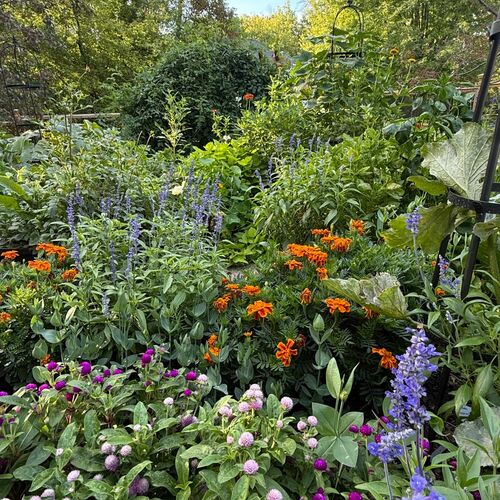
The debate over “tidy plots” versus “integrated gardens” is more than just an aesthetic disagreement; it is a fundamental shift in how we approach cultivation. By mixing vegetables with annuals, perennials, and fragrant herbs, gardeners can achieve a level of visual density that traditional row gardening simply cannot match.
Beyond the obvious visual appeal, there is a profound ecological benefit to this approach. A monoculture of vegetables is a beacon for pests and a challenge for pollination. By introducing a diverse array of flowers—such as dahlias (Dahlia cvs.) and zinnias (Zinnia elegans)—into the vegetable patch, gardeners naturally invite pollinators and beneficial insects into the ecosystem. These visitors do not distinguish between a marigold and a pepper blossom; their presence ensures higher yields for the fruiting crops that rely on their labor.
Three Decades of Growth: A Chronology of Experimentation
Amy’s journey in the soil spans more than 30 years. Her philosophy has not been static; it is the result of three decades of seasonal trial and error.
“I’m still experimenting, changing things, and learning every season,” Amy explains. In the early stages of her gardening career, she followed the traditional advice of orderly rows and spacing. However, as she gained experience, she realized that these “cookie-cutter” layouts failed to capture the vitality of a natural landscape.
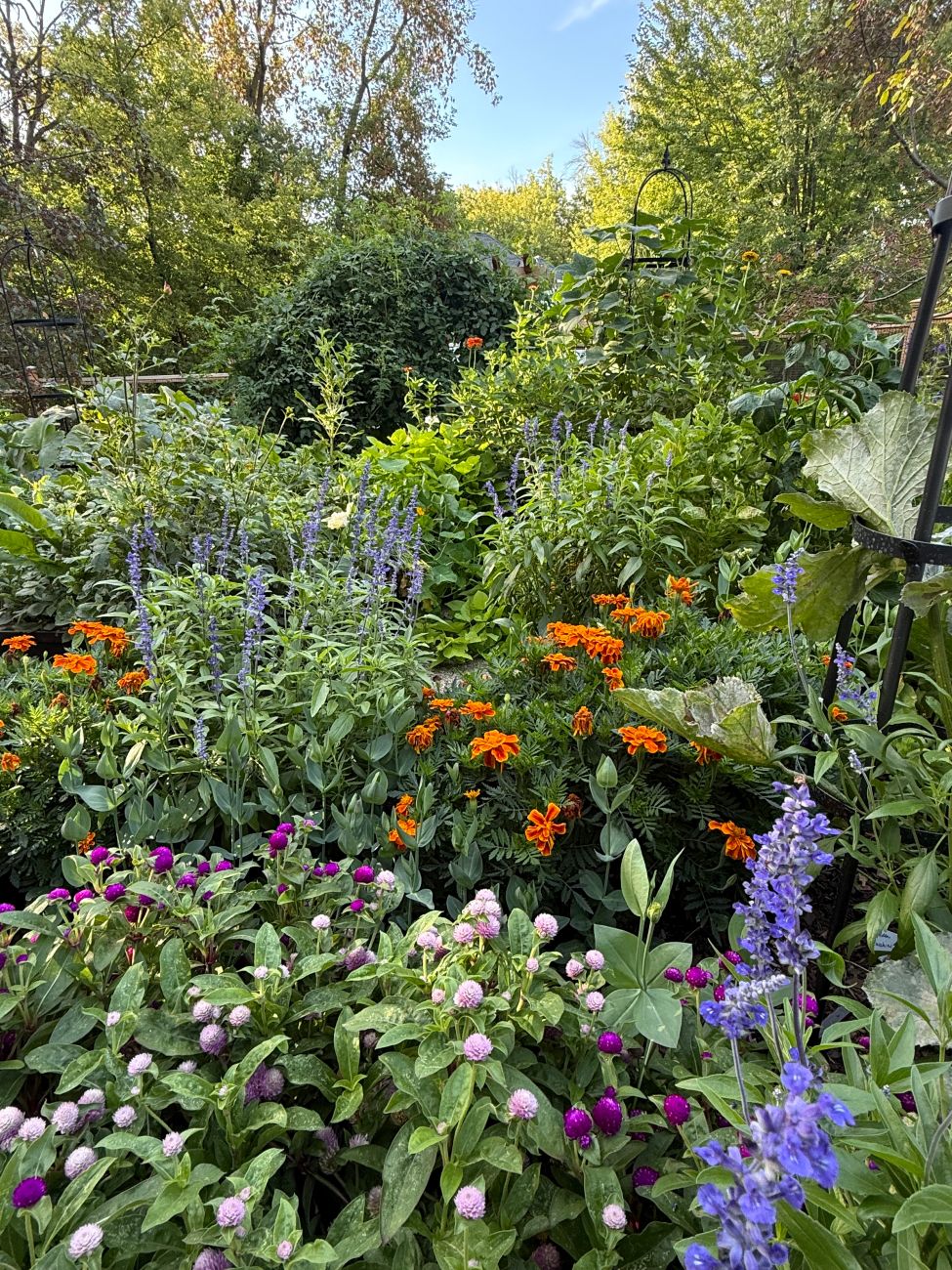
Over the years, her garden has evolved into a laboratory of sorts. She describes her process as one of constant iteration: “Some ideas turn out beautifully, some completely flop, and I change them the next year. I think that experimentation is a big part of why I still love gardening so much after 30+ years.”
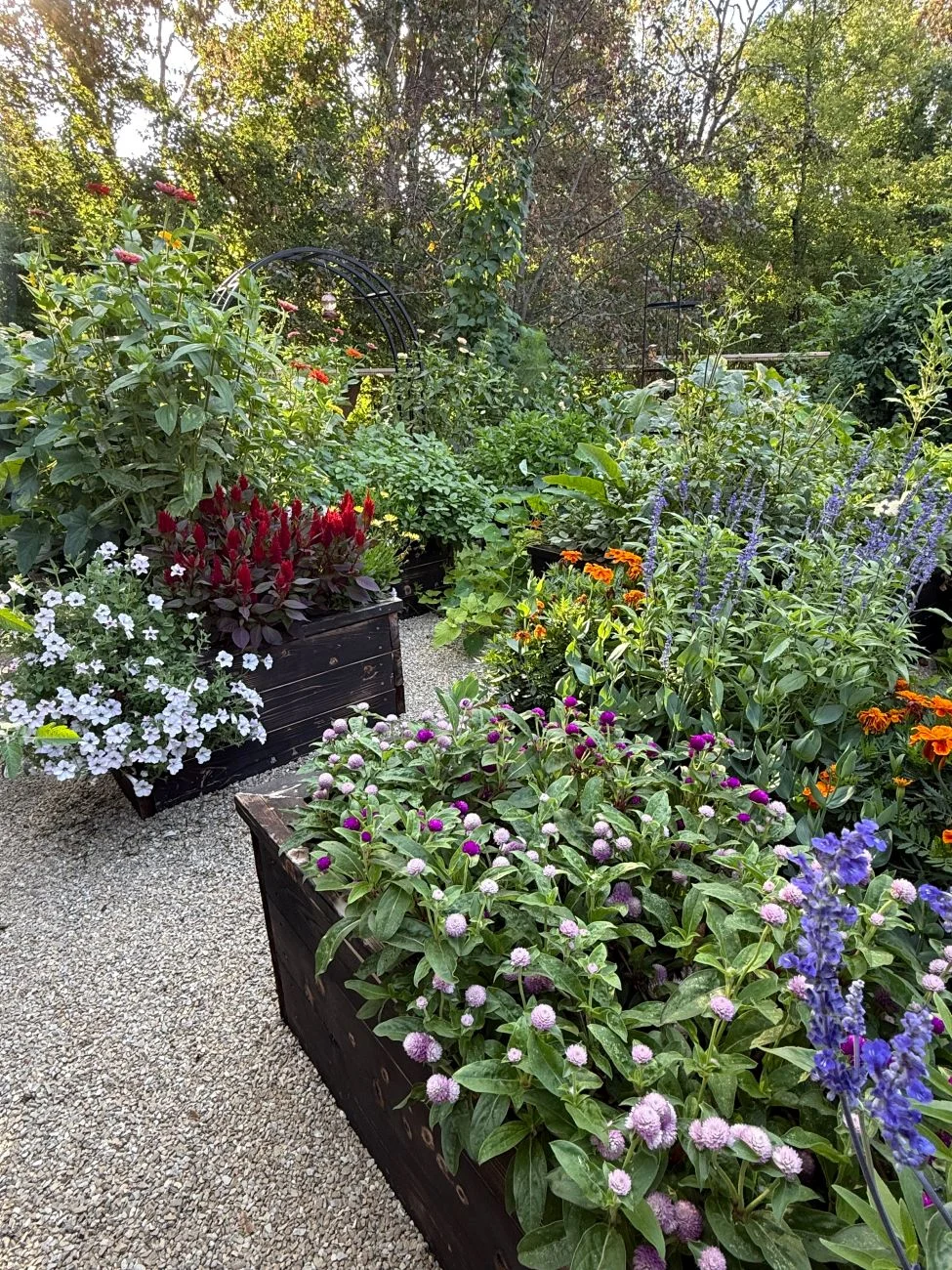
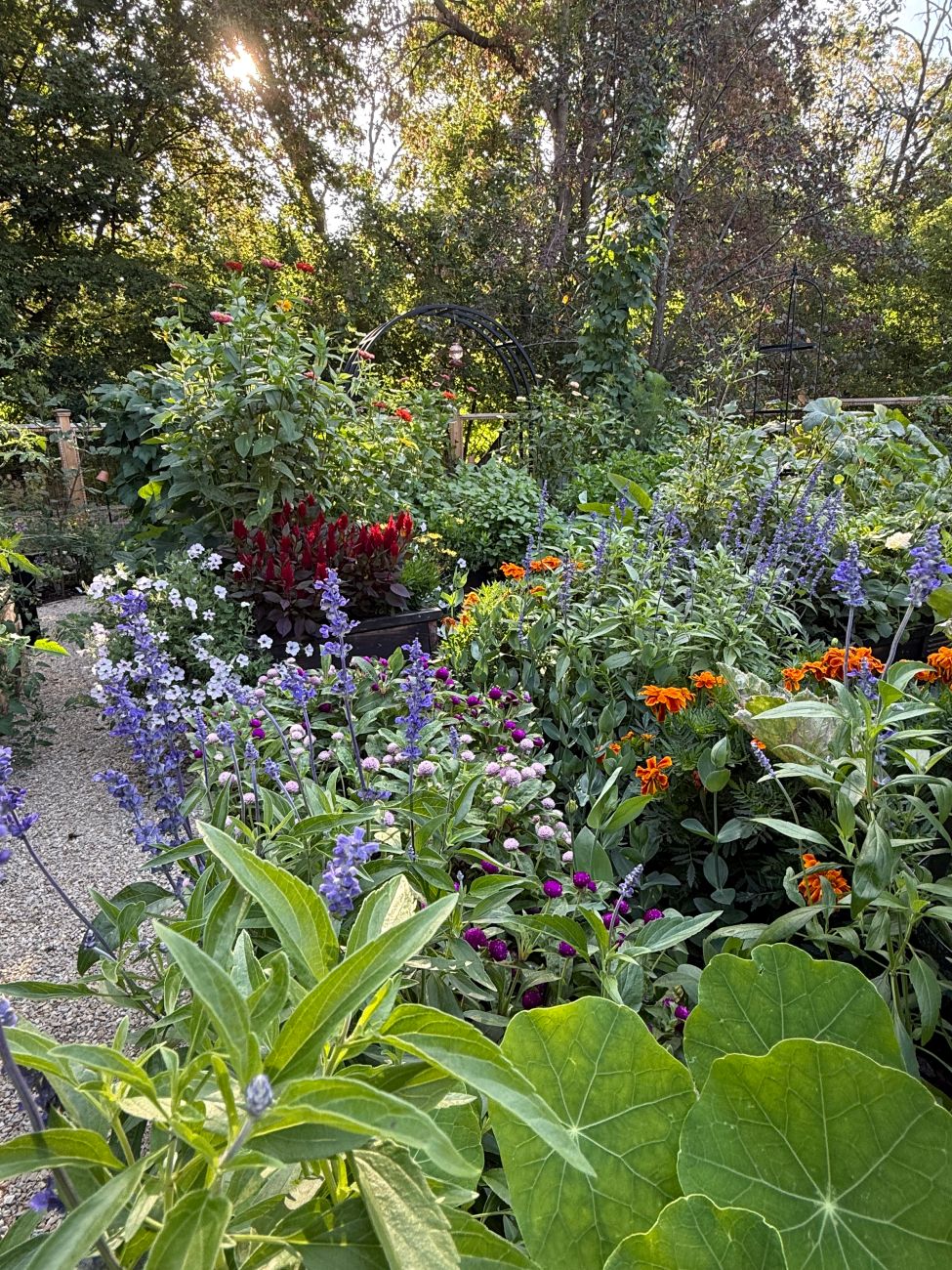
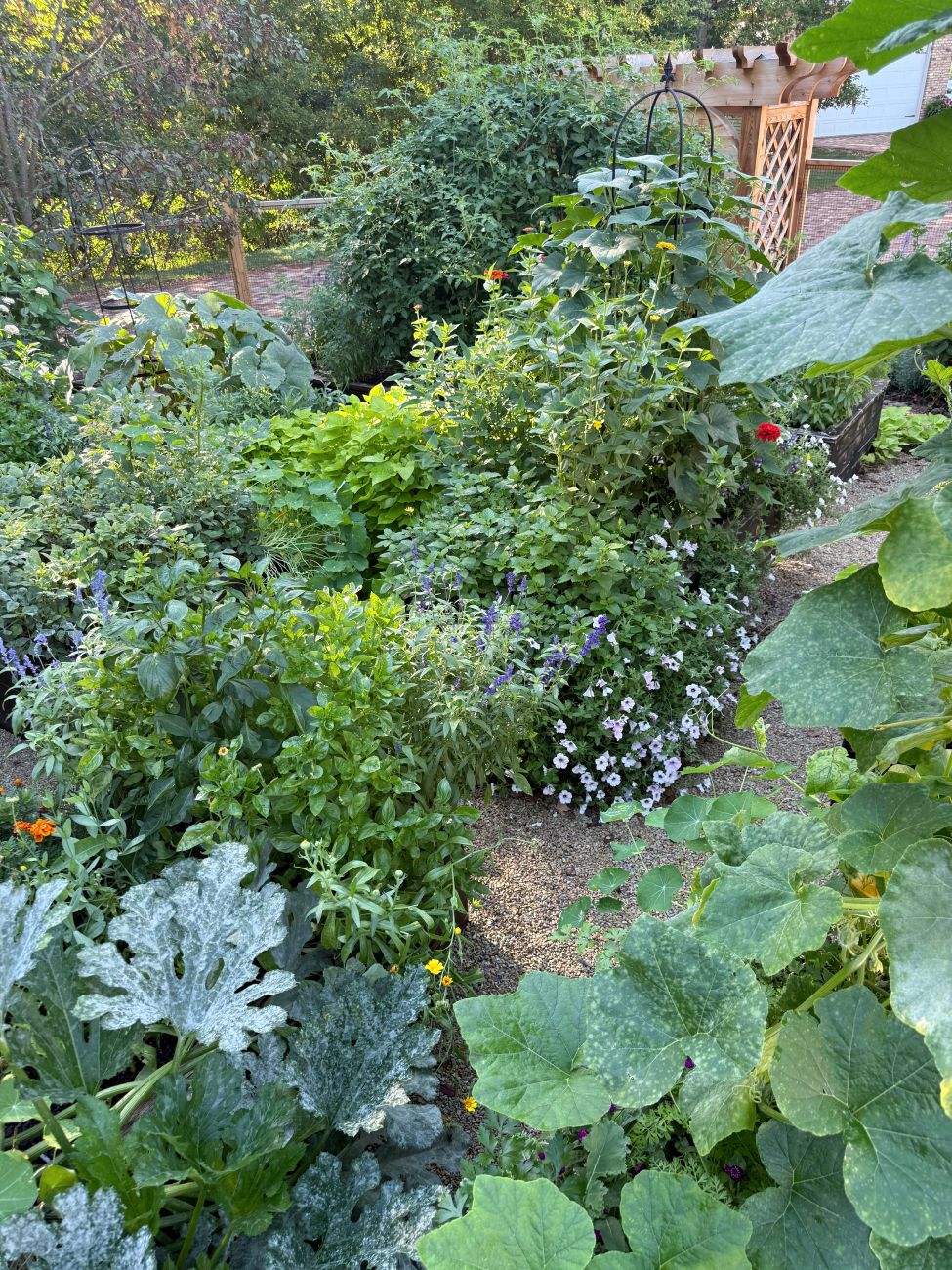
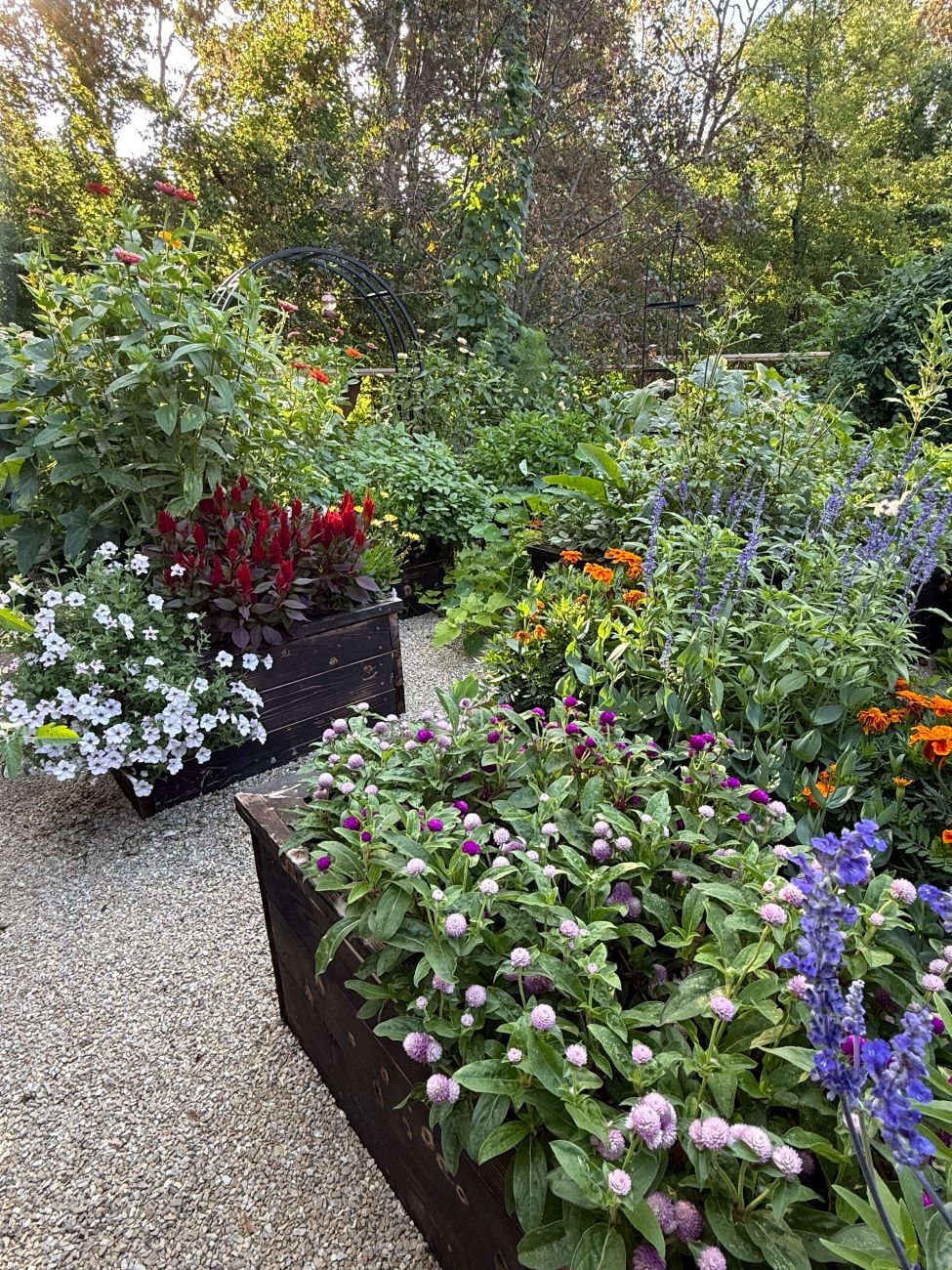
This chronological evolution reflects a deeper maturity in her practice. She has moved away from the fear of “messiness” and toward an embrace of “abundance.” Today, her Minnesota garden is a testament to this, where gravel paths wind through overflowing raised beds, and chartreuse vines spill over edges to blur the line between the path and the planting zone.
The Foundations of an Organic Ecosystem
Central to Amy’s success is a commitment to organic practices, with soil health acting as the bedrock of her entire operation. In a high-density garden, the soil is under significant pressure to provide constant nutrients.
“Healthy soil is always where I start,” she notes. By focusing on the subterranean environment—the microbiome, the moisture retention, and the organic matter—she creates an environment where plants can be packed closely together without competing for resources.
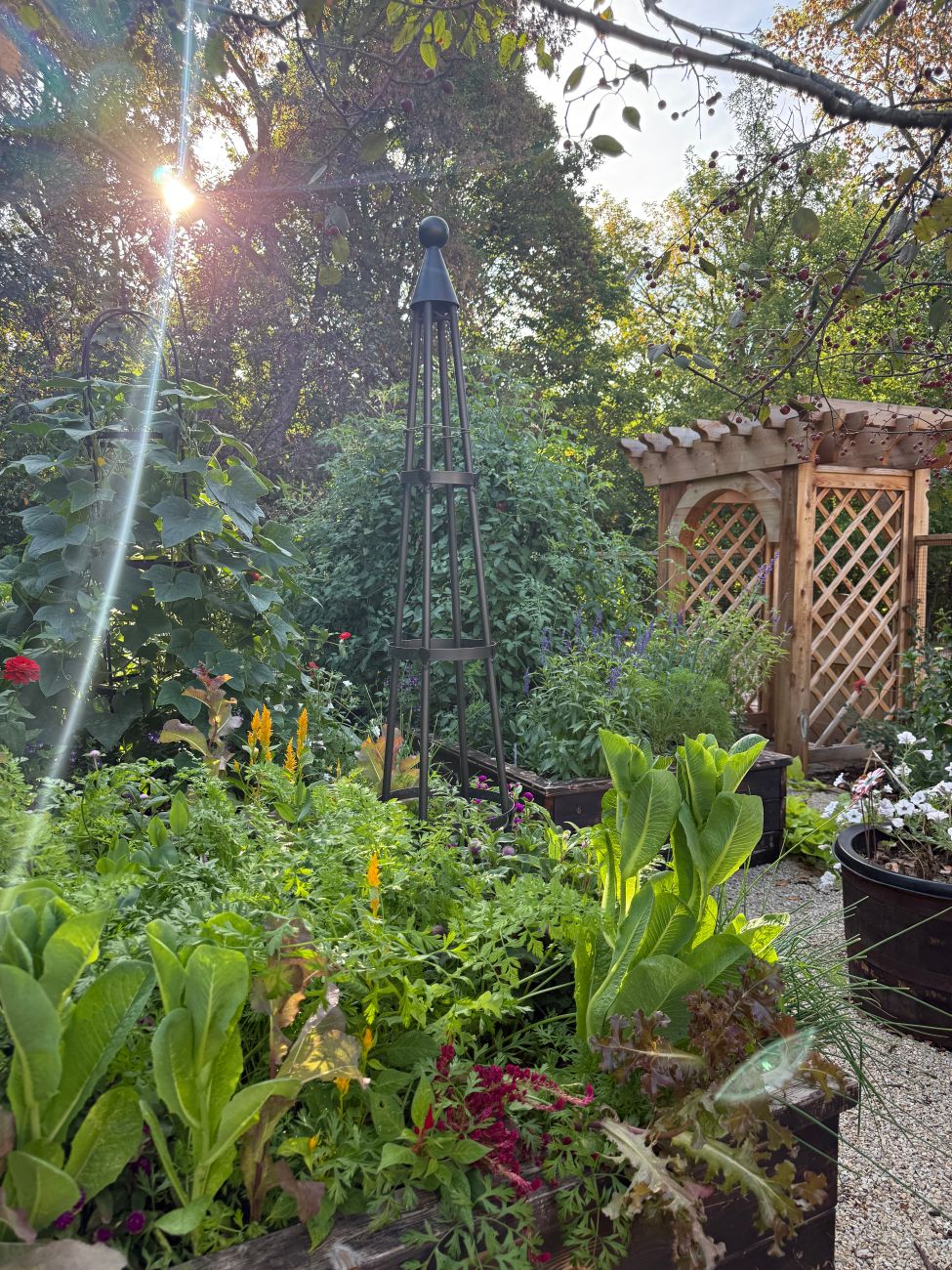
Her design process is equally intentional, though it defies traditional blueprints. Instead of measuring out perfect rows, she focuses on:
- Color Theory: Coordinating blooms with the foliage of vegetables.
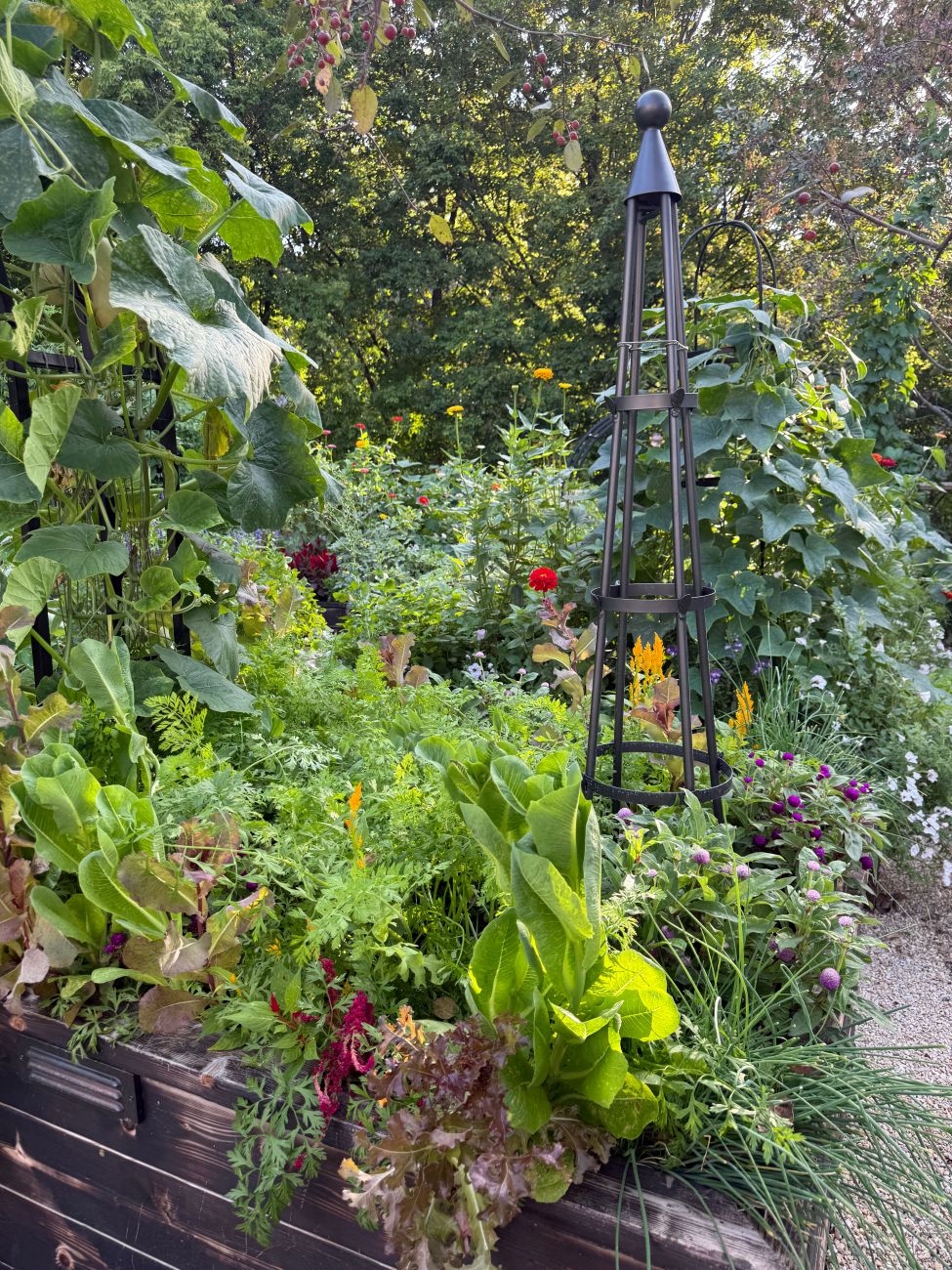
- Texture: Pairing the broad, flat leaves of chard with the delicate, lacy foliage of herbs.
- Rhythm: Repeating specific plants throughout the garden to guide the eye and create a sense of cohesion.
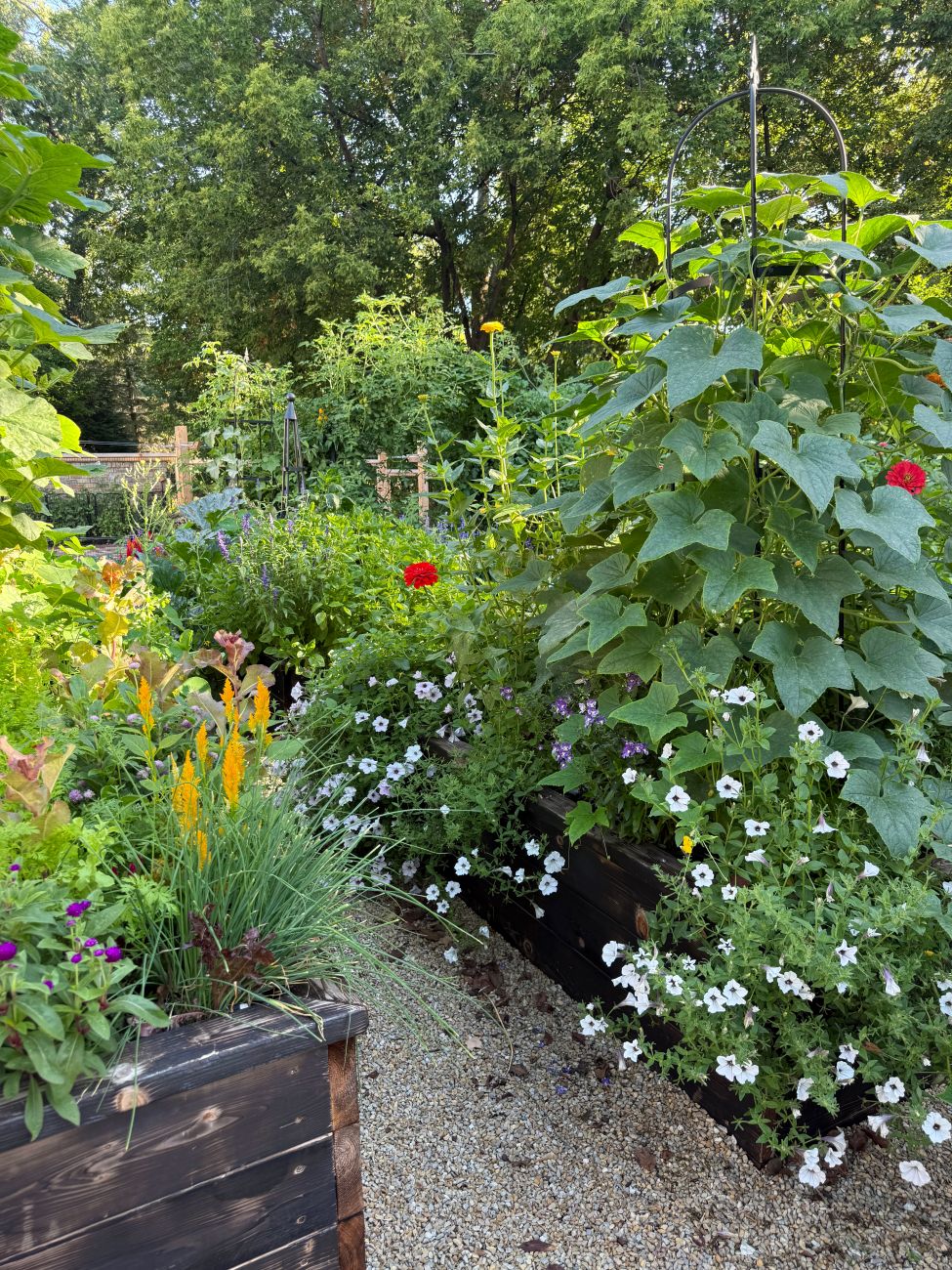
This “wild” aesthetic is, in reality, highly curated. By repeating purple, orange, and red flowers throughout the space, she gives the eye a visual anchor, allowing the garden to feel full and lush without descending into chaos.
Scaling Up: Verticality and Structure
One of the most significant implications of Amy’s approach is the optimization of space. In a standard suburban plot, space is a premium commodity. By utilizing vertical structures—such as metal obelisks, trellises, and arches—she is able to expand her garden’s capacity upward.
Vertical gardening is not just a spatial hack; it is a design element that adds architectural interest to the landscape. By drawing the eye upward, these structures provide a sense of balance to the sprawling, overflowing beds below. They allow climbing vegetables, such as peas or beans, to reach for the sun while serving as a frame for flowering vines.
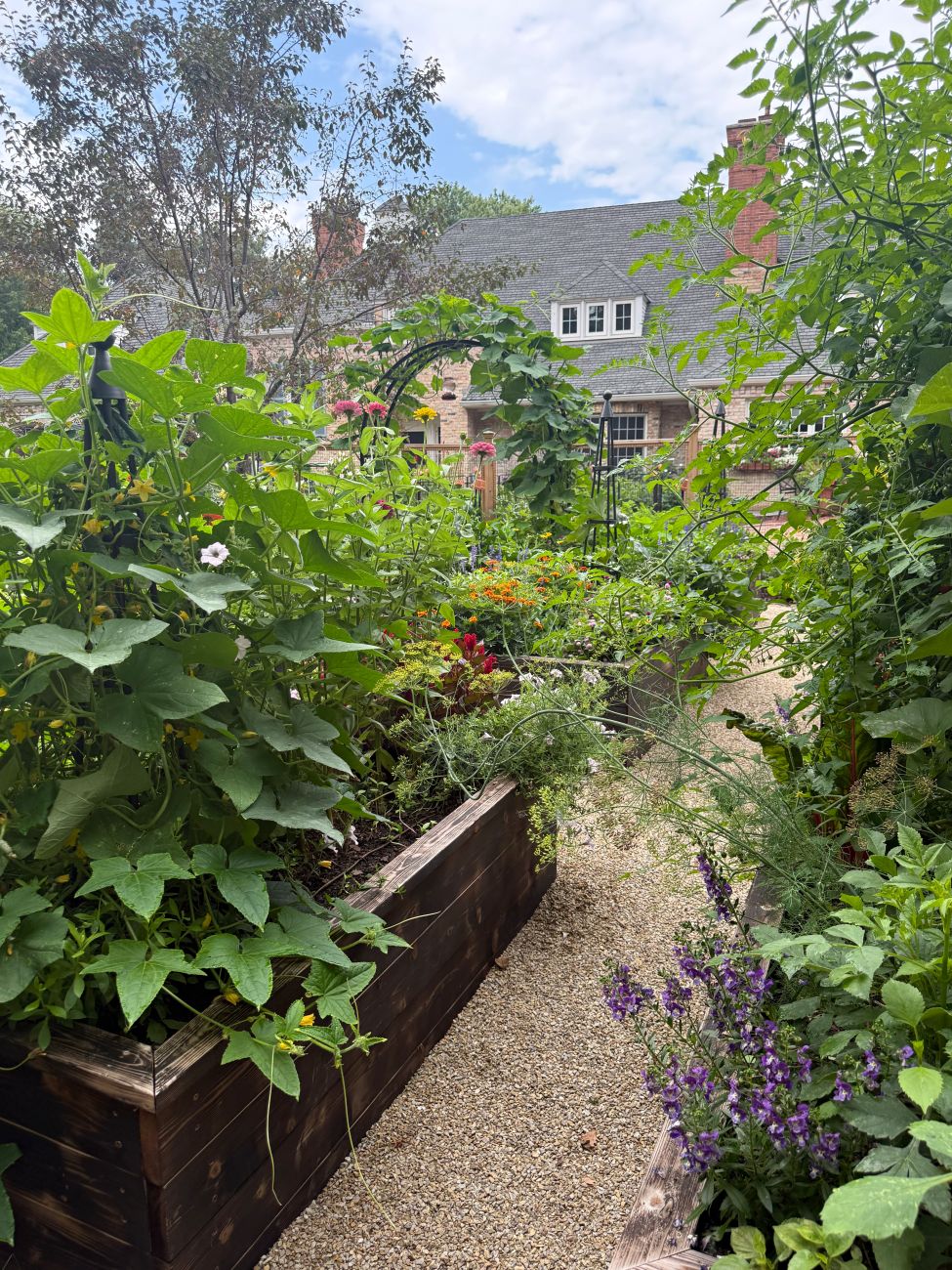
This multi-layered approach creates what she calls “moments of discovery.” Because the garden is not a flat, open space, visitors must walk through it to see what is hidden behind a trellis or under a canopy of squash leaves. It turns the act of gardening into a journey.
Encouraging a New Generation of Gardeners
Through Roots N Reps, Amy has transitioned from a private practitioner to an educator. Her goal is to strip away the intimidation factor that often prevents beginners from picking up a trowel.
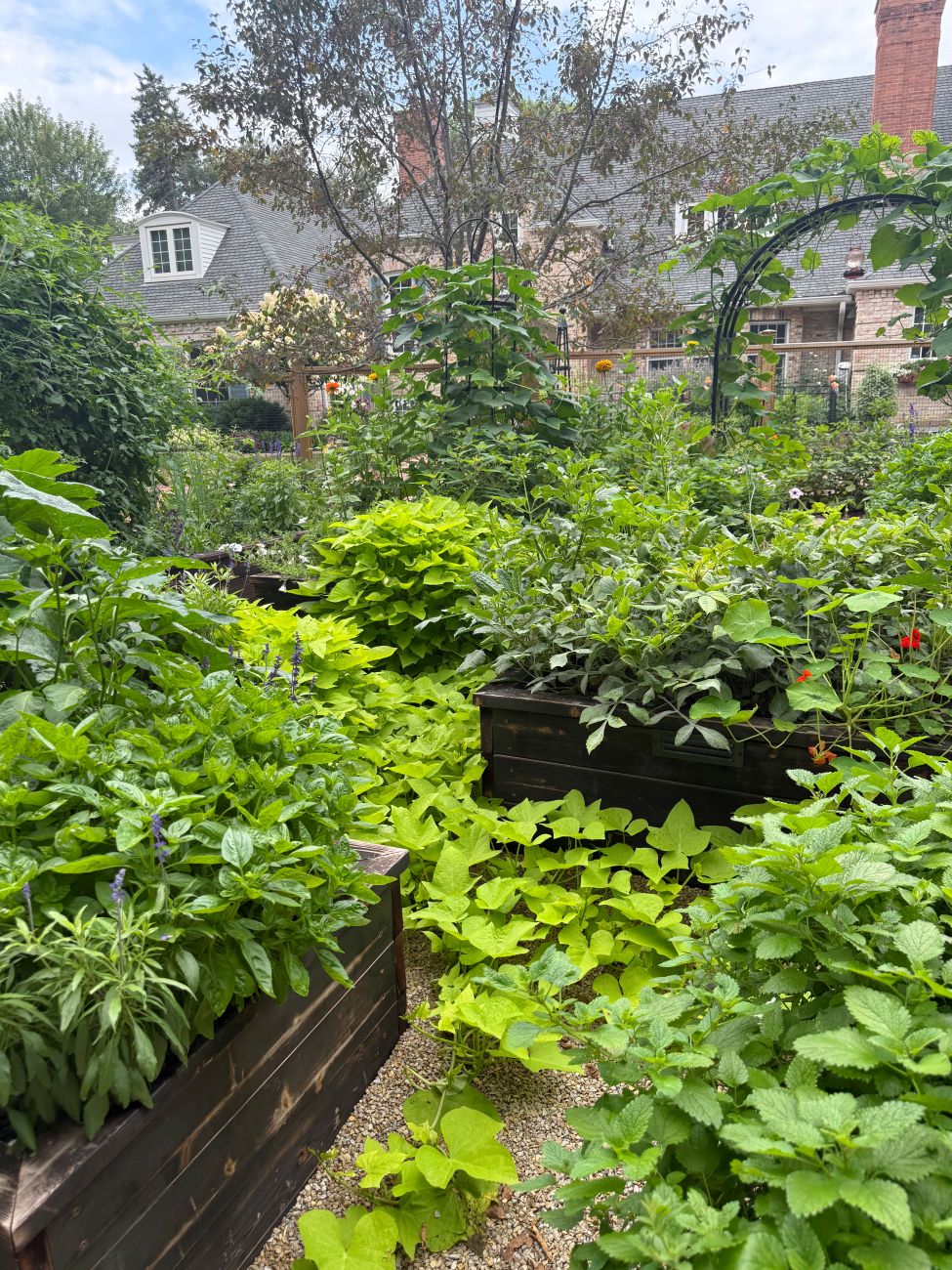
“My hope is to encourage other gardeners to get creative, think beyond traditional garden rows, and realize there isn’t just one ‘right’ way to garden,” she says. In an era of curated, perfect social media feeds, Amy’s emphasis on the “flop”—the failed experiments that lead to better results—is a refreshing, honest take on the craft.
She uses Instagram, YouTube, and Facebook to document her seasonal tours, sharing both her successes and her failures. Her message to the community is simple but profound: "Grow what you love."
Implications for the Future of Home Gardening
The success of the integrated garden model has broader implications for sustainability. As more homeowners turn toward organic gardening, the integration of flowers and vegetables serves as a model for urban and suburban biodiversity. By replacing sterile grass lawns or strictly divided plots with these lush, multi-functional spaces, gardeners are creating corridors for pollinators that are vital to our larger environment.
Furthermore, this model proves that high-yield food production does not require a sacrifice of beauty. The “edible landscape” movement is gaining momentum precisely because it makes sense for the modern gardener—it is productive, environmentally sound, and visually rewarding.
How to Start Your Own Integrated Garden
For those inspired by Amy’s approach, the transition does not need to be radical. Here are a few ways to start:
- Prioritize Soil Quality: Before you start planting densely, ensure your soil is amended with high-quality organic matter. A crowded garden needs a rich, nutrient-dense foundation.
- Start Small with Interplanting: Don’t rip out your entire garden. Try planting a border of marigolds or alyssum around your vegetable beds this season.
- Think in Three Dimensions: If you have limited space, add one or two vertical structures. Use them to support both flowering vines and climbing vegetables.
- Embrace the "Spill": Don’t be afraid to let your plants grow over the edges of your containers or raised beds. This creates a softer, more inviting, and naturalized look.
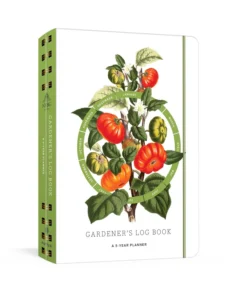
- Keep a Record: As Amy suggests, experimentation is key. Keep a log of what worked and what didn’t. Using tools like the Gardener’s Log Book from the New York Botanical Garden can help you track your successes and failures over the years.
Conclusion: The Joy of the Wildly Abundant
Amy’s garden serves as a reminder that gardening is a creative act. Whether you are in a cold climate like Minnesota or a warmer zone, the principles of layering, verticality, and organic integration remain the same.
By letting go of the need for perfect rows and embracing a more fluid, abundant design, you can transform your backyard into a space that feeds both the body and the soul. As the seasons progress, watching your garden come together—with flowers blooming alongside your harvest—is perhaps the greatest reward a gardener can ask for.
If there is a final lesson to take away from the Roots N Reps philosophy, it is that the best garden is one that reflects the gardener’s own personality. Whether it is a little wild, perfectly structured, or somewhere in between, the only "right" way to garden is the one that brings you the most joy.