The Myth of Timelessness: How Italy’s Iconic Wine Families Are Redefining Legacy
By Danielle Callegari
October 26, 2026
In Italy, the cultural mandate is as clear as a vintage Barolo: hold tight to tradition, study the ghosts of the past, and offer unwavering respect to your elders. Nowhere is this ethos more zealously guarded than in the world of Italian viticulture, where the concept of "heritage" is often treated as a sacred, immutable text. However, a deep dive into the history of Italian wine reveals that this narrative of eternal, unbroken continuity is, in many ways, a carefully curated mirage.
The Mirage of "Always"
The modern obsession with traditional purity is perhaps best illustrated by the “Carbonaragate” scandal of a decade ago. When a foreign media outlet published a recipe for carbonara that replaced guanciale and pecorino with bacon, onion, and crème fraîche, the Italian response was a global, rage-fueled media firestorm. To the Italian public, this wasn’t just a poor culinary attempt; it was a sacrilegious assault on an ancient pillar of Roman identity.
The irony, however, is that the carbonara we recognize today likely did not exist until the end of World War II. Italy itself is a relatively young project, unified only in 1861, and its globally recognized "culinary identity"—the pizza, the pasta dishes, the regional specialties—was largely codified and exported only within the last 75 years.
Italian wine, while ancient in its origins, follows a similar trajectory. While vines have been cultivated on the peninsula for millennia, the Italian wine industry as it exists today is remarkably young. The landscape, the varietals, and the very families who tend them have undergone radical, often traumatic, transformations over the last century.
Chronology of Transformation: From Agrarian Ruin to Global Renaissance
To understand the current state of Italian wine, one must look at the seismic shifts that occurred in the mid-20th century:

- 1957 – The EEC Influence: The formation of the European Economic Community encouraged open trade, which incentivized Italian growers—particularly in the south—to prioritize massive yields over quality. This era saw the widespread use of "super juice," where concentrated grape must from the fertile, hot south was used to bolster the alcohol content of wines produced in more difficult climates.
- 1964 – The End of Mezzadria: The dissolution of the sharecropping (mezzadria) system, which had governed Italian agriculture for centuries, sent shockwaves through the countryside. Many families were forced to abandon their ancestral lands or convert them to industrial purposes.
- 1970s – The Great Uprooting: Faced with a persistent surplus of low-quality wine, the Italian government provided financial incentives for families to destroy their vineyards. Thousands of hectares of historic, old-growth vines were ripped from the earth, effectively severing the physical link between many estates and their past.
Supporting Data: The Reality of Modern Viticulture
Because of these disruptions, very few Italian wine estates can legitimately claim to be continuous, professional commercial operations that predate the mid-20th century. While many families have lived on their land since the Middle Ages, their transition from subsistence farming to commercial winemaking is a relatively modern phenomenon.
The wineries that have survived this period—and are currently "towering" over the global market—did so not by clinging to the status quo, but by adapting to the harsh realities of climate change, evolving market tastes, and the necessity of professionalization.
Pio Cesare: Democratizing the Icons of Piedmont
When Cesare Pio founded his winery in 1881, Italy was an infant nation. His original passport—number 55—remains a prized family artifact. Yet, despite this deep history, the current leadership at Pio Cesare understands that prestige alone cannot secure a future in a changing climate.

Managing Director Federica Boffa, of the fifth generation, faces the dual pressure of climate instability and the need to keep Nebbiolo relevant. "We understand that it is a big responsibility connected not only to our family but also to our city, our region, and our terroir," Boffa notes.
Her strategy for survival is radical in its simplicity: democratization. Boffa argues that wines like Barolo and Barbaresco should not be restricted to formal, black-tie settings. "They are democratic wines, not to be presented only in a jacket and tie, but also in jeans and a T-shirt," she says. By shifting the conversation from exclusivity to accessibility, the family is ensuring that their wines remain a part of modern, vibrant culture rather than relics of a museum.
Tenuta San Leonardo: Change as the Only Constant
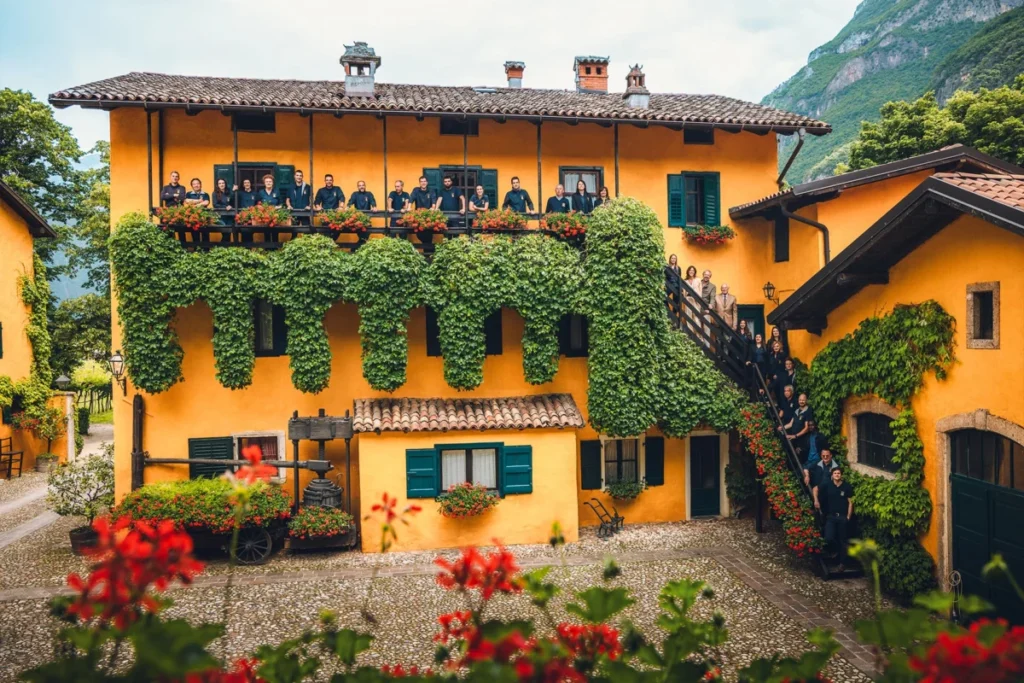
In the Trentino region, San Leonardo stands as a testament to the idea that tradition is not about stagnation. Marchese Anselmo Guerrieri Gonzaga, entrusted with an estate that has been in his family for 300 years, was taught to be "completely faithful to the past."

However, he quickly realized that true stewardship requires evolution. To ensure the estate’s survival, he introduced new grape varieties and expanded the winery’s portfolio, including a Carménère cru and a range of white wines.
Paraphrasing the famous Sicilian novelist Giuseppe Tomasi di Lampedusa—"in order for everything to stay the same, everything must change"—Guerrieri Gonzaga realized that his father’s directive to "take care of it" meant more than preserving the status quo. "Perhaps what I discarded was the idea that being faithful to the past means keeping everything exactly as it was," he explains.
Marchesi Antinori: The Evolution of Succession
The Antinori family, with a winemaking lineage dating back to 1385, represents the pinnacle of Italian wine history. Yet, even they have had to break the "rules" to survive.

Marchese Piero Antinori, now honorary president, oversaw a transition that would have been unthinkable to his ancestors. For 24 generations, the rule was clear: only sons run the business. Facing a reality where he had three daughters, Piero broke the tradition. Today, his daughter Albiera leads the company as president, with her sisters Allegra and Alessia serving as vice presidents.
"I am glad to say that, considering the results, I consider this change a positive development," Piero says. By prioritizing talent and continuity over patriarchal dogma, the Antinori family has expanded its empire from Tuscany to Napa Valley and Washington, proving that the most resilient traditions are those capable of self-correction.
Emidio Pepe: The "Weird" Path to Authenticity
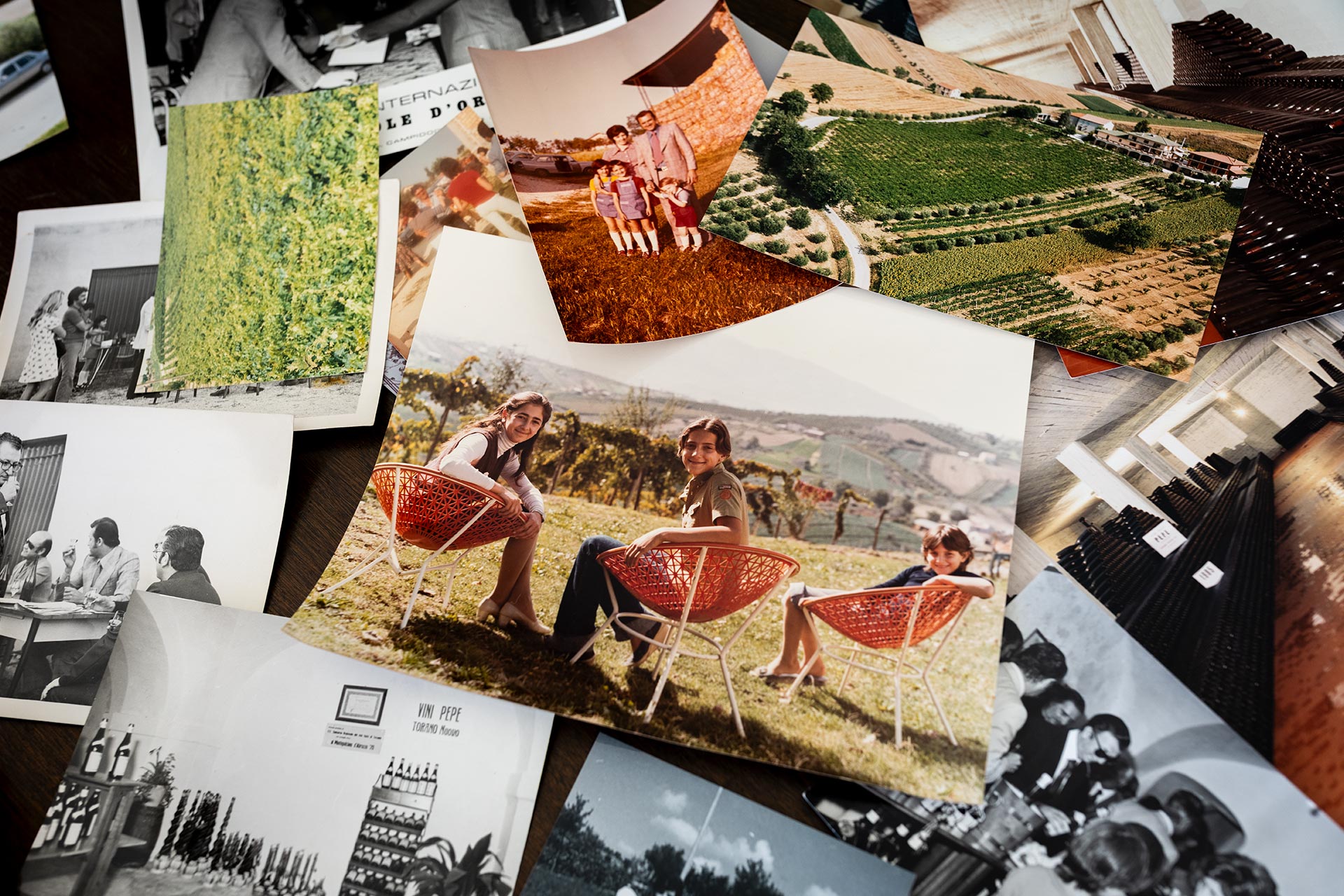
The story of Emidio Pepe in Abruzzo is one of radical, low-intervention farming that anticipated the modern natural wine movement by decades. Since 1889, the family has maintained their land, but it is the current generation—led by the late Emidio’s granddaughter, Chiara De Iulis Pepe—that is defining the estate’s future.

Chiara, not yet 35, views tradition not as a weight to be carried, but as a dynamic force. "I have to keep doing things that are a little bit weird, a little bizarre, because that’s what defines this place," she says. For Chiara, tradition is a set of pillars; her role is not to lean on them for support, but to dance in the space between them. By embracing the experimental, she ensures that the family’s legacy remains a living, breathing entity.
Tasca d’Almerita: The Miracle of Stability
In Sicily, where the 20th century wiped out so many estates, the survival of Tenuta Regaleali since 1830 feels like a miracle. The eighth generation is now preparing to take the reins, an process that brings both excitement and the inevitable friction of a family business.
Alessandro Tasca, preparing for a leadership role, acknowledges the difficulty of balancing personal relationships with corporate strategy. "My role is not simply to inherit what previous generations built, but to protect it, improve it, and eventually pass it on," he says. His approach—decentralizing his own ego to serve the greater good of the estate—is a lesson in modern leadership. He recognizes that the legacy is larger than any one person, a philosophy that has kept the estate anchored through nearly two centuries of turbulence.

Implications: The Future of Italian Heritage
The common thread among these iconic families is not a rigid adherence to the past, but an agile, forward-thinking approach to preservation. The implications for the Italian wine industry are clear:
- Climate Adaptation: The traditional methods of the past are no longer sufficient to combat the unpredictable weather patterns of the 21st century. Innovation in the vineyard is now a requirement for survival.
- Succession Planning: The shift toward inclusive, meritocratic leadership—exemplified by the Antinori and Pepe families—is essential for long-term viability.
- Market Democratization: As seen with Pio Cesare, the future of luxury wine lies in accessibility. The "exclusive" model of the mid-20th century is being replaced by an "inclusive" model that invites a new, diverse generation of wine drinkers to the table.
In the final analysis, these families are not the guardians of a static history. They are the architects of a living culture. By recognizing that tradition is a dynamic, moving target, they have managed to do what few others have: they have ensured that the history of Italian wine will not be written in the past tense, but in the future.