Elevating Breakfast: The Science and Art of the Ultimate Strawberry Granola
In the world of homemade breakfasts, granola often occupies a space of reliable utility—a quick, crunchy base for yogurt or a handful of fuel for a busy morning. However, achieving a version that balances deep, authentic fruit flavor with an enduring, professional-grade crunch is a culinary challenge that frequently eludes home cooks. Nicole Hunn, the expert voice behind Gluten Free on a Shoestring, has unveiled a method for strawberry granola that moves beyond the superficial dusting of freeze-dried fruit, instead utilizing a concentrated strawberry syrup to infuse the grain base itself.
This article explores the technical nuances of this recipe, the methodology behind its construction, and the broader implications for gluten-free baking.
Main Facts: Redefining the Strawberry Standard
The core innovation in this recipe lies in its dual-layered approach to flavor. Most commercial and homemade granolas rely on freeze-dried fruit added at the end to provide a "berry" note. While this provides a crisp texture, it often leaves the oat base tasting one-dimensional—sweetened by honey or sugar, but lacking the acidic, bright punch of fresh fruit.
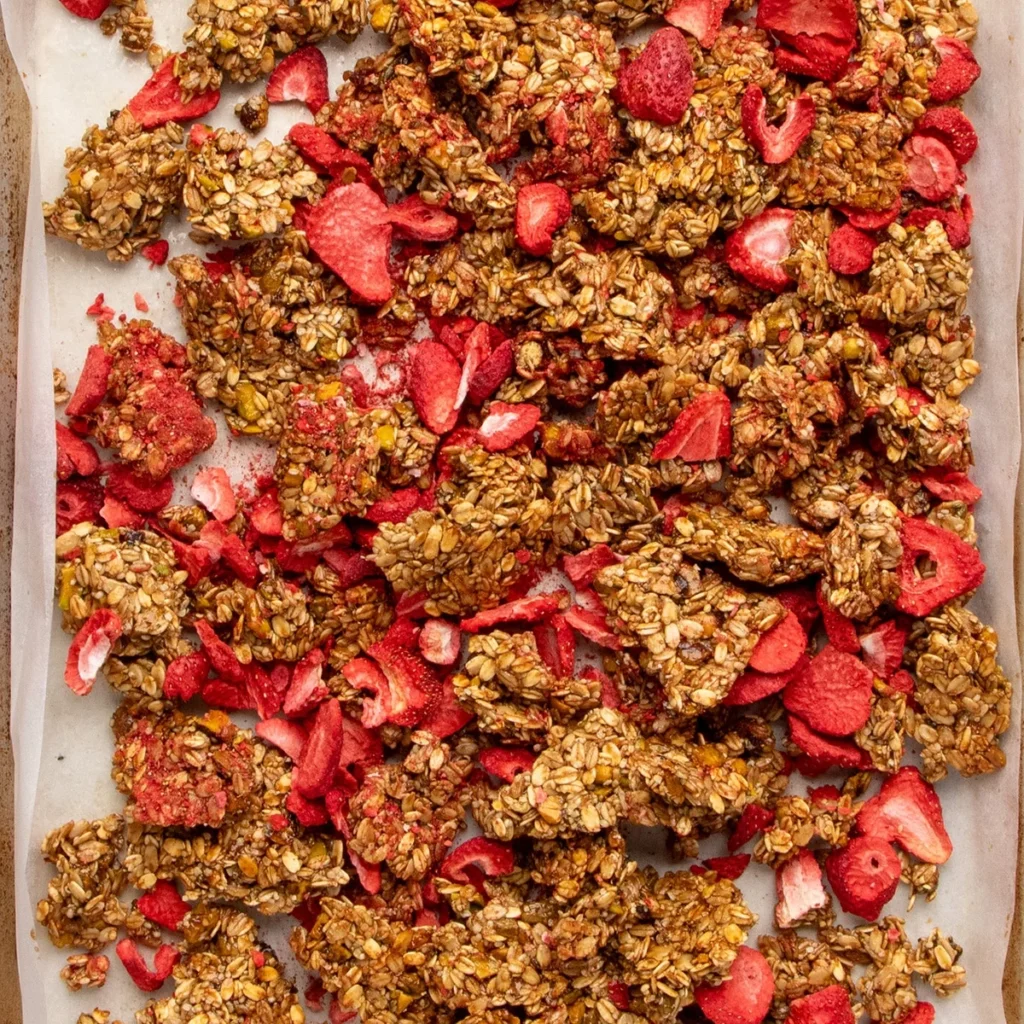
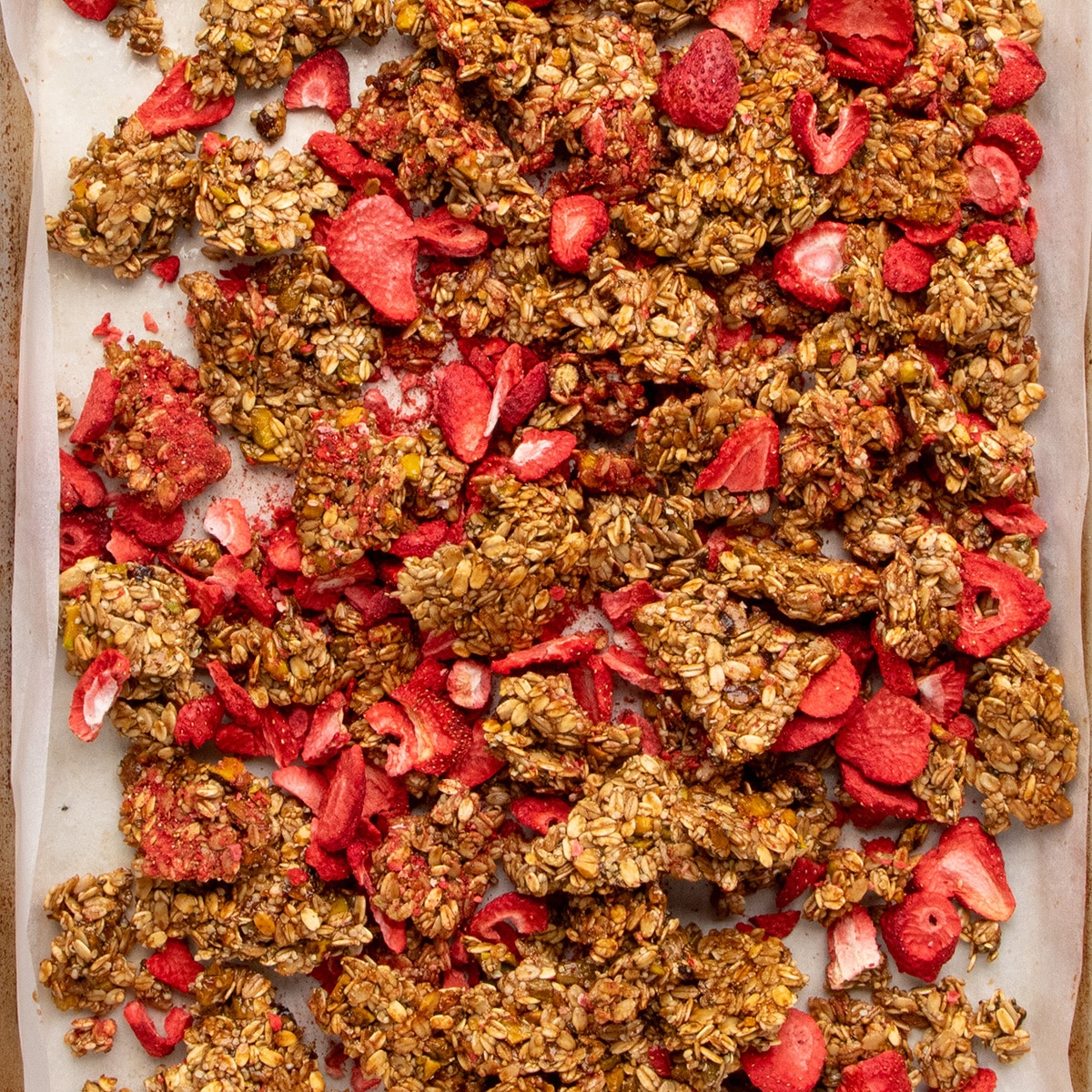
Hunn’s method introduces a concentrated strawberry syrup created by reducing a puree of frozen strawberries, maple syrup, and a touch of salt. This "jammy" reduction is then used as the primary binder for the rolled oats, pistachios, and seeds. By coating the dry ingredients in this fruit-dense syrup before baking, the granola undergoes a process of flavor integration. The subsequent addition of freeze-dried strawberries post-baking provides a secondary, textural contrast, resulting in a product that tastes of real fruit from the first bite to the last.

Chronology: The Step-by-Step Architectural Process
The creation of this granola is an exercise in moisture management. Because strawberry puree contains significant water, the process is carefully sequenced to prevent sogginess.
- The Puree Phase: The process begins by simmering frozen strawberries until they reach a soft, macerated state. The mixture is blended into a smooth consistency. For those who prioritize a refined texture, a fine-mesh sieve is employed to remove the small strawberry seeds.
- The Reduction Phase: The puree is transformed into a syrup by combining it with honey, maple syrup, coconut sugar, vinegar, and coconut oil. This mixture is reduced on the stovetop until it thickens, darkens, and coats the bottom of the pan. This step is critical; it concentrates the sugars and acidity while evaporating excess water.
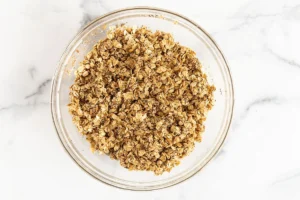
- The Binding Phase: The hot, reduced syrup is folded into the dry mixture (oats, pistachios, hemp seeds, and salt). The heat from the syrup helps distribute the flavor evenly across every grain and nut.
- The Primary Bake: The mixture is spread thin on a parchment-lined sheet pan. A brief 10-minute bake at 325°F sets the structure, followed by a necessary stir to redistribute the clusters and ensure uniform browning.
- The Dehydration Phase: To achieve a "bakery-style" crunch, the temperature is dropped to 175°F. This slow, low-heat finish acts as a home-dehydration process, drawing out final pockets of moisture that would otherwise turn the granola chewy or stale within days.
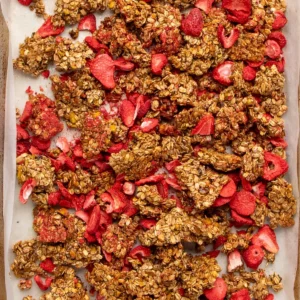
- The Final Addition: Only after the granola has reached room temperature are the freeze-dried strawberries added. This timing is essential; adding them to a warm pan would cause the berries to reabsorb moisture, stripping them of their signature snap.
Supporting Data: Nutritional Profile and Ingredient Logic
The recipe is designed to be entirely gluten-free, dairy-free, and egg-free, catering to a wide range of dietary requirements without sacrificing the mouthfeel typically associated with traditional granola.

Nutritional Snapshot (Per 1-Cup Serving)
- Calories: ~767 kcal
- Carbohydrates: 99g
- Protein: 19g
- Total Fat: 35g
- Fiber: 10g
- Vitamin C: 166mg
The high Vitamin C content is a direct result of the concentrated strawberry inclusion. The fat content, derived from pistachios and coconut oil, provides the necessary satiety to make this a functional breakfast rather than a mere topping. The use of hemp seeds provides an essential source of plant-based protein, rounding out the profile.
Ingredient Role Analysis
- Pistachios: Chosen for their color and distinct, earthy flavor profile which complements the brightness of the strawberry.
- Coconut Oil: Unlike butter, which can go rancid at room temperature, or oils that remain liquid, coconut oil contributes to the firm, "set" structure of the clusters once cooled.
- Vinegar: A small addition of acid helps balance the sweetness of the syrup, cutting through the natural sugar of the fruit and the honey.
Expert Perspectives: Troubleshooting and Refinement
Hunn emphasizes that common failures in granola production are almost always tied to moisture. She warns specifically against the use of traditional high-speed blenders with hot liquids, noting the physical danger of pressure buildup. "If you don’t have a stick blender to puree the strawberries right in the pot, let the mixture cool," she advises.

Another key expert tip is the "storage protocol." Because this granola is made with real fruit, it is sensitive to environmental humidity. Storing the finished product in a nonporous container—specifically glass—is the secret to maintaining that crunch for up to two weeks. Plastic, she notes, is permeable and can allow the granola to soften over time.
Implications: The Future of Homemade Convenience
The implications of this recipe extend beyond a single breakfast item. It represents a shift in how home bakers approach "natural" flavoring. By moving away from artificial extracts or powders and toward concentrated, house-made fruit syrups, bakers can achieve a product that is cleaner, more flavorful, and more shelf-stable than many store-bought varieties.

Furthermore, the adaptability of the formula—allowing for substitutions such as buckwheat for oats, or walnuts for pistachios—highlights the versatility of the base recipe. As dietary awareness increases, recipes that offer "free-from" status while retaining the complexity of high-end pantry staples become increasingly valuable.
This strawberry granola serves as a masterclass in culinary patience. By dedicating the time to properly reduce the fruit syrup and utilizing a low-temperature dehydration stage, the home cook is no longer competing with the limitations of a standard oven. Instead, they are utilizing it as a precision instrument, proving that with the right technique, the gap between "homemade" and "professional-grade" is significantly smaller than most would assume. Whether enjoyed in a bowl of cold yogurt or eaten by the handful, this granola stands as a testament to the idea that thoughtful, slow-process baking pays dividends in flavor and texture.