Unmasking Influence: How a Nonprofit Group Allegedly Becomes a Front for Big Food, Shaping Global Dietary Advice
New York, NY – In a landscape where public health guidance is paramount, a shadow has been cast over the integrity of dietary recommendations worldwide. The International Life Sciences Institute (ILSI), a seemingly innocuous global nonprofit, stands accused of operating as a sophisticated front group for corporate giants like Coca-Cola, PepsiCo, Hershey, and other major players in the processed food and beverage industries. This accusation, supported by a growing body of evidence and critical reviews, suggests a systematic infiltration of scientific discourse and policy-making bodies, directly impacting the advice given to millions on what to eat for better health.
The core of the controversy centers on ILSI’s alleged role in orchestrating scientific reviews that appear to undermine established public health consensus, particularly concerning the consumption of sugar and red and processed meats. Critics contend that ILSI employs tactics eerily reminiscent of those once deployed by the tobacco industry: sowing doubt about robust scientific findings, funding biased research, and manipulating the dissemination of information to protect industry profits, often at the expense of public well-being.
A Disturbing Chronology: Undermining Public Health Guidelines
The story of ILSI’s alleged influence is not a singular event but a pattern of strategic interventions coinciding with critical moments in public health policy.
The Sugar Controversy of 2015: Casting Doubt on Sweet Reduction
The narrative gains sharp focus in 2015, a pivotal year for U.S. dietary recommendations. The newly released Dietary Guidelines for Americans had, for the first time, dared to explicitly recommend a reduction in sugar intake – a move that sent ripples of alarm through the sugar-dependent food and beverage industry. For companies whose profits were inextricably linked to the consumption of sugary products, this was a direct threat.
It was in this climate that ILSI, a group founded by a top Coca-Cola executive and almost entirely bankrolled by a consortium of agribusiness, food, and pharmaceutical Goliaths, reportedly sprang into action. Their strategy, as detailed by critics, mirrored a historical playbook: if the evidence is overwhelmingly against you, cast doubt on the science itself.
ILSI sponsored a review, published in 2016 in the prestigious Annals of Internal Medicine, titled "The Scientific Basis of Guideline Recommendations on Sugar Intake." The lead author chosen for this critical task was Bradley Johnston, a scientist whose future involvement in similar controversies would draw further scrutiny. The review’s conclusion was startling: "Guidelines on dietary sugar do not meet criteria for trustworthy recommendations and are based on low-quality evidence." This declaration effectively dismissed the scientific consensus underpinning the sugar reduction advice, labeling it as unreliable and unsubstantiated.
The reaction from public health advocates was swift and furious. Professor Marion Nestle, a renowned expert in nutrition and public health, sharply criticized the paper, stating, "This comes right out of the tobacco industry’s playbook: cast doubt on the science. This is a classic example of how industry funding biases opinion. It’s shameful." Indeed, the paper’s funding sources, which included major sugar proponents like Hershey, Red Bull, Coca-Cola, and the makers of Oreos, immediately raised red flags about its impartiality.
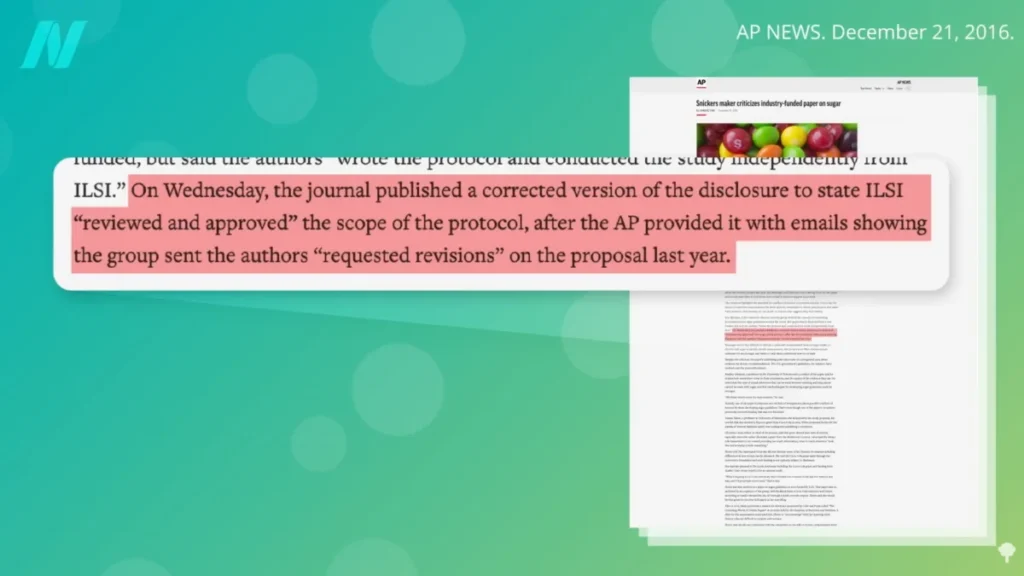
Initially, the authors of the Annals paper vehemently denied any undue influence, asserting they "wrote the protocol and conducted the study independently from ILSI." However, this claim was later exposed as false. An investigation by the Associated Press, which obtained damning emails, revealed that ILSI had actively "requested revisions" to the study’s protocol and conclusions. This revelation forced the Annals of Internal Medicine to publish a corrected version of the paper, acknowledging the undisclosed influence. Further compounding the ethical breaches, it also came to light that a co-author had "conveniently forgot" to disclose a direct $25,000 grant received from Coca-Cola.
The extent of the industry’s reach was so brazen that even Mars, the confectionery giant behind Snickers and M&M’s, felt compelled to publicly denounce the industry-funded paper. Despite being an ILSI member itself, Mars criticized the attempt to undermine sugar reduction guidelines, recognizing the potential damage to the broader food industry’s reputation. Their stance highlighted the perceived recklessness of ILSI’s tactics, suggesting that even within industry circles, some lines were considered too far to cross.
The Meat Guidelines Reversal of 2019: Defying Consensus on Red Meat
Just four years after the sugar debacle, a strikingly similar pattern emerged, this time targeting recommendations for red and processed meat consumption. In 2019, a series of reviews published, once again, in the Annals of Internal Medicine, presented a perplexing set of conclusions that flew in the face of prevailing scientific understanding.
Previous extensive research, including numerous systematic reviews, had consistently linked higher consumption of red and processed meats to increased risks of premature death, cardiometabolic diseases (like heart disease and type 2 diabetes), and various cancers. These findings had formed the basis for public health advice globally, encouraging moderation or reduction in meat intake.
However, the 2019 Annals reviews, notably featuring Bradley Johnston as the lead author once more, presented an astonishing reversal. Despite acknowledging the increased health risks associated with red and processed meat, their Dietary Guideline Recommendations concluded with the advice to "continue current unprocessed red meat consumption" and "continue current processed meat consumption." This recommendation, effectively urging the public to maintain existing, potentially harmful, dietary habits, left public health experts incredulous. The stark contradiction between the evidence presented and the final guidance raised immediate and severe concerns about the integrity of the review process.
Critics were quick to draw parallels to the 2015 sugar controversy. The familiar pattern of acknowledging risks but then issuing counter-intuitive advice, coupled with the involvement of the same lead researcher, strongly suggested a coordinated effort to protect the interests of the meat industry, mirroring "Big Sugar’s" earlier maneuvers. This second incident solidified suspicions that ILSI and its associated researchers were systematically working to undermine public health guidelines that threatened corporate bottom lines.
Supporting Data: Unpacking the Mechanisms of Influence
The alleged modus operandi of ILSI and its corporate funders is a sophisticated blend of scientific outreach, policy infiltration, and strategic dissemination of information.
The Front Group Model: A Legacy of Deception
The concept of a "front group" is not new; it gained notoriety through the tobacco industry’s decades-long campaign to obscure the dangers of smoking. These groups, often masquerading as independent scientific or public health organizations, serve to advance commercial interests by shaping public and scientific opinion. ILSI, with its "innocuous sounding name," has been explicitly linked to this historical strategy. Research has shown ILSI’s "long and serious collaboration with the tobacco industry," providing a blueprint for its later engagement with the food and beverage sectors.

ILSI’s structure as a nonprofit allows it to operate with a veneer of scientific credibility, while its funding, reportedly $17 million annually, comes almost entirely from its 400 corporate members. These members include the most influential names in agribusiness, food, and pharmaceuticals. This funding model creates an inherent conflict of interest, where the very entities responsible for funding research stand to directly benefit from its conclusions.
Infiltration of Policy and Scientific Bodies
Beyond funding specific studies, ILSI has been accused of "quietly infiltrating government health and nutrition bodies around the world." This infiltration allows the organization to exert influence at various stages of policy development, from setting research agendas to reviewing draft guidelines. By placing industry-aligned individuals in key advisory roles or influencing the scientific literature cited by these bodies, ILSI can subtly steer public health discourse in directions favorable to its corporate patrons. The global reach of ILSI, with numerous branches worldwide, amplifies its capacity to shape food policy on an international scale, often away from direct public scrutiny.
The Bias in Industry-Funded Research
The incidents involving sugar and meat guidelines are not isolated anomalies but fit into a broader pattern observed in industry-funded research. Numerous studies examining the relationship between funding sources and conclusions in nutrition-related scientific articles have consistently revealed a significant bias. Research indicates that studies with industry funding are approximately seven to eight times more likely to reach conclusions favorable to the sponsor’s products compared to studies without such funding.
Perhaps most damningly, for interventional studies – those directly testing the effects of a product – the proportion of industry-funded studies that reached unfavorable conclusions about their own products was a staggering 0%. This statistic is not merely a coincidence; it speaks to a systemic issue where the financial imperatives of sponsors can subtly, or overtly, influence research design, execution, interpretation, and publication to ensure desired outcomes. The case of Bradley Johnston, dubbed a "scientist-for-hire" by critics, exemplifies how specific researchers can become instrumental in generating seemingly scientific evidence that supports industry agendas.
Official Responses and Lack Thereof
The response to these controversies has been varied, highlighting both the challenges of combating corporate influence and the critical need for stricter ethical standards in scientific publishing.
Journal Corrections and Criticisms
The Annals of Internal Medicine‘s decision to publish a corrected version of the sugar review, following the Associated Press investigation, served as a crucial acknowledgement of the undisclosed industry influence. This action, while necessary, also raised questions about the initial vetting process and the ease with which industry-backed studies, despite their inherent conflicts of interest, can find their way into prestigious scientific journals. The public denouncement by Professor Marion Nestle and the subsequent retraction by Mars further amplified the criticisms, underscoring the severity of the ethical breaches.
However, the continued publication of similar controversial reviews, such as the 2019 meat guidelines, by the same journal and involving the same lead author, suggests that lessons may not have been fully learned or adequately implemented. This pattern indicates a systemic vulnerability within scientific publishing that allows such tactics to persist.
The Call for Stronger Journal Policies
The struggle against corporate influence in science is not unprecedented. The tobacco industry’s historical manipulation of scientific discourse eventually led leading medical journal editors to adopt a firm stance: they "refused to be passive conduits for articles funded by the tobacco industry." Many high-quality journals now outright decline to publish tobacco industry-funded studies, period, recognizing the inherent and irreconcilable conflict of interest.
Public health advocates argue that a similar, uncompromising approach is urgently needed for the food and beverage industries, especially concerning topics like added sugars, processed foods, and red meat, where commercial interests directly clash with public health imperatives. The recommendation is clear: "high-quality journals could refrain from publishing studies on health effects of added sugars funded by entities with commercial interests in the outcome—like soda and cookie companies." The continued publication of ILSI-sponsored or industry-aligned reviews, however, shows that this critical barrier has yet to be universally erected.
Implications: Eroding Trust and Endangering Public Health
The alleged actions of ILSI and its corporate sponsors carry profound implications for public health, scientific integrity, and public trust.
Erosion of Public Trust in Science and Institutions
When scientific findings are perceived to be manipulated by commercial interests, it erodes the public’s trust in scientific institutions, researchers, and public health authorities. If dietary guidelines, which are meant to be objective, evidence-based recommendations for health, are seen as susceptible to corporate lobbying, then the entire edifice of public health advice begins to crumble. This distrust can lead to confusion, skepticism, and ultimately, a failure of the public to adhere to genuinely beneficial health recommendations. In an era already challenged by misinformation, the undermining of credible scientific sources by industry tactics poses a severe threat to societal well-being.
Detrimental Effects on Public Health
The most direct and alarming implication is the potential for significant negative impacts on public health. If people are advised to "continue current" consumption of foods linked to increased risks of premature death, heart disease, diabetes, and cancer, the consequences could be dire. Misleading dietary guidance can contribute to the rising prevalence of diet-related chronic diseases, placing immense burdens on individuals, healthcare systems, and national economies. For example, if the sugar guidelines are successfully undermined, and people consume more sugar than recommended, it could exacerbate the global obesity and type 2 diabetes epidemics. Similarly, downplaying the risks of red and processed meat could contribute to higher rates of cardiovascular disease and certain cancers.
Challenges for Policymakers
Policymakers rely on robust, unbiased scientific evidence to formulate effective public health policies. When that evidence is compromised by industry influence, it becomes exceedingly difficult to make informed decisions that prioritize public health over corporate profits. This creates a challenging environment where genuine scientific consensus can be drowned out by industry-funded counter-narratives, hindering efforts to address critical public health challenges. The ongoing battle for scientific integrity is not merely an academic exercise; it has real-world consequences for legislative action and public funding decisions.
The Ongoing Battle for Scientific Integrity
The episodes surrounding ILSI underscore the perpetual vigilance required to safeguard scientific integrity. The tactics employed by the food and beverage industry, mirroring those of the tobacco industry, highlight a sophisticated and well-funded effort to control the narrative around product safety and health impacts. This necessitates a multi-faceted response:
- Stricter disclosure requirements: Ensuring full transparency of all funding sources and potential conflicts of interest for researchers and organizations involved in policy-relevant science.
- Independent research funding: Prioritizing and expanding government and philanthropic funding for nutrition research to reduce reliance on industry sources.
- Journal accountability: Implementing and enforcing stringent policies against publishing studies with direct industry funding on sensitive public health topics, akin to the tobacco industry precedent.
- Public education: Raising awareness among the public and policymakers about how industry influence can distort scientific information.
As the next batch of Dietary Guidelines for Americans approaches, with initial scientific reports encouraging diets lower in both sugar and meat, the stakes remain incredibly high. The continued alleged involvement of groups like ILSI and individuals like Bradley Johnston in shaping these critical public health documents signals an ongoing battle for the soul of scientific advice. Until the scientific community and policymakers take decisive action to erect impenetrable firewalls against corporate influence, the integrity of public health recommendations will remain under threat, and the health of populations around the world will continue to be a casualty of profit-driven science. The question is no longer if industry attempts to influence dietary guidelines, but how effectively the scientific community and the public can push back to ensure health, not profit, remains the guiding principle.