The Return of the Rave: How Party Speakers Are Redefining Home Socialization
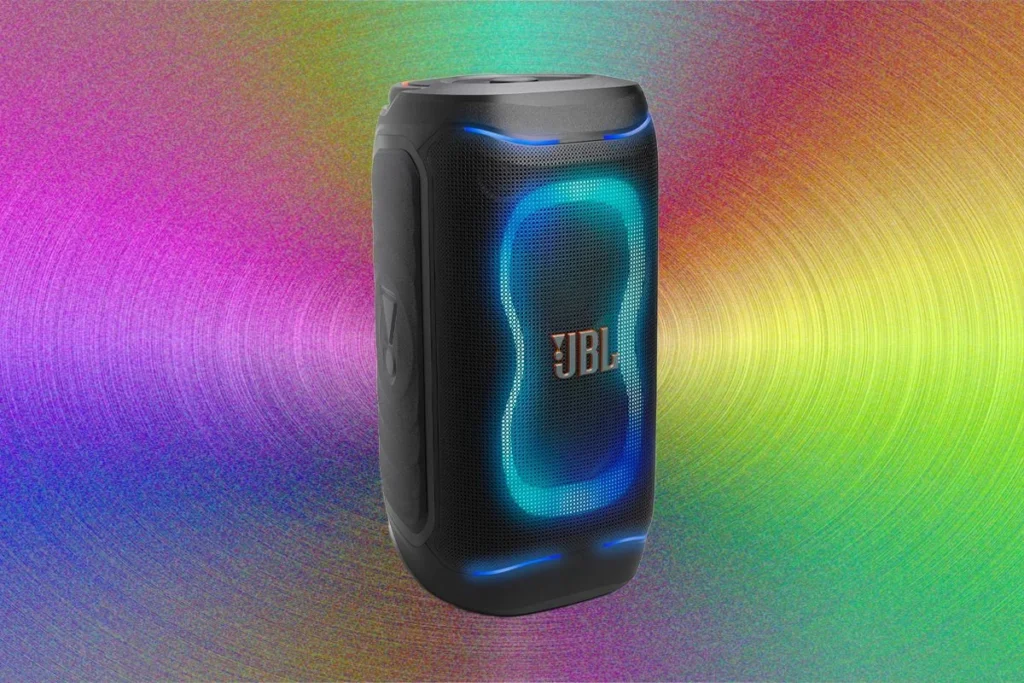
The golden age of the 1980s boombox—when a shoulder-mounted speaker was the ultimate badge of social status—is making a high-tech comeback. Today’s party speakers are the spiritual successors to those block-party icons, evolving into sophisticated, compact PA systems. They are bold, brash, bass-heavy, and, most importantly, engineered to turn any living room, backyard, or park into a spontaneous dance floor. For a generation increasingly trading crowded nightclubs for the intimacy and affordability of private gatherings, these devices are not just accessories; they are the new centerpieces of social life.
The Shift Toward "At-Home" Socialization
The surging popularity of high-output party speakers is not an isolated consumer trend; it is a direct reflection of a broader sociological shift. As economic pressures and shifting lifestyle preferences reshape the entertainment landscape, younger consumers—particularly Gen Z—are migrating away from expensive nights out at bars and clubs.
Recent data underscores this movement. A July 2026 report by The Harris Poll revealed that 68 percent of US Gen Z adults believe that "going out" has become prohibitively expensive. This sentiment is mirrored by data from Attest, which found that 64 percent of Gen Z now prefers to drink and socialize at home, a significant jump from 42 percent just one year prior.
This transition has created a vacuum that traditional audio equipment cannot fill. While a standard bookshelf Bluetooth speaker is perfectly adequate for a dinner party, it fails to provide the visceral, chest-thumping energy required for a "party." Modern party speakers bridge this gap by offering the portability of a wireless device combined with the raw, high-decibel output of professional-grade sound equipment. With integrated LED light shows, rugged chassis, and massive battery reserves, these speakers are designed to sustain an atmosphere that lasts until the early hours of the morning.
Defining the Modern Party Speaker
A party speaker is effectively a hybrid entity. It sits precariously—and successfully—between the worlds of consumer-grade Bluetooth audio and professional live-sound reinforcement.
Key Characteristics:
- Power and Output: Modern battery-powered units typically range from 100 to 800 watts. Through advanced Digital Signal Processing (DSP), manufacturers can now achieve incredible acoustic pressure even at lower wattage, ensuring sound remains crisp even when pushed to the limit.
- Battery Management: A standard device offers 12 to 25 hours of playback. High-end models have begun incorporating swappable batteries, allowing the music to continue indefinitely if a spare is kept on hand.
- Connectivity and Versatility: Beyond Bluetooth, these units often act as hubs. They feature inputs for microphones, guitars, and DJ controllers. Many are equipped with proprietary apps that allow users to play DJ, manipulate vocal effects, and curate synchronized lighting patterns.
- Durability: As these speakers migrate from the living room to the beach or the woods, manufacturers are increasingly adopting IP ratings (ingress protection) to shield internal components from dust, sand, and liquid splashes.
Methodology: Putting Sound to the Test
To evaluate the current market, extensive testing was conducted in both controlled studio environments and "in-the-wild" scenarios—ranging from quiet background music to ear-bleeding volume levels. The criteria for success were rigorous:

- Acoustic Fidelity: A speaker must maintain vocal clarity and minimal distortion even when the bass is boosted to floor-shaking levels.
- Sound Dispersion: Because these speakers are often used outdoors, how the sound "travels" across an open space is a critical performance metric.
- Karaoke and Utility: Using a panel of discerning listeners—and a group of highly energetic, music-loving teenagers—the karaoke capabilities (including vocal removal and microphone echo) were tested for latency and processing accuracy.
- Hardware Integration: We analyzed the efficacy of AI-driven EQ modes and the speaker’s ability to pair with external musical instruments without inducing the signal lag common in standard Bluetooth connections.
The Top Contenders: Expert Reviews
The Best Overall: LG Xboom Stage 501
Collaborating with tech-obsessed producer will.i.am, LG has created a powerhouse. The Stage 501 provides 160 watts on battery and 220 watts when plugged in. During testing, it transformed an empty workshop into a convincing rave venue. Its balance of deep, clean bass and midrange clarity makes it the most versatile unit on the market. It manages to sound "musical" rather than just "loud," a rare feat in this category.
The Best for Portability: JBL PartyBox 130
At 24.8 pounds, the PartyBox 130 hits the sweet spot for urban dwellers. It is light enough to move without a struggle but powerful enough to fill a garden. Its standout feature is the AI Sound Boost, which intelligently prevents distortion as volume increases. It is a robust, well-built machine that prioritizes ease of use, with large, tactile controls that save the user from constantly reaching for their smartphone.
The Best Premium Choice: Marshall Bromley 450
For those who value aesthetics as much as decibels, the Marshall Bromley 450 is the gold standard. With its classic black-and-brass finish and 360-degree sound arrangement, it feels like a genuine piece of rock-and-roll history. It packs a 400-watt punch and offers over 40 hours of battery life. While its LED light show is more subtle—perhaps even "limp"—compared to competitors, its build quality and sonic depth are unmatched.
The Best Value: Soundcore Rave 3S
The Rave 3S is a testament to how far budget-friendly audio has come. It includes two wireless microphones and, crucially, an AI vocal removal tool that actually works. Whether you are hosting a karaoke duel or just pumping a playlist, the 200-watt output and beat-synced lighting offer an experience that punches well above its $350 price tag.
The Best for Deejaying: Sony ULT Tower 7
For the aspiring DJ, the Sony ULT Tower 7 is the clear winner. It offers balanced XLR and RCA inputs, allowing for a professional-grade connection to mixers and decks. With 420 watts of power and an 11-inch woofer, it provides the "club feel" that other speakers strive for but fail to reach. It is large and heavy, but for those who demand professional-level signal routing, it is the only logical choice.
The Best Rugged Option: Soundboks Rider
Sometimes you don’t want a light show; you want an indestructible machine. The Soundboks Rider is built for extreme environments. With its steel grille and silicone corner bumpers, it is virtually tank-like. It delivers up to 118 dB of sound, maintaining detail even at high volumes. While it lacks the modern flair of LED-laden competitors, it is a tool for those who prioritize durability and raw performance.

Implications for the Future of Social Audio
The rise of the party speaker is indicative of a broader "do-it-yourself" approach to social infrastructure. As the cost of public nightlife continues to climb, the home becomes a sanctuary for expression. These devices empower hosts to curate their own environments, effectively decentralizing the "club" experience.
However, this transition is not without its challenges. The increased volume capabilities of these devices raise questions about noise pollution and neighborly relations. As users move these speakers into public parks and shared outdoor spaces, the need for communal etiquette will become as important as the audio technology itself.
Furthermore, the industry is clearly moving toward a "modular" future. The emergence of proprietary, low-latency wireless protocols—like those found in studio-grade monitors—suggests that the next generation of party speakers will likely move away from the limitations of standard Bluetooth. We are entering an era where high-fidelity, low-latency, and high-volume sound will be available to anyone with a spare corner in their living room.
In conclusion, the party speaker is no longer a niche gadget; it is the heartbeat of the modern social gathering. Whether you are seeking the aesthetic charm of a Marshall, the technical prowess of a Sony, or the sheer value of a Soundcore, the technology exists to bring the festival to your front door. The rave hasn’t disappeared; it has simply moved home, and it has never sounded better.