Beyond the Lens: Securing Your Home Without Compromising Your Privacy
In an era where the “smart home” is synonymous with constant surveillance, the ubiquity of security cameras has created a paradoxical trade-off: to feel safe, homeowners are often required to invite a digital eye into their most intimate spaces. While video feeds provide a sense of control, they introduce significant risks, ranging from cybersecurity vulnerabilities that expose private footage to the cloud, to the unsettling reality of “surveillance state” integration, where private data may be shared with law enforcement or third-party corporations.
For those who find the idea of a camera watching their living room or bedroom uncomfortable, there is a viable path forward. Securing your home does not necessitate the use of video surveillance. By leveraging motion sensors, radar technology, and presence-detection ecosystems, you can achieve a robust perimeter and interior security setup that prioritizes your privacy while maintaining vigilant oversight.
The Evolution of Privacy-First Security
The shift away from cameras is not merely a preference; it is a movement toward intentional technology. Security cameras are inherently invasive; they capture visual context that is often unnecessary for basic intrusion detection. Conversely, modern sensor technology focuses on events rather than images.
Whether you are protecting a detached garage, a home office, or a medicine cabinet, the goal of a privacy-focused system is to alert you to activity without the risk of a data leak involving sensitive imagery. In testing various alternatives, a clear hierarchy of solutions has emerged, ranging from old-school hardware to sophisticated, non-visual smart home integrations.
An Old-School Approach: Radar-Based Perimeter Defense
For those seeking to secure large properties or outdoor perimeters without relying on cloud-connected cameras, radar technology offers a compelling, analog-adjacent solution. The Letwesaf Radar Motion Alarm System stands out as a prime example of this philosophy.
How Radar Detection Works
Unlike cameras that use optical sensors, radar systems emit radio waves to detect movement. They are immune to the visual noise that plagues traditional outdoor cameras—such as swaying tree branches or changing light conditions.
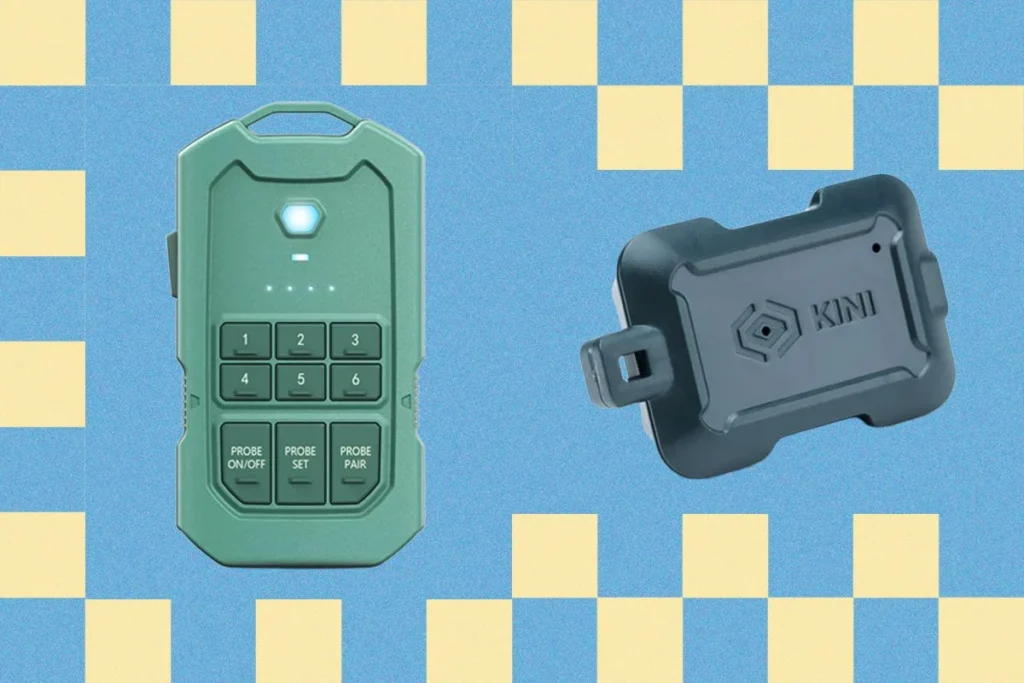
- The Hardware: The Letwesaf system features a receiver and a series of rugged, weather-resistant detectors. With an IP65 rating, these units are built to withstand the elements, making them ideal for monitoring backyards, side passages, or RV campsites.
- The Privacy Advantage: The system operates entirely offline. There is no Wi-Fi connectivity, no app to install, and no cloud server to hack. The receiver simply sounds an alarm when a person or animal enters the detection zone.
- Operational Constraints: While the range is impressive—extending up to half a mile—it is not without its maintenance requirements. The 3,000-mAh battery requires a recharge every five to six days. For a more permanent, "set-it-and-forget-it" installation, integrating a small USB-C solar panel is highly recommended to maintain a constant charge.
Granular Control: The Kinisium SafeAlert
When the objective is to monitor specific high-value targets—such as a gun safe, a medication cabinet, or a jewelry drawer—a general-room sensor is insufficient. The Kini SafeAlert Wi-Fi Motion Sensor provides the precision required for these use cases.
Configuration and Versatility
The Kinisium device is designed for micro-monitoring. It tracks movement along the X, Y, and Z axes, ensuring that any subtle shift in a cabinet door or drawer triggers a notification.

- Customization: Users can calibrate the sensitivity and the "cool-down" period between alerts to prevent notification fatigue.
- Stasis Mode: One of the most innovative features of the Kini system is its "Stasis" mode. Rather than alerting on motion, it alerts on the absence of motion for a set period. This makes it an invaluable tool for caregivers. For instance, if an elderly relative fails to open their medication cabinet by a specific time, the system can send an alert, providing peace of mind without the need for intrusive cameras.
- Privacy Stance: Kinisium has explicitly stated that it does not collect user data, and the device allows for the complete disabling of cloud logging, putting the user in full control of their data footprint.
Smart Home Ecosystems: Light and Presence Sensing
For homeowners already embedded in a smart home ecosystem, there are ways to repurpose existing infrastructure for security without adding new cameras.
Wiz SpaceSense and Philips Hue MotionAware
Both Wiz and Philips Hue utilize the concept of "presence sensing," which measures the disturbance of Wi-Fi or Zigbee signals within a room to detect human movement.
- Wiz SpaceSense: This system leverages your existing Wiz light bulbs as a mesh network of sensors. While it may not be fast enough to trigger a lighting scene instantaneously, it serves as an excellent, subscription-free "tripwire" to notify you of motion while you are away from home.
- Philips Hue MotionAware: This feature is more robust but comes with a caveat: it requires a subscription to receive push notifications. For those who prioritize a unified experience, the cost of $1 per month may be worth the integration with the existing Hue lighting ecosystem. It is a powerful tool for those who already use Hue lights to secure their property, as it allows for automated lighting responses (e.g., flashing lights when motion is detected) to deter intruders.
Supporting Data: The Case for Modular Security
The transition to non-camera security often leads users toward modular security systems. Brands like SimpliSafe, ADT, and Vivint have pivoted to offer "alarm-first" packages. These systems prioritize contact sensors (for doors and windows), glass-break sensors, and motion detectors over video streaming.
The Role of Professional Monitoring
The data indicates that modular systems, when paired with professional monitoring, offer the highest level of security. Unlike DIY systems that rely solely on the homeowner’s smartphone, these services provide a 24/7 human response layer. If a sensor is tripped, a monitoring center verifies the alarm and coordinates with local authorities. This provides the security of a camera system—the ability to verify an emergency—without the homeowner having to manage, store, or worry about video footage.
Implications for Future Tech and Age-Tech
As the industry matures, the focus on "Age Tech" is pushing the boundaries of what sensors can do. Technologies like the Nomo Smart Care system represent the future of private, non-visual monitoring. These systems utilize sophisticated motion sensors capable of detecting falls or long-term inactivity, coupled with wearable panic buttons.
The implication is clear: we are moving toward a future where "security" is defined by the context of a home’s activity rather than the visual evidence of it.
Summary: A Checklist for the Privacy-Conscious
If you are ready to remove cameras from your home or prevent them from entering, follow this strategic framework:
- Assess Your Threat Model: Are you concerned about intruders, or are you monitoring the health of a family member? Choose your sensors accordingly.
- Choose Your Connectivity: If you are a privacy purist, opt for the radar-based or offline systems (like the Letwesaf radar) that do not rely on the cloud.
- Audit Your Ecosystem: If you are comfortable with some cloud interaction, leverage existing smart-home gear (Wiz, Hue, or Aqara) to set up motion-triggered automations.
- Prioritize Hardened Sensors: For entry points, invest in high-quality contact and glass-break sensors. These remain the most reliable, false-positive-free method of detecting a home breach.
By diversifying your security portfolio with these technologies, you can maintain a protected home environment that respects the sanctity of your private life. In the balance between safety and surveillance, the choice is increasingly shifting in favor of the user, proving that you can indeed keep the burglars out without letting the prying eyes in.