Beyond the White: The Quiet Renaissance of Alsatian Pinot Noir
By Aleks Zecevic
September 17, 2026
For generations, the aromatic profile of Alsace has been defined by a singular, crystalline narrative: tall, slender bottles filled with Riesling, Gewürztraminer, and Pinot Gris. It is a region often viewed as an outlier in the French viticultural landscape, a place where German precision meets French finesse. For decades, this identity was so firmly cemented that the mention of "Alsace" triggered an almost Pavlovian expectation of white wine. Red wine, specifically Pinot Noir, was relegated to a mere footnote—a rustic sidebar in a region celebrated for its whites.
Yet, a tectonic shift has occurred. Without the thunderous marketing machinery of Burgundy or the sudden, global cult-status of German Spätburgunder, Pinot Noir in Alsace has undergone a profound transformation. It has not merely improved; it has matured into a category of serious, site-specific, and world-class wine. To taste the best of modern Alsatian Pinot is to recalibrate one’s understanding of the region’s potential.
The Chronology of a Revival
The history of Pinot Noir in Alsace is not one of a new arrival, but rather a long-forgotten heritage. During the era of the Holy Roman Empire, the region enjoyed a storied reputation for red wines cultivated in its unique mosaic of limestone, granite, and marl soils. This prestige was dismantled by the devastation of the Thirty Years’ War, which decimated the local population and culture.
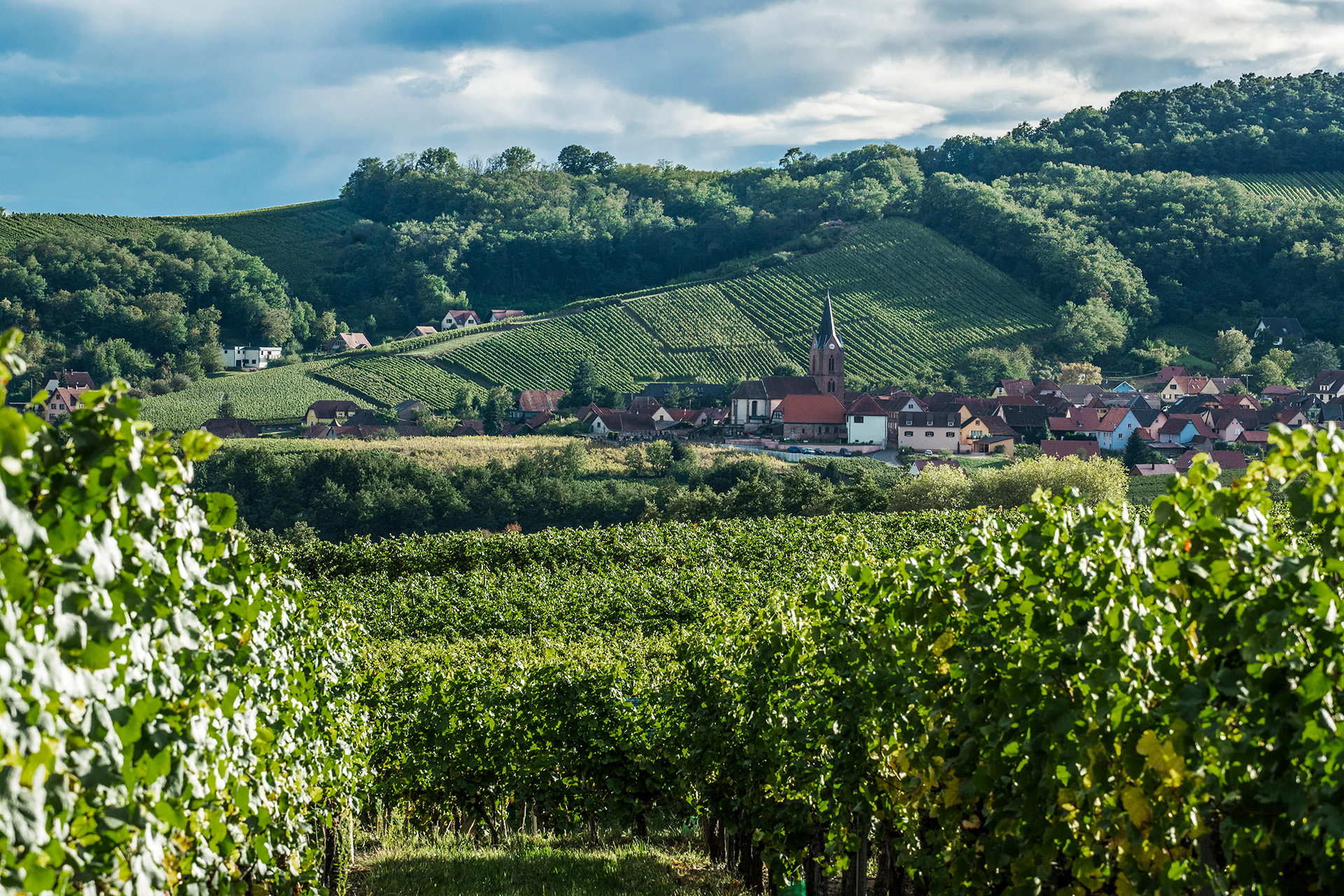
The subsequent repopulation under Louis XIII and XIV introduced farming families from Switzerland, Austria, and Germany—cultures that, at the time, lacked a deep-seated tradition for producing high-quality red wines. As Alsace fell under the German Empire in the late 19th century, the mandate shifted toward volume over virtue. Pinot Noir was pushed to high yields, leading to thin, uninspired wines that were stripped of their inherent character. By the 1970s, the grape was largely irrelevant, a shadow of its former self.
The turning point was not found in the soil, but in the lecture halls. In the 1970s, a visionary generation of Alsatian winemakers turned their gaze away from the German schools of Geisenheim and toward the University of Burgundy. Figures such as Pierre Trimbach and René Muré returned home with a radical philosophy: lower yields, careful élevage in oak, extended macerations, and, most crucially, a profound respect for site expression.
By the late 1980s, this terroir-driven approach began to take hold. Estates like Domaine Albert Mann led the charge, transforming Pinot Noir from a 1% afterthought in 1962 into a flagship varietal. A second, more modern wave—led by vintners like Mélanie Pfister and Felix Meyer—has since synthesized these Burgundian lessons with global perspectives, refining the wines into the elegant, balanced expressions we see today.
Supporting Data: A Growing Footprint
The numbers reflect a steady, deliberate climb. Pinot Noir now accounts for approximately 13% of Alsace’s total vineyard plantings, a significant increase from the 8% recorded in 2008. While this growth is measured, it is concentrated in the most promising sites.

Winemakers are increasingly moving away from high-yielding clones in favor of massal selection—the propagation of cuttings from the best-performing vines in a vineyard. "It’s the mixture that contributes to the complexity in a plot, not a single phenotype," explains Maxime Barmès of Domaine Barmès-Buecher. These selections typically yield smaller, more concentrated berries with looser clusters, which are better suited for producing high-quality wine.
Furthermore, viticultural practices have tightened significantly. Yields, once loosely managed, are now frequently restricted to between 30 and 35 hectoliters per hectare. The widespread adoption of organic and biodynamic farming has also become a cornerstone of the "new" Alsace. "Biodynamics naturally regulates yields, brings more depth, and improves the texture of Pinot Noir," notes Antoine Barthelmé.
Official Perspectives: The Philosophy of the Craft
The narrative of climate change is often cited as the primary driver of this evolution, but the winemakers themselves tell a more nuanced story. While warmer vintages have certainly assisted in achieving phenolic ripeness, the producers argue that the real change was one of intention.
"Before climate change, there was a change of vision," says Antoine Barthelmé of Domaine Albert Mann. "We stopped treating Pinot Noir like a white wine."

Maxime Barmès agrees, noting that the pursuit of excellence requires a delicate hand. "Global warming can help ripening, but in very sunny years, it can also reduce aromatic finesse," he warns. The goal is to avoid the trap of over-ripeness and instead pursue a "precision mindset." At Barmès-Buecher, this involves full destemming, light punch-downs, and aging in older barrels to ensure the wine retains its varietal purity.
Foulques Aulagnon, the export marketing manager for the Alsace Wine Board (CIVA), frames the shift as a fundamental restoration. "It is a revival, not an evolution," he insists. This sentiment is echoed by the winemakers who now treat the vineyard as a living entity rather than a factory for juice. Whether employing whole-cluster fermentation at Albert Mann or the minimal-intervention techniques favored by producers like Catherine Riss, the common thread is a move toward restraint.
Implications: The New Standard
What are the implications of this shift for the global wine market? The most obvious is the emergence of a high-value alternative to Burgundy.
"If you blind taste a great Alsace Pinot and a great Burgundy, Alsace has a good chance of competing with wines ten times more expensive," Maxime Barmès asserts. While comparisons to Burgundy are perhaps inevitable given the grape variety, many Alsatian winemakers are becoming less concerned with direct emulation. They are instead focused on the specific identity of their own soils.

The debate over the ideal soil—clay and marl for structure, granite for freshness, or limestone for the "matrix" of the grape—continues, but the quality of the output suggests the debate itself is a sign of health. The category is in motion: it can be light and perfumed, or dark and structured, but it is increasingly defined by balance.
Bottles to Watch
For those looking to explore this renaissance, the following producers represent the current zenith of Alsatian Pinot Noir:
Domaine Muré: 2023 Clos Saint Landelin Pinot Noir
This wine is a masterclass in composition. It displays a sophisticated profile of cherry, violet, and a whisper of sandalwood. On the palate, it is poised and medium-bodied, possessing the kind of polished tannins that one rarely finds outside of the Côte de Nuits. It is a quiet, powerful testament to the potential of these slopes. (93 Points)
Trimbach: 2023 Réserve Pinot Noir
A study in clarity and precision. The 2023 Réserve captures the essence of pomegranate and rose, supported by melting tannins and a vibrant, lifted acidity. It is an exceptionally balanced wine that proves that even in the entry-level tier of these historic houses, the focus on "seriousness" is absolute. (91 Points)

Conclusion
As Alsace looks toward the future, the rise of Pinot Noir serves as a marker of a region finally comfortable in its own skin. It is no longer just the "white wine region" of France; it is a diverse, dynamic territory that has reclaimed a lost history. By refusing to follow the marketing trends of its neighbors and instead focusing on site-specific precision and viticultural integrity, Alsace has quietly become one of the most compelling wine regions in the world. The shift is not just in the bottle; it is in the mindset of a generation that has realized that the path to the future was hidden in their own soil all along.