Five Ingredients, Infinite Value: The Culinary and Economic Rise of Slow-Cooker Mississippi Chicken
In an era defined by fluctuating grocery prices and demanding professional schedules, the modern home cook is increasingly caught in a structural squeeze: how to prepare nutrient-dense, flavorful dinners without exhausting financial resources or valuable evening hours. As household budgets tighten nationwide, culinary developers are looking backward to classic, viral comfort foods to find solutions for today’s economic realities.
At the forefront of this movement is "Mississippi Chicken"—a highly efficient, five-ingredient slow-cooker dish that reinterprets a classic Southern culinary profile. Developed and rigorously refined in the Nashville Test Kitchen by culinary experts, this recipe offers a powerful case study in modern food optimization: requiring zero chopping, costing just $1.74 per serving, and requiring only ten minutes of active preparation.
Main Facts: The Anatomy of a High-Yield Comfort Dish
Mississippi Chicken is a modern, poultry-based evolution of the internet-famous Mississippi Pot Roast. By swapping out expensive cuts of beef chuck for budget-friendly chicken breasts or thighs, recipe developers have preserved the deeply savory, buttery, and tangy flavor profile of the original dish while significantly lowering the barrier to entry for budget-conscious families.
====================================================================
                        RECIPE PROFILE
====================================================================
Total Recipe Cost:       $10.44
Cost Per Serving:        $1.74 (Yields 6 generous servings)
Active Prep Time:        10 minutes
Cooking Duration:        6 hours on LOW (or 3-4 hours on HIGH)
Primary Kitchen Tool:    6-quart Slow Cooker
====================================================================
The Five Core Ingredients
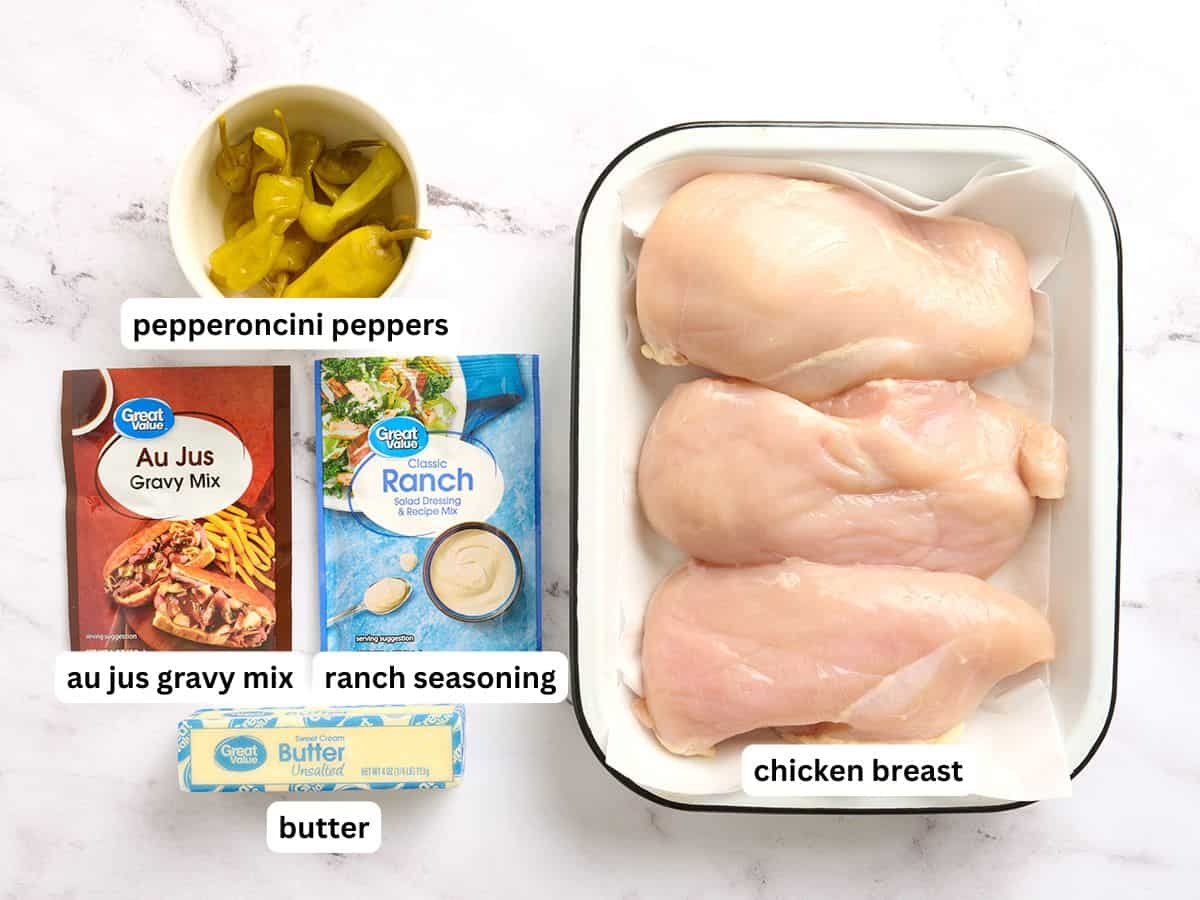
The brilliance of the dish lies in its minimalism. It relies on five shelf-stable or readily accessible refrigerated ingredients that interact chemically during the slow-cooking process to create a complex, cohesive sauce without the need for added water, stock, or thickeners:
- Boneless, Skinless Chicken Breasts (or Thighs): Three pounds of high-protein poultry serve as the clean canvas for the dish.
- Au Jus Gravy Mix: One standard 1-ounce packet provides a deeply savory, umami-rich foundation reminiscent of slow-simmered beef roast.
- Ranch Seasoning Mix: One 1-ounce packet delivers a herb-forward, buttermilk-tangy complexity featuring dill, garlic, and onion notes.
- Unsalted Butter: One solid stick (8 tablespoons) introduces essential lipids, creating a velvety, emulsified sauce that coats the shredded meat.
- Pepperoncini Peppers: Approximately eight whole pickled peppers inject a bright, acetic acidity and mild heat, cutting through the heavy fat of the butter and the salt of the seasoning packets.
Chronology: From Viral Southern Roots to the Modern Table
To understand the rise of Mississippi Chicken, one must trace both its historical lineage in American food culture and the physical timeline of its preparation inside the domestic kitchen.
The Historical Evolution (Late 1990s to Present)
The flavor profile of this dish traces its origins to Ripley, Mississippi, in the late 1990s. A home cook named Robin Chapman sought to adapt a classic pot roast recipe to make it milder and more appealing to her children. Her modification—adding ranch mix, gravy mix, butter, and pepperoncini to a beef roast—was shared with friends, eventually finding its way onto community parish blogs.
By the early 2010s, with the rise of visual social media platforms like Pinterest, Chapman’s creation became a viral phenomenon known globally as "Mississippi Pot Roast." It was heralded by food writers as one of the most popular recipes of the internet age.
In the late 2010s and early 2020s, as global inflation escalated the price of red meat, culinary developers began experimenting with poultry alternatives. The transition from beef to chicken was not merely a cost-cutting measure; it transformed the dish into a lighter, faster-cooking, and highly versatile protein base that could be adapted into wraps, tacos, and salads.
The Cooking Timeline: Step-by-Step Execution
In the kitchen, the physical transformation of these five raw ingredients into a cohesive meal follows a precise chronological progression:
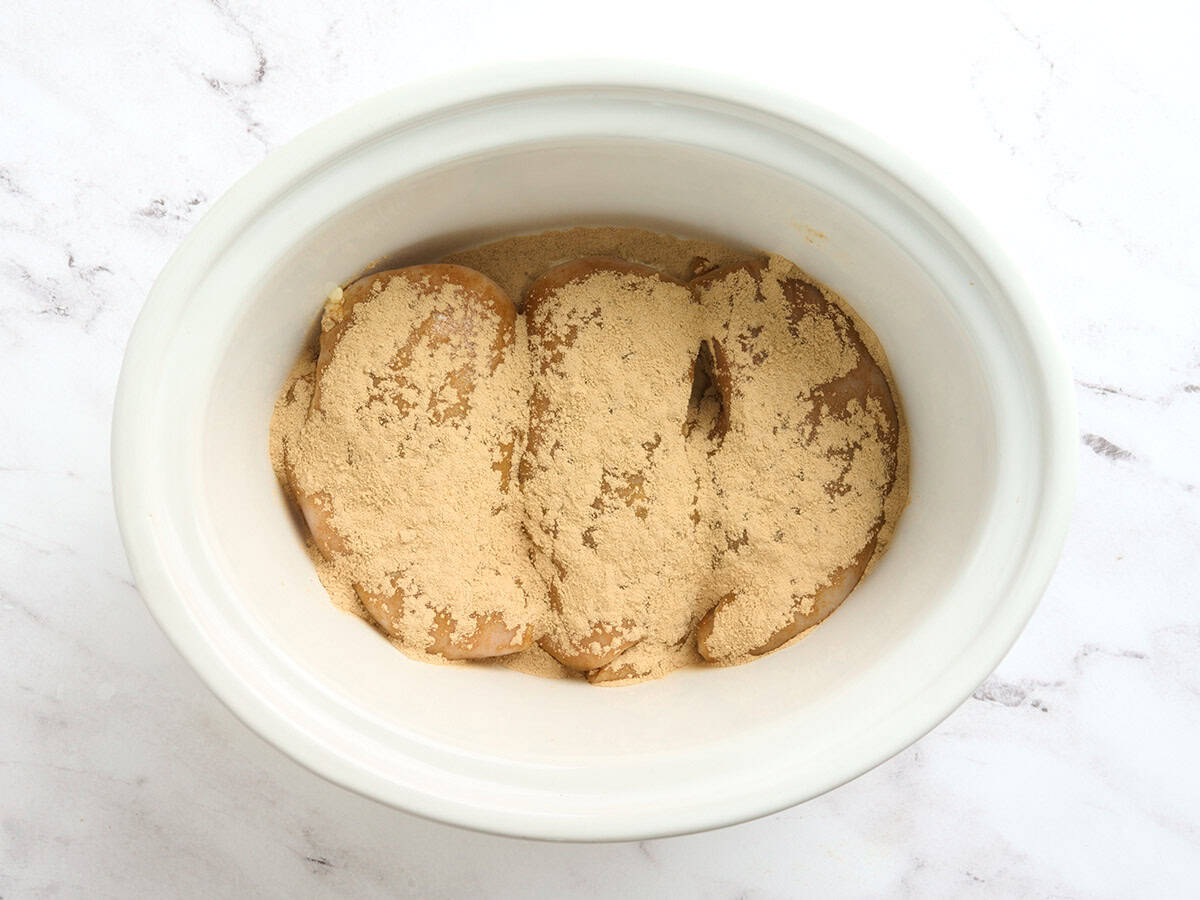
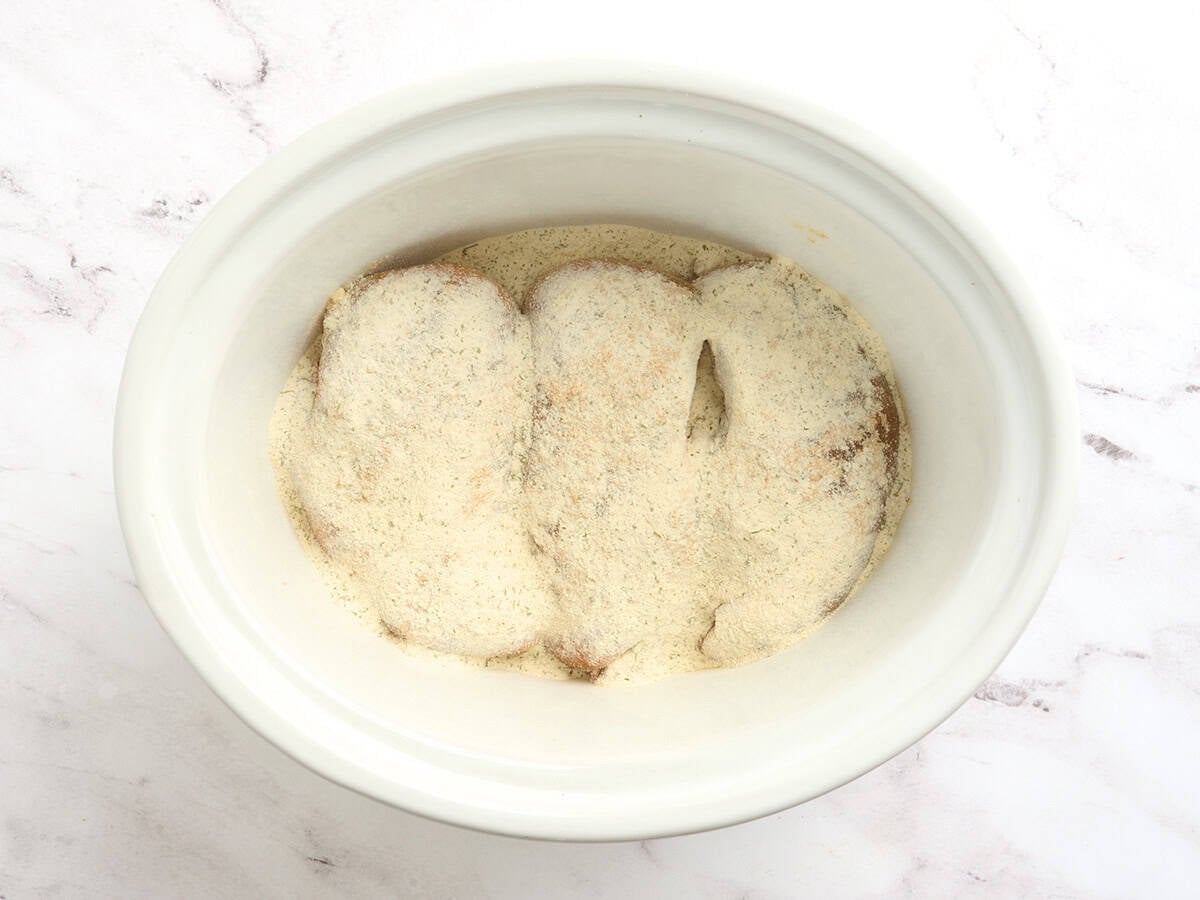
[Hour 0:00] Prep & Layering ➔ [Hour 1:00] Lipid Meltdown ➔ [Hour 3:00] Cellular Breakdown ➔ [Hour 6:00] Shredding & Emulsification- Hour 0:00 — Preparation and Stratification: The cook arranges three pounds of fully thawed chicken breasts in a single, even layer at the bottom of a 6-quart slow cooker. This minimizes overlap, ensuring uniform heat distribution. The au jus and ranch seasoning powders are sprinkled evenly over the raw meat, creating a dry, seasoned crust.
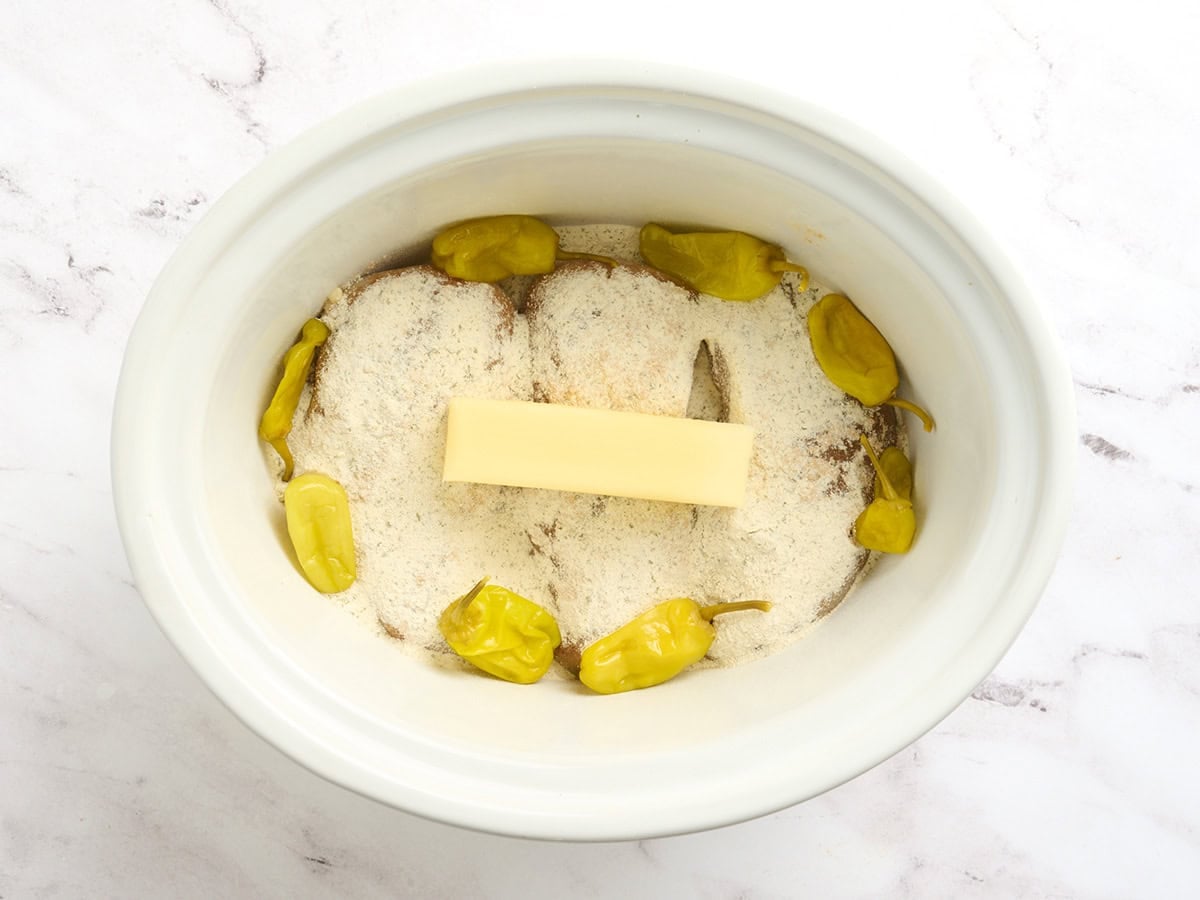
- Hour 0:05 — Positioning the Fats and Acids: A single stick of cold, unsalted butter is placed directly in the center of the seasoned chicken. Eight whole pepperoncini peppers are scattered around the perimeter. The lid is sealed, and the slow cooker is set to LOW.
- Hour 1:00 — The Lipid Meltdown: As the slow cooker’s heating element warms the stoneware, the butter begins to melt, cascading over the seasoned chicken. Simultaneously, the chicken begins to release its natural cellular moisture. This water combines with the melting butter and the dry seasoning packets, initiating the formation of a rich, self-basting sauce.
- Hour 3:00 — Cellular Breakdown and Infusion: By the midpoint of cooking, the heat has begun to denature the tightly wound proteins in the chicken. The acetic acid from the pepperoncini peppers penetrates the meat, tenderizing the muscle fibers while infusing them with a subtle, tangy heat.
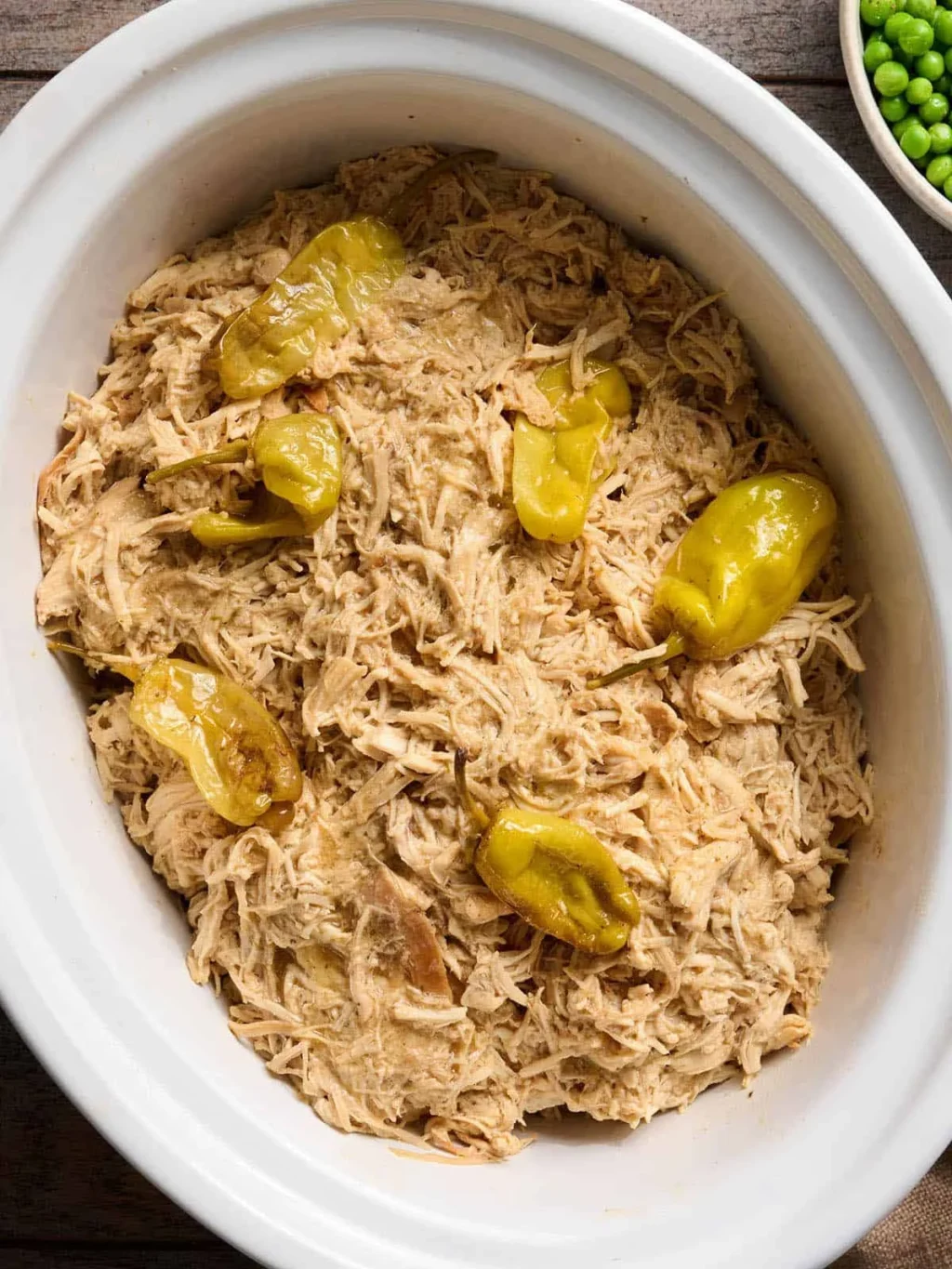
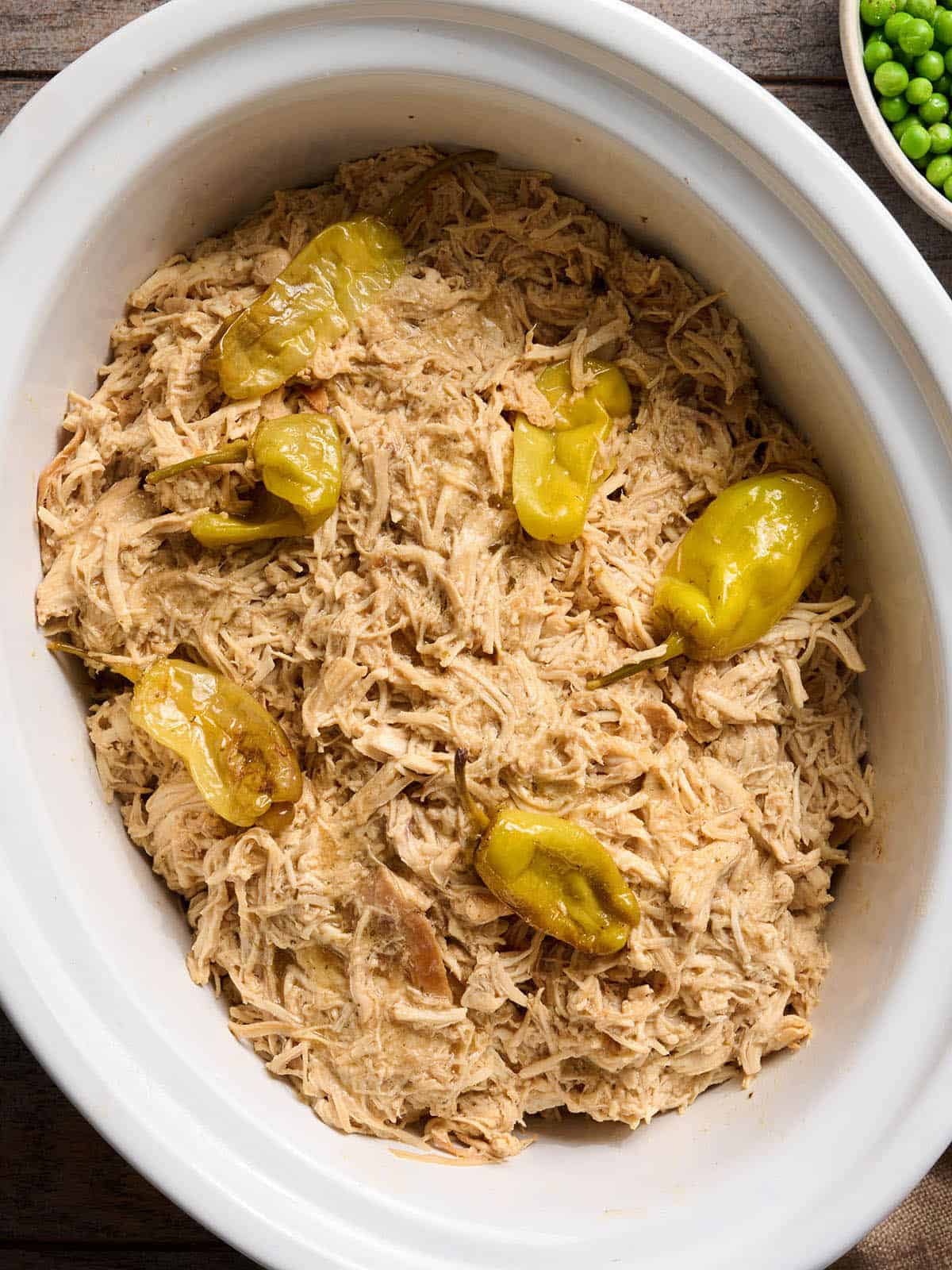
- Hour 6:00 — Thermal Equilibrium and Shredding: The internal temperature of the chicken crosses the critical safety threshold of 165°F (74°C). The butter, rendered chicken juices, and dissolved seasonings have emulsified into a smooth, savory gravy. The cook removes the lid and, using two forks, easily shreds the tender chicken directly in the pot, stirring the shredded fibers back into the warm, buttery liquid to absorb the remaining moisture.
Supporting Data: Economic and Nutritional Metrics
A key driver of the recipe’s viral longevity is its performance under rigorous quantitative analysis. Both financially and nutritionally, the dish presents highly efficient metrics.
Cost Breakdown Analysis
By substituting chicken for beef, home cooks achieve significant financial savings. Below is an itemized cost estimate based on average supermarket pricing for store-brand ingredients:
| Ingredient | Quantity | Estimated Cost |
|---|---|---|
| Boneless, Skinless Chicken Breasts | 3 lbs. | $7.47 |
| Store-Brand Au Jus Gravy Mix | 1 oz. packet | $0.88 |
| Store-Brand Ranch Seasoning Mix | 1 oz. packet | $0.88 |
| Unsalted Butter | 1 stick (1/4 lb.) | $0.92 |
| Pickled Pepperoncini Peppers | 8 pieces | $0.29 |
| Total Recipe Cost | 6 Servings | $10.44 |
| Cost Per Serving | 1 Cup (~150g) | $1.74 |
Comparing this to a traditional Mississippi Pot Roast—which requires a three-pound beef chuck roast averaging $18.00 to $22.00—the poultry variation represents a 45% to 52% reduction in raw ingredient costs, while yielding a comparable volume of finished protein.
Nutritional Profile
While the dish is celebrated for its rich comfort-food flavor, it remains a protein-dense option suitable for various dietary structures, particularly low-carbohydrate regimens:
- Calories: 420 kcal (21% Daily Value)
- Protein: 49 g (98% Daily Value)
- Total Fat: 21 g (32% Daily Value)
- Carbohydrates: 5 g (2% Daily Value)
- Sodium: 1281 mg (56% Daily Value)
- Fiber: 0.5 g (2% Daily Value)
Note on Sodium Management: Because commercial gravy and ranch packets contain concentrated sodium, culinary developers emphasize the absolute necessity of using unsalted butter. This choice prevents the dish from crossing the threshold into excessive saltiness, allowing home cooks to maintain better control over the final flavor profile.
Official Responses: Insights from the Test Kitchen
To evaluate the culinary mechanics of Mississippi Chicken, food scientists and test kitchen developers have analyzed how these simple ingredients interact.
The Developer’s Perspective
Melissa Nolan, a professional recipe developer and culinary instructor trained at Johnson & Wales University, refined this specific formulation in the Nashville Test Kitchen. Nolan, whose background includes an internship at Thomas Keller’s Michelin-starred Per Se in New York City, emphasizes that the success of budget recipes relies on smart ingredient substitution and culinary science.
"When you are working with a five-ingredient recipe, there is nowhere for low-quality or poorly balanced flavors to hide," Nolan explains. "In the test kitchen, we focused on maximizing the physical properties of the slow cooker. Many home cooks make the mistake of adding water or chicken broth to the pot, fearing the meat will burn. However, chicken breasts are roughly 75% water. As they cook, they release an abundance of moisture. Adding extra liquid dilutes the starch in the gravy packets, resulting in a thin, watery broth rather than a rich, glossy sauce that clings to the shredded meat."
Addressing Culinary Substitutions
Nolan and her team also tested several ingredient variations to ensure accessibility across different socioeconomic levels:
- Chicken Thighs vs. Breasts: The test kitchen confirmed that boneless, skinless chicken thighs can be substituted at a 1:1 ratio. Thighs contain more dark meat and connective tissue, yielding a juicier shred. However, developers note that thighs render more natural fat, requiring cooks to trim visible fat prior to cooking and skim excess oil from the surface of the finished sauce.
- The Gravy Element: If au jus mix is unavailable or cost-prohibitive, standard brown gravy mix can be substituted. While brown gravy yields a slightly thicker, milder sauce, it preserves the savory profile essential to the dish.
- Name-Brand vs. Store-Brand: Double-blind testing revealed no statistically significant flavor difference between name-brand seasoning packets and cheaper, private-label supermarket brands, validating the recommendation to buy store-brand options to maximize savings.
Implications: The Macroeconomics of the Modern Kitchen
The rising popularity of dishes like Mississippi Chicken points to broader structural shifts in consumer behavior, domestic labor, and the culinary arts.
The Democratization of Professional Culinary Concepts
For decades, high-end culinary training focused on complex, multi-step techniques: searing, deglazing, reducing, and clarifying. However, the modern domestic reality—characterized by dual-income households, long commutes, and inflation—has created a demand for recipes that bypass these labor-intensive steps without sacrificing flavor.
Mississippi Chicken demonstrates how food science can democratize deep, slow-simmered flavors. The slow cooker acts as a self-contained environment where pressure, steam, and constant low heat mimic the classical French technique of braising. By utilizing prepared seasoning packets, home cooks bypass hours of chopping aromatics (such as onions, celery, and carrots) and measuring individual herbs, making high-quality, comforting meals accessible to individuals with limited culinary training or physical energy.
Classic French Braise                           Modern Slow Cooker
---------------------                           ------------------
1. Sear meat in heavy dutch oven                1. Place raw chicken in pot
2. Chop mirepoix (onions, celery, carrots)       2. Sprinkle seasoning packets
3. Deglaze pan with wine and stock              3. Add butter and peppers
4. Simmer gently for 3-4 hours                  4. Cook on LOW for 6 hours
5. Strain, defat, and reduce sauce              5. Shred and serve directly
Minimizing Food Waste Through Versatility
In food economics, the true cost of a meal is determined not just by the initial checkout price, but by how much of the food is ultimately consumed versus thrown away. Mississippi Chicken addresses the issue of food waste through its exceptional versatility.
Because the shredded chicken is seasoned with a balanced blend of savory, tangy, and rich notes, it can be repurposed across multiple meals throughout the week, preventing "recipe fatigue":
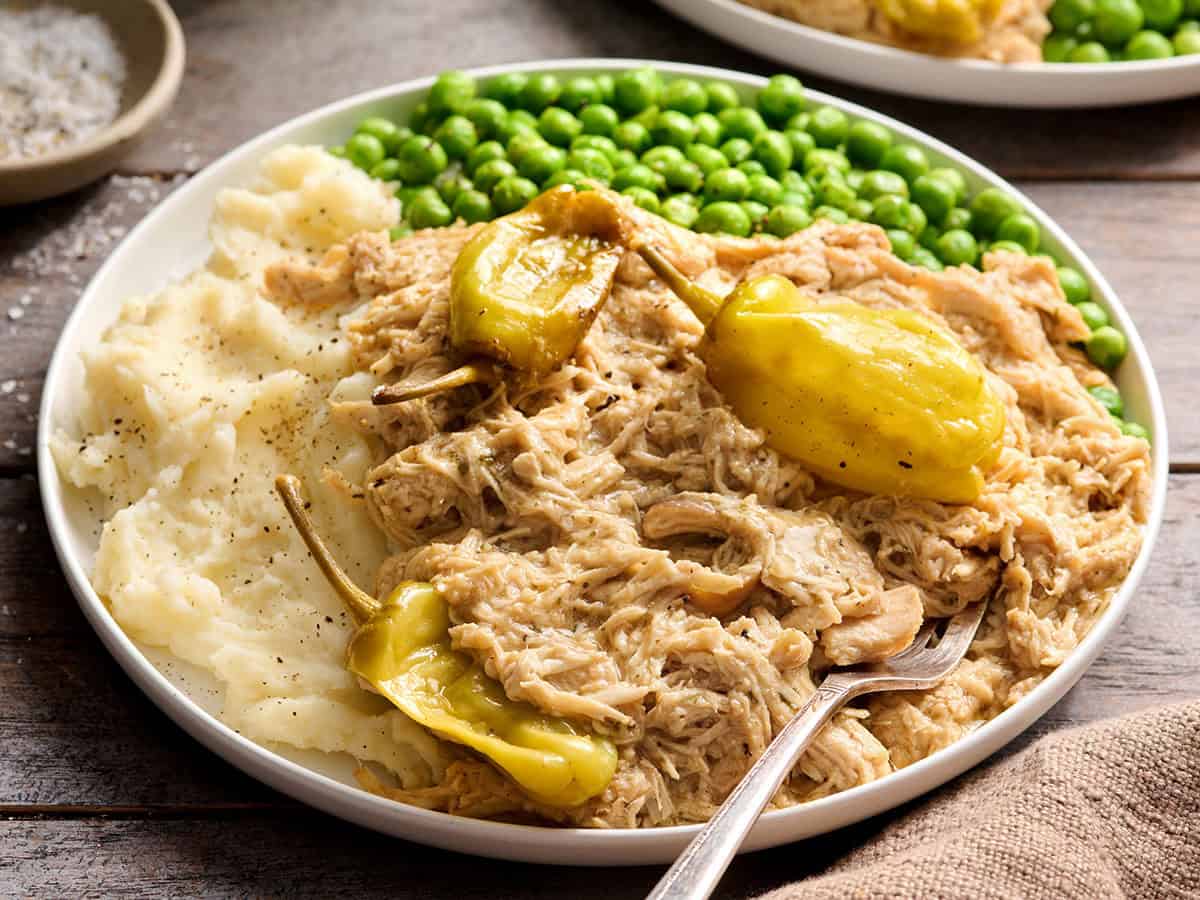
- The Classic Platter: Served hot over creamy mashed potatoes alongside steamed green peas, with the buttery cooking juices ladled over the top like a traditional gravy.
- The Acidic Contrast: Spooned over seasoned yellow or white rice, allowing the grains to absorb the savory sauce.
- The Quick Lunch: Piled high onto sweet Hawaiian rolls to make quick, budget-friendly sliders.
- The Tex-Mex Fusion: Scattered over tortilla chips with black beans and melted cheese to create high-protein, restaurant-style nachos.
- The Low-Carb Meal Prep: Portioned into airtight containers alongside a crisp, fresh green salad, with the dressing served on the side to prevent the greens from wilting.
By transitioning a single, bulk-cooked protein into three or four distinct meals, households can significantly reduce their weekly food waste, maximize their initial financial investment, and enjoy delicious, homemade dinners every night.