The Pervasive Epidemic of Weight Bias: Unmasking Discrimination in Society and Healthcare
Please note: This article discusses the important and troubling issue of weight bias and discrimination, which may be a sensitive topic for some readers.
In an era increasingly focused on equity and inclusion, one form of prejudice continues to thrive, often unchallenged and even normalized: weight bias. Described by experts as "the last acceptable form of bias," weight stigma represents the rampant discrimination and stereotyping of individuals perceived as overweight or obese. Far from being a mere social inconvenience, this pervasive prejudice infiltrates daily life, education, employment, and, critically, the very institutions designed to heal: healthcare. This article delves into the disturbing prevalence and profound implications of weight bias, drawing on compelling research to expose its insidious nature and underscore the urgent need for systemic change.
The Daily Reality of Weight Stigmatization: A Constant Barrage
For individuals living with excess weight, discrimination is not an abstract concept but a tangible, daily reality. A revealing study tasked fifty overweight women with maintaining a diary to record instances of perceived weight-related stigmatization. Over a single week, a staggering total of more than a thousand instances were documented. This translates to an average of three discriminatory encounters per day for an overweight woman – a relentless barrage of harassment, physical barriers, and perceived poorer service. Such experiences can range from overt insults and name-calling to subtle yet demeaning interactions, or practical challenges like being unable to comfortably fit into public seating. The emotional and psychological toll of such constant vigilance and microaggressions is immense, fostering feelings of shame, anxiety, and isolation.
Interestingly, gender plays a significant role in the frequency of these discriminatory experiences. Obese men, while still experiencing bias, report approximately three times less discrimination than women of comparable size, suggesting it might be a daily occurrence rather than several times a day. This disparity highlights how weight stigma intersects with gender bias, often subjecting overweight women to a harsher, more critical societal gaze. The cumulative impact of these daily slights and overt acts of prejudice creates an environment of chronic stress, profoundly affecting mental health and overall well-being.
Beyond Perception: Evidencing Systemic Bias in Employment and Social Acceptance
The notion that individuals might be "paranoid" about experiencing weight bias is decisively debunked by empirical research. Studies employing professional actors, made up with theatrical prostheses to appear overweight, unequivocally demonstrated systemic discrimination in employment. When these actors applied for jobs, they were significantly more likely to face discrimination when presenting as overweight compared to their normal-weight counterparts. This employment bias was particularly pronounced and prejudiced against overweight women, further reinforcing the intersecting nature of weight and gender discrimination. These findings reveal that bias is not just a matter of subjective perception but an objective, measurable barrier to opportunity and fair treatment in professional settings.
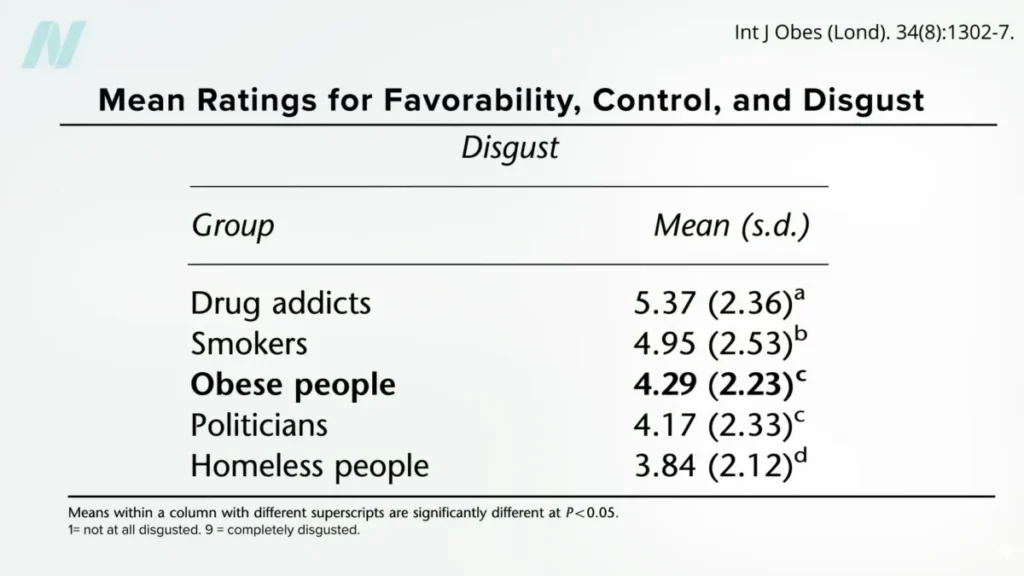
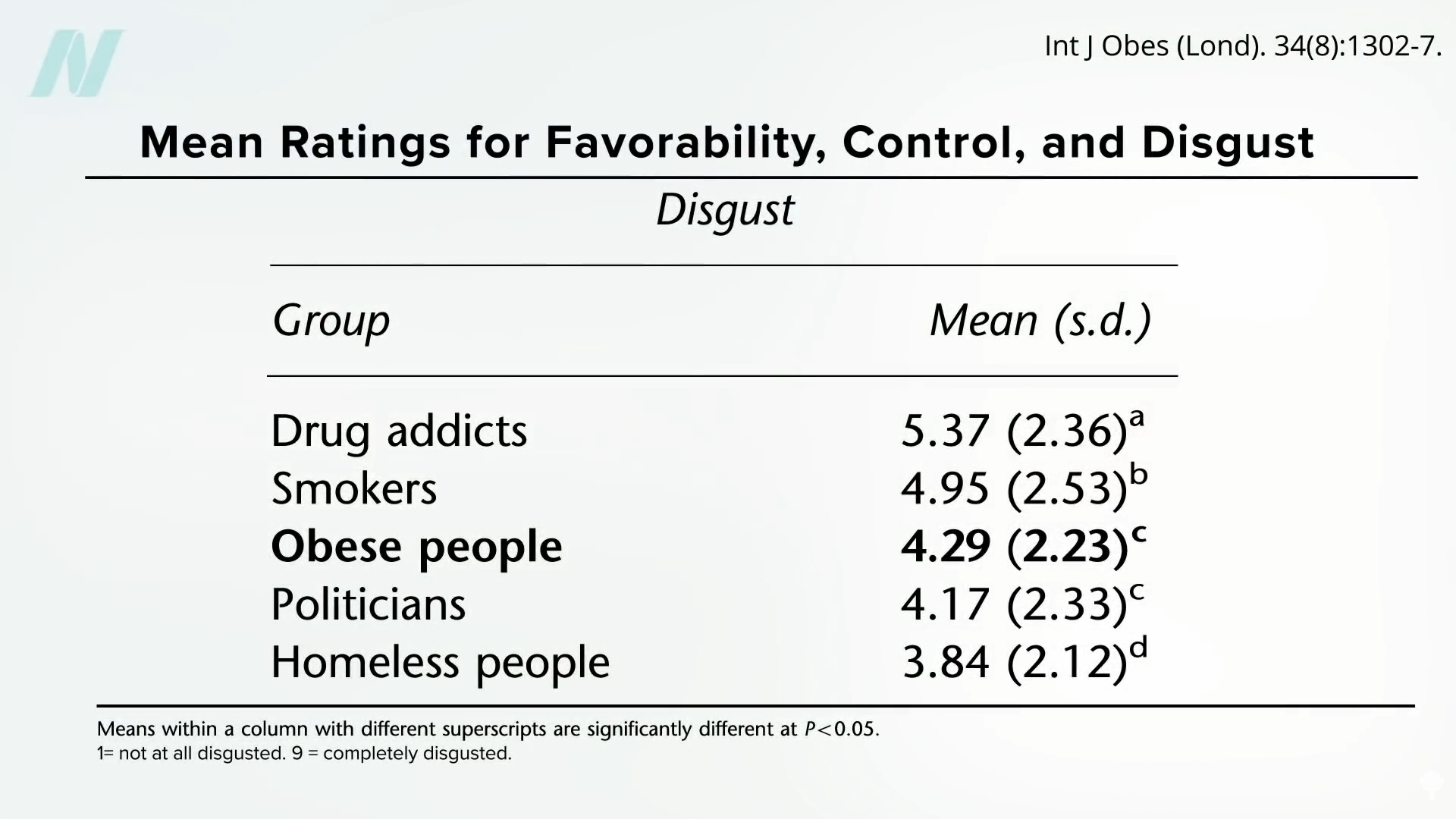
Beyond the workplace, societal attitudes towards individuals with obesity are startlingly negative. A comprehensive comparison of attitudes towards sixteen stigmatized social groups, including people experiencing homelessness, unveiled a chilling reality. In this survey, "only drug addicts and smokers were seen as more disgusting than obese people." This shocking revelation, highlighted in the video "Weight Bias: Hating Their Guts," underscores the profound dehumanization often associated with weight stigma. While the researchers did note a statistical tie – "obese people were rated just as disgusting as politicians" – this equivalence offers little comfort, merely placing them alongside another highly maligned group. Such attitudes permeate public discourse and contribute to a culture where weight bias is not only tolerated but often implicitly endorsed.
A Troubling Timeline: The Genesis and Escalation of Bias
The roots of weight stigma are alarmingly deep, beginning in early childhood. Research indicates that children as young as three years old already harbor negative stereotypes, describing overweight peers with harsh labels such as "mean," "stupid," "lazy," and "ugly." This negative language, far from diminishing, intensifies with age, suggesting a learned prejudice that becomes more entrenched over time. The formative years, where empathy and acceptance should be cultivated, instead become a breeding ground for prejudice against body size.
A landmark study published in 1961 offered an early glimpse into this disturbing phenomenon. Children in summer camps and schools across diverse social, cultural, and ethnic backgrounds in California, Montana, and New York were presented with pictures of various children and asked to rank who they liked best. The images included a child with crutches and a leg brace, a child in a wheelchair, a child missing a hand, a facially disfigured child, and an obese child. Across every demographic group tested, there was "remarkable uniformity": the obese child consistently came in dead last. This pivotal study revealed a deep-seated aversion to obesity even in the mid-20th century.
What is perhaps even more troubling is the trajectory of these attitudes over time. In 2003, researchers conducted a 40-year follow-up to the original 1961 study. The title of their publication, "Getting Worse: The Stigmatization of Obese Children," speaks volumes. The results showed that the obese child was liked even less in the follow-up study than in 1961, indicating a disturbing intensification of weight stigma over four decades. This trend mirrors broader societal shifts, with national surveys recording a nearly 70% jump in perceived weight discrimination since the mid-1990s. Far from progressing towards greater acceptance, society appears to be regressing, deepening the burden on individuals with excess weight.
Entrenched Prejudice: Bias in Educational and Familial Spheres
The pervasive nature of weight bias extends into foundational institutions like education and even within the sanctity of the family unit. Attitudes among teachers and other school staff, who play a crucial role in shaping young minds, are often far from supportive. A significant survey revealed that more than a quarter of educators felt that becoming obese is "one of the worst things that could happen to a person." Such deeply ingrained prejudice among figures of authority can have profound negative impacts on overweight students, affecting their self-esteem, academic performance, and overall school experience. When educators hold such views, it is difficult to foster an inclusive and supportive learning environment for all students.
Perhaps most heartbreaking is the evidence of bias within families. Even parents, who are typically a child’s fiercest advocates, can exhibit discriminatory behavior. Studies have shown that parents may provide less financial and emotional support for college education for their overweight daughters compared to their thinner siblings. As two prominent obesity researchers starkly commented, "It is strong prejudice indeed when parents discriminate against their own children." This familial bias can inflict deep psychological wounds, eroding self-worth and trust, and demonstrating how profoundly weight stigma can permeate even the most intimate relationships.
The Unseen Barrier: Weight Bias in Healthcare
The presence of weight bias within the healthcare system is particularly alarming, as it directly impacts the health and well-being of those who often need care the most. A representative national survey found that over half of physicians "viewed obese patients as awkward, unattractive, ugly, and noncompliant." Nurses, too, exhibit troubling attitudes; about a quarter of them agreed or strongly agreed with the statement: "Caring for an obese patient usually repulses me." These candid admissions from healthcare professionals expose a disturbing level of disdain that fundamentally undermines the principles of patient-centered care.
This antagonism has serious, quantifiable health consequences. For instance, obese women face a higher risk for developing cervical, endometrial, and ovarian cancers, yet they are significantly less likely to receive recommended screenings for these conditions. Morbidly obese patients, in particular, have only about half the odds of getting their recommended pelvic exams. While patient avoidance due to past negative experiences may contribute, a concerning number of doctors actively turn away obese patients. A Sun Sentinel poll of OB/GYN practices in Florida shockingly revealed that as many as one in seven refused to see heavier women, implementing weight cut-offs for new patients starting at just 200 pounds. This outright refusal of care based on weight is a blatant form of discrimination that directly compromises patient health and safety.
Even when obese patients are "welcomed" by physicians, the quality of care can suffer. Studies have shown that physicians, when randomized to receive a medical chart of a migraine patient presented as average weight, overweight, or obese, reported that they would allocate approximately 28% less time to the obese patient. Furthermore, this reduced time is often less quality time. Recorded doctors’ visits reveal that physicians tend to build "less emotional rapport with overweight and obese patients." This lack of empathy and truncated attention can lead to misdiagnoses, overlooked symptoms, and a profound sense of alienation for patients, potentially deterring them from seeking necessary medical attention in the future.
Disturbingly, this prejudice extends even to those specifically trained to address obesity. Obesity specialists themselves have been found to profess increasingly explicit anti-fat attitudes. Surveys conducted between 2001 and 2013 showed a worsening trend, with these specialists describing "fat people as significantly more lazy…stupid…and worthless…compared to thin people." This internal bias within the very field dedicated to addressing weight-related health challenges is a profound ethical concern. Moreover, even within the hallowed halls of medical literature, explicitly prejudiced statements can be found, such as this example from the Annals of Internal Medicine: "Obesity is an aesthetic crime: it is ugly." Such rhetoric in professional publications normalizes and perpetuates weight stigma within the medical community.
The Patient’s Blind Spot: Overestimated Respect and Inauthentic Relationships
One of the most insidious aspects of weight bias in healthcare is the disconnect between provider attitudes and patient perception. A study aptly titled "Obese Patients Overestimate Physicians’ Attitudes of Respect" found that despite the deeply negative attitudes harbored by doctors toward their obese patients, these same patients often expressed satisfaction with their providers. The researchers concluded that "while physicians may be successfully playing the part, the lack of true respect suggests…the authenticity of the patient-physician relationship should be questioned."
This finding has profound implications. If patients are unaware of the underlying disdain, they may continue to seek care from providers who harbor prejudice, potentially receiving suboptimal treatment or failing to build the genuine trust essential for effective healthcare. An inauthentic relationship, built on a facade of professionalism rather than genuine respect, can undermine patient engagement, adherence to treatment plans, and the overall therapeutic process. It places the burden on the patient to navigate a system that, while appearing supportive, may secretly harbor judgment and bias, further isolating them in their health journey.
The Urgent Call for Systemic Change and Official Responses
The evidence unequivocally demonstrates that weight bias is a pervasive and harmful form of discrimination, deeply embedded in societal attitudes and institutional practices. The implications are far-reaching, affecting individuals’ mental health, educational and employment opportunities, and crucially, their access to equitable and compassionate healthcare. Addressing this epidemic requires more than individual awareness; it demands systemic change and official responses.
Official Responses and Policy Implications:
Firstly, there is a critical need for anti-discrimination legislation that explicitly includes weight as a protected characteristic. Just as laws protect individuals from discrimination based on race, gender, or religion, similar protections are necessary to safeguard individuals from prejudice based on body size. This would provide legal recourse for those who experience discrimination in employment, housing, or public accommodations.
Secondly, professional organizations in healthcare, education, and human resources must develop and implement comprehensive anti-bias training programs. These programs should go beyond mere awareness, actively challenging stereotypes and fostering empathy and respectful communication. For medical professionals, this includes a fundamental re-evaluation of how obesity is taught, moving away from purely individualistic blame models towards a more nuanced understanding of its complex biological, social, and environmental determinants. Medical curricula must incorporate modules on weight-inclusive care, emphasizing respect, dignity, and evidence-based approaches that do not rely on shaming or stigmatizing language.
Furthermore, healthcare systems need to ensure that their facilities are physically accessible and accommodating for all body sizes, from appropriately sized equipment to comfortable waiting room seating. Refusal of care based on weight must be explicitly prohibited, and mechanisms for reporting and addressing such discrimination must be robust and transparent.
Societal Implications:
Beyond policy, a broader cultural shift is essential. Media portrayals of individuals with obesity must evolve to be more diverse, respectful, and realistic, moving away from harmful stereotypes and comedic tropes. Public health campaigns aimed at promoting healthy lifestyles must be carefully crafted to avoid inadvertently perpetuating weight stigma, focusing instead on holistic well-being rather than solely on weight loss. Education at all levels, from early childhood to adult learning, should promote body positivity, critical thinking about societal beauty standards, and an understanding of the multifaceted nature of body size.
The ongoing burden of weight bias erodes public trust, perpetuates health inequities, and inflicts profound psychological harm. Recognizing weight bias as a legitimate and serious form of discrimination is the first step towards dismantling it. The data is clear: the stigmatization of individuals based on their weight is not only unacceptable but is worsening. It is an urgent call to action for policymakers, educators, healthcare providers, and society at large to foster a more compassionate, equitable, and inclusive world for everyone, regardless of their body size. The next blog in this two-part series, "The Burden of Weight Bias," will further explore the multifaceted impacts of this critical issue, drawing additional insights from the book How Not to Diet.