Pedals and Pour: Why the World’s Top Wine Regions Are Becoming the Ultimate Cycling Destinations
By Lydia Price
September 25, 2026
There is an undeniable synergy between the rhythmic cadence of a bicycle wheel and the slow, intentional appreciation of a fine wine. For the modern traveler, the two are no longer separate pursuits; they are increasingly being woven into a single, immersive vacation experience. The same geographic hallmarks that define the world’s most prestigious viticultural zones—dramatic topography, varied elevations, and an intimate relationship with the land—also happen to create the most rewarding terrain for cyclists.
As travelers shift away from passive tourism toward active, experiential travel, the "bike-and-bottle" phenomenon has moved from a niche interest to a major travel trend. Whether it is the grueling, moon-like ascent of France’s Mont Ventoux or the gentle, gravel-lined lanes of Oregon’s Willamette Valley, cycling allows enthusiasts to experience the terroir of a region not just through a glass, but through the very earth they traverse.

The Surge of Active Oenotourism
The growth in this sector is not merely anecdotal; it is quantifiable. Tour operators report significant double-digit growth in regions that cater specifically to this demographic. Katy Rockett, regional director of North America at the renowned tour operator Explore Worldwide, notes that the demand for cycling-centric wine travel is surging.
"Our Porto to Lisbon cycling trip has seen bookings increase 31% year over year, while our Lisbon to Algarve trip is also seeing growth, with bookings up 40%," Rockett explains. "Traveling by bike puts you directly into the landscape, riding through vineyards, agricultural areas, villages, and smaller communities. There is a much stronger connection between the wine you’re tasting and the place it comes from."
This sentiment is echoed in Europe’s hospitality sector, where hotels are rapidly retrofitting their services to accommodate the influx of cyclists. Dagmar Lombard, general manager of Hôtel Crillon le Brave in southeastern France, believes the democratization of the sport has played a pivotal role. "Pairing cycling with wine tourism answers a growing demand for immersive, active experiences," Lombard says. "The rise of the electric bike has made it far more accessible—both for exploring the vineyards around us and for taking on a challenge like the ascent of Mont Ventoux."

A Global Tour of Terroir: Nine Essential Destinations
From the sun-drenched hills of Provence to the coastal trails of South Africa, here are the premier regions where world-class cycling meets the world’s finest vintages.
Provence, France: The Cyclist’s Playground
Provence is perhaps the spiritual home of the bike-and-wine movement. The region offers a diverse array of experiences, from the fragrant, rolling lavender fields to the rugged, ancient Roman roads that crisscross the bucolic landscape. For the professional-minded cyclist, the ascent of Mount Ventoux—a frequent, fearsome fixture of the Tour de France—remains a bucket-list challenge. The summit, with its otherworldly expanse of white limestone, offers a stark contrast to the verdant, vineyard-filled foothills below.
Properties like Hôtel Crillon le Brave are at the forefront of this trend. Certified as an Accueil Vélo—a prestigious French national designation for cycle-friendly businesses—the hotel provides everything from on-site equipment and rental delivery to secure storage and post-pedal spa treatments. After a long day of climbing, the region’s signature mineral-tinged rosés offer the perfect, refreshing reward.

The Douro Valley, Portugal: High-Stakes Terroir
For those seeking an adrenaline-fueled experience, the Douro Valley is a UNESCO World Heritage site that demands both physical stamina and a love for high-quality Port and DOC table wines. The terrain is defined by steep, schist-cut slopes where terraced vineyards cling precariously to the hillsides.
It is a destination for the dedicated cyclist, where "flat" is a foreign concept. However, the reward for the constant climbing is unparalleled. Historic quintas (wine estates) like the legendary Quinta do Vesúvio, managed by Symington Family Estates, offer a window into history dating back to the 16th century. Sampling a vintage Port after navigating the punishing gradients of the Upper Douro is a rite of passage for the adventurous oenophile.
Stellenbosch and Franschhoek, South Africa: The Cape Winelands
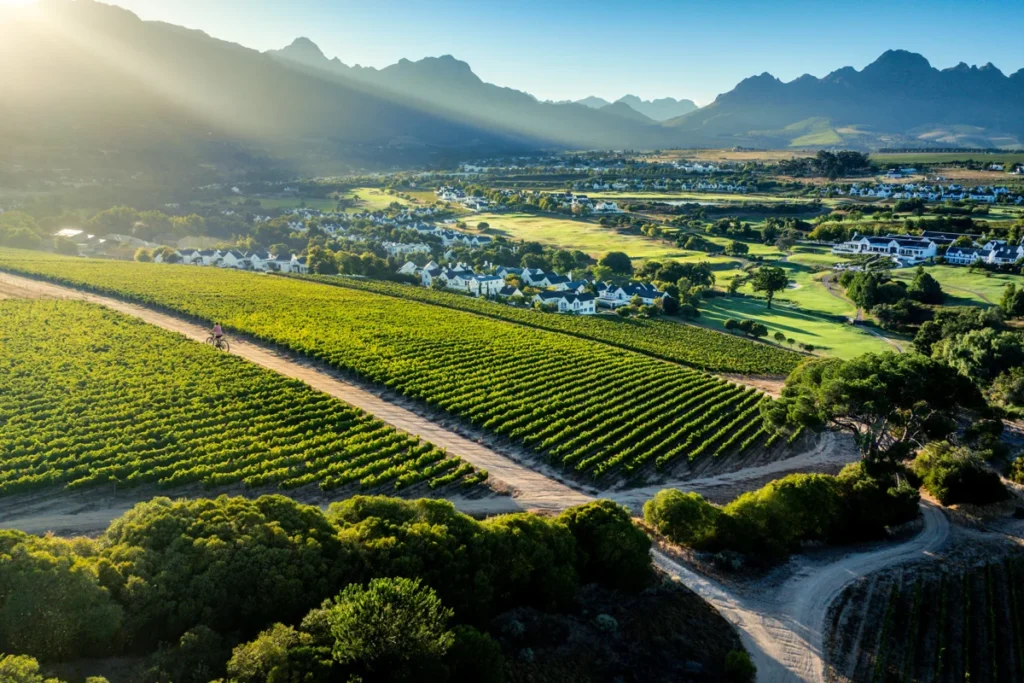
South Africa’s Cape Winelands have cultivated a robust outdoor-adventure culture that seamlessly integrates with its viticultural heritage. Stellenbosch offers a massive network of road, gravel, and mountain bike trails. A popular route involves crossing the Helshoogte Pass through the Simonsberg Mountains toward the charming town of Franschhoek.

Along the way, estates like Delaire Graff provide luxury accommodations that cater to the tired cyclist, featuring private pool terraces and floor-to-ceiling views of the mountains. Once in Franschhoek, a stop at Boekenhoutskool is mandatory for those looking to taste some of the region’s finest Cabernet Sauvignon and Syrah.
Sonoma Valley, United States: A Diverse Landscape
In the United States, Sonoma County holds a distinct advantage over its neighbor, Napa, boasting more bike-friendly roads and a larger, more varied geographical footprint. With 19 distinct AVAs, riders can transition from redwood forests to coastal trails and vibrant valley floors within a single trip.
The Healdsburg and Dry Creek Valley areas are particularly well-suited for two-wheeled exploration. A 10-mile ride along West Dry Creek Road offers a low-stress, high-reward experience, passing a dozen wineries. A stop at Lambert Bridge for a picnic of local charcuterie in their gardens is the quintessential Sonoma experience, while Reeve Wines provides a sophisticated detour for fans of world-class Riesling.

Loire Valley, France: The "La Loire à Vélo" Trail
For the epicurean explorer, the Loire Valley offers a legendary 560-mile trail, La Loire à Vélo. Starting in Cuffy and ending at the Atlantic coast, the route passes a string of Renaissance châteaux and world-class vineyards.
A notable detour is the Via Allier, which ventures into the volcanic hills of the Côtes d’Auvergne AOC. Here, cyclists can ride through landscapes that have been shaped by ancient eruptions, sampling Gamay and Pinot Noir from producers like Desprat Saint Verny. It is a rare opportunity to pair geological history with a wine culture that traces its roots back to Roman times.
Barossa Valley, Australia: Convenience and Quality
The Barossa Trail is a model for modern cycling infrastructure. A 25-mile sealed path that weaves through the heart of Australia’s most famous wine region, it provides a safe, gentle, and incredibly convenient experience. With public facilities and water stations along the route, the focus remains squarely on the scenery and the cellar doors.

A highlight of the region is the historic Seppeltsfield complex, which features a palm-lined avenue leading to some of the most storied wines in the Southern Hemisphere, including red blends that have consistently achieved 100-point ratings from critics.
Girona and the Empordà, Spain: The Professional’s Choice
Girona has long been an international hub for professional cyclists, but its surrounding landscape offers far more than just high-performance training grounds. The DO Empordà region allows riders to traverse cork forests and medieval villages, culminating in views of the Mediterranean.
The region’s gravel and road cycling infrastructure is extensive, including segments of the 217-mile Pirinexus loop. After navigating the rolling terrain, cyclists can delve into the local wine culture, characterized by the signature Garnatxa Negra and Carinyena grapes.

Willamette Valley, United States: The Scenic Standard
Oregon’s Willamette Valley Scenic Bikeway was the first of its kind in the nation. Spanning 134 miles, the route is designed to be a multi-day journey through the heart of the Pacific Northwest’s Pinot Noir country. The terrain is gentle and agricultural, winding past hop fields, hazelnut orchards, and the Willamette River. Stops at local institutions like Ankeny Vineyard provide a perfect pause, where a glass of estate-grown Chardonnay can be enjoyed alongside wood-fired pizza.
Tuscany, Italy: The Classic Italian Experience
No list of cycling destinations would be complete without Tuscany. The region’s white gravel roads (strade bianche) and rolling hills are iconic. With over 9,000 miles of mapped routes, Tuscany caters to every level of rider, from those seeking a leisurely pedal through olive groves to those tackling the grueling climbs of the Via Francigena.
The integration of Chianti Classico and Montalcino into the landscape ensures that every ride ends in a place of viticultural significance, cementing Tuscany’s place as the ultimate destination for those who believe that the best way to see the world is at the speed of a bicycle.

The Economic and Environmental Implications
The rise of this travel sector has profound implications for both the wine and tourism industries. By encouraging travelers to move slowly through rural landscapes, regions are seeing increased engagement with local economies that might otherwise be bypassed by high-speed tourism. Furthermore, because cycling is a low-carbon mode of transport, this trend aligns with the growing demand for sustainable travel practices.
As destinations continue to invest in cycling infrastructure—such as the expansion of the Accueil Vélo network in France or the development of dedicated trails in the Barossa Valley—the barrier to entry for the average traveler continues to lower. The result is a more intimate, health-conscious, and environmentally friendly approach to wine appreciation, ensuring that the legacy of these great regions is preserved for generations of cyclists to come.