The Friction Revolution: Why You Don’t Need a $60 Device to Quit Doomscrolling
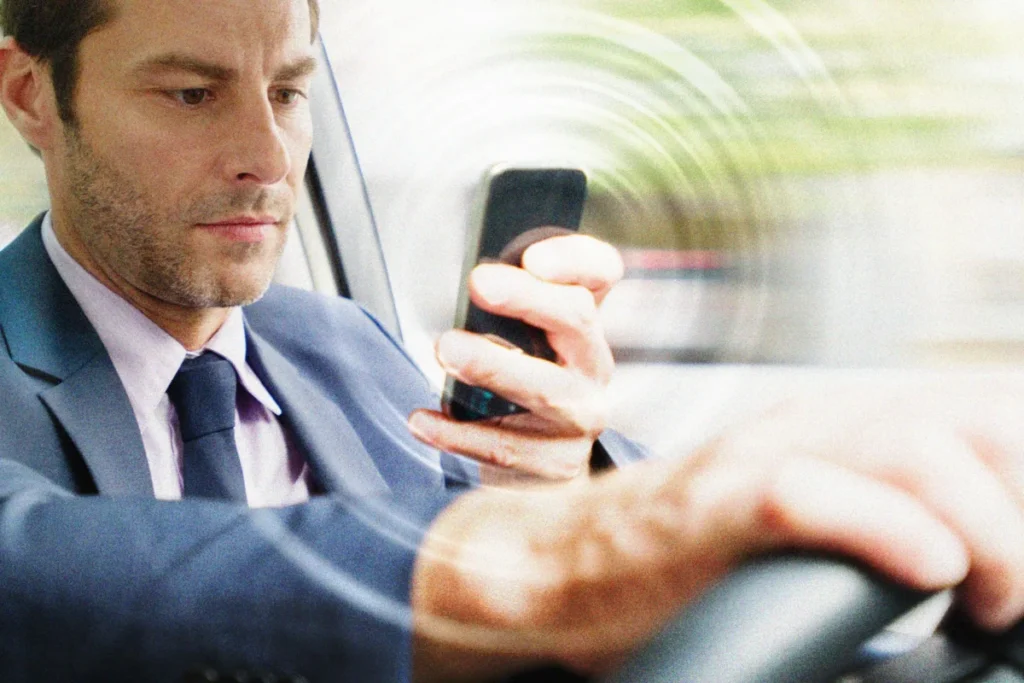
In the modern digital landscape, the battle for human attention has become an asymmetric war. Technology companies employ teams of behavioral psychologists and data scientists specifically tasked with keeping users glued to their screens. As a result, the "doomscrolling" phenomenon—the compulsive act of endlessly consuming negative or distracting news and social media content—has become a pervasive mental health challenge.
Enter the "Brick," a $59 physical device designed to act as a gatekeeper for your smartphone. By simply tapping your phone against this dedicated hardware, you can trigger a software lock that prevents you from accessing your most addictive apps. It is a brilliant, albeit expensive, application of physical "friction"—the concept of adding deliberate barriers to discourage impulsive habits. However, for those looking to reclaim their attention without the premium price tag, the solution is already in your pocket: your phone is already equipped with the necessary hardware to replicate the Brick’s functionality for free.
Main Facts: The Anatomy of a Digital Lock
The mechanism behind the Brick and its DIY alternatives is fundamentally simple: Near Field Communication (NFC). This is the same wireless technology that powers contactless payments at grocery stores and provides security for biometric passports.
At its core, a distraction-blocking app functions by creating a "digital cage." When the app detects a specific NFC signal or scans a pre-defined QR code, it initiates a restrictive profile. This profile restricts access to specified applications, effectively creating a "physical barrier" to entry. If you want to check Instagram or Reddit, you must physically navigate to the location of your NFC tag or QR code and interact with it to "unlock" your device. This intentional, physical action forces the user to move from a state of passive, impulsive consumption to one of conscious decision-making.
Chronology: From Silicon Valley Optimization to DIY Resistance
The rise of the "digital wellbeing" industry can be traced back to the early 2010s, when smartphone usage metrics began to indicate that the average human was spending nearly a quarter of their waking life staring at a screen.
- 2018: Major operating system developers, including Apple and Google, introduced "Screen Time" and "Digital Wellbeing" dashboards. These were early attempts to provide users with data about their habits.
- 2021-2023: As users realized that dashboards alone were insufficient to curb addiction, a wave of third-party "focus" apps emerged. These apps introduced stricter controls, such as time-locked sessions and restrictive "work modes."
- 2024: The introduction of the "Brick" hardware marked a shift toward tactile, hardware-based solutions. It acknowledged that the digital nature of the problem required a physical intervention to be effective.
- Late 2024: Open-source developers began reverse-engineering the concept, realizing that standard smartphones possess the hardware necessary to perform the exact same task without the need for proprietary, expensive hardware.
Supporting Data: Why Friction Works
Psychological research into habit formation consistently highlights the "20-second rule." Popularized by psychologist Shawn Achor, the theory posits that if you can increase the amount of time or effort required to perform a bad habit by just 20 seconds, the likelihood of you following through with that habit drops significantly.

Doomscrolling thrives on low-friction environments. When an app is one tap away, the "cost" of opening it is near zero. By placing an NFC tag inside a drawer, a cabinet, or even a different room, you introduce the necessary physical friction. The effort required to get up, walk across the room, and tap the tag provides a "cooling-off period" that allows the rational brain to override the impulsive dopamine-seeking brain.
Data from users of open-source tools like Foqos and Switchly suggests that users who utilize physical triggers report a 40% higher success rate in adhering to their "focus" schedules compared to those who rely on software-only timers, which are significantly easier to override or disable.
Official Responses and Developer Perspectives
The developers behind these open-source tools are motivated by a shared philosophy: digital autonomy should not be behind a paywall.
Ali Waseem, the creator of Foqos, notes that the primary hurdle for most users is not the technology, but the permission structure of modern operating systems. "The phone’s operating system is designed to keep you in the app," Waseem explains. "We are essentially using the phone’s security features against its own addictive design to give the user back their control."
Conversely, the team at Saltyy, developers of the Android-based Switchly, emphasizes the "experimental" nature of their work. Because Android is fragmented across hundreds of manufacturers, ensuring that an app can truly "lock" a system without being killed by the OS’s battery-saving processes is a continuous technical challenge. They argue that as long as the tech giants prioritize engagement over user health, independent developers must continue to provide these "off-ramps."
Implications: The Future of Digital Autonomy
The move toward physical-digital integration signals a maturing understanding of our relationship with technology. We are beginning to accept that human willpower is not a match for the multi-billion-dollar machine learning algorithms designed to capture our attention.

Implications for Mental Health
The most significant implication is the democratization of focus. By utilizing free, open-source tools, individuals who cannot afford $60 proprietary devices can still protect their mental bandwidth. The psychological benefits are measurable: lower anxiety levels, increased sleep quality, and a noticeable improvement in cognitive performance—often referred to as "deep work" capacity.
The Ecosystem Shift
We are likely to see a shift where "offline" becomes a luxury, and tools that facilitate it become standard in the app store. As these tools evolve, we may see deeper integration with smart home devices. For example, your phone might remain locked until your smart lightbulb turns on, or until your fitness tracker confirms you have moved a certain distance from your couch.
Ethical Considerations
The existence of these tools creates a fascinating paradox. We are effectively creating "malware" for ourselves—software that intentionally restricts our usage for our own benefit. This raises important questions about who owns the "intent" of the user. If an app is configured to block your access to news or social media, it is performing an act of service, yet it is doing so by using the same "administrative" privileges that traditional malware uses to hijack a device. The difference, of course, is user consent and the transparency of the open-source code.
Conclusion: Reclaiming the Attention Economy
You do not need to buy a $59 plastic puck to reclaim your life from your smartphone. The technology required to break the cycle of doomscrolling is already at your fingertips. By leveraging open-source applications like Foqos on iOS or Switchly on Android, and pairing them with a $1 NFC tag or even a simple printed QR code, you can build a system that respects your boundaries.
The ultimate goal of these tools is not to make you hate your phone, but to make you the master of it. By introducing physical friction, you are not just blocking apps; you are reclaiming your time, your focus, and your ability to engage with the world in the present moment. In a world that is designed to distract you, the most revolutionary act is simply choosing to pay attention to something else.