The Future of Sustainable Dining: Can Antimicrobial Surfaces Solve the Food Safety Challenges of Reusable Packaging?
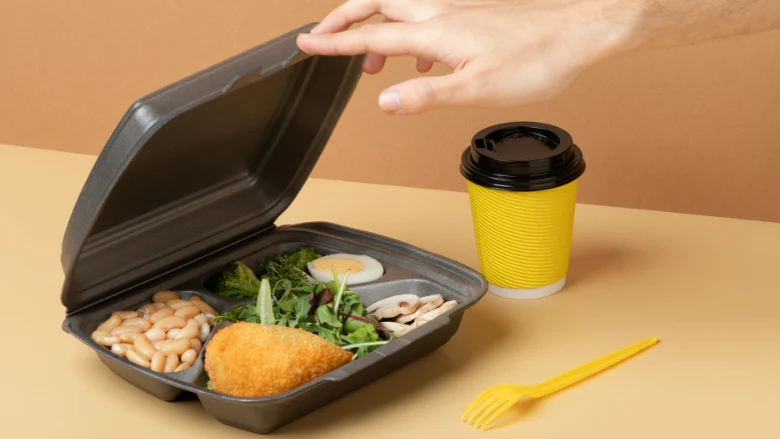
As the global food industry pivots toward a circular economy, the transition from single-use plastics to reusable packaging has become a cornerstone of environmental policy. Driven by ambitious mandates such as the European Union’s Packaging and Packaging Waste Regulation (PPWR), food retailers and manufacturers are under increasing pressure to integrate durable, multi-cycle containers into their supply chains. However, this transition introduces a formidable hurdle: the heightened risk of microbial cross-contamination.
To bridge the gap between sustainability and food safety, researchers are increasingly turning to advanced materials science. A comprehensive new review explores how antimicrobial surface technologies—ranging from chemically functionalized coatings to bio-inspired physical structures—could redefine the safety profile of reusable food packaging.
The Challenge of Circularity: Why Reuse Increases Microbial Risk
The fundamental challenge of reusable packaging lies in the "cycle." Unlike single-use items, which are discarded after a single interaction with food, reusable containers are subjected to repeated cycles of use, transport, and industrial sanitization.
Current food safety protocols rely heavily on conventional cleaning agents to remove pathogens. However, plastic surfaces—the most common material for lightweight, durable packaging—are prone to microscopic surface imperfections. These nooks and crannies provide the perfect harbor for microorganisms, which can rapidly organize into biofilms. Once a biofilm is established, the bacteria within it become significantly more resistant to standard chemical sanitizers, effectively shielding them from the very cleaning processes designed to eliminate them.
The consensus among food safety experts is clear: to ensure the safety of reusable systems, we must shift our focus from "cleaning up" contamination to "preventing" it from ever taking hold. By engineering surfaces that inherently resist microbial colonization, the industry could drastically reduce the reliance on aggressive chemical sanitizers, thereby extending the lifespan of the packaging while ensuring consumer safety.
Chronology of Innovation: From Chemical Coatings to Bio-Mimicry
The evolution of antimicrobial surfaces has progressed through several distinct stages of scientific inquiry, each offering unique advantages and introducing new technical hurdles.
- The Era of Functionalization (Early 2000s–Present): Initial efforts focused on coating surfaces with antimicrobial agents such as silver ions, zinc oxide, and organic acids. These substances were designed to actively kill microbes upon contact.
- The Wettability Shift (2010s): Researchers began experimenting with surface energy, creating superhydrophobic (water-repelling) or superhydrophilic (water-attracting) layers to prevent the initial "landing" of bacteria on the surface.
- The Rise of Smart Materials: Recent years have seen the development of responsive or "stimuli-sensitive" surfaces, which transition between states to kill bacteria and subsequently release debris based on environmental triggers like pH or temperature.
- The Physical Revolution (Current): The most recent focus has moved away from chemical additives entirely, utilizing nano-topography to physically manipulate the interaction between a surface and a bacterium.
Evaluating Antimicrobial Technologies: Supporting Data and Mechanisms
Functionalized Surfaces: The Potent but Problematic Approach
Functionalized surfaces are arguably the most well-studied. By incorporating agents like nisin (an antimicrobial peptide) or vanillin-based polymers, these surfaces can achieve remarkable results. For instance, studies have demonstrated up to 99 percent inhibition of dangerous pathogens like E. coli, S. aureus, and Listeria monocytogenes.
However, the industry remains wary of this approach. The primary concerns include:
- Migration and Toxicity: Antimicrobial agents may leach into food over time, raising questions about consumer ingestion.
- AMR Concerns: There is a significant fear that the overuse of antimicrobial-coated surfaces could contribute to the development of antimicrobial-resistant (AMR) "superbugs."
- Degradation: Repeated washing cycles can strip away these agents, rendering the packaging ineffective long before its structural life has ended.
Superwettable Surfaces: Creating a Hydration Barrier
Superwettable surfaces aim to deny bacteria a "foothold." Superhydrophobic surfaces use a low-surface-energy coating to force liquids—and the bacteria within them—to bead up and roll off. Conversely, superhydrophilic surfaces create a dense hydration layer at the material’s surface. Because bacteria must reach the surface to attach, this layer acts as a physical buffer. While theoretically effective, the durability of these coatings remains a major bottleneck; the nanoscale structures required to create these effects are often easily abraded during the harsh mechanical scrubbing of industrial dishwashers.
Smart Surfaces: The "Kill-and-Release" Concept
The "smart" or responsive surface represents the cutting edge of materials science. These materials are designed to be "bactericidal" during the food-storage phase but "self-cleaning" during the washing phase. By responding to changes in temperature or pH, the surface can switch its conformation, effectively shedding any captured microbial debris. While promising, the review notes that this technology is currently confined to medical and laboratory settings; its application to food-grade polymers is currently speculative and requires extensive real-world testing.
Physically Patterned Surfaces: The Nature-Inspired Solution
Perhaps the most promising avenue involves "physically patterned" surfaces. By mimicking the structure of cicada wings or shark skin—which naturally repel bacteria through topography rather than chemistry—scientists can create surfaces that either prevent attachment or physically rupture the bacterial cell wall upon contact.
The data here is compelling: one study found that hierarchical surfaces featuring micro-protrusions and nanospikes reduced E. coli attachment by 82 percent and S. aureus by 84 percent. Because this method is entirely mechanical, it bypasses the toxicity and AMR concerns associated with chemical coatings.
Official Perspectives and Regulatory Implications
Regulatory bodies, including the European Food Safety Authority (EFSA) and the U.S. Food and Drug Administration (FDA), have yet to issue specific guidelines for the validation of these advanced antimicrobial surfaces in a reuse context. However, the move toward circularity necessitates a new regulatory framework.
The industry is currently facing a "validation vacuum." Manufacturers need standardized tests that simulate the rigors of industrial reuse. According to the recent review, successful implementation will require a delicate balance:
- Food-Contact Safety: Ensuring that no part of the antimicrobial technology—especially in physical or smart surfaces—migrates into food or breaks off as microplastics.
- Recyclability: Antimicrobial additives must not contaminate the plastic recycling stream, which is a major concern for the circular economy.
- Long-term Efficacy: Surfaces must be validated against thousands of cycles, not just the ten or twenty cycles common in preliminary academic research.
Implications: The Path Toward Scalable Reuse
The transition to a circular food packaging economy is not merely a logistical challenge; it is a materials science revolution. If antimicrobial surfaces are to become the industry standard, the focus of research must shift from "efficacy" to "endurance."
The potential implications for the industry are profound. If we can successfully deploy physically patterned or smart antimicrobial surfaces, we may be able to significantly reduce the chemical and water intensity of industrial sanitization. This would lower the total carbon footprint of reusable packaging, making it a truly sustainable alternative to single-use options.
However, researchers emphasize a word of caution: there is no "universal" antimicrobial solution. Bacterial morphology varies wildly, and a surface that is lethal to Listeria may be ineffective against Salmonella. Future development must be application-specific, with materials engineered to address the specific microflora relevant to the food products they are intended to carry.
As we look toward a future where circularity is the norm, the integration of these "smart" and "patterned" materials will likely be the deciding factor in whether reusable packaging can meet the stringent food safety requirements of the 21st century. The path forward lies in rigorous, real-world testing that accounts for the harsh realities of commercial use—abrasion, thermal cycling, and the relentless accumulation of food residues. Only by mastering the interface between the container and the microbe can we turn the promise of the circular economy into a safe, sustainable reality.