The Paradox of Dry Sanitation: Balancing Microbial Control and Moisture Risks in Low-Moisture Food Facilities
In the high-stakes environment of low-moisture food manufacturing—where products like chocolate, peanut butter, infant formula, and dry spices are produced—the industry mantra has long been "water is the enemy." Because pathogens such as Salmonella can persist for years in low-water-activity environments, manufacturers have historically avoided wet cleaning to prevent the mobilization of dormant bacteria.
However, as regulatory scrutiny intensifies, the industry has shifted toward the use of "dry" sanitizers to satisfy requirements for a "sanitation break." This transition has created a complex technical paradox: the very agents intended to sanitize these facilities may be introducing the precise moisture necessary to trigger microbial proliferation in the industry’s most vulnerable areas—hard-to-clean crevices.
The Core Conflict: Moisture vs. Antimicrobial Efficacy
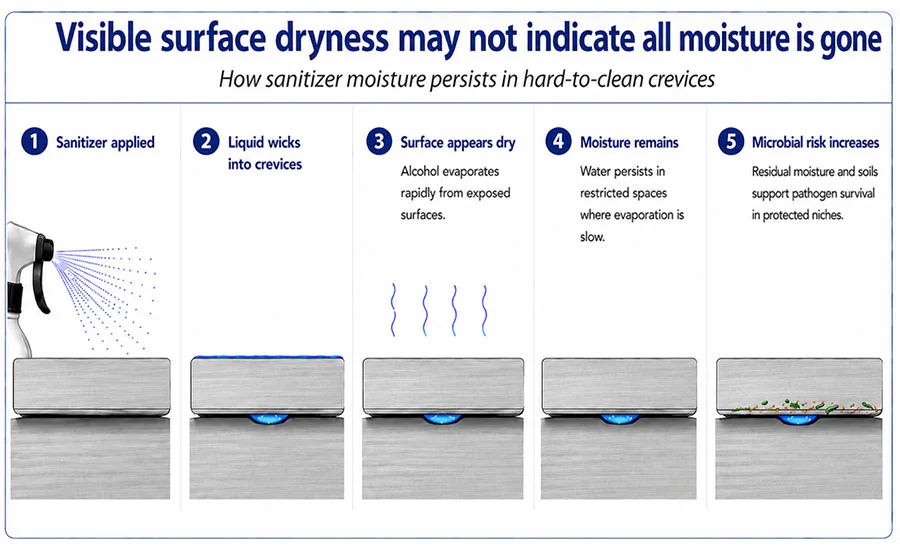
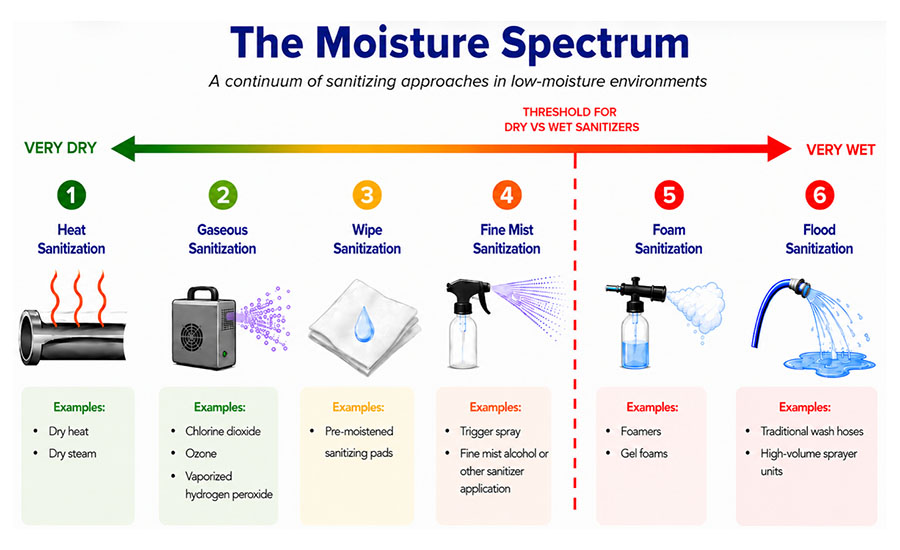
The fundamental challenge in low-moisture sanitation lies in the physics of microbial inactivation. While sanitizers are marketed as "dry" interventions, many contain significant water content. Alcohol-based sanitizers, for instance, are often formulated with 60% to 70% ethanol or isopropanol. At these concentrations, water is not merely a carrier; it is a chemical necessity for protein denaturation, which kills bacteria.
Yet, this essential moisture introduces a critical vulnerability. In modern food facilities, equipment is often riddled with "legacy" design flaws: hollow frameworks, overlapping surfaces, damaged seals, and complex threaded fittings. When a sanitizer is applied to these surfaces, the liquid inevitably wicks into these crevices via capillary action. While the alcohol evaporates quickly from open, accessible surfaces, the restricted airflow within a narrow, non-drainable crack prevents total evaporation.
Consequently, a facility may appear "dry" to the naked eye while harboring hidden, damp micro-niches. These areas become incubators where residual food soil and trapped moisture combine to create a protective, nutrient-rich biofilm, effectively neutralizing the sanitizing agent and providing a permanent home for pathogens.
Chronology: From Dry Cleaning to the "Sanitation Break"
The evolution of these practices has been driven by both internal food safety culture and external regulatory pressure.
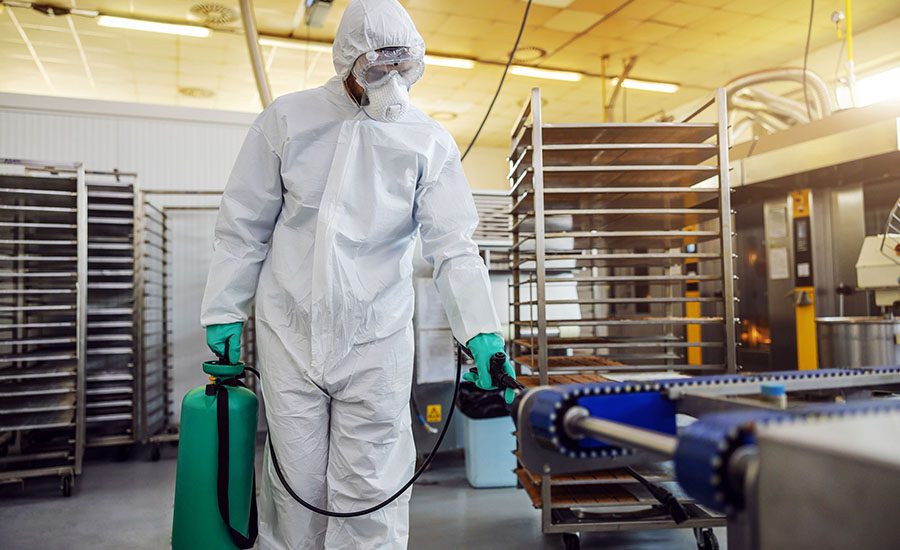
- The "Treat Water Like Glass" Era: For decades, the industry operated under the strict understanding that any moisture in a dry facility was a catastrophic risk. This led to the development of rigorous dry-cleaning protocols involving HEPA vacuums, dry brushing, and mechanical scraping.
- The Rise of Alternative Sanitization: As the need for more robust microbial reduction grew, facilities began experimenting with alcohol wipes, QAC crystals, and gaseous systems. These were initially viewed as adjuncts to mechanical cleaning.
- The 2025 FDA Draft Guidance: The landscape shifted significantly with the U.S. Food and Drug Administration’s 2025 Draft Guidance for Industry: Establishing Sanitation Programs for Low-Moisture Ready-to-Eat Human Foods. The guidance introduced the formal concept of the "sanitation break"—a mandatory production halt to clean and sanitize food-contact surfaces.
- The "Paper Trail" Pressure: Because the FDA requires evidence of a sanitation break to distinguish between potentially contaminated product and "safe" product during a recall, manufacturers have felt compelled to apply sanitizers to "prove" the break occurred. This has, in many cases, prioritized documentation over the actual physical safety of the line.
Supporting Data and Technical Realities
Scientific literature consistently suggests that the efficacy of sanitizers is often overstated when applied to complex industrial equipment.
The Limits of Laboratory "Coupon" Studies
Much of the data supporting sanitizer efficacy comes from laboratory-scale "coupon" studies—small, flat, stainless-steel surfaces inoculated with bacteria in a controlled environment. These studies typically show high log-reductions. However, real-world application in a facility is drastically different. In a factory, surfaces are rarely perfectly clean; they are covered in microscopic layers of dust, proteins, and fats. These soils shield bacteria from the sanitizer. Furthermore, the complex geometry of a conveyor belt or a filling nozzle bears little resemblance to a flat lab coupon.
Moisture Retention Dynamics
Studies indicate that once liquid enters a crevice, it can remain trapped for over 48 hours. In many high-throughput facilities, the time between sanitation breaks is shorter than the time required for complete, natural evaporation of trapped moisture. This leads to a "cumulative hydration" effect. Each successive sanitation cycle adds more moisture to the same harborage point, potentially creating a state of chronic dampness that supports the long-term survival of Salmonella.
Gaseous and Thermal Alternatives
While chlorine dioxide gas and dry steam vapor have emerged as potential solutions, they are not silver bullets. Gaseous treatments suffer from diffusion limitations; they struggle to penetrate deep into enclosed niches, especially if those niches are packed with food dust. Similarly, thermal treatment via process air often fails because of temperature variability. A machine may be "hot" at the point of the heating element but significantly cooler in the deep, recessed cracks where pathogens actually reside.
Implications for Regulatory Compliance and Recall Scope
The "sanitation break" is not just a cleaning term; it is a legal one. In the event of a contamination investigation, the ability to delineate between "safe" and "at-risk" product hinges on the efficacy of the sanitation break.
If a company applies a sanitizer but fails to actually eliminate the pathogen due to poor hygienic design or ineffective delivery, the "sanitation break" is technically invalid. If an outbreak occurs, the company may find itself unable to prove the boundaries of the contamination, forcing a much larger and more costly recall than would have been necessary had the sanitation program been more realistically calibrated.
The danger, therefore, is two-fold:
- Direct Risk: The introduction of moisture creates new, active harborage sites.
- Regulatory Risk: A false sense of security leads to the assumption that a line is "sanitized," potentially causing management to ignore the underlying, non-hygienic equipment design that is the true source of the risk.
Expert Consensus and Future Directions
The prevailing view among food safety experts is that sanitization is the final, supporting step in a process, not the foundation. The primary microbial reduction must always come from physical cleaning—the removal of food soil.
Reimagining the Sanitization Program
Facilities should move away from a "check-the-box" mentality regarding sanitizers. Instead, the focus must shift to:
- Hygienic Design Overhaul: Replacing legacy equipment with pieces that feature rounded corners, welded joints (rather than overlapping surfaces), and proper drainage slopes. If a machine cannot be effectively cleaned and dried, it should be redesigned or replaced.
- Validation of Actual Surfaces: Instead of relying on generic lab data, facilities should conduct internal validation studies on their own equipment, measuring surface temperatures in the "coldest" spots and monitoring for moisture retention in known crevices.
- Risk-Based Application: If a sanitizer is used, the delivery method must be carefully chosen. High-volume sprays should be strictly prohibited in favor of controlled mists or targeted wipe-downs, and, where possible, a post-sanitization dry-wipe step should be implemented to remove excess moisture.
- Prioritizing Cleaning: If a surface is not visually clean, a sanitizer will not be effective. The labor and capital investment currently directed toward sophisticated, high-cost sanitizing chemistry might be better spent on better mechanical cleaning tools, improved vacuum systems, and more frequent inspections of hard-to-reach areas.
Final Thoughts
The quest for a "sanitation break" should never supersede the fundamental principle of keeping dry environments dry. Manufacturers must resist the pressure to adopt "check-box" sanitization methods that introduce moisture into the processing environment. True food safety in low-moisture facilities is not found in the chemical bottle, but in the meticulous, physical removal of the residues that provide pathogens with the moisture and nutrients they need to survive.
By shifting the focus from the application of sanitizer to the integrity of the cleaning process and equipment design, manufacturers can build a robust, science-based defense against environmental pathogens—one that protects both the consumer and the integrity of the business.