The Paradox of the Plate: When Healthy Options Lead to Worse Choices
Introduction
In an era increasingly focused on public health and informed consumerism, policies designed to guide healthier eating habits often face an unexpected adversary: the intricate, sometimes illogical, landscape of human psychology. Conventional wisdom suggests that providing nutritional information or offering healthy alternatives would empower individuals to make better dietary choices. Yet, a growing body of research reveals a perplexing truth: these well-intentioned interventions can, paradoxically, drive people towards even unhealthier decisions. This phenomenon challenges our fundamental assumptions about how we process information, perceive value, and ultimately, choose what to eat.
The Unfulfilled Promise of Transparency: Calorie Labeling’s Limited Impact
A Policy Born of Good Intentions
The push for greater transparency in food labeling gained significant momentum in the early 21st century. Faced with rising rates of obesity and diet-related chronic diseases, public health advocates and policymakers sought innovative ways to encourage healthier eating. A cornerstone of this effort was the belief that consumers, armed with clear, accessible information, would naturally gravitate towards choices that align with their health goals. This conviction culminated in the 2017 federal mandate requiring national chain restaurants to display calorie counts prominently on their menus. The fanfare accompanying this regulation underscored a widespread optimism: knowledge, it was believed, would translate directly into healthier food choices, helping individuals stay within their daily energy needs.
The Mandate and Its Meager Returns
However, the real-world impact of calorie labeling has proven to be a stark contrast to these optimistic projections. Studies conducted in the wake of the mandate have largely painted a picture of minimal, if not negligible, effectiveness. Far from instigating a significant shift in dietary habits, research, such as a 2017 study published in PubMed, indicated that calorie labels shaved off an average of a mere eight calories per meal. This statistically insignificant reduction cast a shadow over the initial hopes, suggesting that simply presenting caloric information does not automatically override deeply ingrained preferences, habits, or psychological biases.
The disappointment over these findings has prompted a re-evaluation of the efficacy of information-based interventions in public health. While the intention behind calorie labeling – to empower consumers with the data needed to make healthy food choices outside the home – was undoubtedly noble, the outcomes suggest a more complex interplay of factors influencing dietary decisions than previously assumed.
Industry’s Early Maneuvers and Strategic Compliance
Perhaps the limited impact of calorie labeling was, in retrospect, predictable. The food industry, keenly attuned to consumer behavior and regulatory pressures, often provides early indicators of a policy’s true potential. Consider McDonald’s, a global fast-food giant, which voluntarily began publishing calorie information nationally back in 2012. This move came after a similar labeling mandate in New York City had been extensively studied and found to have no overall effect on consumer behavior.
For some observers, the ease with which certain regulations, like calorie labeling, have been passed, particularly when contrasted with the fierce industry resistance to measures like "front-of-pack traffic light labeling" (which offers a more immediate, color-coded assessment of nutritional value), speaks volumes. The industry’s readiness to adopt calorie labeling nationally could be interpreted not as an embrace of public health, but as a strategic maneuver. Studies suggest that such labeling could boost "perceptions of the restaurant’s concern for consumers’ well-being" – a valuable public relations win – without genuinely threatening sales of their high-calorie, indulgent flagship products like the Big Mac. This carefully managed narrative allowed companies to appear responsive to health concerns while meticulously avoiding any substantial shifts in consumer purchasing patterns that might undermine their core business.
The Paradoxical Pull: How Healthy Options Backfire
Beyond the limited effectiveness of calorie labeling, a more unsettling discovery has emerged from behavioral psychology: the very act of adding a healthy option to a menu can, counter-intuitively, drive people to make even worse choices. This phenomenon, seemingly illogical, is rooted in several fascinating glitches of human psychology that warp perception and decision-making.
The "Vicarious Goal Fulfillment" Effect
One of the most compelling demonstrations of this paradox comes from studies exploring what researchers term "vicarious goal fulfillment." This theory posits that the mere presence of a healthy option can lead individuals to subconsciously feel they have already made progress towards their health goals, thereby licensing them to indulge in less healthy choices.
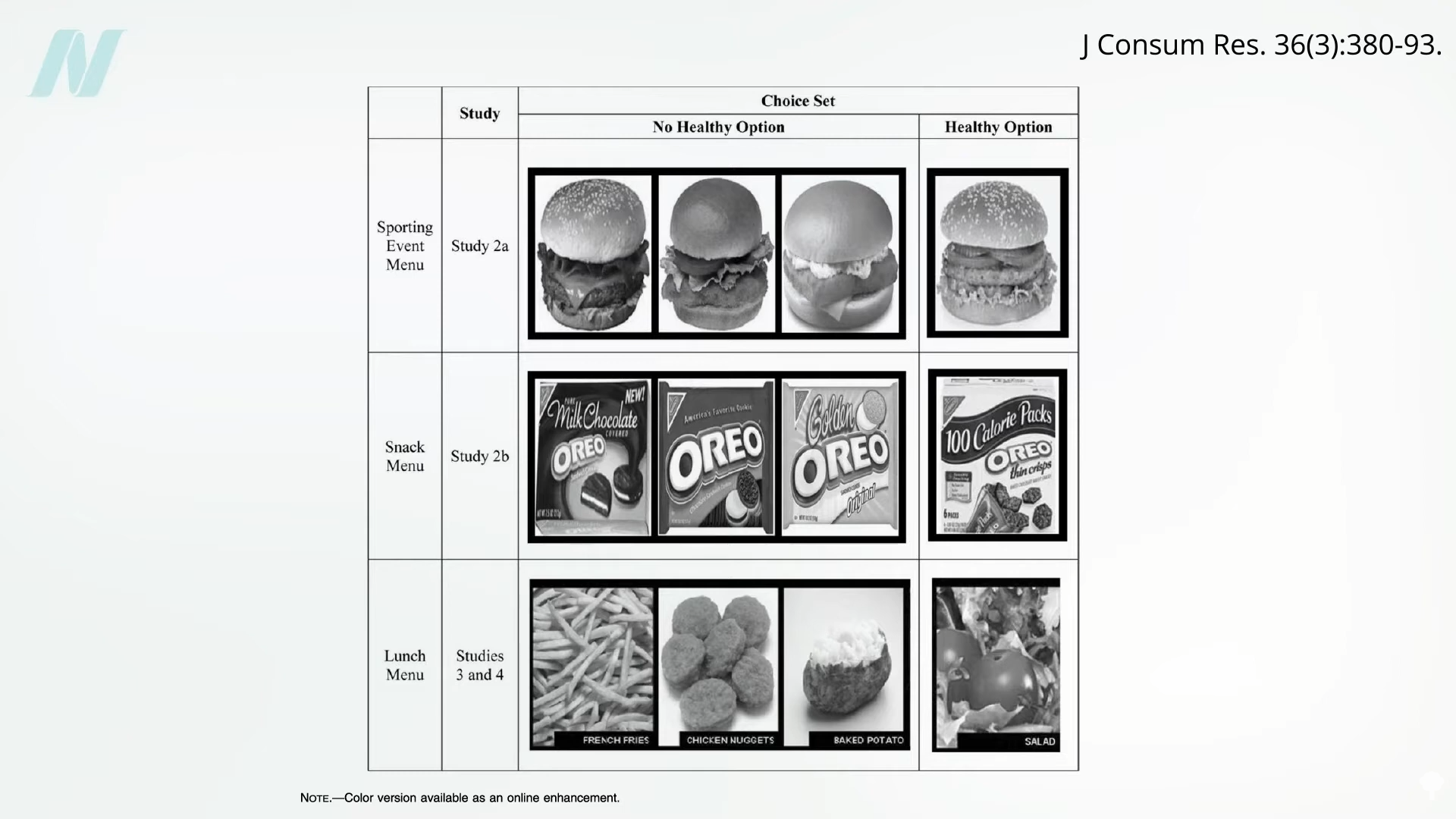
Consider a classic experiment involving side dishes. When presented with a choice between an unhealthy option like French fries and a more neutral alternative such as a baked potato, roughly 10% of people would opt for the indulgent fries. However, when a third, even healthier option – like a side salad – is introduced into the mix, the dynamics shift dramatically. One might assume that the salad would draw people away from the fries, perhaps encouraging more to choose the middle-ground baked potato. Instead, the preference for French fries shoots up, tripling to a staggering 33%. Without the salad, only one in ten chose fries; with it, a third did.
A similar effect was observed in main course selections. In a "No Healthy Option" scenario, where diners chose between a bacon cheeseburger, a chicken sandwich, or a fish sandwich, 17% selected the burger. When the fish sandwich was swapped out for a veggie burger, the preference for the indulgent bacon cheeseburger almost doubled, soaring to 37%. How can simply seeing a healthy option push people towards unhealthier choices? The paper describing this series of experiments, aptly titled "Vicarious Goal Fulfillment: When the Mere Presence of a Healthy Option Leads to an Ironically Indulgent Decision," explains that people make a mental note to choose the healthy option at some future, nebulous time. This mental commitment, however fleeting, provides a psychological "excuse" to indulge in the present.

Self-Licensing: The Justification Trap
Vicarious goal fulfillment is closely related to another fascinating glitch in human psychology known as self-licensing. This phenomenon occurs when individuals unwittingly justify actions that draw them away from their long-term goals, immediately after performing an action that aligns with those goals. It’s the classic scenario of rewarding oneself with a donut after a week of healthy eating, or justifying an extra slice of cake because you worked out that morning. We reward ourselves with an indulgence that ultimately sets us back.
The power of self-licensing extends beyond food choices. In one study, smokers given "vitamin C" supplements subsequently smoked significantly more cigarettes than those given what they believed to be "placebo" pills (both groups, in fact, received identical sugar pills). The smokers who thought they were taking health supplements smoked nearly twice as much, perhaps subconsciously reasoning that since they had just done something good for their health, they could afford to "live a little" – a decision that may have, ironically, caused them to live a little less.
This psychological dynamic translates into other lifestyle arenas as well. Participants given placebo pills, which they were told were dietary supplements, not only expressed less desire to engage in subsequent exercise but also followed through by walking about a third less. Compared to those who were told the pills were placebos, the misled participants were also more likely to choose a buffet over a "healthy, organic meal." A seminal study titled "The Liberating Effect of Weight Loss Supplements on Dietary Control" further underscored this effect. Participants randomized to take a known placebo or a purported weight-loss supplement (again, both were just placebos) were later covertly observed at a buffet. Not only did the "supplement" subjects eat more food, but they also chose less healthy items. They consumed about 30% more candy in a bogus "taste test" and ordered more sugary drinks. The investigators concluded, "people who rely on dietary supplements for health protection may pay a hidden price: the curse of licensed self-indulgence."
The vicarious goal fulfillment studies further illuminate that not only does making progress towards a goal rationalize decision-making that undermines us, but even just considering making progress can have a similar licensing effect. Crucially, study participants were not only moved to make a less healthy choice but often the unhealthiest choice. One might assume that even if people didn’t go for the salad or veggie option, the presence of a healthier alternative might encourage a middle-ground choice. Instead, it pushed people in the opposite, most indulgent direction.
The "What the Hell Effect"
Compounding these psychological traps is another irrational quirk: the "what the hell effect." This phenomenon describes how, once an individual has strayed from their goals or indulged slightly, they often feel that their efforts are already compromised, leading them to abandon restraint entirely. It’s the reason why "one forbidden cookie can lead dieters to eat the whole bag."
This effect was vividly demonstrated in another "No Healthy Option" scenario involving Oreos. When offered chocolate-covered Oreos, regular Oreos, or golden Oreos, researchers found that adding a "lower-calorie" Oreo option doubled the likelihood that study participants would go straight for the most indulgent chocolate-covered option. Once people decide they are going to get that salad next time and spoil themselves just this once, the "what the hell effect" encourages them to go all the way and choose the most indulgent option available.
The Health Halo Effect: Perceptual Distortions
Beyond influencing decision-making, the mere presence of healthy foods can also warp our perceptions, leading to what is known as the "health halo effect." This bias causes individuals to perceive unhealthy foods as healthier when they are associated with or presented alongside healthy items.
Consider an experiment where weight-conscious people were shown a burger and asked to estimate its calories. The average answer was 734 calories. However, when the exact same burger was shown accompanied by three celery sticks, the calorie estimate dropped significantly to 619 calories. Did participants believe the celery had negative calories? No, most knew celery had calories, but the mere juxtaposition of the burger with the healthy celery made the burger seem healthier. The same phenomenon occurs when an apple is added to a bacon-and-cheese waffle sandwich, a side salad accompanies beef chili, or carrots are placed next to a cheesesteak – about a hundred calories magically appear to disappear from people’s estimations.
This health halo effect may also explain why people are more likely to order a dessert and more sugary drinks with a "healthier" sub at Subway compared to a Big Mac at McDonald’s. This is particularly ironic given that the sub used in the study (filled with ham, salami, and pepperoni) had 50% more calories to begin with than the Big Mac.
Even a simple reference to healthy eating can trigger this distortion. Show people a picture of a Big Mac, and they estimate it contains 646 calories. But add the text "For your health, eat at least five fruits and vegetables per day" to the advertisement, and suddenly, the same burger in the same ad is perceived to have only 503 calories. Merely offering and even promoting salads and fruit, therefore, can bring McDonald’s accolades and bolster consumer loyalty without, ironically, meaningfully improving their customers’ health.
Official Responses and Industry Maneuvers
The findings regarding the limited effectiveness of calorie labeling and the paradoxical effects of healthy options pose a significant challenge to public health policy. Despite the growing body of academic research highlighting these psychological pitfalls, there has been a notable lack of comprehensive official response or significant policy adjustment from governmental bodies. The initial mandate for calorie labeling remains, seemingly impervious to data suggesting its negligible impact on consumer behavior.
Industry, on the other hand, appears to have long understood, or at least intuitively leveraged, these psychological dynamics. McDonald’s early voluntary adoption of calorie labeling, as discussed, can be viewed less as a proactive health initiative and more as a sophisticated public relations strategy. By appearing to comply with health-conscious trends and offering token "healthy" options, companies can cultivate an image of corporate responsibility and concern for consumer well-being. This bolsters brand loyalty and public perception, often without requiring fundamental changes to their core menu offerings or significantly impacting sales of their most profitable, often indulgent, items. The strategic promotion of salads and fruit, therefore, serves to create a "health halo" over the entire brand, allowing consumers to feel better about their choices, even when those choices remain unhealthy.
This disconnect underscores a critical gap between the intention of public health policies – to genuinely improve population health through informed decision-making – and the actual outcomes when these policies encounter the complexities of human psychology and the strategic maneuvers of commercial entities. Regulations are often born from a rational perspective of consumer behavior, assuming that providing information will lead to rational choices. However, when these policies collide with unconscious biases like self-licensing, vicarious goal fulfillment, and the health halo effect, their intended impact can be significantly diluted, or even reversed.
Broader Implications for Public Health and Consumer Behavior
The insights into these psychological biases carry profound implications for public health strategies and our understanding of consumer behavior. They highlight the inherent challenge of influencing dietary choices beyond simple information provision and underscore the need for more nuanced and sophisticated interventions.
The Challenge of Behavior Change
The findings demonstrate that human behavior is rarely purely rational. Dietary decisions are influenced by a complex web of factors including habit, convenience, taste preferences, cost, social norms, and powerful psychological biases. Simply providing calorie counts or offering a salad option, while seemingly logical, fails to account for the subconscious processes that can lead individuals to justify indulgence or perceive unhealthy items as less harmful. This complexity means that relying solely on education or transparency as a panacea for public health issues related to diet is likely to be ineffective.
Rethinking Health Interventions
If current strategies are ineffective or, worse, counterproductive, a fundamental rethinking of public health interventions is necessary. Instead of focusing solely on individual responsibility and information, future approaches might need to prioritize environmental changes and "choice architecture." This involves designing environments where healthier options are the default, the most convenient, or the most appealing, rather than relying on individuals to constantly override their psychological biases. Examples could include:
- Portion Control: Mandating smaller default portion sizes in restaurants.
- Pricing Strategies: Making healthier foods more affordable and less healthy foods more expensive.
- Strategic Placement: Placing healthy options more prominently in cafeterias and grocery stores.
- Default Options: Automatically serving water instead of sugary drinks, or a healthy side dish instead of fries, unless explicitly requested otherwise.
Such approaches shift the burden from constant individual vigilance to systemic changes that subtly guide healthier choices without triggering the self-licensing or health halo effects.
The Ethics of Marketing and Choice Architecture
These studies also raise ethical questions about marketing practices. Companies, whether consciously or unconsciously, often leverage these psychological quirks to their advantage. Promoting healthy items while simultaneously offering highly indulgent options allows them to cater to both health-conscious consumers and those seeking comfort food, often with the perverse outcome of encouraging greater indulgence. Understanding these mechanisms places a greater responsibility on both policymakers and corporations to consider the full behavioral impact of their offerings and marketing messages.
Empowering the Informed Consumer
While policy changes are critical, individual awareness of these biases can also be a powerful tool. Consumers who understand the "vicarious goal fulfillment," "self-licensing," "what the hell effect," and "health halo effect" are better equipped to recognize when their own minds are playing tricks on them. This self-awareness can foster a more critical approach to food choices and marketing, helping individuals resist the unconscious pull towards indulgence.
Future Directions for Research and Policy
The ongoing challenge for public health is to move beyond simplistic assumptions and embrace the nuanced realities of human behavior. Future research should delve deeper into identifying specific triggers for these psychological biases and explore more effective counter-strategies. Policy development must integrate insights from behavioral economics and psychology to design interventions that are not only well-intentioned but also genuinely effective in fostering healthier populations. This may involve a shift from merely informing choices to actively shaping the choice environment itself, acknowledging that the path to better health is paved not just with good intentions, but with a profound understanding of the human mind.
Conclusion
The journey towards a healthier society is fraught with complexities, and the latest insights into human psychology reveal a surprising obstacle: the very tools we deploy to encourage better health can sometimes lead us astray. Calorie labels, designed to empower, have proven largely ineffective, while the mere presence of healthy options can paradoxically license greater indulgence. Understanding phenomena like vicarious goal fulfillment, self-licensing, the "what the hell effect," and the pervasive health halo is crucial for crafting public health strategies that genuinely move the needle. Moving forward, a more sophisticated, psychologically informed approach is imperative – one that recognizes the irrationalities of human behavior and designs interventions that work with our minds, rather than against them.