The Scaffolded Ledger: Implementing Early Childhood Financial Literacy Through Experiential Learning

In an era defined by digital transactions and "one-click" purchasing, the physical reality of money is increasingly abstract for the younger generation. However, a growing movement among parents and financial educators suggests that the foundations of fiscal responsibility must be laid long before a child receives their first paycheck. A case study in Vermont illustrates a rigorous, "scaffolded" approach to financial literacy, utilizing local events like county fairs and household labor to teach children as young as five the complexities of earning, debt, and discretionary spending.
Main Facts: The Framework of a Family Money Philosophy
The core of this educational model rests on a clearly defined "Family Money Philosophy." Unlike traditional allowance systems, which often provide a flat weekly rate regardless of behavior or effort, this model differentiates between communal responsibilities and individual earning opportunities.
Defining Needs vs. Wants
The strategy employs a binary classification of expenses. The parents assume total financial responsibility for "needs," which include:
- Essential Infrastructure: Housing, healthcare, and clothing.
- Nutritional Basics: All standard household meals and groceries.
- Educational and Cultural Enrichment: Books (via libraries or used sales), museum admissions, and entry fees to community events like county fairs.
Conversely, the children are responsible for "wants" or discretionary items. This category encompasses souvenirs from gift shops, specialized treats outside of provided meals (such as dessert at a restaurant), and new items from school book fairs. By drawing this hard line, parents eliminate the "pester power" often seen in retail environments, shifting the burden of choice—and the subsequent cost—to the child.

The Labor-for-Capital Model
To fund their discretionary desires, the children participate in a market-based chore system. Unlike "daily unpaid work," which is considered a prerequisite for family membership, "paid chores" are viewed as professional services rendered to the household. These tasks are compensated at what the parents deem "fair market value," and the children are encouraged to negotiate "chore bundles" or lump-sum contracts for larger projects, such as organizing kitchen cabinetry.
Chronology: From Basic Counting to the Psychology of Debt
The development of financial literacy in this household has followed a chronological progression, moving from simple arithmetic to complex emotional management regarding debt and loss.
Phase I: The Introduction of Earned Income
The process began with the identification of age-appropriate labor. Initial tasks included basic organization and assistance with household maintenance. Crucially, compensation was only provided if the job was completed to a professional standard. This taught the children that income is tied to the quality of output, rather than mere participation.
Phase II: The "Unicorn Debt" Incident
A pivotal moment in the children’s financial education occurred at a Vermont county fair. A seven-year-old child, identified as "Kidwoods," desired an inflatable unicorn priced at $13. Possessing only $9, the child was faced with a deficit. The parents opted to act as a predatory—or at least strict—lender, providing the $4 balance under the condition of mandatory future labor.

The resulting "debt service" period proved revelatory. Upon returning home, the child was required to perform chores to pay off the $4. The child’s observation—“It is not fun to do chores to earn money for something I’ve already bought”—marked a significant cognitive shift. This visceral experience with the "opportunity cost" of debt served as a more powerful deterrent than any theoretical explanation of interest or credit.
Phase III: Social Negotiation and Cost-Sharing
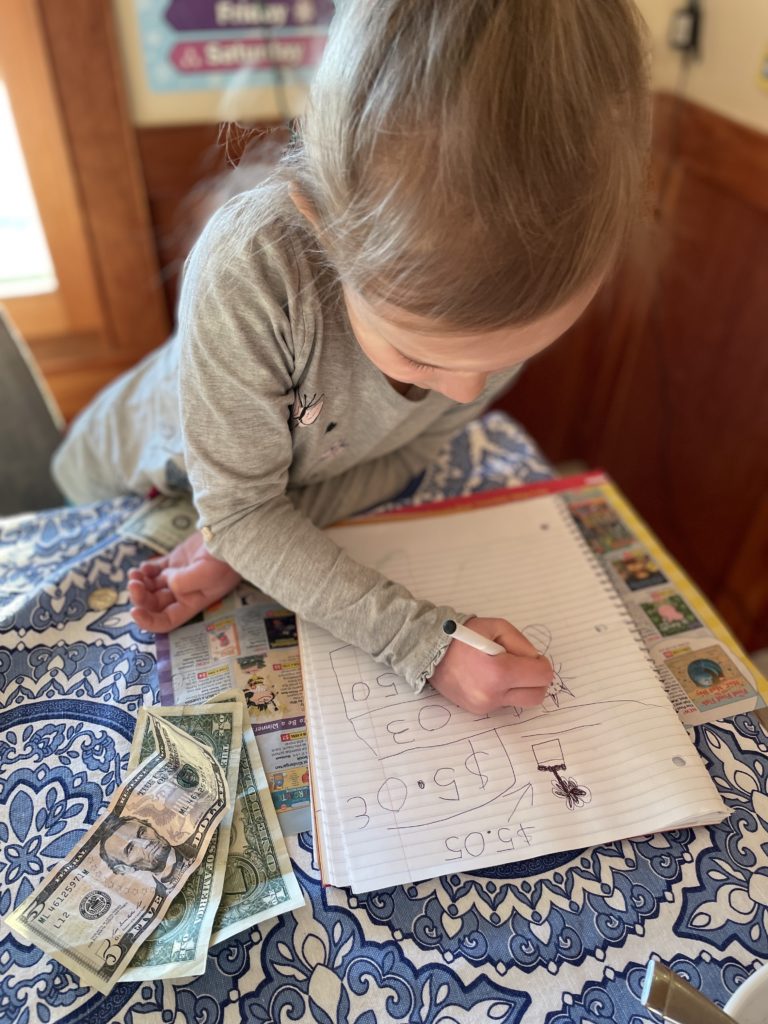
As the children’s financial literacy matured, they began applying these lessons to social dynamics. During community "pizza nights," the children were responsible for purchasing their own desserts. This led to the elder child negotiating a cost-sharing agreement with the younger sibling. When the price of a dessert ($7) could not be evenly divided, it forced a practical application of coin denominations and the concept of "rounding" or alternating payments, further integrating mathematical skills with social contracts.
Supporting Data: The Case for Early Intervention
While the Vermont case study is anecdotal, it aligns with broader psychological and economic data regarding child development.
Cognitive Development and Financial Concepts
Research from the University of Cambridge suggests that by age seven, most children have grasped the fundamental concepts that will shape their future financial behaviors. This includes the ability to plan ahead, the understanding that money can be exchanged for goods, and the recognition of the difference between "wants" and "needs."
The Efficacy of the "Earned" Allowance
Data from various financial literacy advocates, including the Consumer Financial Protection Bureau (CFPB), indicates that "experiential learning"—giving children a small amount of money to manage—is more effective than classroom instruction alone. Furthermore, children who "earn" their discretionary money tend to value their purchases more highly and are less likely to engage in impulsive spending compared to those who receive money as an entitlement.
| Feature | Entitlement Allowance | Earned Income Model |
|---|---|---|
| Source of Funds | Fixed weekly/monthly gift | Completed labor/negotiated tasks |
| Lesson Focus | Budgeting a fixed sum | Connection between effort and reward |
| Negotiation | Rarely applicable | Encouraged (Chore bundling) |
| Debt Perception | Often abstract | Visceral (Labor without reward) |
Official Perspectives: Expert Analysis on Parental Lending
Financial experts and child psychologists offer a nuanced view of the "parental debt" model used in the Vermont case.
Dr. Arash Emamzadeh, a specialist in psychology and consumer behavior, notes that allowing a child to experience the "pain of paying" is essential. "When parents bail children out or shield them from the consequences of overspending, they delay the child’s ability to self-regulate," he states. "The ‘Unicorn Debt’ example is a controlled environment where the stakes are low—only $4—but the psychological impact is high. It creates a ‘somatic marker,’ a physical memory of the discomfort of debt."
Sarah Newcomb, a behavioral economist, emphasizes the importance of the "negotiation" aspect mentioned in the Vermont study. "Teaching a child that they can negotiate the price of their labor is teaching them self-worth and market dynamics. It moves them from being passive consumers of a parent’s will to active participants in an economy."

However, some educators caution that the distinction between "family chores" and "paid chores" must remain rigid. If the line blurs, children may begin to demand payment for basic acts of hygiene or kindness, which undermines the "communal" aspect of family life.
Implications: Building a Toolset for Adulthood
The ultimate goal of this scaffolded approach is to demystify money, stripping it of its emotional baggage and treating it as a neutral tool.
The De-Stigmatization of Financial Discourse
By speaking openly about how "Mama works and is paid money," the parents are removing the "taboo" nature of financial discussion. This transparency prevents money from becoming a source of anxiety or an indicator of self-worth. Instead, it is framed alongside other "tools" for a successful life, such as sleep, nutrition, and education.
Ownership and Responsibility
The requirement that children carry their own wallets and manage their own physical cash introduces the concept of "stewardship." The incident at the science museum, where a lost wallet led to "tears of relief" upon its recovery, taught a lesson in vigilance that no lecture could replicate. It established that wealth—no matter how small—requires active management and protection.

Future Horizons: The Bank of Parental Units
The next phase for the Vermont family involves introducing the concept of "interest." By opening a "Bank of Parental Units," the parents intend to pay a high interest rate on any money the children choose to save rather than spend. This will introduce the "time value of money" and the benefits of delayed gratification.
In conclusion, the Vermont model suggests that the most effective financial education is one that is integrated into the fabric of daily life. By allowing children to fail, to go into debt, and to negotiate their value in a safe, low-stakes environment, parents are not just teaching them how to count coins—they are preparing them to navigate the complex economic realities of the 21st century. The "boring meetings" and "labor-intensive chores" of today are the building blocks of the fiscally sound citizens of tomorrow.