The Unseen Enemy: How Ultra-Processed Foods Drive Overeating and Illness, Even When Nutrient-Matched
Main Facts
A groundbreaking randomized controlled trial has definitively revealed that the consumption of ultra-processed foods (UPFs) leads to increased calorie intake and weight gain, even when these foods are meticulously matched for their caloric, sugar, fat, and fiber content with unprocessed alternatives. This landmark study, the first of its kind, challenges the conventional wisdom that only the nutrient profile of food matters, underscoring the profound and distinct impact of industrial processing on human health and eating behavior.
For decades, the term "junk food" has vaguely described less healthy options like candy, chips, and sodas. However, nutrition researchers have increasingly adopted the more precise concept of "ultra-processed food" to categorize industrial formulations laden with ingredients not typically found in home kitchens. These include various flavors, sweeteners, colors, emulsifiers, and other additives designed to imitate real foods, enhance palatability, or mask undesirable qualities. This category broadly aligns with what many health experts call "red light foods" – items to be minimized or avoided for optimal health.
The implications of this research are far-reaching, highlighting that the problem with modern diets extends beyond mere sugar or fat content. The very act of industrial processing, and the resulting food matrix and additives, appears to fundamentally alter how our bodies regulate hunger and satiety, pushing us towards overconsumption and an escalating global health crisis.
Chronology: The Rise and Recognition of an Industrial Food Empire
The concept of ultra-processed foods, formalized by the NOVA classification system, emerged as researchers sought a more robust framework to understand the dietary shifts occurring globally. Unlike minimally processed foods (like fresh fruits and vegetables) or processed culinary ingredients (oils, salt, sugar), UPFs are industrial formulations made largely or entirely from substances derived from foods and additives, with little or no intact whole food. They are typically ready-to-eat, palatable, and designed for convenience and long shelf life.
The dramatic rise of UPFs is a relatively recent phenomenon, coinciding with the post-World War II industrialization of the food system and the subsequent demand for convenience. Food manufacturers rapidly innovated, developing products that could be mass-produced, easily distributed, and consumed on the go. This era saw the proliferation of items like breakfast cereals, packaged snacks, ready-to-heat meals, and sugary drinks.
By the early 21st century, the dominance of ultra-processed foods became undeniable. In the United States, for instance, more than 70% of the assessed food supply is now classified as ultra-processed. This isn’t just a phenomenon confined to grocery store aisles; UPFs are strategically placed everywhere – from gas stations and convenience stores to vending machines in schools and offices. As a former Coca-Cola executive famously stated, soda should be kept within an "arm’s reach of desire," a marketing philosophy that has successfully permeated countless product categories. A major candy brand brazenly boasted about their ubiquitous distribution: "We put them everywhere… Not sorry."
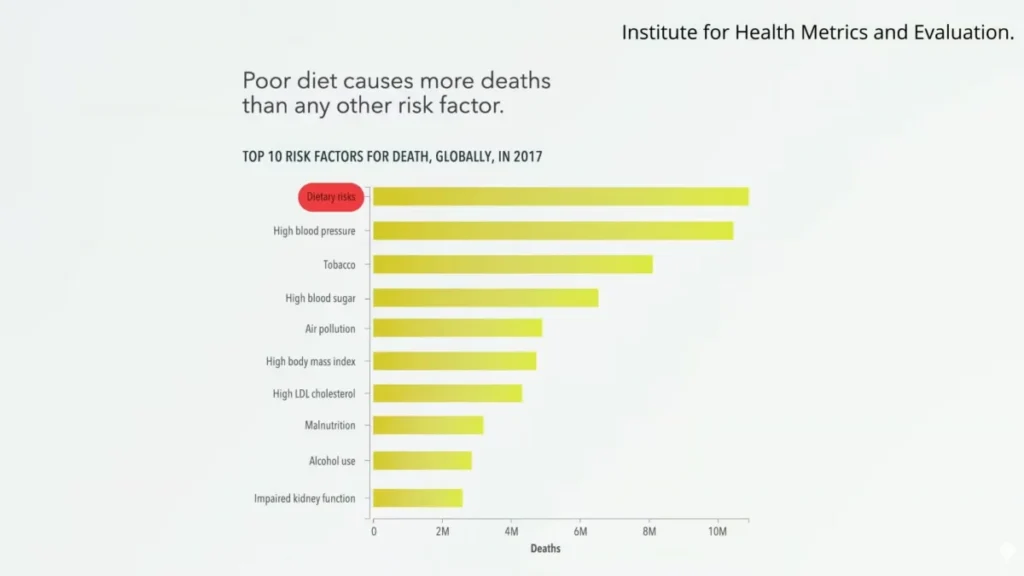
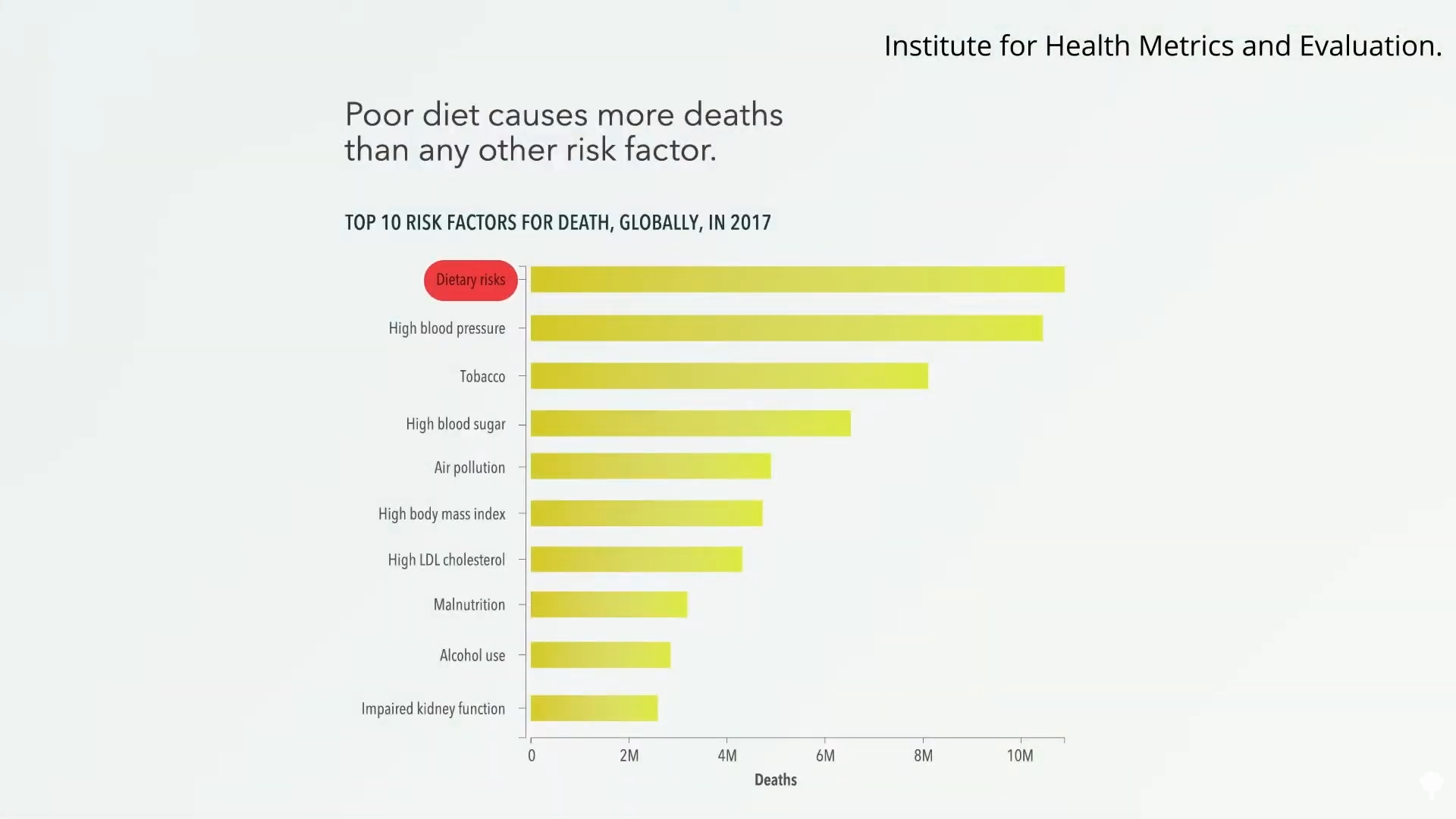
This pervasive presence means that UPFs constitute a significant, and often majority, portion of daily caloric intake. In higher-income countries worldwide, ultra-processed foods consistently account for over 50% of dietary calories. The impact on younger generations is particularly alarming: an unbelievable 56% to 70% of what U.S. children and adolescents consume over an entire day is classified as junk. This dietary landscape has led to unhealthy diets becoming humanity’s greatest killer, recognized as the leading risk factor for death globally, surpassing traditional risks like smoking or physical inactivity.
Supporting Data: The Silent Saboteur of Health
The health consequences of a diet dominated by ultra-processed foods are extensive and increasingly well-documented. Early research, often involving animal models, provided stark warnings. Studies on rats demonstrated that diets high in modern, highly palatable foods led to dramatic weight gain, systemic inflammation, and a range of cognitive and metabolic abnormalities. These animal findings offered a glimpse into the potential human toll.

In humans, the links are similarly robust:
- Obesity and Eating Disorders: As UPFs became pervasive, binge eating disorder was recognized as a new and increasingly common eating disorder. Strikingly, studies have found that 100% of "binge foods" are ultra-processed. This is no coincidence; these foods are meticulously engineered to be hyper-palatable and difficult to stop consuming, overriding natural satiety signals. As the adage goes, "people don’t tend to binge on broccoli."
- Chronic Disease Epidemic: A comprehensive review of studies revealed that approximately 9 out of 10 investigations found a clear association between ultra-processed food consumption and adverse health outcomes. This extends far beyond just obesity to include:
- Cardiovascular Diseases: Increased risk of heart disease, stroke, and hypertension.
- Type 2 Diabetes: Greater likelihood of developing insulin resistance and diabetes.
- Cancers: Links to various forms of cancer.
- Gastrointestinal Issues: Higher incidence of irritable bowel syndrome (IBS) and other digestive complaints.
- Mental Health: Association with depression and anxiety.
- Frailty and All-Cause Mortality: Increased risk of physical frailty in older adults and, significantly, a shorter lifespan (all-cause mortality).
- Impact on Youth: Studies specifically focusing on children and adolescents have added asthma to this concerning list and reported higher levels of DNA damage, suggesting potential long-term genetic consequences.
- The Absence of Benefit: Crucially, not a single study has reported a link between ultra-processed foods and beneficial health outcomes. This stark contrast is evident when observing populations that primarily consume minimally processed foods, exhibit low meat consumption, and have high fiber intake – these groups consistently experience far fewer chronic diseases, lower obesity rates, and extended disease-free lifespans.
While many of these findings initially stemmed from observational studies, which can show correlation but not necessarily causation, the scientific community recognized the urgent need for interventional research to establish definitive causality. This led to the pioneering randomized controlled trial that forms the core of this discussion.
The Landmark Randomized Controlled Trial: Unmasking the True Culprit
The first randomized controlled trial on ultra-processed foods, conducted by Dr. Kevin Hall and his team at the National Institutes of Health, marked a pivotal moment in nutrition science. Recognizing the limitations of observational data, researchers embarked on a highly controlled experiment to isolate the unique effects of food processing.
Methodology: The study involved 20 adult volunteers who were essentially "locked" in a hospital ward for 28 days. Each participant underwent two distinct dietary phases, each lasting 14 days, in a crossover design. This meant every individual served as their own control, experiencing both an ultra-processed diet and an unprocessed diet.
The Critical Matching Factor: The innovative aspect of this trial was its meticulous design: both diets were crafted to be iso-caloric, iso-sugar, iso-fat, iso-fiber, and iso-macronutrient (carbohydrate and protein). This was a direct response to the food industry’s argument that the problem with "junk food" was merely its nutrient profile, suggesting that reformulation (e.g., adding fiber or reducing sugar) could mitigate harm. By matching all these traditional nutritional parameters, the researchers aimed to "tease out the effect of ultra-processing itself."
Diet Examples:
- Ultra-Processed Breakfasts: Cheerios with milk and a muffin, or an egg and cheese muffin with turkey bacon and orange juice.
- Unprocessed Breakfasts: Oatmeal with blueberries and almonds.
- Ultra-Processed Lunches: Turkey sandwich with nonfat Greek yogurt, canned peaches, baked potato chips, and sugar-free Crystal Light Lemonade.
- Unprocessed Lunches: Southwest entrée salad with black beans, carrots, corn, avocados, and nuts, alongside grapes and apples.
Participants were offered meals with the same overall sugar and fat content for each dietary phase but were instructed to eat as much or as little as they desired.
The Startling Results: The findings were unequivocal. On the ultra-processed diet, participants spontaneously consumed approximately 500 more calories per day compared to the unprocessed diet. Unsurprisingly, this led to a significant change in body weight: individuals gained an average of two pounds during the 14 days on the ultra-processed diet, while they actively lost an average of two pounds during the 14 days on the less-processed diet.
Why the Difference? While the study didn’t fully elucidate all the mechanisms, several factors are hypothesized:
- Eating Speed: Participants tended to eat ultra-processed meals faster.
- Satiety Signals: The physical structure and rapid absorption of UPFs may bypass or blunt normal satiety signals, leading to less feeling of fullness.
- Gut-Brain Axis: The additives, emulsifiers, and altered food matrix in UPFs may disrupt the gut microbiome and its communication with the brain, influencing appetite regulation.
- Hyper-Palatability: The engineered combination of fats, sugars, and salts, often with artificial flavors, creates a highly rewarding sensory experience that encourages overconsumption.
The study conclusively demonstrated that the problem isn’t solely the unbalanced nutrient profile of ultra-processed foods, but rather the processing itself that drives overeating and weight gain.
Official Responses: Industry Reformulation vs. Real Solutions
The food industry’s response to the growing body of evidence against ultra-processed foods has largely centered on the concept of "reformulation." This strategy involves tweaking existing products – adding a bit of fiber here, reducing sugar or fat there – to create the "prospect of nutritional improvement without dietary change." This "unobtrusive strategy" is appealing to manufacturers because it allows them to maintain their highly profitable product lines and avoid fundamental shifts in their business model.
However, the groundbreaking RCT effectively debunks this approach. The study proved that even when nutrients are matched, the ultra-processed nature of the food still drives overconsumption and weight gain. This suggests that simply reformulating UPFs without addressing their inherent processing may be an insufficient, if not misleading, solution. It prioritizes corporate profit over genuine public health improvement.
From a public health perspective, the industry’s argument that it’s "unrealistic" to expect people to avoid ultra-processed foods due to "societal time constraints and the difficulties of food prep" is often met with skepticism. Critics argue this narrative echoes a decades-long propaganda campaign designed to normalize dependence on processed foods. They point out that healthy, convenient alternatives exist – "Those who think healthy foods can’t be convenient have never met an apple."
The societal cost of this reliance on UPFs is staggering. While the food industry rakes in over a trillion dollars annually, a disproportionate share of healthcare spending goes towards treating chronic diseases exacerbated by these very foods, such as diabetes and heart disease. As one analysis starkly put it, "we lose triple what the food industry makes," when accounting for the healthcare burden. This highlights a profound disconnect between corporate profitability and public well-being.
Implications: Reclaiming Health Through Real Food
The scientific consensus emerging from the landmark RCT and extensive observational data paints a clear picture: a dietary shift away from ultra-processed foods is not merely advisable, but essential for public health. The implications touch upon individual choices, public health policy, and the very structure of our food systems.
Individual Empowerment:
- Prioritizing Whole Foods: The most direct implication for individuals is to prioritize whole, minimally processed foods. This means focusing on ingredients that resemble their natural state – fruits, vegetables, whole grains, legumes, nuts, and seeds.
- Basic Culinary Skills: While industry often dismisses the practicality of cooking, investing in basic culinary skills can be empowering, enabling individuals and families to prepare nutritious meals from scratch.
- Mindful Eating: Understanding how UPFs manipulate appetite can foster more mindful eating habits, encouraging individuals to listen to their body’s true hunger and satiety cues rather than succumbing to engineered palatability.
- The "Traffic Light System": Practical tools like the "traffic light system" (green for go, yellow for caution, red for stop) can simplify food choices, guiding consumers towards healthier options.
Policy and Systemic Change:
- Public Education Campaigns: Governments and health organizations need to launch robust education campaigns that clearly explain what ultra-processed foods are and their specific health risks, moving beyond generic "eat healthy" messages.
- Fiscal Measures: Implementing taxes on ultra-processed foods, similar to tobacco or sugary drink taxes, could disincentivize consumption and generate revenue for public health initiatives. Conversely, subsidies for fresh produce and whole foods could make healthy options more affordable and accessible.
- Marketing Restrictions: Tighter regulations on the marketing of UPFs, especially to children, are crucial to combat the pervasive cues that encourage consumption.
- Clearer Labeling: Beyond basic nutrient labels, more prominent and easily understandable labels (e.g., front-of-pack warnings, NOVA classification indicators) could help consumers make informed decisions.
- Support for Healthy Food Environments: Creating environments where healthy choices are the default – in schools, workplaces, and public spaces – is vital. This includes promoting school gardens, healthy cafeteria options, and community food programs.
- Rethinking Agricultural Subsidies: Re-evaluating agricultural subsidies that disproportionately favor ingredients used in UPFs (like corn syrup) could help shift the economic landscape towards healthier food production.
As Dr. Robert Lustig noted, while his "mother-blaming" perspective is problematic, his prescription remains sound: "There’s only one recourse—real food, which is low in sugar and high in fiber." The challenge is not just to inform but to inspire and enable this shift, both at an individual and societal level. We must resist the industry’s narrative of inevitability and recognize that a healthier future requires us to "start thinking outside the box" of processed convenience and reconnect with the foundational power of real, unprocessed nourishment. The science is clear: our health depends on it.