The Unsung Hero: How Oatmeal Revolutionized Diabetes Management – From Historical Mystery to Modern Scientific Breakthrough

FOR IMMEDIATE RELEASE
[City, State] – [Date] – Long before the advent of insulin, a humble grain held a surprising power over one of humanity’s most challenging diseases: diabetes. The simple oatmeal diet, once a subject of intense skepticism, emerged as a vital lifeline for countless patients, profoundly impacting their lives and offering a glimpse into the intricate connection between diet and metabolic health. More than a century later, modern science is finally unraveling the "unsolved mystery" that captivated early pioneers in diabetes care, revealing the profound mechanisms by which oats, particularly their unique fiber content, can dramatically improve blood sugar control and even reduce insulin dependency.
The Historical Enigma: Oatmeal’s Pre-Insulin Triumph
The narrative of oatmeal’s efficacy in diabetes care begins in the early 20th century, a period marked by desperate struggles against a disease that was often a death sentence. In 1903, German physician Carl von Noorden published groundbreaking findings on an "oatmeal diet" that appeared to save or significantly prolong the lives of many individuals suffering from diabetes. His claims, initially met with considerable skepticism from the medical establishment, were eventually substantiated by a growing body of clinical observations.
A Controversial Cure Gains Traction
Dr. James B. Herrick, an acclaimed American physician, initially harbored doubts about von Noorden’s radical dietary approach. However, after implementing the oatmeal diet with his own patients, Herrick was reportedly "astonished by the results." His clinical experience, mirroring von Noorden’s, contributed to a pivotal shift in medical opinion. By 1909, the burgeoning evidence led to a bold proclamation: "no case of juvenile or adolescent diabetes should be deprived of the benefits of the oatmeal cure." This endorsement underscored the profound impact of a dietary intervention in an era devoid of pharmaceutical solutions like insulin.
The legendary Dr. Elliott Joslin, founder of the world’s oldest and largest diabetes clinic and a towering figure in diabetes research, also bore witness to the remarkable effects of oatmeal. He famously described its impact as "sometimes magical," acknowledging the "oatmeal cure" as an "unsolved mystery" and "one of the greatest puzzles in diabetes" of his time. These early clinicians observed a crucial detail: the strict exclusion of animal protein was essential, as it appeared to "annihilate the favorable action of oatmeal-type diets." This observation, made decades before the molecular understanding of insulin resistance, provided a vital clue that would resonate with future scientific discoveries.
Modern Scientific Validation: Unpacking the "Magical" Effects
Fast forward more than a century, and contemporary research has begun to demystify the "magical" properties of oats. We now understand that the historical observations regarding animal protein were remarkably prescient. Modern scientific consensus confirms that animal protein intake can intensify insulin resistance – a fundamental driver of prediabetes and type 2 diabetes. Conversely, plant-based foods, rich in fiber and micronutrients, are known to enhance insulin sensitivity, promoting the body’s efficient use of insulin.
Oats and Whole Grains: A Prophylactic Against Diabetes
Beyond its historical curative role, long-term epidemiological studies have consistently demonstrated that higher consumption of whole grains, including oats, is associated with a significantly lower risk of developing diabetes. This preventative aspect underscores the broad public health importance of incorporating such foods into daily diets.
Recent meta-analyses and systematic reviews, synthesizing data from numerous randomized controlled trials, have solidified oatmeal’s therapeutic value. These studies have robustly shown that regular oat consumption significantly improves both short-term and long-term blood sugar control in individuals with diabetes. Furthermore, a consistent benefit observed across these trials is a reduction in cholesterol levels, adding another layer to oats’ cardiovascular health advantages.
The Power of Beta-Glucan: A Fermentable Fiber
The primary driver behind many of oats’ health benefits is believed to be a unique soluble fiber known as beta-glucan. This fermentable fiber interacts profoundly with the human body, particularly within the gut. One of its well-established mechanisms is its cholesterol-lowering ability, which is now understood to be partly mediated by its influence on the gut microbiome. By modulating the composition and activity of intestinal bacteria, beta-glucan contributes to a healthier metabolic profile.
The Gut Microbiome: A Key to Insulin Sensitivity
The "magic" of oat fiber extends deeply into our digestive system, particularly influencing the gut microbiota. A small amount of fiber can indeed go a long way. Our beneficial gut flora utilizes dietary fiber as a substrate, fermenting it to produce short-chain fatty acids (SCFAs). These SCFAs, such as butyrate, propionate, and acetate, are far more than just metabolic byproducts; they exert potent anti-inflammatory effects throughout the body and play a critical role in regulating metabolism and enhancing insulin sensitivity.

Fiber’s Role in Alleviating Type 2 Diabetes
Dozens of randomized controlled trials have meticulously documented how the specific types of fiber found abundantly in oats and legumes can improve long-term blood sugar control in individuals with diabetes. The scientific rationale is clear: the selective promotion of certain gut bacteria by dietary fiber intake directly contributes to alleviating type 2 diabetes. Oat fiber, in particular, acts as a prebiotic, fostering the growth of beneficial bacterial species like Lactobacillus and Bifidobacteria. These bacteria are crucial for maintaining gut integrity, modulating immune responses, and influencing host metabolism in a favorable way.
Considering the absence of insulin-resistance-intensifying animal protein and fat, coupled with a dense concentration of prebiotic fiber, it becomes clear why oatmeal diets transitioned from a debated experimental treatment to an integral part of clinical routine in diabetes management.
Rapid Clinical Outcomes: Seeing Results in Days, Lasting for Weeks
Perhaps one of the most astonishing aspects of oatmeal’s therapeutic potential is the speed and duration of its beneficial effects. Multiple studies have indicated that even a few days of consuming an oatmeal-rich diet can yield significant improvements that persist for approximately a month afterward.
Dramatic Reductions in Insulin Needs
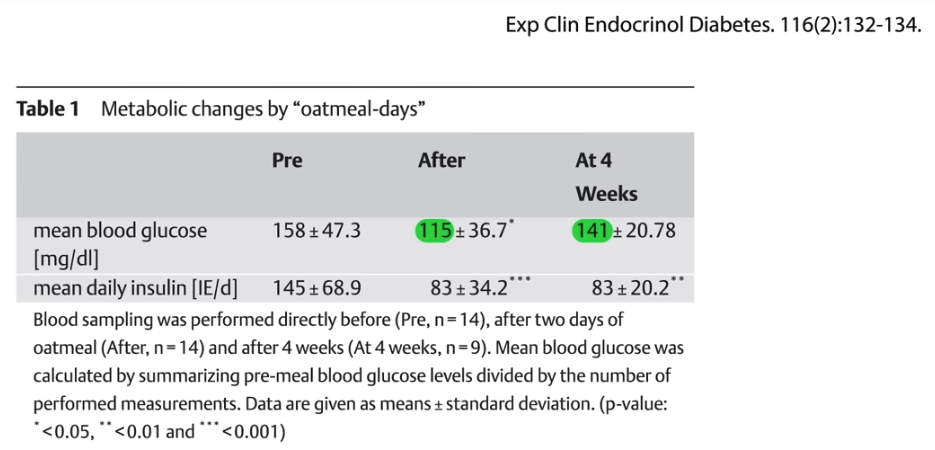
A notable randomized, controlled, crossover trial showcased these rapid benefits. Participants on an oatmeal diet experienced a remarkable drop in insulin needs—approximately 40%—in just two days. This was a stark contrast to a control group on a hypocaloric diabetic diet that merely restricted calories. Crucially, the positive effects were not transient; a measure of long-term blood sugar control (likely HbA1c) taken four weeks later still reflected the significant benefit, even after participants had resumed their regular diets.
Other contemporary studies corroborate these findings. A mere two days of an oatmeal intervention consistently reduced the required amount of insulin and improved blood sugar levels, with these beneficial effects observed to last for up to four weeks. Patients with uncontrolled type 2 diabetes, when placed on a two-day oatmeal diet, experienced a 40% reduction in their insulin dose, accompanied by an almost normalization of average blood sugars. The sustained impact, weeks after the intervention ceased and participants returned to their usual eating patterns, highlights a profound and lasting metabolic reprogramming.
(Image: A chart depicting the reduction in blood sugar and insulin dosage after 2 days of eating oatmeal, immediately after, and 4 weeks later)
Gut Microbiome Transformation and Improved Glycemic Control
The underlying mechanism for these sustained benefits appears to be deeply rooted in the gut microbiome. When individuals adopt a diet rich in oats, beans, fruits, vegetables, and nuts, there is a dramatic increase in the population of "fiber-feeding" gut bacteria that churn out beneficial short-chain fatty acids. This shift directly correlates with improved glycemic control, with fasting diabetic blood sugars dropping by about 25% within one month. The greater the diversity and abundance of these fiber-promoted SCFA producers, the better the participants’ improvement in their hemoglobin A1c (HbA1c) levels, a crucial indicator of long-term blood sugar control.
(Image: Charts illustrating how high-fiber diets can alter the gut microbiome and improve blood sugars in those with type 2 diabetes)
Clinical Perspectives and Implications: The Need for Medical Supervision
While the evidence overwhelmingly supports the therapeutic benefits of oatmeal, there is a critical caveat: its efficacy can be too good, necessitating close medical supervision.
The Imperative of Deprescription
If a patient with diabetes initiates an oatmeal-rich diet, their physician must be prepared to rapidly deprescribe (reduce or discontinue) their blood sugar-lowering medications. Failure to do so could lead to dangerously low blood sugar levels (hypoglycemia), a severe and potentially life-threatening condition. Therefore, oatmeal interventions should not be undertaken without the guidance of a healthcare professional, especially in patients who might have difficulties recognizing or reporting symptoms of hypoglycemia. The "downside" of trying oatmeal days, ironically, is its powerful effectiveness, demanding careful clinical management.
Practical Considerations: Choosing the Right Oats and Enhancing Palatability
Understanding the nuances of oatmeal consumption can further optimize its benefits. Not all oats are created equal, particularly regarding their glycemic impact.
The Glycemic Index of Oatmeal Varieties
Whole grains are inherently beneficial, but intact whole grains offer superior advantages. The "wholiest" form of oats is the groat, which simply has its inedible outer husk removed.
- Steel-cut oats (also known as pinhead or Irish oats) are groats sliced into two to four pieces. These are considered a low-glycemic-index food, typically scoring under 55 on the glycemic index (GI) scale.
- Old-fashioned rolled oats are made by steaming and flattening oat groats. They have a slightly higher glycemic index of 55, still considered low to moderate.
- Instant oats undergo more extensive steaming and are rolled even more thinly. This processing increases their surface area and digestibility, leading to a higher glycemic index of 79. While higher, this is still often better than many commercial breakfast cereals, which can score in the 80s or 90s.
For optimal blood sugar control, prioritizing oat groats or steel-cut oats is generally recommended, as their slower digestion leads to a more gradual rise in blood glucose.
Elevating Oatmeal: From Basic Bowl to Gourmet Meal
Oatmeal, a classic whole-grain breakfast, offers immense versatility. Beyond the traditional sweet preparations, incorporating a variety of plant-based toppings and even savory profiles can enhance its appeal and nutritional density.
A common base, often referred to as "BROL" (Barley, Rye, Oats, Lentils), provides a robust foundation for a fiber-rich meal. For those seeking a sweet profile, combinations like frozen dark red cherries, cocoa powder, dates, and walnuts or pumpkin seeds create a nutrient-dense and satisfying option.
However, oatmeal need not be confined to breakfast or sweet preparations. Exploring savory oatmeal recipes, incorporating ingredients like sautéed greens, mushrooms, herbs, curry spices, or roasted vegetables, can transform it into a wholesome and flavorful main course, further diversifying dietary fiber intake.
Future Directions and Public Health Implications
The compelling evidence supporting oatmeal’s role in diabetes management, both historically and in modern clinical trials, has significant implications for public health. Promoting the consumption of whole grains, particularly oats, represents a cost-effective and accessible dietary intervention that can contribute to both diabetes prevention and management.
Further research could focus on standardizing "oatmeal diet" protocols, investigating optimal dosages and durations for specific patient populations, and exploring the long-term sustainability and adherence rates of such dietary changes. Understanding the precise interplay between specific oat varieties, processing methods, and individual gut microbiome compositions could unlock even more tailored and effective dietary strategies.
In an era grappling with a global diabetes epidemic, the humble oat stands as a powerful testament to the profound therapeutic potential of whole plant foods. Its journey from a historically "magical" enigma to a scientifically validated intervention underscores the enduring wisdom of dietary approaches in medicine, reminding us that sometimes, the simplest solutions can be the most profound.