From Bare Soil to Botanical Oasis: The 27-Year Evolution of a South Carolina Tropical Haven
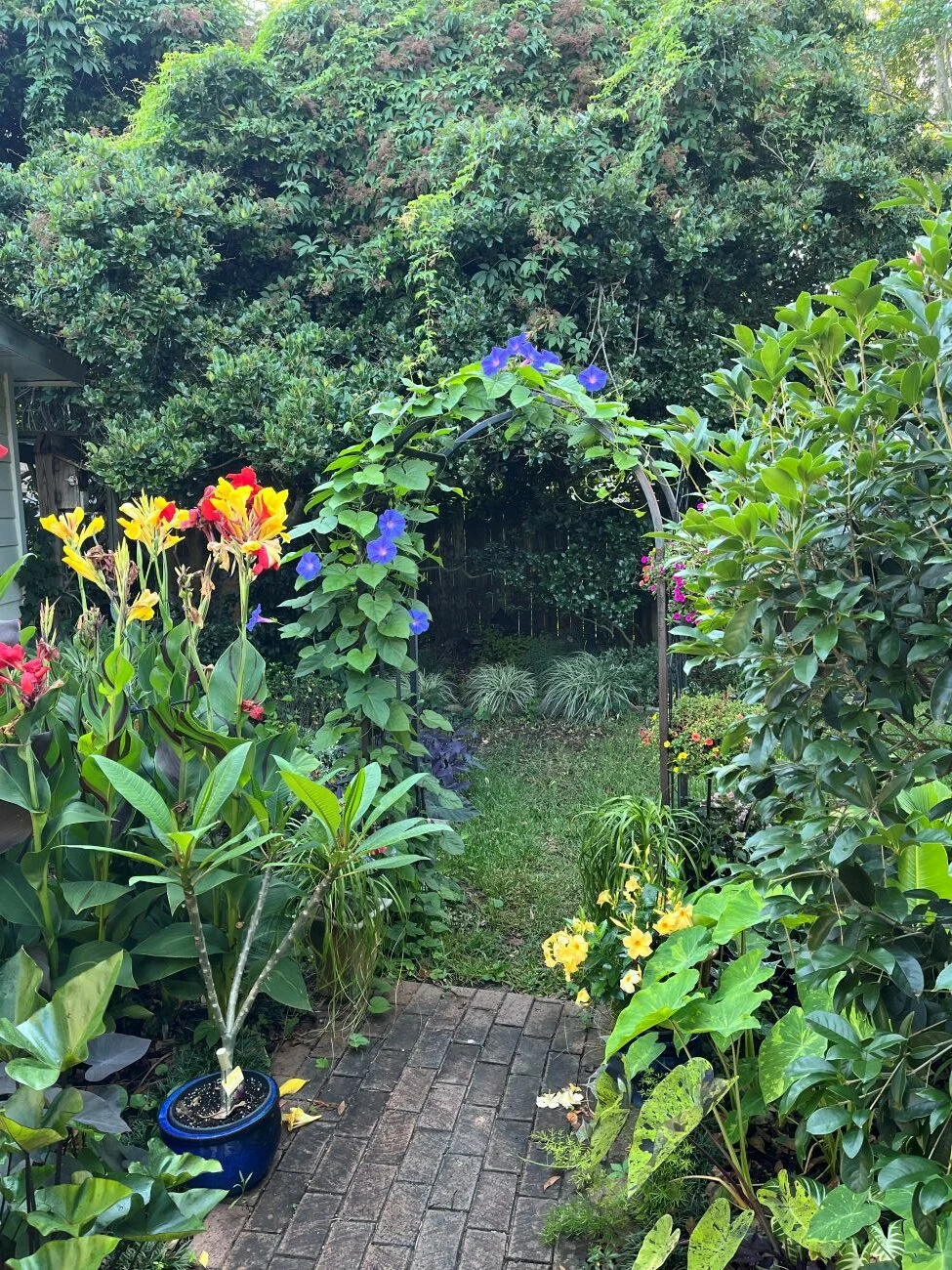
In the heart of Mount Pleasant, South Carolina, a verdant sanctuary stands as a testament to the transformative power of patience, passion, and horticultural vision. What began nearly three decades ago as a blank canvas of empty, unremarkable land has been meticulously cultivated into a thriving, multi-layered tropical paradise. This garden, the pride and joy of its owner, Marilyn, serves as a masterclass in how to adapt exotic, high-moisture-loving plant species to the humid, challenging climate of the Lowcountry.
The Genesis of a Green Sanctuary: A Chronology of Growth
The story of this garden is not one of overnight success, but rather a slow-burn narrative of dedication. Twenty-seven years ago, Marilyn began with nothing—no mature canopy, no established soil structure, and no infrastructure.
The Early Years (Years 1–7)
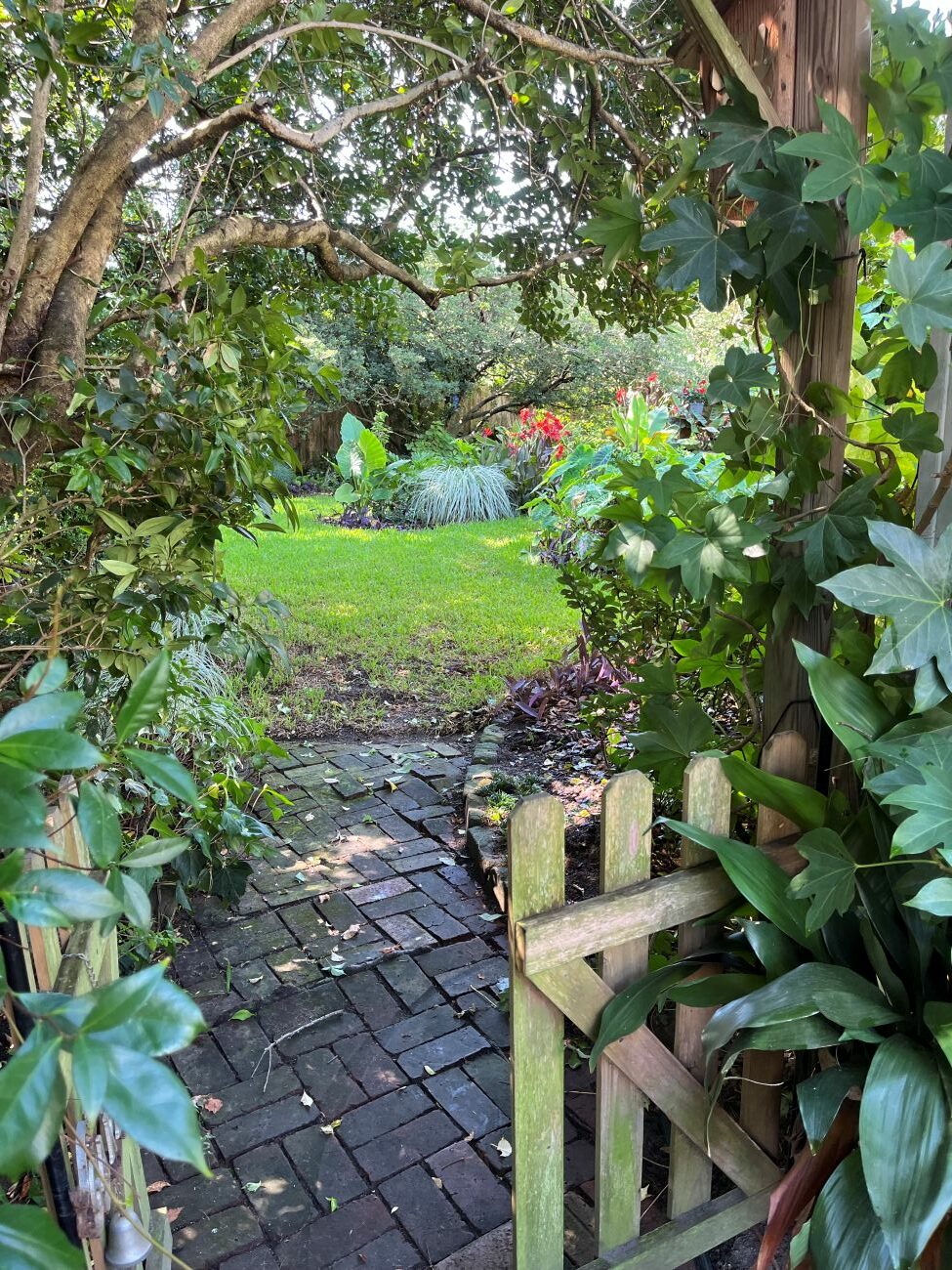
The initial phase of the garden was defined by soil amendment and infrastructure development. Recognizing that tropical plants demand high-nutrient, well-draining organic matter, the first years were spent building the foundational beds that would eventually support heavy feeders like Musa (banana plants) and Colocasia (elephant ears). During this time, the garden’s layout was established, including the installation of the central brick pathways that now guide visitors through the dense foliage.
The Developmental Phase (Years 8–18)
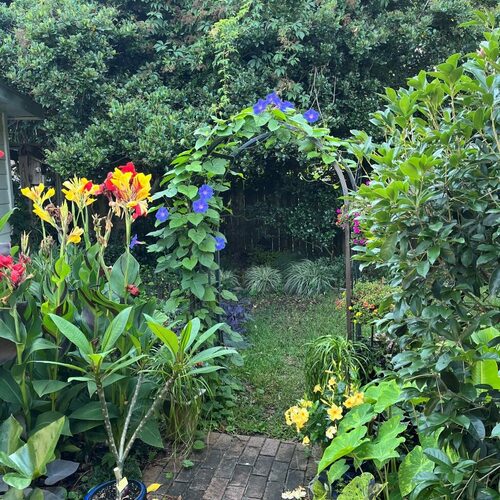
As the microclimate began to shift with the growth of trees and the introduction of shrubs, Marilyn began experimenting with verticality. The addition of garden structures, such as the garden arch, provided the necessary support for climbing flora like morning glories (Ipomoea purpurea). It was during this period that the koi pond was introduced, acting as the hydrological heart of the garden. The presence of water not only provided a focal point but also elevated the humidity levels in the immediate vicinity, creating a more hospitable environment for sensitive specimens.
The Maturity of the Paradise (Years 19–27)
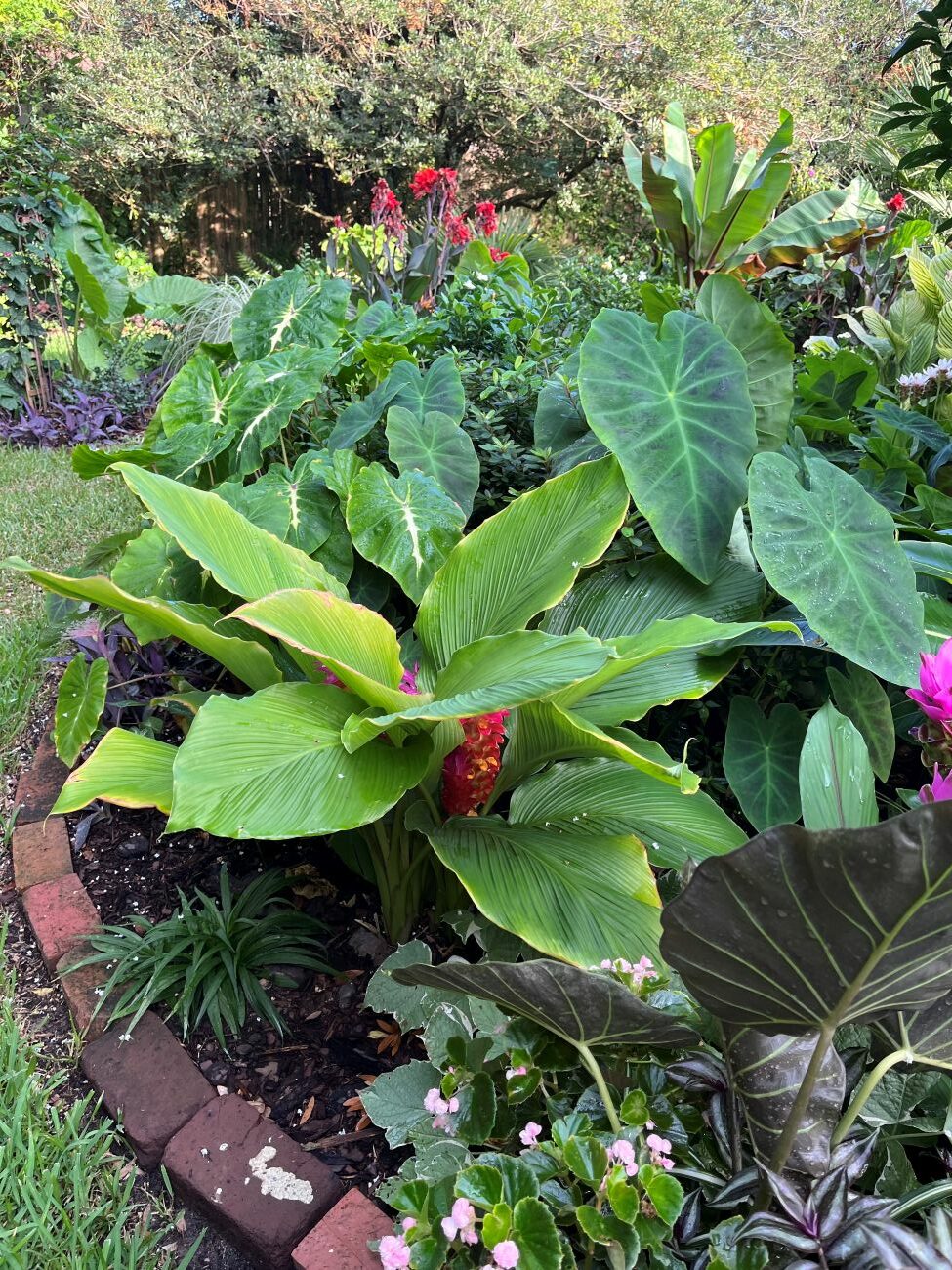
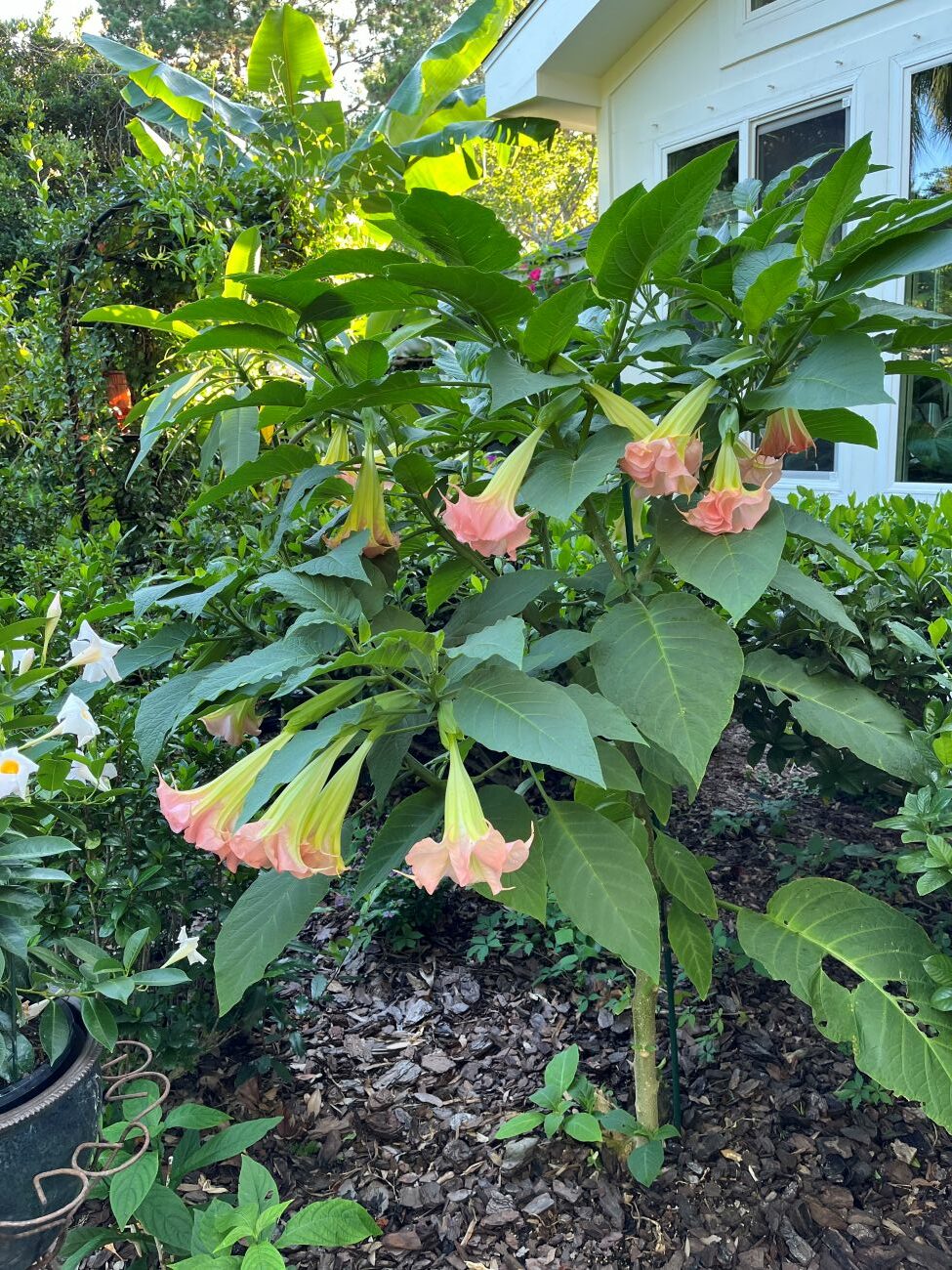
Today, the garden has reached a state of ecological maturity. The "tropical look" is no longer just a collection of pots, but a sophisticated tapestry of textures and heights. Giant curcumas, rare elephant ear cultivars like ‘Maui Sunrise’ and ‘Coal Miner’, and fragrant Brugmansia (angel’s trumpets) have created a closed-canopy effect that mimics the deep shade of a rainforest floor.
Botanical Diversity: The Engine of the Landscape
The success of Marilyn’s garden relies on a careful selection of species that thrive in the USDA Hardiness Zones 8 through 11. The landscape is a study in botanical contrast.
Texture and Foliage
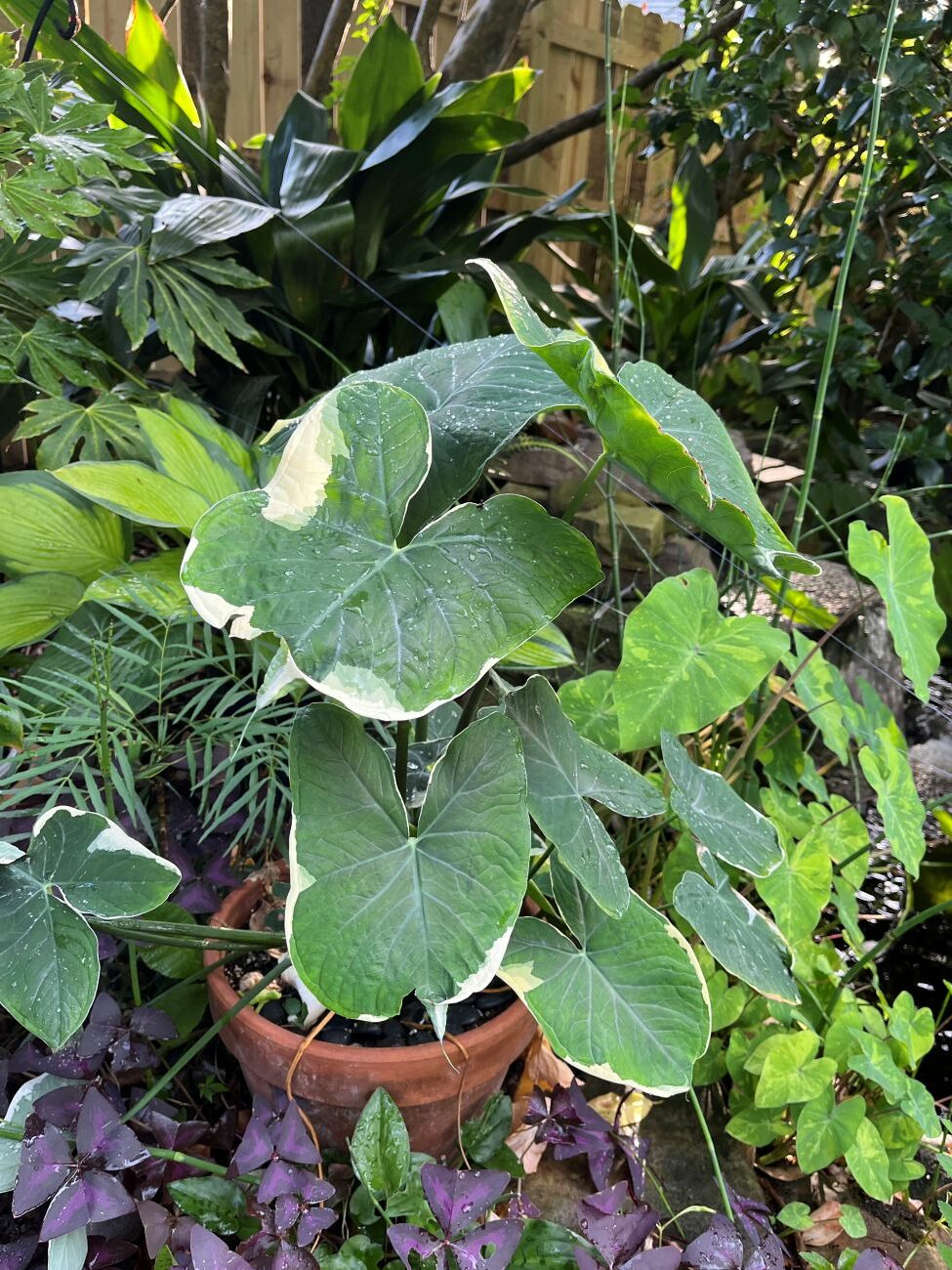
The garden’s visual impact is anchored by its foliage. The use of Xanthosoma ‘Mickey Mouse’ near the koi pond is a strategic choice; its variegated, arrow-shaped leaves provide a luminous quality that reflects off the water’s surface, drawing the eye toward the center of the garden. By layering giant curcumas with the deep, moody purples of Colocasia ‘Coal Miner’, Marilyn creates a sense of depth that makes the garden feel far larger than its physical footprint.
The Fragrance Factor
A garden, as Marilyn notes, should engage more than just the eyes. By incorporating Brugmansia, she has introduced a temporal element to the landscape. While these "angel’s trumpets" provide a bold, pendulous aesthetic during the day, they truly come alive in the evening, releasing a heavy, intoxicating fragrance that transforms the backyard into an evening destination for relaxation.
Unexpected Discoveries
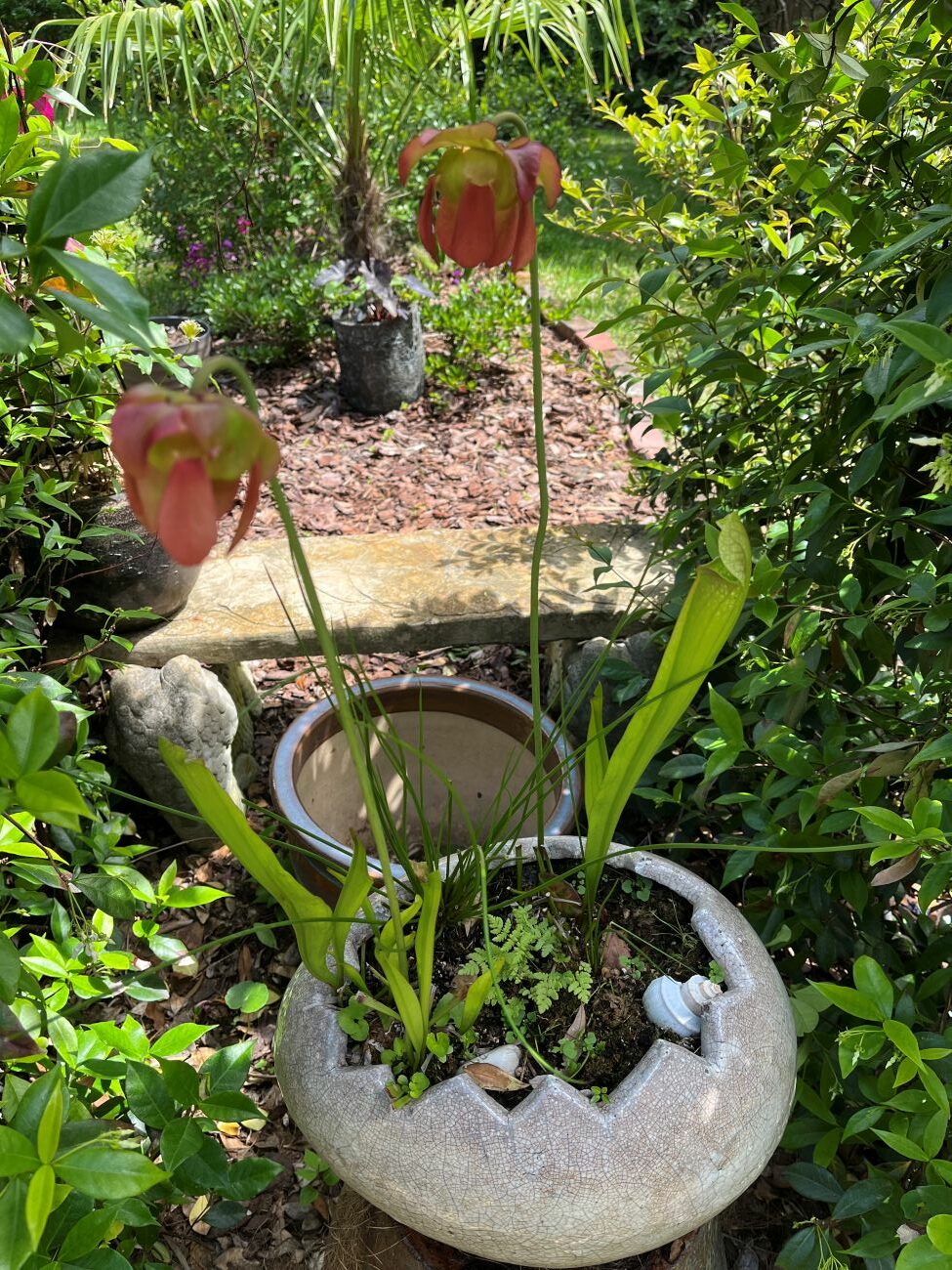
Interspersed among the lush tropicals are specimens that challenge traditional garden expectations. The inclusion of Sarracenia (pitcher plants) serves as a reminder of the region’s native botanical heritage. These bog-loving carnivores provide an unexpected architectural silhouette, offering a sharp contrast to the broad, soft leaves of the elephant ears.
Professional Insights: Resilience and Design
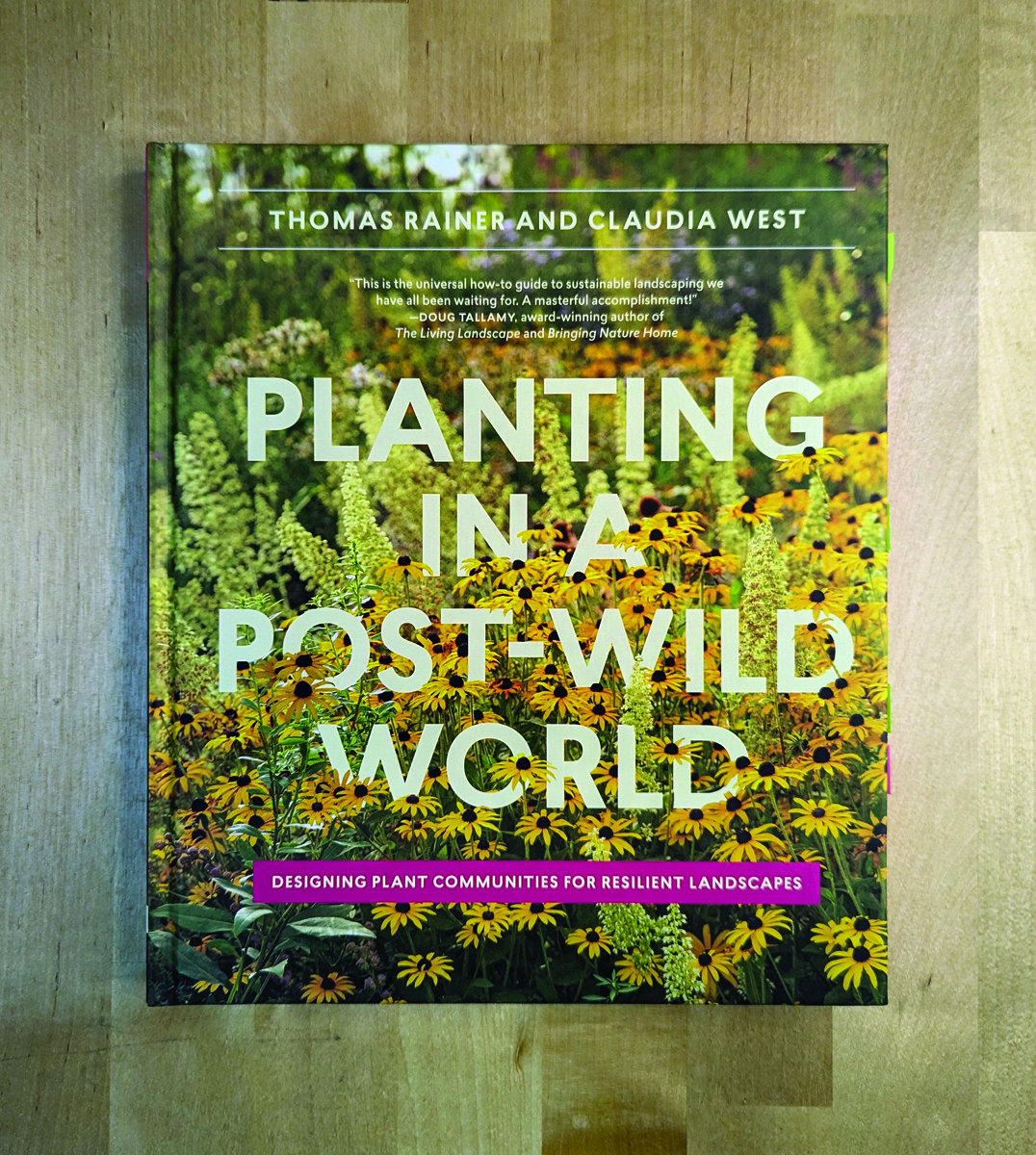
The garden is not merely a collection of plants; it is a designed community. According to experts in resilient landscape design, such as Thomas Rainer and Claudia West, authors of Planting in a Post-Wild World, successful modern gardens must function as hybrids—balancing the wild, untamed aesthetic of nature with the practical limitations of suburban spaces.
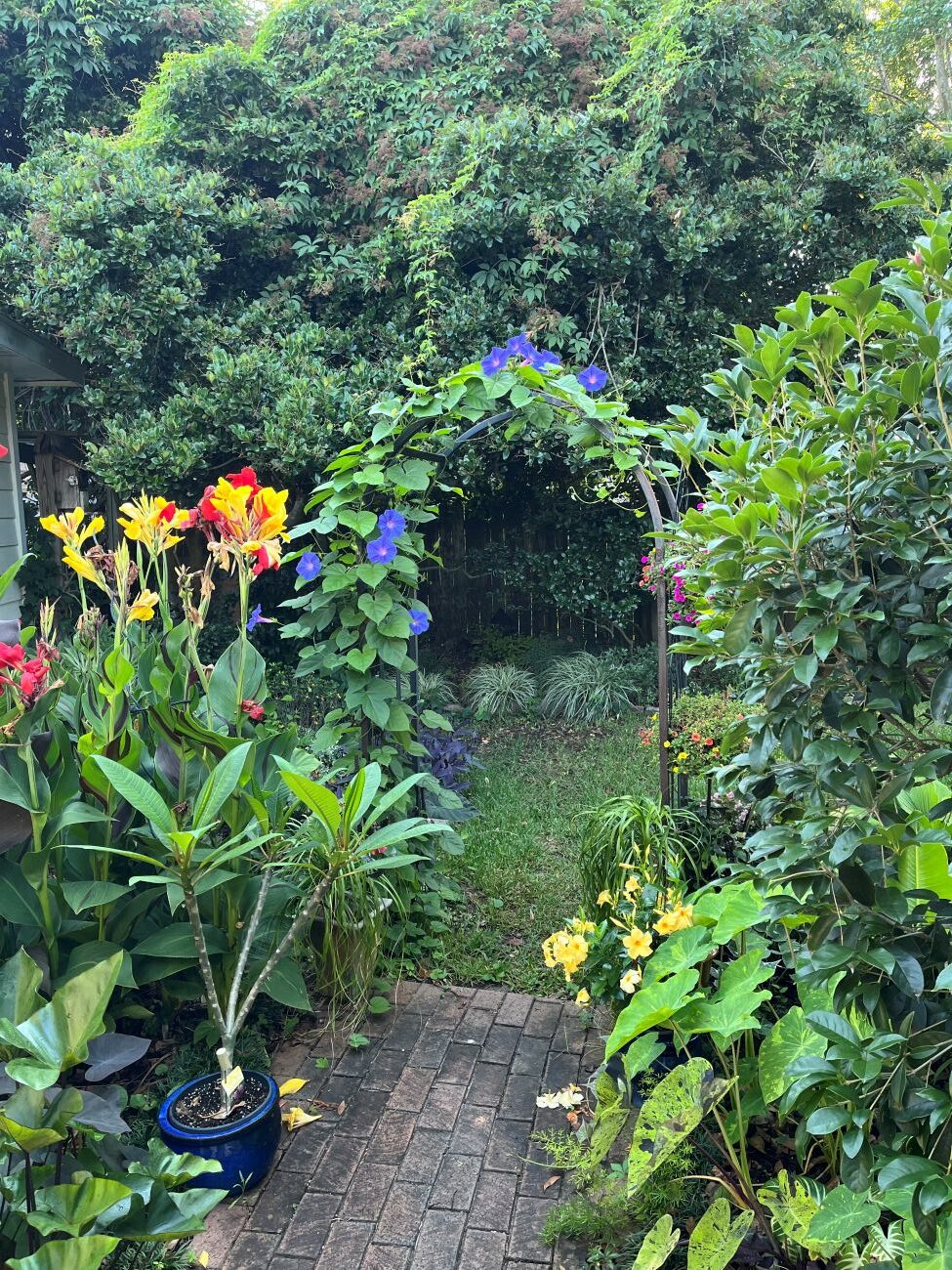
Marilyn’s garden achieves this by managing plant communities that support one another. The dense planting strategy acts as a "living mulch," suppressing weeds and maintaining soil moisture, which reduces the need for constant human intervention. This method of "layering" is highly recommended for homeowners in the Southeastern United States, where rapid growth can often lead to maintenance burnout.
Practical Implications for Local Gardeners
For those looking to replicate the success seen in Mount Pleasant, the implications are clear: start with the soil, focus on your zone’s strengths, and embrace the power of water features.
Infrastructure and Maintenance
The logistical backbone of a tropical garden is water. Whether it is a koi pond providing ambient humidity or a well-managed irrigation system, moisture is the currency of this landscape. Owners should invest in high-quality hardware to manage water delivery. Tools such as heavy-duty brass Y-valves allow for the simultaneous management of multiple watering zones, which is essential when maintaining different types of plants—from bog-loving pitcher plants to thirsty banana trees—in a single garden.
Structural Support
As plants grow, they require more than just nutrients; they require scaffolding. The use of garden obelisks provides a clean, vertical interest point that supports climbing vines without overwhelming the delicate aesthetic of the tropical leaves. Selecting structures that are both lightweight and durable is key, as they must withstand the humid, high-wind conditions often found in coastal South Carolina.
A Call to Action: The Community of Growers
Marilyn’s journey from a bare plot to a tropical retreat is a reminder that gardening is an ongoing process of learning. Failures, such as lost plants or seasonal set-backs, are as much a part of the garden as the blooms themselves.
The Fine Gardening community encourages all readers to document their own progress. Whether you are tending to a small collection of succulents or a vast backyard jungle, your experiences provide valuable data for fellow growers. By sharing photos and stories, gardeners contribute to a larger repository of knowledge regarding regional success and climate-appropriate plant care.
How to Participate
If you have a garden that you are proud of—or even a garden you have visited that inspired you—the Fine Gardening team invites you to submit your work for the "Garden Photo of the Day" feature. Submissions should include:
- High-quality imagery: 5–10 photos showcasing both wide-angle views and intimate plant details.
- Botanical context: Information about the plants featured, your geographic location, and your years of experience.
- The "Why": A brief narrative on what makes your space special—whether it’s a funny story, a hard-won victory over pests, or a dream for the future of your landscape.
Conclusion: The Ever-Changing Canvas
The garden in Mount Pleasant is never truly "finished." It is a living, breathing entity that changes with the seasons and matures with each passing year. Marilyn’s 27-year project demonstrates that with a commitment to ecological principles and a love for the craft, any homeowner can create a personal paradise.
As the sun sets on her garden, and the Brugmansia begins to cast its evening scent across the koi pond, it is clear that the effort has been worth it. The garden stands not just as a collection of tropical specimens, but as a sanctuary—a place where the wild and the cultivated meet to create a lasting, peaceful environment. For those standing at the start of their own gardening journey, let this serve as inspiration: begin with the soil, plant with purpose, and allow your vision the time it needs to grow.