The Frozen Legacy: How Frosé Transformed the Modern Cocktail Landscape
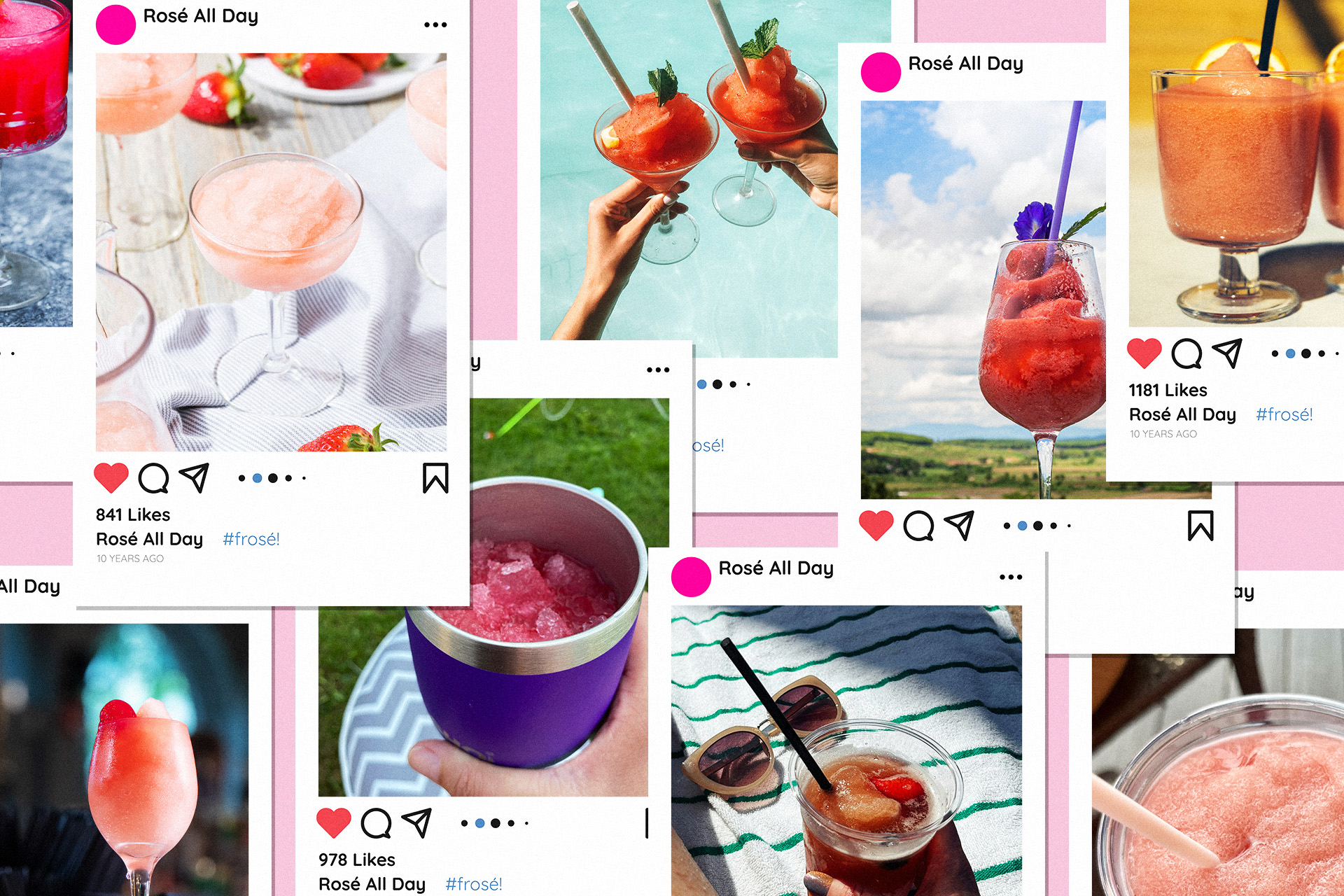
In the annals of 21st-century culinary culture, few years hold as much mythic weight as 2016. It was a time when Hamilton was the undisputed king of Broadway, the Instagram feed was a curated gallery of vibrant snapshots rather than a scroll of existential dread, and the global political climate—while turbulent—had yet to reach the boiling point of the modern era. It was also the summer that the “frosé” entered our collective vocabulary, marking a seismic shift in how the hospitality industry approached the frozen drink.
Today, in an era where mixology has become increasingly performative—with martinis masquerading as caprese salads and cocktails fortified with protein powder—the original, three-ingredient frosé stands as a quiet testament to the power of simplicity. It remains one of the most compelling arguments for the “less is more” philosophy in a world obsessed with hyper-innovation.
The Genesis of a Phenomenon: A Chronology
The story of frosé is not one of a boardroom marketing strategy, but of serendipitous tinkering. Justin Sievers, then the general manager at the original Bar Primi in New York City’s Bowery neighborhood, found himself staring at a newly acquired slushie machine intended for frozen Negronis.
“Rosé was everywhere that summer,” recalls Sievers, now a co-owner of Café Mulberry. “New York was in the middle of a brutally hot, unrelenting stretch. I started wondering if there was a way to translate that ubiquity into something even more refreshing.”
The 2016 Tipping Point
By blending rosé wine, a touch of rosé vermouth, and puréed strawberries, Sievers unlocked a formula that hit the perfect equilibrium of acidity, sweetness, and temperature. The drink didn’t just sell; it became a cultural touchstone.
Within weeks, the phenomenon moved from a local curiosity to a national obsession. “The name was memorable, the color practically demanded to be photographed, and most importantly, it was genuinely delicious,” says Sievers. “Almost overnight, we had a line down the block. This was before ‘line culture’ was a standard part of the New York City dining experience, and I was frantically trying to source more machines just to keep up.”
Supporting Data: The Scale of the Frosé Frenzy
The numbers behind the drink illustrate the sheer intensity of its popularity. During the peak of its initial two-summer run, the Bar Primi team was processing nearly 940 frosé orders in a single weekend.
Josh Nadel, the beverage director of NoHo Hospitality, which owns Bar Primi, describes the atmosphere of that time as a “strong helping of curiosity augmented with a bit of mischief, alongside equal parts luck and intention.”
The logistical strain was significant. Because customers were treating the drink as a temporary accessory—purchasing a round, capturing the perfect social media photo, and often departing before finishing their glass—the turnover rate was unprecedented. Staff members were running machines at both the bars and in the prep kitchens simultaneously. Even today, Nadel notes that while the initial mania has settled into a predictable, sustained demand, the drink exhibits a unique longevity, with winter sales consistently outperforming initial projections.
Official Perspectives: The Evolution of the Frozen Category
The influence of the frosé extended far beyond a singular summer hit. It effectively rehabilitated the reputation of the frozen drink category, which had previously been relegated to the fringes of serious mixology—the domain of boardwalk souvenir shops and seaside casinos.
“It woke the sleeping frozen drink giant in contexts and locations which previously eschewed or excluded the category,” explains Nadel. “Today, you are just as likely to find a frozen Negroni at a ‘50 Best’ bar as you are a frozen margarita at a seaside taco bar. I’d say rather than inspiring a specific cocktail, it’s more the elevation and acceptance of the category as a whole.”
This shift in perception has allowed bartenders to treat the slushie machine as a legitimate tool of the trade rather than a gimmick. It opened the door for high-end bars to experiment with texture and temperature in ways that were previously considered too “kitschy” for the craft cocktail movement.
Implications: The Spritz-Slushie Marriage and Beyond
One of the most visible ripple effects of the frosé movement is the nationwide adoption of the "frozen spritz." Following the massive 2018 marketing push for the Aperol Spritz, the industry saw a natural convergence of these two trends. With restaurants already equipped with high-capacity slushie hardware, the leap to frozen Aperol or Campari was almost inevitable.
Regional Variations and Cult Favorites
The influence is now institutionalized across the American dining landscape:
- The Swurl (Houston, TX): At Montrose Cheese & Wine, this cult-favorite drink blends frosé with house-made sangria in a 50/50 ratio.
- The Fraperol Spritz (Austin, TX): Il Brutto has successfully adapted the Aperol formula into a frozen format that serves as a cornerstone of their summer menu.
- The Campari Slush (Nashville, TN): The Capricious pop-up at the Fairlane Hotel has demonstrated how a more bitter, herbaceous profile can thrive when frozen, creating a sophisticated take on the summer cooler.
As the industry matures, the “sequel syndrome” has taken hold. Bartenders are increasingly riffing on the base format, often with such complex ingredients that the origins are masked. At Gurney’s Beach Club in Montauk, the house frosé includes vodka, orange bitters, lemon juice, and rose syrup, cementing its status as their second-best-selling beverage.
Why We Still Crave the Slushie
The endurance of the frosé—and its many descendants like Sievers’ “Fratcha” (a frozen matcha-frosé hybrid)—speaks to a deeper psychological need. As the cost of living continues to climb, and as geopolitical and climate-related stressors become increasingly inescapable, the cocktail functions as a form of “adult play.”
There is a visceral, childlike joy in consuming a frozen treat. It provides a tactile experience that a standard cocktail in a coupe glass simply cannot replicate. For a generation of drinkers navigating an increasingly heavy world, the frosé offers a rare, accessible moment of levity.
The Professional Verdict
From a business perspective, the frosé also solved a fundamental problem in modern hospitality: labor efficiency. In an era of high staff turnover and rising operating costs, a drink that can be pre-batched and dispensed by non-specialized staff is a massive asset. It provides consistency in flavor and presentation, ensuring that the guest experience remains uniform regardless of who is behind the stick.
As we look back from the vantage point of 2026, the frosé is no longer just a trend or a viral moment. It has earned its place in the canon of classic drinks, not because it is the most complex or the most refined, but because it managed to capture the spirit of a specific time while simultaneously future-proofing the frozen cocktail category.
When a guest orders a frosé today, they are doing more than just ordering a drink. They are participating in a ritual of nostalgia—a small, icy, pink-hued reminder of a time when the world felt just a little bit brighter, and when the most pressing concern of the summer was simply keeping the slushie machine running. If one drink has the power to transport us back to that state of mind, it is little wonder that the frosé has managed to survive the fickle nature of the modern beverage industry.