The Unseen Battle: How Public Health Triumphed Over Trans Fats – A Landmark Victory in Food Regulation
Introduction: Unraveling a Public Health Enigma
The history of public health is replete with battles waged against invisible foes – pathogens, pollutants, and, increasingly, the insidious dangers lurking within our food supply. For decades, attempts to meaningfully regulate the food industry often faltered, stymied by powerful corporate interests and deeply ingrained cultural norms around individual choice. Yet, a singular triumph stands out: the global eradication of industrially produced trans fats. What was the secret to the public health community’s success in this unprecedented victory, especially when past attempts to curb unhealthy dietary components had largely failed?
This question brings into sharp focus the diverse strategies employed by public health advocates to mitigate the ruinous consequences of risky choices. Generally, these strategies fall into three broad categories: informing people, nudging people, and directly intervening to make harmful activities less accessible or inherently safer. Understanding which approach ultimately proved most effective in the trans fat saga offers invaluable lessons for future public health endeavors.
The Spectrum of Public Health Intervention
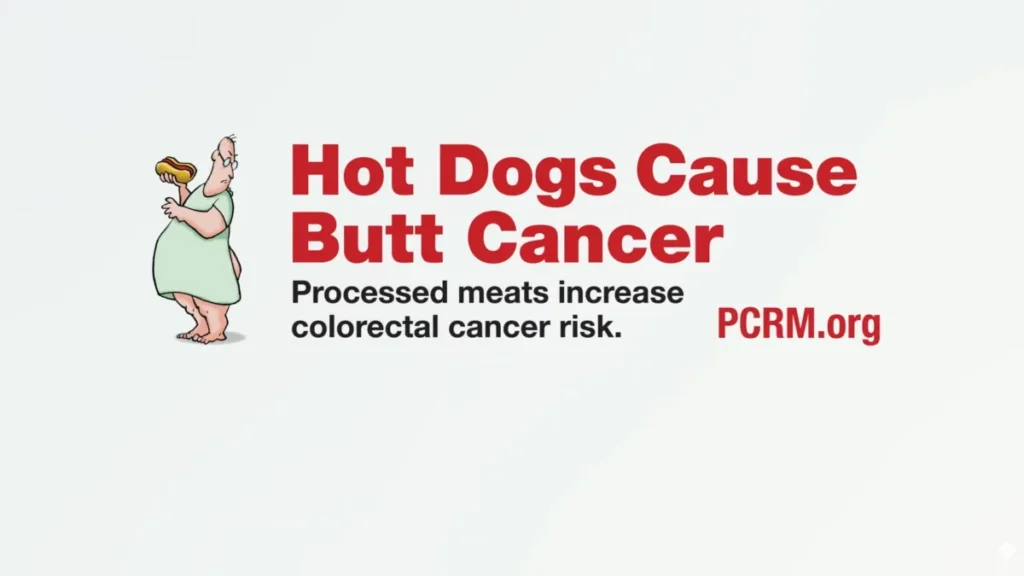
The first approach, informing people, relies on education and awareness campaigns. This includes initiatives like nutritional labeling, public service announcements, and informational billboards. We see this in the "sugar pack" ads on public transit, designed to inform consumers about the alarming quantities of sugar in soft drinks, or the stark "Hot Dogs Cause Butt Cancer" billboards that directly educate the public about the undeniable link between processed meats and colorectal cancer. The underlying assumption here is that armed with knowledge, individuals will make healthier choices.
The second approach, nudging people, involves structuring choices to encourage healthier behaviors without outright banning options. This often includes offering financial incentives, making healthy options more prominent, or using behavioral economics principles to subtly guide decisions. For example, some programs might offer discounts on fresh produce or place healthier snacks at eye level in stores. While less intrusive than direct intervention, nudging still relies on individuals ultimately making the "right" choice.
The third, and often most controversial, approach is direct intervention. This involves regulatory actions that eliminate or significantly reduce the harm potential of a product or activity, often by removing the human element of choice or risk. Consider the question of preventing car fatalities: which approach do you think has saved more lives? Was it mandating driver education (informing), labeling cars about crash risk (informing), or the direct intervention of requiring airbags and seatbelts to be installed in all vehicles, making them inherently safer regardless of driver choice? The efficacy of direct intervention often lies in its ability to protect the entire population, irrespective of individual knowledge or willpower. The ban on trans fats would ultimately prove to be a powerful example of this third strategy in action.
However, the question lingered: was there a way to make products nutritionally safer in the first place, rather than constantly battling the downstream effects of unhealthy choices? The journey to ban trans fats provides a compelling answer.
The Silent Scourge: The Alarming Science of Trans Fats
Trans fatty acids, or trans fats, are a type of unsaturated fat that occurs in small amounts in nature but became widespread in processed foods through an industrial process called partial hydrogenation. This process made liquid vegetable oils solid at room temperature, extending shelf life and improving texture in baked goods, fried foods, and snack items. From a food manufacturer’s perspective, they were a miracle ingredient. From a public health perspective, they were a ticking time bomb.
A Global Wake-Up Call: The Harvard Nurses’ Study and Denmark’s Decisive Action
The scientific community’s understanding of trans fats dramatically shifted in the early 1990s. A seminal study, the 1993 Harvard Nurses’ Study, published in the New England Journal of Medicine, delivered a bombshell. It found that a high intake of trans fats could increase the risk of heart disease by a staggering 50%. This wasn’t merely a marginal risk; it was a profound threat to cardiovascular health, elevating trans fats to the status of a major dietary villain.
The findings from the Harvard Nurses’ Study served as a catalyst, particularly in Europe. Denmark, a nation often at the forefront of progressive public health policies, took the scientific evidence seriously and acted swiftly. The trans fat story began there with the scientific discovery and ended, remarkably, a mere decade later with a comprehensive ban on added trans fats in 2003. Denmark’s move was groundbreaking, making it the first country in the world to implement such a ban. Their approach was simple yet radical: instead of merely informing consumers about the dangers, they chose to eliminate the source of the danger from the food supply.
The Human Cost of Delay in the United States
While Denmark was celebrating a public health victory, the United States lagged far behind. It took another ten years after Denmark’s ban before the U.S. even began seriously considering a similar prohibition. This delay had a devastating human cost. All the while, trans fats continued to permeate the American diet, contributing to an estimated tens of thousands of deaths annually. The impact wasn’t just measured in mortality rates; it was also reflected in "years of healthy life lost" to conditions like heart disease, stroke, and type 2 diabetes – a burden comparable to that imposed by severe illnesses such as meningitis, cervical cancer, and multiple sclerosis.
The stark disparity between the scientific evidence, the swift action taken by countries like Denmark, and the prolonged inaction in the U.S. raised a critical question: if so many people were suffering and dying, why did it take so long for the United States to even suggest taking action? The answer lay in the formidable power of the food industry and the complex interplay of economic interests, political lobbying, and ideological opposition to government regulation.
The Battle for Public Health: New York City as a Microcosm
The struggle to ban trans fats in the United States wasn’t a monolithic national effort from the outset. Instead, it unfolded in localized battles, with New York City serving as a crucial microcosm of the larger national debate. The city’s pioneering efforts to ban trans fats in restaurants and food service establishments offered a preview of the intense opposition and the eventual strategies that would lead to a nationwide ban.
Industry Resistance and the "Nanny State" Narrative
As New York City moved to implement its ban, opposition from the food industry came down hard and fast. Industry groups, powerful lobbying organizations, and even some media outlets decried the proposal as an egregious example of "government intrusion." They quickly adopted the pejorative term "nanny state" to characterize the city’s public health initiatives, suggesting that the government was overstepping its bounds by dictating what citizens could eat.
The Institute of Shortening and Edible Oils, a key industry player, spearheaded arguments emphasizing individual responsibility and the idea that "everything should be eaten in moderation." This narrative was strategically echoed by the livestock industry, which pointed out that trans fats can naturally occur in small amounts in meat and dairy products, implicitly suggesting that a ban on industrially produced trans fats was an overreach that could eventually impact their products. Critics, often backed by industry funding, styled such proposals as the "rise of food fascism," employing hyperbolic language to incite fear and rally opposition.
However, public health advocates pointed out the inherent hypocrisy in these arguments. While the industry championed "consumer choice," it was the widespread, often hidden, use of dangerous industrially produced trans fats that had, in fact, severely limited consumers’ ability to choose healthy options by broadly fouling the food supply. Consumers, often unknowingly, were exposed to these harmful fats in a vast array of everyday products.
The "Slippery Slope" Fallacy and the "Broccoli Horror"
Another persistent tactic employed by vested corporate interests to derail public health initiatives is the "slippery slope" argument. The fear-mongering narrative typically goes: if "food zealots" get their wish in banning added trans fats, what’s next? Will the government start regulating sugar, salt, or even mandate vegetable consumption? This argument, designed to distract from the very real and immediate harm being caused, attempts to conjure up extreme, improbable future scenarios.
This exact "what if the government tries to make us eat broccoli?!" hypothetical actually surfaced in a significant legal context during a Supreme Court case concerning the Affordable Care Act (Obamacare). Chief Justice John Roberts, in questioning the limits of Congress’s power, suggested that if the government could compel individuals to buy health insurance, it could conceivably start "ordering everyone to buy vegetables." This hypothetical was swiftly and famously rebutted by Justice Ruth Bader Ginsburg, who dubbed it "the broccoli horror."
Justice Ginsburg, known for her sharp legal mind, acknowledged that technically, Congress could compel the American public to eat more plant-based food. However, she sagely wrote, one cannot "offer the ‘hypothetical and unreal possibility’…of a vegetarian state as a credible reason" to strike down a law. Her point underscored the legal principle that policy decisions should not be based on absurd or improbable hypotheticals. As one legal scholar succinctly put it, "Judges and lawyers live on the slippery slope of analogies; they are not supposed to ski it to the bottom." This legal wisdom served to dismantle the very foundation of the "slippery slope" argument, highlighting its often-unrealistic and fear-mongering nature in policy debates.

A Precedent Set: New York City’s Triumph and its Ripple Effect
Despite the fervent opposition and sensationalist rhetoric, New York City persevered. In 2006, the city’s Board of Health voted to ban trans fats in restaurants, with full implementation by 2008. This landmark decision marked a significant victory for public health, preserving New York City’s status as a leading innovator in health policy.
A Legacy of Leadership in Public Health
New York City had a history of taking proactive measures long before federal action. For example, the city banned lead paint 18 years before federal action was finally taken, despite decades of unequivocal evidence of its severe harm, particularly to children. This demonstrated a consistent willingness to act decisively in the face of scientific evidence, even when it meant challenging powerful industries.
The impact of New York City’s trans fat ban was tangible and measurable. Researchers comparing stroke and heart attack rates in various New York counties, both before and after the ban’s rollout, estimated that it successfully reduced cardiovascular death rates by approximately 5%. This was a significant public health achievement, directly translating regulatory action into saved lives and improved health outcomes for thousands.
The Model for National Change
The success of the New York City ban became a powerful model for the rest of the nation. It demonstrated that such a ban was not only feasible but also highly effective in improving public health without crippling the restaurant industry, as critics had predicted. Its measurable positive impact provided concrete evidence that would later be crucial in building the case for a nationwide prohibition. Reflecting on the initial skepticism and the seemingly insurmountable odds, many public health advocates, if asked about the chances of a national trans fat ban, might have jokingly responded, "Fat chance." Yet, the groundwork laid by New York City was instrumental in turning that slim chance into a reality.
Beyond Labels: The Strategic Shift that Paved the Way for a Ban
The ultimate success of the trans fat ban in the U.S. was not a simple matter of scientific evidence triumphing over industry might. It involved a clever, almost accidental, strategic maneuver that fundamentally altered the economic landscape and the political will to resist.
Denmark’s Direct Approach vs. America’s "Poison with Proper Labeling" Mentality
The philosophical divide between Denmark’s approach and the prevailing sentiment in North America was stark. As a leading Danish cardiologist observed, "Instead of warning consumers about trans fats and telling them what they are, we’ve [the Danes] simply removed them." This direct intervention prioritized public health protection above individual choice in the face of a clearly defined danger.
In contrast, a common refrain in North America, particularly from industry, was: "You can put poison in food if you label it properly." This argument asserts that if people are aware of the risks, they should retain the autonomy to eat whatever they want. However, this premise hinges on several flawed assumptions. First, it assumes that consumers are given all the facts in an unbiased manner, which is not always the case given the food industry’s documented "model of systemic dishonesty," as one health ethics professor aptly put it. Second, it assumes that individuals, even with information, have the capacity, time, and resources to navigate a complex and often misleading food environment to make consistently optimal choices. Given the industry’s predilection for predatory deception and manipulation, direct government intervention was increasingly deemed necessary to safeguard public health. But how was such a significant intervention going to overcome entrenched opposition?
The Unintended Consequence: Labeling as a Catalyst for Reformulation
The crucial turning point, which ultimately paved the way for the national ban, was an earlier, seemingly less aggressive regulatory measure: the mandatory labeling requirement. In 2006, manufacturers in the U.S. were required to start adding trans fat content to their products’ nutrition facts labels. Ostensibly, this was an "inform" strategy, intended to empower consumers with knowledge.
However, the labeling requirement had a far more profound, and perhaps unintended, impact on producers than on consumers. Now that companies were forced to divulge the truth about trans fat content, a powerful new dynamic emerged: competition. Brands quickly realized that a "no trans fat" claim could become a significant competitive advantage. Consumers, increasingly aware of the health risks thanks to public health campaigns, began to seek out products free of trans fats.
This created a scramble within the industry. Companies invested heavily in reformulating their products to remove industrially produced trans fats, eager to display "0g Trans Fat" on their packaging. The shift was dramatic. Within years of the mandatory disclosure, more than 5,000 new or reformulated products were introduced touting low or zero trans fat content. Even major fast-food chains adapted. Kentucky Fried Chicken (KFC), which had previously faced lawsuits for having some of the highest trans fat levels, dramatically changed course. They launched an advertising campaign featuring a mom telling a dad that KFC now had zero grams of trans fat, leading to the dad’s enthusiastic yell, "Yeah baby! Whoooo!!" as he began to consume fried chicken by the bucketful. This illustrative example perfectly captured the industry’s pivot.
The Path to Insufficient Political Will to Block the Ban
This industry-led reformulation, driven by market forces spurred by labeling, was the secret to passing the eventual national ban. Once the major food industry players had already invested billions in reformulating their products and had successfully marketed their "no trans fat" alternatives, the financial stakes for blocking a comprehensive ban on added trans fats significantly diminished. The economic incentive to fight the ban had largely evaporated because the industry had already adapted.
With the financial impetus for opposition largely gone, there was insufficient political will remaining to block the ban. In 2015, the U.S. Food and Drug Administration (FDA) made a landmark decision, declaring industrially produced trans fats "not generally recognized as safe" (GRAS) and setting a three-year timeline for their removal from the food supply. Added trans fats were effectively taken off the playing field, a triumph for public health decades in the making.
Unfinished Business: The Nuances and Future of Food Regulation
While the ban on industrially produced trans fats represents a monumental achievement, it’s crucial to understand its specific scope and the ongoing challenges in food regulation.
The Limits of the Trans Fat Ban: Animal-Derived Fats
It’s important to note that the ban specifically targeted industrially produced trans fats, those created through the partial hydrogenation of vegetable oils. It did not affect the small amounts of naturally occurring trans fats found in meat and dairy products, which are known as ruminant trans fats. While these animal-derived trans fats are generally found in lower quantities in the diet compared to their industrial counterparts, their long-term health effects are still a subject of ongoing scientific research and debate within the public health community. The distinction highlights the complexities of food science and regulation, where "trans fat" isn’t a single, monolithic entity.
Broader Lessons for a Healthier Food Future
The trans fat victory offers profound lessons for future public health policy. It underscores the limitations of relying solely on informing or nudging consumers when faced with powerful industries employing deceptive practices and marketing harmful products. It demonstrates that direct intervention, particularly when strategically implemented through initial regulatory steps like mandatory labeling that inadvertently drive industry reformulation, can be highly effective.
The fight against trans fats showcased the government’s essential role in protecting public health, even against formidable industry opposition. As public health challenges continue to evolve, from the pervasive issue of ultra-processed foods to excessive sugar and sodium intake, the strategic playbook developed during the trans fat battle will undoubtedly serve as a vital guide. The journey to a truly healthier food environment remains ongoing, requiring constant vigilance, robust scientific inquiry, and the unwavering courage to enact necessary regulations to safeguard the well-being of all citizens. The trans fat ban stands as a powerful testament to what can be achieved when public health priorities finally prevail.