The Ultimate Guide to Finding Your Perfect Gaming Mouse: Beyond the Hype
In the hyper-competitive world of PC gaming, the mouse is arguably the most critical extension of the player’s intent. It is the bridge between human reflex and digital action. While marketing departments often flood the market with buzzwords like "super-high DPI" or "aerospace-grade materials," finding the right peripheral is less about chasing specs and more about understanding the nuances of ergonomics, sensor reliability, and build philosophy. Whether you are a professional esports athlete or a casual enthusiast, selecting the right tool can fundamentally change your interaction with your favorite games.
Main Facts: The Anatomy of a High-Performance Peripheral
A true gaming mouse is distinguished from its office-bound counterparts by several core features. The most important of these is the sensor. A high-quality optical sensor provides pixel-perfect tracking that translates even the smallest hand movements into precise cursor placement.
Furthermore, modern gaming mice prioritize button longevity and actuation speed. Mechanical or optical switches—the tiny components beneath the clickers—are rated for tens of millions of clicks, ensuring that the "click-feel" remains crisp over years of heavy use. Finally, weight has become the new frontier of innovation. The current trend favors "ultralight" designs, which reduce fatigue during long sessions, though this often requires a delicate balance between weight-saving chassis cutouts and structural integrity.

A Chronology of Modern Mouse Innovation
The evolution of the gaming mouse has been marked by a shift from heavy, feature-laden bricks to agile, high-performance instruments.
- The Early 2010s: The era of the "all-in-one" mouse. Manufacturers focused on cramming as many buttons as possible onto a single device, catering to the peak popularity of MMORPGs like World of Warcraft.
- 2015–2018: The rise of the sensor wars. Companies like Logitech and Razer began focusing heavily on latency reduction, introducing proprietary wireless technologies that matched the reliability of wired connections.
- 2019–2022: The "Lightweight Revolution." Influenced by the DIY community, major brands began stripping away unnecessary plastic and batteries to achieve weights under 70 grams.
- 2023–Present: The era of premium materials. We are currently seeing the adoption of magnesium alloys and carbon fiber, allowing manufacturers to create mice that are simultaneously featherlight and rock-solid, moving away from the "honeycomb" designs of previous years.
Evaluating the Current Contenders
Corsair’s Triple Threat: Performance vs. Philosophy
Corsair has recently pushed the boundaries of their lineup with the Sabre V2 Pro series. The Sabre V2 Pro Ultralight ($130) is a marvel of engineering, weighing in at a staggering 36 grams. It is a purist’s tool—an instrument that sacrifices structural heft for sheer agility. While critics point to its thin, minimalist shell as a potential point of fragility, it remains a "must-have" for those who adhere to the "simplify and add lightness" mantra.
For those who find the ultralight model too flimsy, the Corsair Sabre V2 Carbon Fiber and Magnesium ($170) editions offer a more robust experience. These models hover around the 60-gram mark but provide a level of rigidity that feels premium. Between the two, the magnesium chassis is the standout, offering superior build quality and a more refined aesthetic for the desktop.

The Reliable Classics: Logitech and Razer
The Logitech Pro X Superlight 2 Dex ($160) remains a powerhouse. Despite having been on the market for some time, its ergonomic shape and proven sensor performance make it a top contender for those who prefer a more contoured, "dexterous" grip. It serves as a reminder that a proven shape often trumps the newest technical specifications.
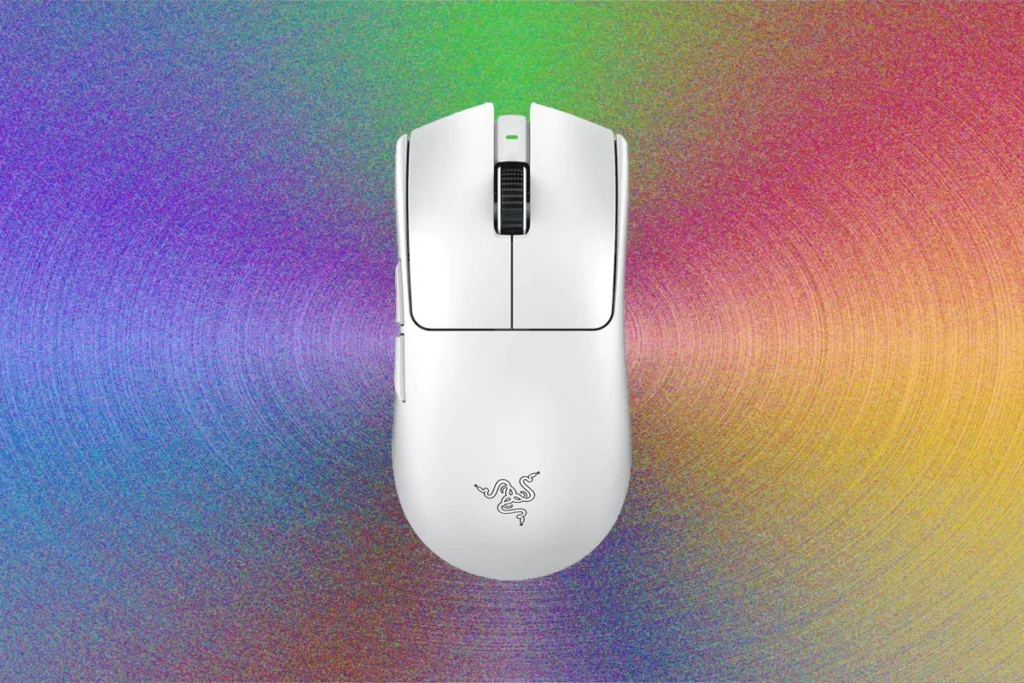
Similarly, the Razer Viper V3 Pro ($100) continues to be a gold standard. With its symmetrical design and high-polling-rate technology (up to 8,000 Hz), it offers performance that is virtually indistinguishable from the latest flagships, making it one of the best values in the high-end space today.
Specialty Choices: MMOs and Rugged Reliability
For gamers who still require a heavy macro loadout, the Corsair Scimitar Elite Wireless SE ($80) is a modern classic. Its unique feature is a sliding side-button rail that allows users to adjust the position of the numpad to match their specific hand size and grip, proving that even "niche" peripherals can benefit from ergonomic innovation.

Conversely, the SteelSeries Aerox 3 ($100) offers something few others do: peace of mind. Rated for water resistance, it is an ideal choice for the accident-prone gamer or those in humid environments. While its technical specs are slightly behind the bleeding edge, its durability and Bluetooth versatility make it a unique utility player.
The Budget King
The Logitech G203 ($27) proves that you don’t need to spend a fortune to get a competitive edge. While it lacks the high-end sensors of its $150 counterparts, it offers a reliable, comfortable shape and functional software, making it the perfect entry point for those just beginning their journey into competitive gaming.
Understanding Your Ergonomics: Hand Size and Grip
Choosing the right mouse is fundamentally a physical process. According to industry experts, your grip style dictates the geometry you need:

- Palm Grip: The most common style, where your entire hand rests on the mouse. This requires a larger, more ergonomic, and contoured shape to support the palm.
- Claw Grip: A hybrid style where the palm rests on the rear of the mouse while fingers are arched. This is favored by tactical shooter players for its balance of stability and agility.
- Fingertip Grip: The most agile but least stable. The hand does not touch the back of the mouse at all. If you use this style, look for smaller, shorter mice that won’t interfere with your wrist movement.
To find your match, measure the length of your hand from your middle finger tip to the base of your palm. A mouse length that is roughly 60% of your hand size is a common starting point for palm grippers.
The Surface Matters: Mousepads as an Investment
A $200 mouse will perform poorly on a $5 desk surface. A high-quality pad is not just a desk accessory; it is a critical component of the tracking surface.
- Harber London Professional Leather Desk Mat ($239): For those who view their desk as a piece of interior design, this leather mat offers a sophisticated, smooth surface that allows for consistent glide. It is a premium investment for the professional gamer.
- SteelSeries QcK ($11): The industry standard for a reason. Its consistent cloth texture is the baseline for many professional esports players, offering a perfect balance of control and speed.
- Grovemade Wool Felt Desk Pad ($70): A surprise favorite. While not traditionally marketed for gaming, the texture of the wool provides a unique glide that feels almost "floating." It is an aesthetic upgrade that also happens to be a fantastic surface for optical sensors.
Implications for the Future of Peripheral Design
The gaming peripheral market is currently at an inflection point. As sensors reach a point of "diminishing returns"—where human reaction time becomes the bottleneck rather than the hardware—manufacturers are pivoting toward material science and sustainability.

The shift toward magnesium and carbon fiber indicates that the industry is moving away from the disposable, plastic-heavy manufacturing of the past decade. Furthermore, the increasing availability of wireless technology with zero perceptible latency has essentially rendered the "wired vs. wireless" debate obsolete. In the coming years, we can expect to see even more emphasis on modularity, where users can swap switches or shells to customize their experience without replacing the entire unit.
Ultimately, whether you are chasing the lightest possible weight or the most robust, long-lasting build, the market has never been more diverse. The "best" mouse is not the one with the highest price tag, but the one that disappears under your hand, allowing you to focus entirely on the game at hand.