The Last Bastion: How Old Colony Tap Survives in an Era of Declining Dive Bars
By Bianca Piazza
August 21, 2026
“Real dive bars aren’t made; they just are,” says Lenny Enos, the current steward of the Old Colony Tap, a legendary watering hole tucked away at 323 Commercial St. in the heart of Provincetown, Massachusetts. Enos, a lawyer by day and a third-generation operator of the establishment, presides over a space that has defied the rapid tides of gentrification for nearly 90 years.
To walk into the Old Colony is to step through a temporal rift. With its salt-worn lifebuoys, rusted diving helmets, dark-hewn wooden walls, and a ceiling draped in nautical rope and weathered fishing rods, the bar remains a physical manifestation of a bygone era. It is here that a young Anthony Bourdain—long before he became the world’s most beloved culinary storyteller—found sanctuary in the mid-1970s. As the cinematic release of the biopic Tony brings renewed global attention to this P-Town institution, the bar serves as a poignant reminder of why, in a world of polished aesthetics and corporate-owned taprooms, the authentic dive bar remains an essential piece of the American cultural tapestry.
A Chronology of Grit: From Fishing Boats to Film Sets
The story of the Old Colony Tap is inextricably linked to the maritime history of Cape Cod. When Enos’s grandfather, Lenny Blue, purchased the business alongside partner Herman Jenard in the 1950s, they leaned into the town’s rugged identity, redecorating the space with a nautical theme that remains largely untouched today.
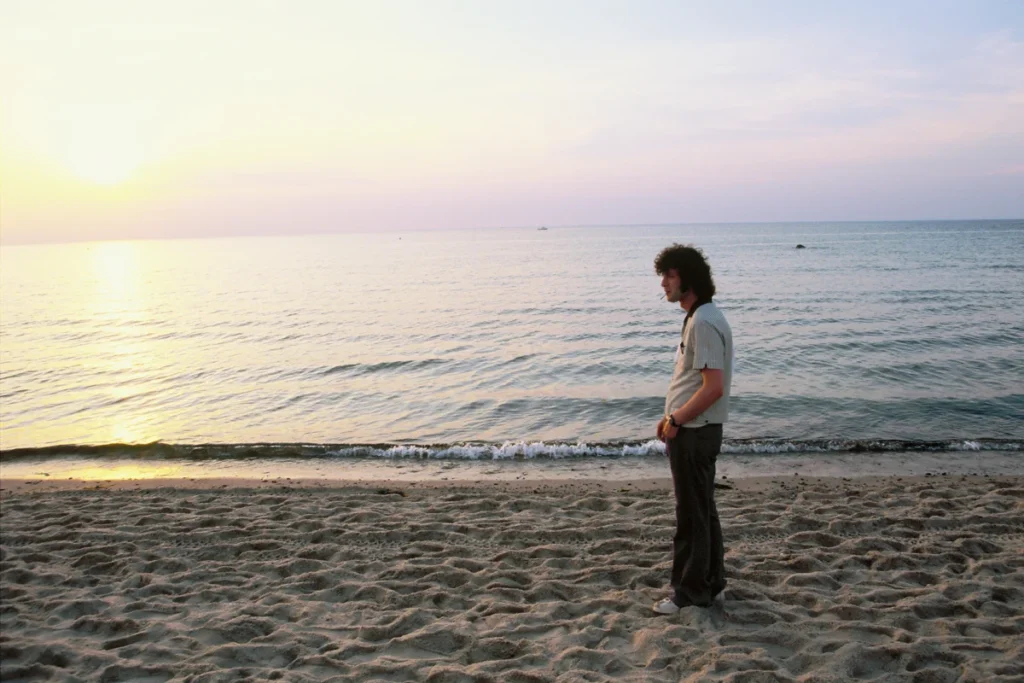
During the summer of 1975, a 19-year-old Anthony Bourdain arrived in Provincetown. Having failed to secure a coveted writing fellowship, the future chef was, by his own admission in Kitchen Confidential, a “spoiled, miserable, narcissistic, self-destructive, and thoughtless young lout.” He found himself working in the kitchen of The Flagship—a now-shuttered restaurant—and seeking refuge at the Old Colony. It was a formative season of his youth, one where he was mentored by veteran chefs and hardened by the realities of the culinary grind.

This era is now immortalized in the biopic Tony, directed by Matt Johnson. Starring Dominic Sessa as the young Bourdain, the film utilizes the Old Colony Tap as a primary location, filming a pivotal bar fight scene within its walls. The film, which hits theaters nationwide today, highlights the bar’s significance not just to Bourdain’s personal journey, but to the broader history of the Provincetown food and drink scene.
Bourdain’s relationship with the bar did not end with his youth. He famously revisited the spot in 2014 for an episode of his award-winning travel series Anthony Bourdain: Parts Unknown. In the episode, he described the Old Colony as “where fishermen eat,” cementing its status as a destination for those who value authenticity over artifice.
Supporting Data: The Erosion of the American Dive
The Old Colony’s survival is nothing short of a statistical miracle. According to data from the past decade, the American dive bar is an endangered species. An August 2025 Gallup poll revealed that self-reported alcohol consumption among Americans has plummeted to 54%, the lowest level recorded in nearly 90 years of surveying.
This cultural shift is mirrored in the decline of brick-and-mortar establishments. Between 2011 and 2016, 20 of the 70 bars featured in Luke O’Neil’s Boston’s Best Dive Bars shuttered their doors permanently. In Philadelphia, liquor licenses have seen a 40% decline since 1997, while Chicago’s tavern licenses have dropped from 3,300 in 1990 to roughly 1,200 today. New York City has seen a similar contraction, with a 25% drop in alcohol sales reported in late 2025 as real estate costs skyrocket and consumer preferences shift toward "Instagrammable" craft cocktails and polished environments.
As Peter Gonzalez, owner of Manhattan’s Johnny’s Bar, recently noted, the "corporate" takeover of neighborhoods has left little room for the shabby, unpretentious charm of a true dive. "People want to take a picture of their $20 Cosmo," Gonzalez remarked, highlighting the aesthetic-first consumer culture that threatens the survival of establishments like the Old Colony.

Official Responses: The Philosophy of the "No-Frills" Establishment
Despite the pressures of the modern economy, Enos maintains that the Old Colony Tap has never had to "try" to be a dive bar. It simply exists as a reflection of its environment and its history.
“There was no—and there remains no—concerted effort to make Old Colony Tap a dive bar,” Enos explains. “It just is what it is, and always has been. When Bourdain came back to film Parts Unknown, he mentioned that this is what town was like when he was there in the ’70s. So much of it has changed, but we’ve just endured.”
Enos notes that the influx of interest from the film Tony has been a welcome but curious phenomenon. While the cast and crew, including stars Dominic Sessa and Leo Woodall, have been spotted enjoying the bar’s atmosphere—and specifically its lauded Bloody Mary—Enos insists that the business model remains unchanged. They don’t have a kitchen; they serve potato chips and, occasionally, fresh local oysters brought in by friends from the fishing community.
“We don’t do anything special,” Enos says, echoing Bourdain’s own philosophy. “He wasn’t looking for anything special.” When asked what an "authentic" Bourdain order looks like, Enos points to the simplicity of the menu: a shot of Jameson and a draft PBR, or perhaps a cold can of Narragansett.
Implications: Why We Must Protect the "Real"
The decline of the dive bar is more than just a loss of cheap beer and sticky floors; it is a loss of a specific type of community hub. Dive bars have historically served as the "third place"—a social environment separate from the home and the office—where class distinctions are leveled, and the only currency that matters is the price of a pint.

In Provincetown, the Old Colony’s longevity is tied to the town’s unique status as a small, non-gentrified beach destination. Its decor, which features objects scavenged from the Cape Cod National Seashore—buoys, clam rakes, and fishing nets—tells the history of the locals who once traded these items for a tab. As Enos recalls, there was a time when a patron might say, “I’ll trade you this, give me a $10 tab.” That kind of organic, barter-based community is exactly what is being lost in the corporate-dominated landscape of modern American cities.
The implication for the future is clear: if we continue to prioritize high-margin, aesthetic-driven businesses, we risk erasing the character of our neighborhoods. The Old Colony Tap survives not because it has adapted to the times, but because it has refused to. It remains a place of "minimum fuss," where the beer is cold, the history is visible on the walls, and the conversation is as unfiltered as the decor.
As Tony brings a new generation of fans to the Provincetown coastline, they may arrive looking for a piece of the man who famously sought out the "culinary underbelly." What they will find at the Old Colony is not a movie set, but a living museum of American grit. In a world that is rapidly sanitizing its past, the Old Colony Tap serves as a necessary, stubborn reminder that some things are better left exactly as they are.
For those looking to experience the true spirit of the dive bar, the answer remains simple: walk in, pull up a stool, order a cold beer, and—above all—don’t look for anything special. That, in itself, is the most special thing of all.