NASDA Appoints Brianna Robinson-Verloop as Senior Director of Public Policy to Lead National Agricultural Strategy
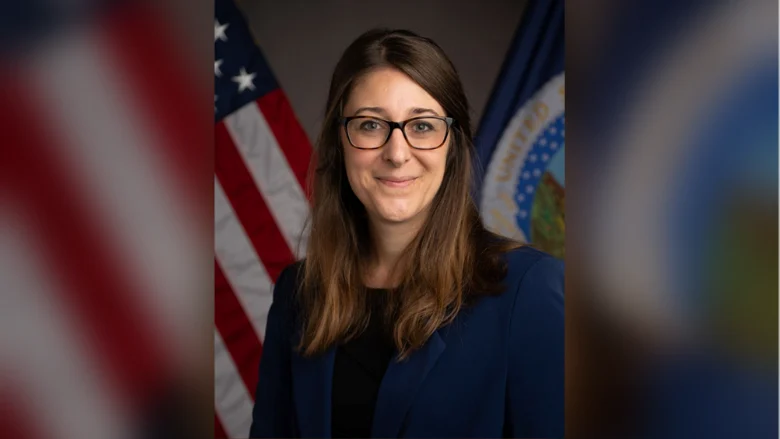
The National Association of State Departments of Agriculture (NASDA) has officially announced the appointment of Brianna Robinson-Verloop, M.S., as its new Senior Director of Public Policy. Set to assume the position this September, Robinson-Verloop will inherit a mandate to drive the association’s multifaceted policy agenda, spearheading advocacy initiatives and overseeing the organization’s dedicated policy team.
This strategic hire arrives at a critical juncture for American agriculture, as state departments navigate an increasingly complex landscape defined by shifting trade dynamics, evolving food safety regulations, and the need for resilient supply chains. Robinson-Verloop brings to the table over 15 years of high-level experience, having served across the U.S. Congress, the U.S. Department of Agriculture (USDA), and various international policy forums.
The Professional Trajectory: A Legacy of Expertise
To understand the weight of this appointment, one must examine the career trajectory of Robinson-Verloop, which reads as a roadmap of modern agricultural governance.
Recent Leadership at the USDA
Most recently, Robinson-Verloop served as the Director of Animal and Animal Products at the USDA’s Foreign Agricultural Service (FAS). In this capacity, she was responsible for facilitating the global trade of U.S. animal products, a role that required deep knowledge of international sanitary and phytosanitary (SPS) measures. Her work in this sector ensured that American producers maintained access to global markets while adhering to rigorous safety standards.
Legislative and Regulatory Foundations
Before her tenure at the FAS, Robinson-Verloop honed her regulatory expertise within the USDA’s Food Safety and Inspection Service (FSIS). Her time at the FSIS provided her with an intimate understanding of the domestic regulatory environment, specifically regarding the oversight of meat, poultry, and processed egg products.
Furthermore, her stint as a Brookings Institution Legislative Fellow in the U.S. House of Representatives provided her with a "boots-on-the-ground" perspective of the legislative process. By bridging the gap between executive agency policy and congressional intent, she gained the unique ability to translate technical agricultural science into actionable legislative language—a skill set that will be invaluable in her new role at NASDA.
International Negotiations
Beyond domestic borders, Robinson-Verloop has been a persistent presence in international trade forums. She has represented the United States in high-stakes negotiations concerning global food safety and trade harmonization. These experiences have granted her a nuanced understanding of how foreign regulatory policies impact domestic producers, a perspective she intends to leverage to benefit NASDA members.
Academic and Intellectual Grounding
Robinson-Verloop’s approach to policy is deeply rooted in academic rigor. She holds a Bachelor of Science in Animal Science from California State Polytechnic University, Pomona, and a Master of Science in Agriculture from the University of Nebraska–Lincoln. This combination of hands-on agricultural science and advanced policy studies ensures that her recommendations remain grounded in scientific reality, rather than purely theoretical or political abstractions.
Official Responses and Strategic Vision
In a statement regarding her new appointment, Robinson-Verloop emphasized that her career-long immersion in federal food safety, trade, and regulatory policy has profoundly shaped her professional philosophy.
"My experience has taught me that the most effective policy solutions are those that are both scientifically sound and practically implementable," Robinson-Verloop noted. "At NASDA, the goal is to amplify the voices of our state commissioners, secretaries, and directors. By integrating the lessons I have learned from the halls of Congress to the global trade table, I look forward to developing robust, forward-thinking policy solutions that secure the future of American agriculture."
NASDA leadership has expressed high expectations for the transition, noting that Robinson-Verloop’s ability to navigate the "triad" of agriculture—federal regulation, legislative advocacy, and international trade—is exactly what the association requires to address the challenges of the coming decade.
Implications for the Agricultural Sector
The appointment of a seasoned regulatory expert like Robinson-Verloop signals several key shifts in how NASDA intends to approach its advocacy in the coming years.
1. Strengthening the State-Federal Nexus
One of the primary roles of NASDA is to act as a bridge between state-level agricultural departments and federal agencies. With her deep background in the USDA, Robinson-Verloop is uniquely positioned to streamline communication and reduce bureaucratic friction. This is expected to improve the efficiency with which federal agricultural programs are implemented at the state level.
2. Navigating the Trade Landscape
Global trade remains a volatile aspect of the agricultural economy. As the U.S. seeks to expand market access for animal and plant products, having a director with specific expertise in foreign market access will likely give NASDA members a stronger, more informed voice in trade policy discussions. Robinson-Verloop’s background suggests that NASDA will likely increase its focus on the harmonization of international food safety standards, which would reduce technical barriers for American exporters.
3. Food Safety as a Policy Pillar
With food safety becoming an increasingly central issue in public health, the intersection of regulatory oversight and industry practice is shifting. Robinson-Verloop’s history at the FSIS implies that NASDA will likely continue to advocate for science-based food safety policies that balance consumer protection with the economic realities of food producers.
4. Advocacy in a Changing Congress
Legislative priorities for agriculture are rarely stagnant. From the ongoing discussions regarding the Farm Bill to emerging concerns over climate-smart agriculture and labor shortages, the policy environment is fraught with complexity. Robinson-Verloop’s experience as a Brookings Fellow provides her with the political acumen necessary to navigate the complexities of Capitol Hill, ensuring that the concerns of state departments are not lost in the broader partisan debates.
The Role of NASDA in the Modern Food Ecosystem
The National Association of State Departments of Agriculture represents the commissioners, secretaries, and directors of agriculture in all 50 states and four U.S. territories. As the primary body responsible for implementing state and federal agricultural programs, NASDA plays a pivotal role in the food safety ecosystem.
The appointment of Robinson-Verloop is not merely a change in personnel; it is a strategic alignment of the association’s leadership with the current realities of the food and agriculture sector. By prioritizing deep technical and legislative expertise, NASDA is signaling that it is prepared to move from a reactive posture—responding to federal mandates—to a proactive posture, where it helps shape the very policies that define the industry.
Looking Ahead: The Challenges on the Horizon
As Robinson-Verloop prepares to step into her role this September, she will face a full docket of challenges. The agricultural sector is currently grappling with:
- Supply Chain Resilience: The post-pandemic recovery has highlighted the fragility of domestic food systems. Developing policies that encourage localized processing while maintaining federal safety standards will be a major priority.
- Technological Integration: From the adoption of AI-driven agricultural tools to the regulation of cell-cultivated proteins, the definition of "agriculture" is expanding. NASDA will need to determine how these technologies fit within the existing regulatory framework.
- Climate and Sustainability: State departments are increasingly at the forefront of implementing environmental stewardship programs. Balancing these mandates with production capacity is a delicate, high-stakes task.
Conclusion: A New Chapter for NASDA
The selection of Brianna Robinson-Verloop as Senior Director of Public Policy marks a significant milestone for NASDA. Her blend of academic knowledge, federal experience, and international diplomacy provides the association with a leader capable of addressing both the minute details of food safety regulation and the sweeping challenges of global trade.
As the agricultural sector continues to evolve in response to technological, environmental, and economic pressures, the leadership at the policy level will determine the long-term viability of the American food supply. With Robinson-Verloop at the helm of the policy team, NASDA is well-positioned to ensure that the voices of state agricultural leaders continue to carry significant weight in Washington, D.C., and beyond.
The industry will be watching closely as she begins her tenure in September, anticipating a period of renewed focus on clear, evidence-based, and highly effective advocacy that reflects the vital importance of the nation’s agricultural backbone.