The Great Data Gauntlet: Why Exercising Your Privacy Rights is a Bureaucratic Nightmare
In an era defined by the monetization of human behavior, the California Consumer Privacy Act (CCPA) was heralded as a watershed moment for digital rights. Since its inception in 2020, the law has granted California residents the fundamental ability to "peek behind the curtain"—to request access to the sprawling, often invasive dossiers that corporations compile on them. However, a recent investigation reveals a troubling reality: for many, the path to transparency is paved with corporate incompetence, systemic friction, and a recurring tendency for companies to delete the very data users are trying to examine.
The Catalyst: A 515-Page Revelation
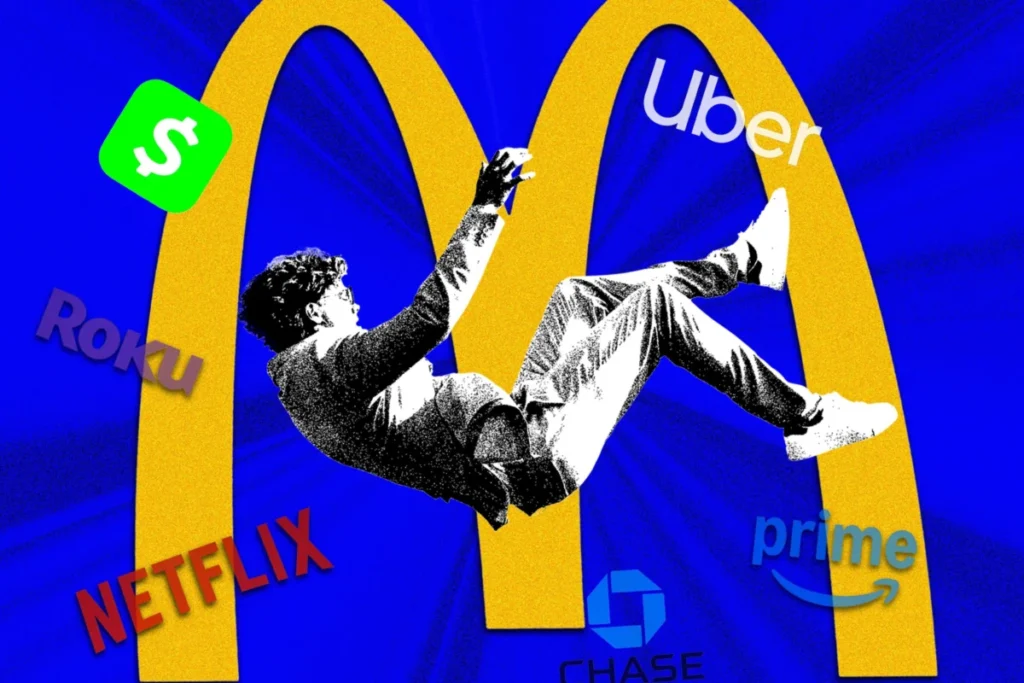
The impetus for this investigation began with a simple, curiosity-driven request to McDonald’s. After filing for access to the personal data the fast-food giant held on me, I received a 515-page dossier. It contained granular details of my app interactions, location history, and predictive analytics that essentially concluded I would likely never stop eating there.
If a fast-food chain could build such an extensive profile, what were the other entities in my digital orbit collecting? Over the following week, I embarked on a mission to file more than 100 data access requests, intending to test the efficacy of the CCPA’s mandate. What I discovered was not a streamlined process, but an obstacle course designed to discourage the very transparency the law was intended to foster.
Chronology of a Failed System
The CCPA provides three primary mechanisms: the right to opt-out of data sales, the right to request deletion, and the right to request a copy of collected data. My investigation focused exclusively on the latter. Under the law, companies are required to provide accessible channels—such as web forms, phone lines, or email addresses—for these requests, with a 45-day window to respond.
The Crunchbase Fiasco
On August 17, I submitted an access request to Crunchbase, the prominent tech startup database. My email was explicit: "I am not requesting deletion at this time. Please do not treat this as a deletion request."
Two days later, the response arrived: "Thanks so much for your patience. Your account has been permanently deleted from Crunchbase."
Despite my immediate follow-up to clarify that I sought access, not erasure, the company compounded the error. They confirmed that while my user account was gone, the underlying data they held on me remained—an outcome that effectively barred me from exercising my right to see that data without creating a new account. When questioned, a spokesperson attributed the incident to a "processing error" by a customer success representative, denying the use of generative AI in the misclassification.
The BeenVerified Maze
My encounter with BeenVerified, a data broker dealing in public records, highlighted the sheer frustration of the process. Upon emailing their compliance address, I received a notification that my "person report" had been removed from their search results. Again, I had requested access, not deletion.
When I pointed out this discrepancy, a representative denied my identity, despite having just processed a request that required identifying information. Subsequent emails were met with circular logic, where the agent insisted on "opting me out" rather than providing the requested data. As noted by Greg Hammond, the firm’s senior counsel, this was a failure of internal training—a recurring theme in the industry.
The Cash App Dead End
The experience with Cash App, owned by Block, was perhaps the most disheartening. Their privacy policy explicitly lists a toll-free number for California residents to initiate access requests. When I called, the support agents seemed baffled, as if they had never heard of the CCPA. I was placed on hold repeatedly and eventually instructed to call the very number I had just used. It was a textbook example of "compliance theater"—where the legal requirement is met in writing, but the internal infrastructure is woefully unprepared to execute it.
The Expert Perspective: A Failure of Good Faith
The systemic nature of these failures suggests that "compliance" is often treated as a burden rather than a core operational requirement. Ben Winters, director of AI and privacy at the Consumer Federation of America, was blunt in his assessment. "That’s crazy," Winters said. "That’s not an acceptable status quo." He views these friction-filled interactions as clear evidence of the weaknesses in policy frameworks that rely on corporations to act in "good faith."
Elina van Kempen, a PhD graduate from UC Irvine and coauthor of Consumer Beware! Exploring Data Brokers’ CCPA Compliance, echoes this sentiment. Through her research involving over 500 data brokers, she found that misclassifications—where access requests are met with deletion or opt-out notices—are not outliers; they are a standard, albeit buggy, response. For the average consumer, this lack of resolution often means the end of the line.
Implications for Data Privacy
The underlying issue is that the current legal framework places the entire burden of enforcement on the individual. The "bureaucratic obstacle course" described in these interactions is a feature, not a bug, of current privacy management.
Mayu Tobin-Miyaji, a law fellow at the Electronic Privacy Information Center (EPIC), argues that the industry’s focus on "compliance" is fundamentally misguided. "It shows how potentially little resources the companies are putting toward compliance and making sure that people can have access to their data," Tobin-Miyaji noted.
The Case for Data Minimization
Both Winters and Tobin-Miyaji point toward a more robust solution: data minimization. Currently, companies collect as much information as possible, creating massive, high-risk databases. Data minimization would legally require firms to collect only the data strictly necessary for their primary business operations.
Under this model, saving a credit card for a purchase would be permitted, but harvesting personal demographic data for sale to third-party brokers would be strictly prohibited. This shift would fundamentally change the power dynamic:
- Reducing the Attack Surface: Fewer records mean less data available for hackers.
- Eliminating the Bureaucracy: If companies aren’t collecting unnecessary data, consumers don’t need to navigate complex request forms to see what is being stored.
- Restoring Trust: Transparency would become the default, rather than an arduous request process.
Conclusion: A System in Need of Reform
My journey through the CCPA landscape was, at times, infuriating. From the loss of my accounts to the stonewalling of customer support agents, the process reinforced the idea that corporations are still operating with a "data-first" mentality that treats privacy as a legal annoyance to be managed, not a right to be protected.
The data request process is currently broken. It is time for regulators to move beyond simply mandating that companies provide a way to access data, and instead move toward structural changes that limit the collection of that data in the first place. Until we move from a model of "requesting access" to a model of "minimal collection," the average consumer will remain trapped in a cycle of digital surveillance, with only the illusion of control to show for it.
Note: In accordance with WIRED’s editorial policies, I utilized generative AI to assist in drafting bureaucratic correspondence and managing the tracking spreadsheet for this investigation. The body of this article was written by hand.