Allergen Carryover in Edible Insects: New Study Challenges Assumptions About Pre-Harvest Fasting
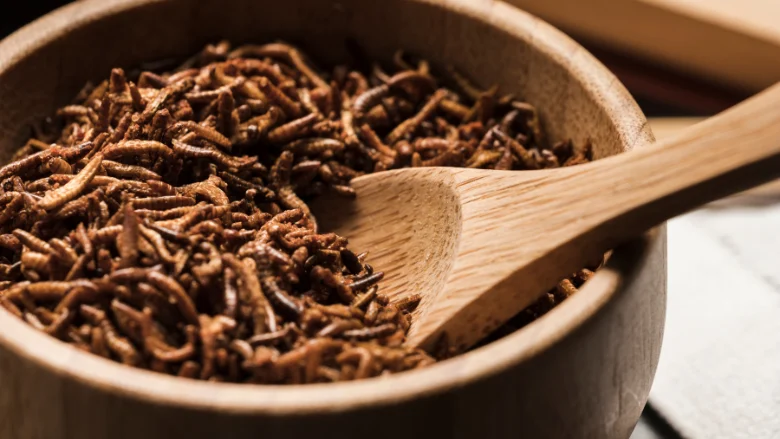
As the global food industry pivots toward sustainable protein alternatives, edible insects have emerged as a frontrunner in the quest to reduce the environmental footprint of human diets. However, a recent study published in the journal Foods has sounded a cautionary note for manufacturers and regulators alike. The research reveals that Hermetia illucens—the black soldier fly—can retain significant traces of food allergens from its rearing substrate even after a 48-hour pre-harvest fasting period. These findings challenge the industry’s current reliance on "starvation" as a decontamination strategy and underscore the urgent need for stringent allergen management protocols in insect farming.
The Core Challenge: Insect Feed and Human Safety
The edible insect sector is currently operating in a regulatory gray area regarding allergen labeling. While insects themselves are known to possess proteins that can trigger cross-reactivity in individuals with crustacean or dust mite allergies, there is a secondary layer of risk: the substrate on which they are reared.
To optimize growth and sustainability, insect larvae are frequently fed agricultural by-products, food waste, or cereal-based substrates. If these substrates contain common food allergens—such as soy, peanut, or gluten—the risk of "carryover" becomes a critical food safety concern. The study, conducted by the Experimental Zooprophylactic Institute of Piedmont, Liguria, and the Aosta Valley (IZSPLV) alongside the National Reference Center for the Detection of Food Allergens (CReNaRiA) in Italy, sought to quantify exactly how much of these allergens are retained by the insect’s body.
Chronology of the Investigation
The researchers designed a controlled pilot study to simulate a "worst-case scenario" for high-exposure environments. The timeline and methodology of the investigation were as follows:
1. Preparation and Rearing
Researchers utilized Hermetia illucens larvae, a species favored for its efficiency in bioconversion. The larvae were reared over a 15-day period on substrates composed of rice and maize, supplemented with a 10 percent concentration of specific allergens: peanut, almond, soy, celery, or gluten. This 10 percent concentration was deliberately chosen to ensure that any potential carryover would be measurable.
2. The Fasting Trial
A common practice in the insect-rearing industry is to implement a pre-harvest fasting period. The logic is that by withholding food, the larvae will clear their intestinal tracts of residual feed, thereby reducing the risk of contamination in the final processed product. The researchers tested three specific sampling points:
- Time Zero: Immediately following the 15-day growth period.
- 24-Hour Fast: After 24 hours of total food deprivation.
- 48-Hour Fast: After 48 hours of total food deprivation.
3. Processing and Analysis
Following the fasting periods, the larvae were harvested, dried, and ground to replicate standard industrial processing techniques used in the production of insect-based flour or protein powders. The samples were then subjected to rigorous diagnostic testing, including real-time PCR (polymerase chain reaction) to detect allergenic DNA and ELISA (enzyme-linked immunosorbent assay) to quantify protein concentrations.
Supporting Data: Findings by Allergen
The results of the study varied significantly by the type of allergen introduced, suggesting that the "risk profile" of insect feed is not uniform.
Soy: The Primary Concern
Soy demonstrated the most alarming results. Evidence of soy DNA was present in every single sample across all time points, including the 48-hour post-fasting group. ELISA testing confirmed that soy protein concentrations exceeded the 2.5 parts-per-million (ppm) limit of detection in every instance. The persistence of soy suggests that this allergen may be more easily sequestered or bioaccumulated within the larval tissue, rather than simply remaining in the digestive tract.
Celery: A Persistent Presence
Celery DNA was identified in seven of the nine treatment samples. Notably, it remained detectable even after the full 48-hour fasting window, indicating that current clearing strategies are insufficient for mitigating celery-derived allergen risks.
Almond and Peanut: Varying Results
Almond DNA showed sporadic presence at the initial harvest and the 24-hour mark but lacked statistical significance compared to control groups. Interestingly, peanut DNA was not detected in any larval samples. This suggests that the biological mechanism of uptake for different allergens varies, potentially due to the molecular size of the proteins or the metabolic pathways the insects use to process specific plant materials.
Gluten: The Hidden Variable
Gluten concentrations remained below the 5-ppm limit of detection for the ELISA method used. However, the researchers were careful not to label this as a "clean" result. The inability to detect the protein does not definitively prove its absence, given the potential limitations of the test sensitivity and the complexity of the larval matrix.
Implications for Industry and Regulation
The most significant finding of this study is the lack of a statistically significant difference in allergen detection between the three sampling times. For the industry, this is a wake-up call: 48 hours of fasting is not a reliable method for ensuring an allergen-free product.
A Shift in Safety Protocols
The implications for food business operators (FBOs) are profound. If fasting does not clear the allergen, the industry must pivot toward "upstream" management. This includes:
- Strict Ingredient Sourcing: Ensuring that rearing substrates are strictly controlled and screened for the presence of the "Big Nine" food allergens.
- Precautionary Labeling: As seen with other food sectors, insects intended for human consumption may eventually require "May contain" warnings if the rearing substrate cannot be guaranteed as allergen-free.
- Site-Specific Risk Assessment: The study emphasizes that safety must be evaluated on a case-by-case basis. An insect farm using one type of waste stream will have a completely different risk profile than one using another.
Expert Perspectives and Future Research
The research team, while providing a critical foundation for future safety guidelines, acknowledges the limitations of their pilot study. With only three replicates per sampling point, the researchers emphasized that these findings are a starting point rather than a final decree.
"The persistence of these allergens may depend on whether the residues remain in the intestinal tract or become incorporated into the larval tissues themselves," the authors noted. If the allergens are being absorbed into the fat or muscle tissue of the insect, a fasting period will never be effective. This is a critical distinction that future studies must address through advanced histological and biochemical mapping.
The global regulatory community, including agencies such as the European Food Safety Authority (EFSA) and the U.S. Food and Drug Administration (FDA), is expected to monitor these developments closely. As insect protein scales from a niche market to a mainstream ingredient, the necessity for a standardized "safety-by-design" approach becomes paramount.
Moving Toward Transparency
For consumers, particularly those with severe allergies, this study highlights the importance of transparency in the supply chain. Until standardized, validated cleaning protocols are established, the industry must prioritize clear labeling and rigorous testing of finished products. The era of assuming that insects are inherently "safe" based on their natural state is ending; the era of evidence-based, industrialized safety management has begun.
Future research is slated to explore the specific mechanisms of allergen transport within the insect body. By determining exactly where these proteins reside, scientists may be able to develop genetic or dietary modifications that prevent the uptake of these allergens entirely, paving the way for a truly sustainable and safe insect-based food future.
For more information on the evolving standards of food safety, industry professionals are encouraged to utilize resources such as the "Ask FSM" AI tool, which provides real-time access to regulatory updates and safety documentation in the ever-changing landscape of food production.