The Silicon Arms Race: Nvidia’s RTX Spark and the Dawn of Localized Agentic AI
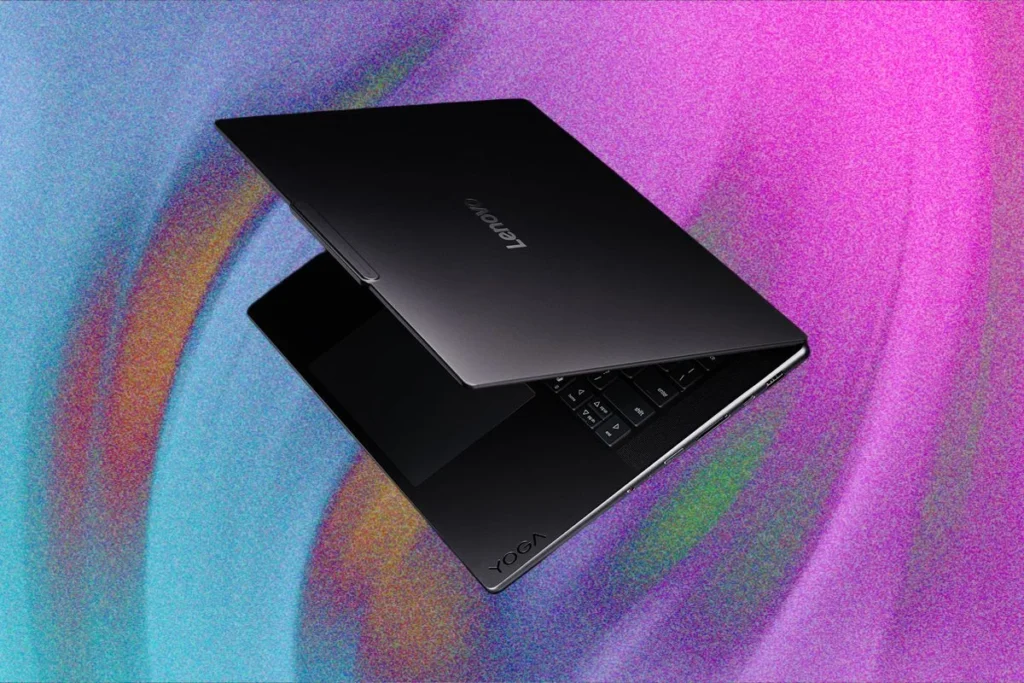
Three months ago, the technology world caught its first glimpse of a hardware paradigm shift. Nvidia, the undisputed titan of the AI era, pulled back the curtain on its “RTX Spark”—a proprietary superchip designed to bridge the gap between heavy-duty server infrastructure and the modern personal computer. At the time, the announcement was met with a mixture of awe and skepticism. Could a single chip really redefine the capabilities of a laptop? As of the 2026 IFA tech show in Berlin, the industry has its answer.
The arrival of the first generation of RTX Spark-powered hardware—ranging from ultra-premium laptops to compact, AI-optimized desktops—marks a definitive pivot in how consumers interact with artificial intelligence. As the demand for running agentic AI workflows, such as the sophisticated OpenClaw ecosystem, moves from the cloud to the desktop, Nvidia has positioned itself to feed a growing hunger for localized, high-performance computing.
Main Facts: A New Architecture for the Personal Computer
At the core of this transition is the RTX Spark. Unlike traditional Windows-based architectures that rely on a CPU from one vendor and a discrete GPU from another, the RTX Spark is a fully integrated system-on-a-chip (SoC). It combines a high-performance Arm-based Grace CPU with a robust Blackwell-architecture RTX GPU. By packaging the CPU, GPU, and high-bandwidth memory into a single silicon die, Nvidia has effectively mirrored the strategy that propelled Apple Silicon to the top of the performance charts.

The technical specifications are, by any measure, formidable. The chip features a Grace CPU with up to 20 cores and a Blackwell GPU boasting an staggering 6,144 cores. In practical terms, this places the graphics and compute capabilities of these machines between the current RTX 5070 Ti and 5080 laptop variants. This integration is designed to solve the two biggest hurdles of modern AI: thermal management and data latency. By keeping the AI processing on-device, users gain a significant advantage in privacy, ensuring that sensitive data—ranging from financial records to proprietary creative projects—never leaves the local drive.
A Chronological Evolution of the Spark Ecosystem
The journey of the RTX Spark has been swift, characterized by a rapid transition from proof-of-concept to mass-market availability.
- May 2026 (The Tease): Nvidia announces the RTX Spark architecture at a private industry event, signaling a departure from the traditional reliance on x86-based partnerships for its flagship gaming and professional graphics platforms.
- June 2026 (Development Cycles): Early development kits are seeded to high-end manufacturers, including Lenovo, Asus, and Dell, as the industry begins to prepare for the "Agentic Era" of computing.
- August 2026 (Pre-IFA Buzz): Reports circulate regarding the thermal efficiency of the Grace-Blackwell combination, confirming that the new chips are capable of maintaining high performance in chassis thinner than 0.7 inches.
- September 2026 (IFA Berlin): The formal unveiling of the first consumer-facing devices, including the Lenovo Yoga 9n 2-in-1 and various "AI Box" mini-PCs from Acer and Asus.
- Q4 2026 (Market Availability): Major OEMs announce rolling release dates for the first wave of RTX Spark laptops, setting the stage for a holiday season defined by high-performance local AI.
Supporting Data: Hardware and Performance Metrics
The hardware landscape, as showcased at IFA, highlights a clear focus on the "Prosumer" and professional creator demographics. The Lenovo Yoga 9n 2-in-1, a 16-inch convertible, serves as the flagship for this new era. With a 2880 x 1800 OLED display, 120-Hz refresh rate, and a thickness of just 0.69 inches, it is a direct challenge to the MacBook Pro 16-inch.

Configuration Divergence
The distinction between models is largely dictated by memory capacity, which has become the primary bottleneck for large-scale AI agent deployment:
| Model | Max Memory | Form Factor | Target User |
|---|---|---|---|
| Lenovo Yoga 9n | 64 GB | 16-inch 2-in-1 | Creative/General Professional |
| Lenovo Yoga Pro 9n | 128 GB | 15-inch Laptop | AI Engineer/Power User |
| Acer SFF RTX Spark | 128 GB | Mini-PC | Developers/Data Scientists |
| Asus ProArt Mini | 128 GB | Mini-PC | Studio/Workstation Users |
The inclusion of a "Force Pad" in the Yoga Pro 9n, which allows for direct stylus interaction, underscores the shift toward input methods that favor generative AI workflows. Furthermore, the reliance on Arm-based architecture suggests a long-term play for battery efficiency—a critical factor for portable AI units that must perform sustained, high-intensity compute tasks.
Official Responses and Industry Positioning
Industry reactions have been a mix of excitement and cautious analysis. While the raw performance of the RTX Spark is undeniable, questions regarding software compatibility remain. Moving from the traditional x86 Windows ecosystem to an Arm-based SoC requires significant optimization, not only from Nvidia but from software developers who need to recompile their tools to take advantage of the Blackwell architecture.

"We are seeing a convergence of form and function," said an industry analyst at the Berlin show. "For years, the ‘AI PC’ was a marketing buzzword. With the RTX Spark, it’s finally becoming a hardware reality."
Conversely, competitors are not sitting idle. The announcement of Lenovo’s AMD-powered ThinkCentre X Ultra, equipped with the Ryzen Max+ Pro 495 chip and 128 GB of RAM, highlights that Nvidia is entering a crowded, high-stakes market. AMD’s strategy remains rooted in the familiarity of its platform, appealing to developers who require broad compatibility with existing Windows enterprise software. Meanwhile, Apple continues to push its M-series silicon, which has set the benchmark for efficiency and integrated memory performance.
Implications: The High Cost of the Localized AI Future
The most significant barrier to the widespread adoption of these systems is, predictably, the cost. High-bandwidth, large-capacity memory is expensive, and the RTX Spark chips are premium silicon. With the ThinkCentre X Ultra starting at $3,699—before even reaching the 128-GB memory configuration—it is clear that the "AI-ready" future is currently a luxury.

However, the implications of these machines go beyond their price tags. The move toward "Agentic AI" implies that your computer will eventually move from a tool you use to an entity that acts on your behalf. Whether it is managing complex scheduling, drafting emails based on your unique style, or analyzing private financial data, the need for a local, secure "AI brain" has become a technological imperative.
As the industry moves into 2027, the success of the RTX Spark will not be measured by benchmark scores alone, but by the ecosystem of agents that can effectively utilize its power. If the hardware can provide the performance needed to run these agents without the latency or privacy risks of the cloud, then the high entry price may well be a hurdle that professionals and enthusiasts are willing to clear.
We are witnessing the end of the "generic" PC era. In its place, a new breed of machines is emerging—specialized, highly efficient, and deeply intelligent—designed not just to display content, but to create it. For those willing to invest in the hardware, the future of personal computing is no longer a question of what your PC can show you, but what it can do for you.