The Devastating Cycle: How Weight Stigma Perpetuates Obesity and Inflicts Profound Harm

Please note: This article discusses the important and troubling issue of weight bias and discrimination, which may be a sensitive topic for some readers.
[CITY, STATE] – In an era increasingly focused on public health, a critical and often overlooked factor continues to undermine efforts to combat rising obesity rates: weight stigma. Far from being a motivator for healthier living, evidence overwhelmingly suggests that weight bias and discrimination trap individuals in a detrimental cycle, exacerbating health issues and causing profound psychological and physical suffering. Astonishing research reveals the depth of this torment, with formerly obese individuals expressing a preference for severe disabilities—including blindness or limb amputation—over a return to their previous weight, and readily choosing normal weight over a multi-million dollar windfall.
This article delves into the insidious mechanisms of weight stigma, exploring how it contributes to the very conditions it purports to address, its devastating health consequences independent of body mass, the misguided attempts at "stigmatization lite," and the critical need for a more empathetic and evidence-based approach in healthcare and society at large.
The Vicious Cycle: Stigma’s Grip on Health and Behavior
The notion that stress can contribute to obesity is well-established, with total fasting, for instance, known to significantly elevate levels of the stress hormone cortisol. However, the direct link between everyday dieting and stress hormone spikes is less clear. What is unequivocally evident, however, is the potent role of weight stigma in creating a truly vicious cycle involving stress, eating behaviors, and physical activity.
Studies tracking thousands of individuals over several years have painted a stark picture. Those reporting experiences of discrimination based on their weight were more than twice as likely to become obese. For individuals already living with obesity, the impact was even more severe: they faced over three times the odds of remaining obese compared to peers of similar weight who did not experience such discrimination. This cycle can manifest through various pathways. On one side of the calorie-balance equation, stress-induced eating often serves as a coping mechanism, leading individuals to consume more in response to the emotional distress caused by stigma. On the other side, weight stigma directly fuels exercise avoidance, creating a formidable barrier to physical activity.
Obese individuals who frequently encounter weight stigma report a greater reluctance to engage in public exercise. The fear of being judged, stared at, or embarrassed creates a powerful disincentive, leading to what can be described as "too fat to exercise" fears. These anxieties are not unfounded. Research has documented strong anti-fat biases among both fitness professionals and regular gym-goers, contributing to an unwelcoming and often hostile environment at fitness centers and health clubs. This societal judgment, therefore, actively discourages the very behaviors that could contribute to improved health. The psychological burden of anticipated or actual discrimination thus contributes to a self-perpetuating cycle where stigma leads to behaviors that can maintain or worsen weight, which in turn can lead to more stigma.
Beyond Weight: The Health Toll of Discrimination
The detrimental effects of weight stigma extend far beyond its contribution to the obesity cycle. Individuals experiencing weight-based discrimination suffer a myriad of adverse health consequences that are independent of any additional weight gained. This highlights that the harm is not merely physical, but deeply systemic and psychological, impacting fundamental biological processes.
Those who report more frequent weight-based discrimination consistently exhibit higher levels of depression, a severe mental health condition that can significantly impair quality of life. Furthermore, these individuals show elevated levels of inflammation, a key indicator of chronic stress and a risk factor for numerous diseases, including cardiovascular disease and certain cancers. They also experience higher levels of oxidative stress, an imbalance between free radicals and antioxidants in the body that can damage cells and contribute to aging and disease. Perhaps most alarmingly, studies have linked weight discrimination to a shorter lifespan. Two independent studies, collectively following nearly 20,000 people, both found approximately a 50% increase in mortality risk among those reporting greater daily discrimination. These findings lead to a sobering conclusion: weight discrimination itself may shorten life expectancy, underscoring its profound and often overlooked health impact.
The Flawed Promise of "Stigmatization Lite" and its Real-World Failures
Despite the overwhelming evidence of weight stigma’s harm and ineffectiveness, a controversial argument has surfaced from some corners of academia and public health: the advocacy for "stigmatization lite." Proponents, such as the President Emeritus of the prestigious Hastings Center, have infamously suggested using social pressures to compel weight loss without resorting to "outright discrimination." The rationale often cited is the perceived success of anti-tobacco campaigns, which transformed smoking from a "bad habit" into "reprehensible behavior" through social shaming. The argument posits that if social stigma could counter the persuasive force of billions spent by the tobacco industry, it might similarly tackle the influence of the food and beverage industries.

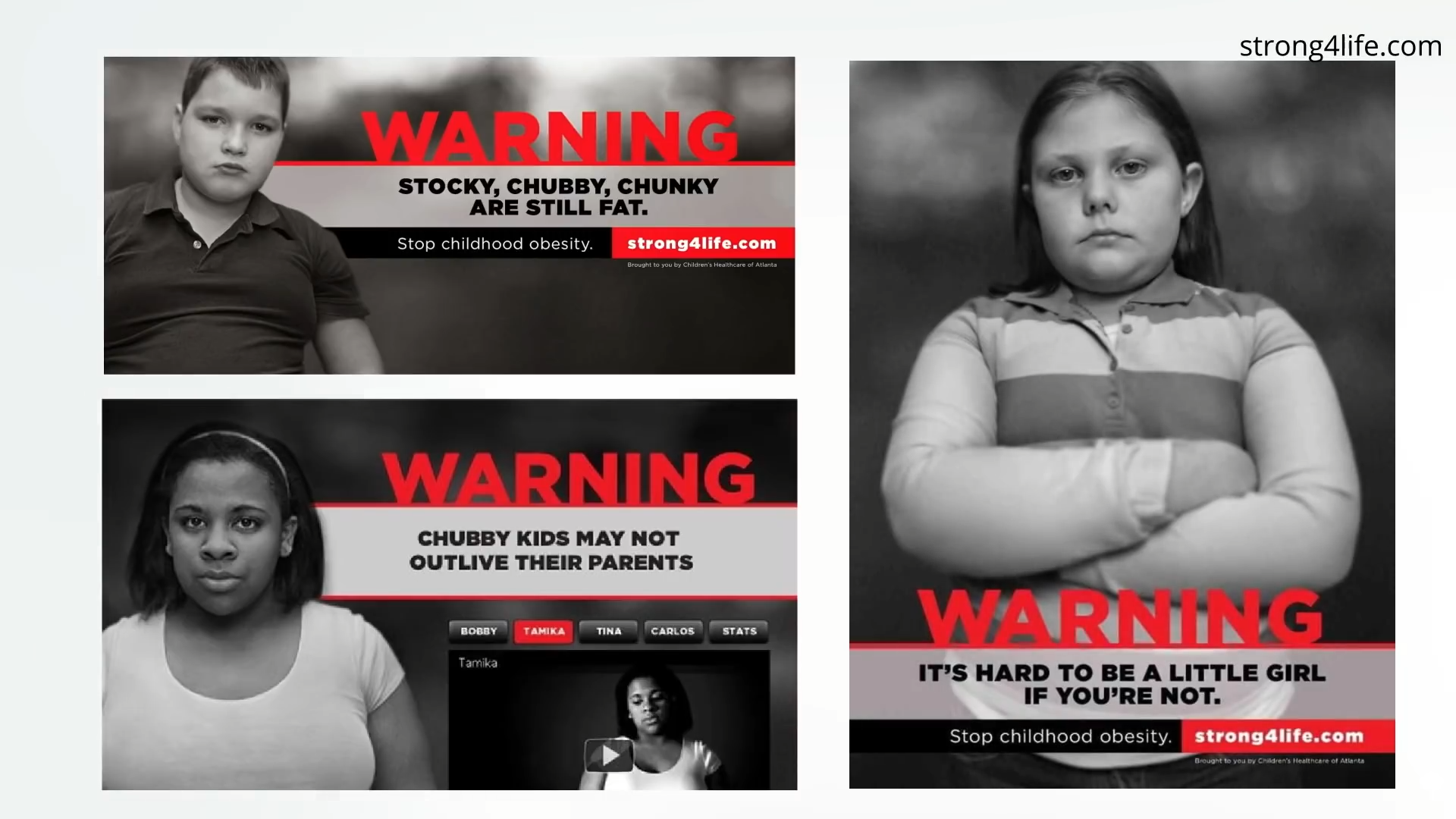
However, attempts to replicate this approach for obesity have been met with fierce resistance and, more importantly, have proven counterproductive. A notable example is Georgia’s "Strong4Life" campaign, launched to address some of the highest childhood obesity rates in the state. This campaign featured highly controversial billboards depicting morose-looking obese children accompanied by captions such as "Warning: Chubby kids may not outlive their parents" or "It’s hard to be a little girl if you’re not." While campaign sponsors defended these ads as a necessary, albeit blunt, attempt to break through denial, their efficacy was questionable from the outset.
Crucially, the science directly contradicts the notion that such "pressure to lose weight" has a positive, motivating effect. Researchers at Yale conducted a pivotal study demonstrating this. Normal-weight women, after watching stigmatizing clips featuring clumsy, loud, lazy stereotypes being teased about their weight, consumed roughly the same amount of snacks (M&M’s, jelly beans, and chips) as after watching neutral material like insurance commercials. However, when overweight women viewed the same stigmatizing content, their calorie intake tripled compared to watching the neutral videos. This finding directly challenges the premise that shaming motivates positive change; instead, it indicates that stigmatization can lead to increased emotional eating, making matters worse.
Further reinforcing this, studies have shown that being labeled "too fat" during childhood is associated with a higher risk of becoming obese later in life, even when compared to children of the same weight who were never given such a label. These findings dismantle the argument for "stigmatization lite," demonstrating that rather than fostering health, it actively undermines it, often by driving individuals towards behaviors that exacerbate their challenges.
Navigating the Conversation: Healthcare’s Crucial, Yet Complex, Role
The complexities surrounding weight are not confined to public campaigns; they deeply permeate the healthcare system. There is a curious paradox: while obesity is recognized as a significant health concern, discussions about weight often remain elusive in clinical settings. Just as veterinarians have been found to be reluctant to inform pet owners about their animals’ obesity, fewer than a quarter of parents of overweight children report ever being told about their child’s weight status by pediatricians. This silence is particularly problematic given that parents are often "notoriously poor judges of their children’s weight," as highlighted by a Gallup Survey. Similarly, the percentage of adults who identify as overweight has remained largely stagnant over decades, despite a skyrocketing obesity epidemic, leading Gallup to conclude that there’s "a picture of mass delusion in the United States about its rising weight."
However, this reluctance to address weight directly is a missed opportunity. Patients have a fundamental right to be informed about their health status. Studies indicate that individuals who are explicitly told by their doctor that they are overweight are approximately four times more likely to attempt weight loss and about twice as likely to succeed. This underscores the critical role of clear, compassionate, and evidence-based communication from healthcare professionals.
Yet, barriers persist within the medical community itself. Just as smoking physicians are less likely to challenge their smoking patients, overweight physicians are often less inclined to initiate discussions about weight loss or even document obesity in patient charts. Ironically, some research suggests that overweight patients tend to trust diet advice more from overweight doctors than from those of normal weight, creating a complex dynamic where advice may be less forthcoming from those perceived as more relatable.
Beyond individual physician biases, systemic issues contribute to this silence. A significant number of primary care physicians admit to providing little specific advice on weight management, often resorting to vague suggestions like "watch what you eat." Many report that they would dedicate more time to weight management if their efforts were "reimbursed appropriately," indicating a structural disincentive. The current paradigm often fails to equip physicians with the tools, time, or financial incentive to engage in meaningful, sustained conversations about weight with their patients.
In the face of these challenges, the commentary from experts rings true: "If shaming reduced obesity, there would be no fat people." This stark statement encapsulates the failure of punitive approaches and highlights the urgent need for a shift towards understanding, support, and effective strategies that do not rely on stigmatization.
The Unspoken Burden: A Profound Revelation of Suffering
To truly grasp the devastating impact of weight stigma, one must confront the profound experiences of those who have lived with severe obesity. A groundbreaking study provides jaw-dropping insights into the immense burden carried by individuals living in an obese body, offering a stark reminder of the human cost that often goes unacknowledged.
Researchers interviewed 47 men and women who had successfully lost and maintained over 100 pounds, seeking to tap into their unique perspective—having personally transitioned from morbid obesity to an average of 126 pounds lighter. They were presented with a hypothetical, yet deeply revealing, choice: "If someone offered you a couple of million dollars if you stayed morbidly obese forever, would you have chosen the money? Or would you have chosen to be normal weight no matter what?"
The options provided were:
- "I would have chosen no money and being normal weight. It would have taken me one second to decide."
- "I probably would have chosen being normal weight. But the possibility of having that much money would make me think about the choice."
- "I wanted to be normal weight, but I could really use the money. If I could be a multimillionaire, I think I could live with being morbidly obese."
Of the 47 participants, a staggering 46 immediately chose Option 1, opting for normal weight without hesitation, even at the cost of millions of dollars. Only one person had to pause and consider the offer, and not a single participant chose Option 3. This overwhelming consensus powerfully illustrates the depth of their prior suffering and the value they placed on physical and emotional well-being over immense financial gain.
If this revelation is surprising, a subsequent finding from the same study is even more staggering. Participants were asked to compare their experience of obesity to other severe disabilities. Typically, when individuals are asked to choose between living with their current disability or switching to a different one, there is a strong tendency to prefer their existing condition. This is due to the safety and familiarity of knowing how to navigate their own specific challenges. For example, while many sighted people might prefer deafness to blindness, blind individuals overwhelmingly choose to remain blind rather than gain sight at the cost of sound, having adapted to their reality.
However, the exact opposite occurred with the formerly obese individuals. Every single one of the 47 participants stated they would rather be deaf, dyslexic, diabetic, or suffer from very bad acne or heart disease for the rest of their lives than return to being obese. More than 90% expressed a preference for having a leg amputated, and similarly, approximately 9 out of 10 would rather be legally blind than be obese. Obesity, it appears, stands almost alone as a condition where nearly everyone who has experienced it wishes to switch, regardless of the perceived severity of the alternative. One participant’s poignant remark encapsulates this sentiment perfectly: "When you’re blind, people want to help you. No one wants to help you when you’re fat." This statement powerfully reveals the profound social isolation and lack of empathy often directed towards individuals with obesity, compounding their physical and emotional struggles.
Implications: Towards a Compassionate and Effective Future
The evidence is clear: weight stigma is a pervasive, harmful, and ineffective approach to addressing obesity. It does not motivate, but rather demoralizes, isolates, and actively exacerbates the very health challenges it claims to tackle. From fostering stress-induced eating and exercise avoidance to contributing to severe mental and physical health conditions independent of weight, the costs of weight discrimination are immense and deeply personal.
The profound suffering articulated by those who have lived with obesity demands a fundamental shift in societal perception and medical practice. Instead of misguided "stigmatization lite" campaigns or a culture of blame, there is an urgent need for empathy, understanding, and evidence-based strategies that prioritize health outcomes without resorting to judgment. Healthcare professionals must be empowered and encouraged to initiate sensitive, informed discussions about weight, offering specific, actionable advice in a supportive environment. Public health initiatives should focus on creating inclusive environments and fostering health at every size, rather than perpetuating harmful stereotypes.
Ultimately, the path forward lies in dismantling the systemic biases that fuel weight stigma and replacing them with compassion, respect, and a commitment to truly help individuals achieve their best health, free from the burden of discrimination.
Doctor’s Note:
This article is the second in a two-part series. If you missed the previous installment, please refer to Weight Bias in Health Care. The information presented here is drawn from my book, How Not to Diet.