Unpacking the Evidence: The Battle Over Observational Studies in Nutritional Science
The credibility of scientific nutrition literature, particularly studies relying on observational data, has become a contentious battleground, often fueled by corporate interests seeking to undermine public health guidelines. While randomized controlled trials (RCTs) are lauded as the gold standard for drug efficacy, their direct applicability to complex dietary research is increasingly being questioned by independent scientists and public health advocates.
The debate centers on whether the same rigorous standards applied to pharmaceutical interventions should be universally imposed on dietary recommendations. Critics, often with ties to industries impacted by dietary advice, argue that observational studies, which merely identify correlations rather than direct cause-and-effect, provide "low-quality evidence." However, a closer examination reveals that this criticism often misapplies methodological paradigms, overlooks the unique challenges of nutrition research, and disregards the cumulative strength of diverse evidence.
Main Facts: Navigating the Nuances of Nutritional Evidence
The core of the dispute lies in the inherent differences between studying drug effects and dietary patterns. Randomized controlled trials, where participants are randomly assigned to an intervention group (e.g., a new drug) or a control group (e.g., a placebo), are highly effective for assessing the direct impact of a specific intervention. This design minimizes confounding factors and allows for clear conclusions about cause and effect.
However, applying this model directly to diet presents formidable challenges. Dietary diseases, such as heart disease or cancer, often develop over decades, making long-term, tightly controlled RCTs logistically and ethically impractical. Imagine randomizing individuals to consume specific, often unpalatable, "placebo foods" or adhere strictly to an assigned diet for years, or even a lifetime, to observe "hard endpoints" like disease incidence or mortality. Human behavior, adherence, and the sheer complexity of food intake make such trials exceedingly difficult to execute with the necessary precision and duration.
This is precisely why observational studies, which track large populations and their dietary habits over extended periods, are indispensable in nutrition research. These studies aim to identify associations between specific foods or dietary patterns and health outcomes. While they cannot definitively prove causation, they can generate hypotheses and reveal powerful correlations that, when combined with other forms of evidence, build a robust scientific understanding.
Intriguingly, research comparing findings from observational population studies with those from randomized trials reveals a significant degree of concordance. On average, there is little evidence for substantial differences in findings between these two study types. Effects are often observed in the same direction and exhibit a similar general magnitude in approximately 90% of the treatments examined. This suggests that, despite their methodological differences, observational studies frequently point towards valid conclusions.
The corporate criticism, however, often selectively highlights instances where discrepancies appear, such as the historical debate surrounding hormone replacement therapy (HRT). Early observational studies suggested that women taking Premarin experienced fewer heart attacks. However, subsequent randomized controlled trials appeared to show the opposite effect. Yet, a deeper dive into the data revealed that these discrepancies were primarily rooted in timing – specifically, when Premarin was initiated in relation to menopause. Once these temporal factors were accounted for, the studies largely converged, demonstrating similar results. This example underscores the importance of nuanced interpretation and comprehensive analysis rather than outright dismissal of an entire category of research.
Chronology: Industry Influence and the Evolution of Dietary Guidelines
The corporate campaign to discredit observational nutrition research is not new, but it has gained prominence in recent years, particularly in response to evolving dietary guidelines that challenge the consumption of certain industry products.
The Sugar Industry’s Offensive:
A pivotal moment in this chronology was a paper published in the Annals of Internal Medicine, funded by the sugar industry. This paper concluded that dietary guidelines advocating for reduced sugar consumption were "untrustworthy" because they were based on "low-quality evidence." The authors’ central argument hinged on the application of the GRADE (Grading of Recommendations Assessment, Development and Evaluation) system, a methodology primarily designed for assessing the evidence base for medical interventions like drugs.
This approach was immediately criticized by independent nutrition scientists as "the inappropriate use of the drug trial paradigm in nutrition research." While GRADE is a valuable tool in its intended context, its rigid application to the unique complexities of dietary research can artificially downgrade perfectly valid evidence.
The Meat Industry Follows Suit:
The pattern soon replicated itself. An institution funded by the meat industry hired one of the key figures behind the sugar industry-funded study. Predictably, this individual became the lead author of a paper similarly asserting that dietary guidelines recommending reduced red and processed meat consumption could be ignored. Using the same GRADE methodology, this paper concluded that the evidence supporting these recommendations was "of low quality," despite prevailing scientific consensus and established dietary advice.
These instances highlight a troubling trend: industries threatened by public health recommendations strategically employ methodological critiques to sow doubt and undermine scientific consensus. They exploit the public’s general unfamiliarity with the nuances of scientific methodology to promote a narrative that serves their commercial interests.
The Evolution of Guidelines and Industry Manipulation:
Adding another layer of irony, the sugar industry-funded paper also critiqued the inconsistency of sugar recommendations across various guidelines over a 20-year period to bolster its argument about "low quality." While guidelines are naturally expected to evolve with new scientific understanding, the most recent guidelines have shown remarkable consistency. A notable outlier, the 2002 Institute of Medicine guideline that suggested up to a quarter of one’s diet could be straight sugar, was partially funded by an institute supported by major beverage and confectionery companies. This historical precedent reveals a cynical tactic: industries fund research or influence guidelines to create favorable, albeit questionable, recommendations, and then later point to these very inconsistencies (which they helped create) as evidence that all guidelines are untrustworthy. This cyclical manipulation undermines public trust and scientific progress.
Supporting Data: A Broader Perspective on Evidence Quality
The argument that observational studies provide "lower quality evidence" is often presented without acknowledging the full spectrum of scientific inquiry and the different levels of certainty required for varying types of advice.
Drugs vs. Diet: A Different Standard of Proof:
One critical distinction often overlooked by corporate critics is the inherent risk profile of pharmaceuticals versus dietary recommendations. Prescription drugs are a significant cause of morbidity and mortality. In Europe and the United States, they are estimated to be the third leading cause of death, after heart disease and cancer. Approximately 100,000 Americans annually die from adverse side effects of prescription drugs, even when taken as directed. Given these massive, well-documented risks, there is an absolute imperative for "rock-solid evidence" – typically randomized, double-blind, placebo-controlled trials – to ensure that the benefits unequivocally outweigh the risks. As the adage goes, "You’re playing with fire, so you’d better believe I want randomized, double-blind, placebo-controlled trials for drugs."
In contrast, advising someone to "eat more broccoli" or "drink less soda" carries negligible risk. The potential for harm is minimal, while the potential for benefit is substantial. Therefore, demanding the same "rock-solid" level of proof for such low-risk, high-benefit dietary advice, which is often impossible to achieve through RCTs, is a misapplication of scientific rigor. It sets an impossibly high bar, effectively paralyzing public health efforts.
Specialized Tools for Nutrition Research:
Recognizing the limitations of general evidence assessment tools like GRADE for nutrition, the scientific community has developed more appropriate methodologies.

-
NutriGrade: This scoring system is specifically designed to assess and judge the level of evidence in nutrition research. A key feature of NutriGrade is its explicit consideration of funding bias, systematically downgrading studies that receive industry funding. This built-in mechanism addresses the very issue of corporate influence that often drives the critique of observational studies. The fact that industry-funded authors chose the inappropriate drug-centric GRADE method over NutriGrade is telling.
-
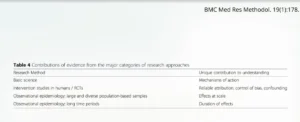
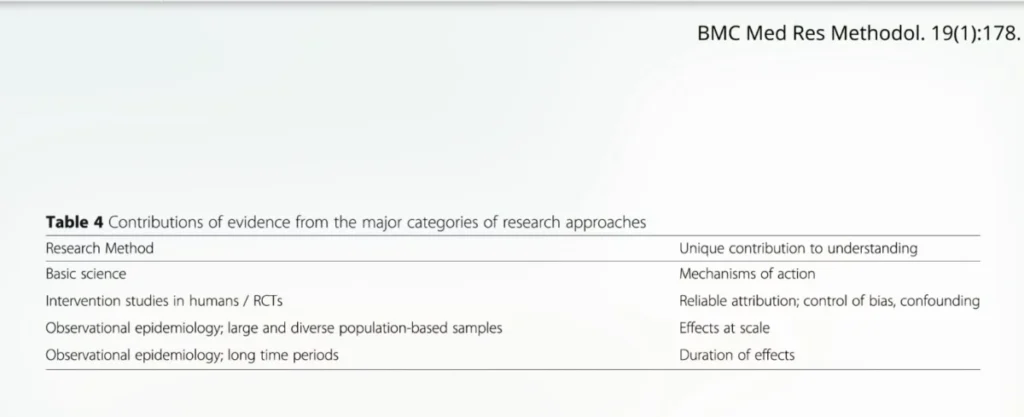
HEALM (Hierarchies of Evidence Applied to Lifestyle Medicine): This framework was also developed precisely because existing tools like GRADE are often not feasible or appropriate for questions in lifestyle medicine that cannot be fully addressed by RCTs. HEALM acknowledges that each research method — from mechanistic lab studies to large-scale population observations — makes a unique and valuable contribution to the overall understanding of health.
The Synergy of Diverse Evidence:
Effective public health decisions rarely rely on a single type of study. Instead, they synthesize evidence from multiple sources, each offering a different piece of the puzzle:
- Laboratory studies can explore exact biological mechanisms at a cellular or molecular level.
- Randomized controlled trials can establish direct cause and effect for specific, manageable interventions.
- Large population observational studies can track hundreds of thousands of individuals over decades, identifying broad patterns and associations in real-world settings.
The trans fat story serves as a powerful testament to the efficacy of this multi-pronged approach. Early randomized controlled trials demonstrated that trans fats increased risk factors for heart disease (e.g., LDL cholesterol levels). Concurrently, large population studies showed a clear dose-response relationship: the more trans fats people consumed, the higher their incidence of heart disease. Together, this converging evidence built an irrefutable case for the harmful effects of trans fat. As a result, trans fats were largely removed from the U.S. food supply, a public health intervention estimated to prevent as many as 200,000 heart attacks annually. While no RCT specifically randomized people to consume "canisters of Crisco" for years to observe heart attack rates directly, the combined weight of mechanistic, short-term RCT, and long-term observational data was sufficient to warrant decisive action. This demonstrates the principle: "You can’t let the perfect be the enemy of the good when there are tens of thousands of lives at stake."
Precedent in Public Health:
This approach is not unique to nutrition. Public health officials routinely make critical decisions based on the "best available balance of evidence" when direct, ethically permissible RCTs are impossible. Consider how tolerable upper limits for lead exposure or PCBs are determined. No ethical experiment would randomize children to ingest varying amounts of lead to observe who develops "tolerable brain damage." Instead, evidence is meticulously gathered from epidemiological studies, animal models, and mechanistic research to approximate safe levels and protect public health. The same logic applies to many aspects of dietary guidance.
Even in the absence of RCTs, or when they are simply infeasible, observational studies provide a wealth of evidence on the nutritional causes of various cancers. For instance, strong observational data link red meat consumption to an increased risk of colorectal cancer. If dietary guidelines for cancer prevention were assessed solely through the drug-designed GRADE approach, they too would be dismissed as "low quality," a conclusion that flies in the face of established scientific understanding and public health recommendations.
Official Responses: Defending Scientific Integrity
The scientific community has largely responded to these industry-funded critiques by emphasizing the importance of context-appropriate methodologies and the synthesis of diverse evidence.
Independent nutrition societies and public health organizations have consistently defended the validity and necessity of observational studies in informing dietary guidelines. They highlight that the systematic biases introduced by industry funding, often masked by seemingly rigorous methodological critiques, are a greater threat to scientific integrity than the inherent limitations of observational research itself.
The development and promotion of tools like NutriGrade and HEALM are direct "official responses" from the scientific community. They represent a concerted effort to establish robust, fit-for-purpose frameworks for evaluating nutritional evidence, explicitly accounting for the unique challenges and ethical considerations of dietary research, and critically, the potential for industry bias. These tools implicitly challenge the notion that a single, universal standard (like GRADE for drugs) can or should be applied across all domains of health science.
Furthermore, leading journals and academic institutions have become more vigilant about conflicts of interest, often requiring explicit disclosure of funding sources and increasingly scrutinizing the methodologies employed in industry-backed research. While these measures are not foolproof, they signify an ongoing commitment to upholding scientific rigor against external pressures.
Implications: Safeguarding Public Health and Trust
The debate over observational studies in nutrition has profound implications for public health, policy, and consumer trust.
Impact on Dietary Guidelines: If the industry-funded critiques gain widespread traction, it could severely undermine the scientific basis for current dietary guidelines. This would have devastating consequences for public health, potentially leading to a rollback of recommendations that have been instrumental in preventing chronic diseases. Without reliable guidelines, individuals are left vulnerable to misinformation and the unchecked influence of commercial interests.
The Challenge of Industry Influence: This saga serves as a stark reminder of the persistent challenge posed by industry influence on scientific research and public policy. By strategically funding studies, employing specific methodological approaches, and leveraging media narratives, powerful industries can create doubt about well-established scientific facts. This tactic, often referred to as "manufacturing doubt," mirrors historical efforts by the tobacco industry to dispute the link between smoking and cancer. It necessitates constant vigilance from independent scientists, policymakers, and the public.
Erosion of Public Trust: When scientific consensus is deliberately undermined, it erodes public trust in both science and public health institutions. In an era of rampant misinformation, it becomes increasingly difficult for individuals to distinguish credible health advice from biased, commercially driven narratives. This not only jeopardizes individual health choices but also weakens the collective capacity for effective public health interventions.
Future Directions: Moving forward, it is crucial for nutrition research to continue refining its methodologies, embracing specialized tools like NutriGrade and HEALM, and fostering greater transparency regarding funding and conflicts of interest. Public health communication must also evolve, not only to convey dietary recommendations but also to educate the public on how to critically evaluate scientific evidence and identify potential biases.
Ultimately, the goal is to ensure that dietary guidelines are informed by the most comprehensive, unbiased, and context-appropriate scientific evidence available, safeguarding public health against the insidious influence of commercial agendas. The battle over observational studies is not merely a methodological dispute; it is a fundamental struggle for scientific integrity and the well-being of populations worldwide.