A Recipe for Controversy: How Flawed Science Stirred a Meatstorm in Public Health

Washington D.C. – A scientific firestorm erupted in late 2019 following the publication of a series of articles in the prestigious Annals of Internal Medicine. These articles, culminating in a controversial recommendation, suggested that adults could continue their current consumption of red and processed meat without concern for health risks. This pronouncement immediately ignited a furious backlash from leading nutrition researchers and public health advocates, who decried the guidelines as not only irresponsible but also a dangerous perversion of evidence-based medicine.
The recommendations, which flew in the face of decades of established dietary advice from major health organizations worldwide, were swiftly and vehemently condemned. Experts from institutions like Harvard University—a global epicenter of nutrition research—expressed unprecedented levels of outrage, calling the studies deeply flawed and their conclusions misleading.
The Genesis of the Controversy: A Chronology of Misdirection
The initial articles, published in September 2019, presented systematic reviews and meta-analyses of existing data on red and processed meat consumption and health outcomes. While the Annals of Internal Medicine is a highly respected journal, the conclusions drawn by the lead authors, particularly the explicit recommendation against reducing meat intake, struck a discordant note across the scientific community.
The reaction was immediate and fierce. Nutrition researchers across the globe publicly "blasted" the articles, highlighting what they perceived as profound methodological flaws. Dr. Frank Hu, the Chair of the Department of Nutrition at Harvard T.H. Chan School of Public Health, minced no words, calling the recommendations "a very irresponsible public health recommendation." His predecessor, the esteemed Dr. Walter Willett, was even more direct and unrestrained in his criticism. "It’s the most egregious abuse of data I’ve ever seen," Willett stated emphatically, adding, "There are just layers and layers of problems."
This chorus of condemnation underscored a deep-seated concern that the scientific rigor expected from such a publication had been compromised, potentially jeopardizing public health messaging and eroding trust in nutritional science. The central tenet of this criticism revolved around a specific methodological choice: the application of the Grading of Recommendations, Assessment, Development, and Evaluation (GRADE) criteria.
Deconstructing the Flawed Methodology: The GRADE Misapplication
At the heart of the controversy was the authors’ decision to base their analyses and recommendations largely on the GRADE criteria. While GRADE is a widely recognized and valuable tool in evidence-based medicine, its application to dietary research, particularly in this context, was immediately flagged as inappropriate and fundamentally flawed by numerous experts.
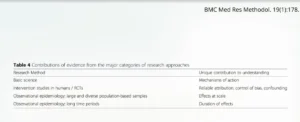
GRADE was meticulously designed for evaluating the certainty of evidence and the strength of recommendations, primarily in the context of drug trials and other clinical interventions. In such settings, the gold standard is the randomized, double-blind, placebo-controlled trial (RCT). GRADE inherently assigns "low- or very-low" scores for "certainty of evidence" to observational studies, as these types of studies do not meet the stringent criteria of RCTs. This is precisely what one desires when evaluating the efficacy and safety of a new drug: a high bar for proving benefits and risks through highly controlled experiments.
However, the nature of dietary and lifestyle research presents unique and often insurmountable challenges to conducting such trials. As critics highlighted, the "infeasibility for conducting large, long-term randomized clinical trials on most dietary, lifestyle, and environmental exposures makes the criteria inappropriate in these areas." Imagine the logistical and ethical nightmares involved in controlling people’s diets every single day for decades, or randomizing individuals to smoke a pack of cigarettes daily for twenty years to definitively prove a link to lung cancer.
The absurdity becomes even more pronounced when considering the concept of "blinding." In a drug trial, neither the participant nor the researcher knows if a placebo or the active drug is being administered. This "double-blinding" prevents bias. Yet, as the Harvard nutrition department chair pointed out, "You can’t do a double-blinded placebo-controlled trial of red meat and other foods on heart attacks or cancer." How would one "blind" participants to what they are eating? Would a control group smoke "placebo cigarettes"?
Despite these self-evident limitations, the Annals papers reportedly downgraded numerous high-quality observational studies specifically due to a "lack of blinding." This mechanistic application of GRADE, according to its critics, demonstrated a fundamental misunderstanding or willful misapplication of the tool’s intended purpose. The authors themselves acknowledged that their recommendations diverged from virtually all other major dietary guidelines precisely because those other guidelines had not employed the GRADE approach. The reason, as a Stanford nutrition scientist explained, is simple: "we can’t randomize people to smoke, avoid physical exercise, breathe polluted air or eat a lot of sugar or red meat and then follow them for 40 years to see if they die. But that doesn’t mean you have no evidence. It just means you look at the evidence in a more sophisticated way."
Indeed, alternative approaches to evaluating evidence in nutrition exist. Tools like NutriGrade, for example, have been specifically developed to assess studies on nutrition and lifestyle factors, acknowledging the inherent differences in research methodology for these complex areas. The choice to ignore such specialized tools in favor of a misapplied GRADE framework raised serious questions about the true motivations behind the controversial publications.
The Peril of Perverted Evidence: Beyond Meat and Into Public Health
The concerns articulated by leading nutrition scientists extended far beyond the immediate implications for red meat consumption. Many feared that the methodological approach employed in the Annals series represented a dangerous precedent that could be exploited to sow doubt about a wide array of well-established public health warnings.
The lead author of the controversial meat papers had previously faced scrutiny for similar methodological approaches while working at the behest of soda and candy companies. This history fueled suspicions that the appeals to specific "standards of evidence" were less about genuine scientific inquiry and more about advancing the financial interests of powerful industries.
As critics highlighted, the selective application of GRADE, insisting on randomized controlled trials where they are ethically or practically impossible, "could be misused to discredit all sorts of well-established public health warnings." This includes the undeniable link between secondhand smoke and heart disease, the adverse health effects of air pollution, the chronic disease risks associated with physical inactivity, and the dangers of trans fats. Such a tool could empower industries to deliberately "sow doubt" in any field where RCTs are not feasible, even extending to crucial issues like climate change. The rhetorical question, "How would a placebo planet even work?" underscores the absurdity of applying such rigid criteria across the board. In an extreme hypothetical, strictly adhering to GRADE guidelines could even be used to question the long-established and unequivocally proven link between smoking and lung cancer.
This raises a chilling prospect: a systematic "hijacking" of evidence-based medicine, not for better science, but to "support subverted or perverted agendas" that benefit powerful economic interests at the expense of public health.
The Illusion of Rigor: When RCTs Fail Behavioral Science
To further illustrate the practical limitations of demanding RCTs for complex behavioral interventions, critics often point to real-world examples that highlight the distinction between randomizing advice and randomizing actual behavior.
Consider a randomized controlled trial designed to study the effect of advising middle-aged men to stop smoking. Participants were randomized to either receive advice to quit or to a control group receiving no special instruction. The study concluded, disappointingly, that there was "no evidence at all of any reduction in total mortality," with 13.7% of the advice group dying compared to 12.9% in the control group. Does this mean smoking isn’t bad for you? Of course not.
The fatal flaw lies in the interpretation: the trial didn’t randomize people to quit smoking; it randomized them to receive advice to quit. Human behavior is complex and often resistant to simple advice. At the study’s last follow-up, those who received advice to quit were still smoking an average of 8 cigarettes a day, compared to 12 cigarettes a day for the control group. Such a minimal difference in actual smoking behavior could not reasonably be expected to yield a significant difference in mortality.
The same principle applies to dietary interventions. Massive, expensive randomized dietary trials, such as the Women’s Health Initiative and the Multiple Risk Factor Intervention Trial (MRFIT), have reportedly "wasted hundreds of millions of dollars" due to similar challenges. In these studies, participants often failed to consistently adhere to the prescribed dietary advice. Consequently, the intervention groups ended up eating diets that were not substantially different from the control groups, leading to similar disease outcomes—much like the smoking-advice trial.
These failures were not due to inexperienced investigators; these trials were conducted by "very best research teams who invested enormous efforts to achieve their goals." Rather, they underscore the inherent difficulty in running decade-long randomized trials that demand profound and sustained changes to deeply ingrained eating behaviors. People simply won’t, or can’t, consistently follow such rigorous instructions over extended periods. In fact, due to these adherence challenges, randomized controlled trials have even struggled to definitively show an effect of smoking on mortality, which is "pretty remarkable considering that smoking is one of the most powerful known risk factors in the world."
Official Responses and Expert Condemnation
The official responses to the Annals publications from the broader scientific community were overwhelmingly critical. Beyond the individual statements of prominent researchers, numerous organizations and collective statements emerged, calling for a re-evaluation of the guidelines and a stronger commitment to sound scientific methodology.
The unanimous condemnation from Harvard’s nutrition department, with its unparalleled expertise and legacy in the field, carried significant weight. Dr. Willett’s assertion of "egregious abuse of data" and "layers and layers of problems" became a rallying cry for those concerned about scientific integrity. Dr. Hu’s labeling of the recommendations as "very irresponsible" highlighted the potential public health dangers.
The authors’ own admission that their recommendations differed from all other major guidelines specifically because of their unique application of the GRADE approach served as a tacit acknowledgment of their methodological divergence. However, they framed this divergence as a sign of their greater rigor, a claim that was roundly rejected by critics who saw it as a fundamental misapplication.
The Broader Implications: A Threat to Evidence-Based Public Health
The ultimate implication of such a flawed approach is a dangerous simplification of complex health science. If every exposure that cannot be tested with a perfectly blinded, decade-long RCT is dismissed as having "low certainty evidence," then the logical, albeit fallacious, conclusion is that people should simply "eat whatever they want." This directly contradicts the vast body of observational data and nuanced scientific understanding accumulated over decades.
This was vividly illustrated by a chilling exchange. When asked if doctors could advise people whether a salad is healthier than a bowl of sugar, one of the senior co-authors of the meat papers reportedly responded that physicians should tell people that "the quality of evidence is low, so it depends almost entirely on their preferences." This statement, more than any other, exposed the profound disconnect between this methodological rigidity and the practical realities of public health guidance.
As one critic eloquently summarized, "When GRADE criteria do not allow us to strongly recommend against smoking a cigarette with your bowl of sugar, we believe that alternative grading systems are preferable." This highlights the core issue: the tool, when misapplied, rendered common sense and established scientific consensus utterly meaningless. It transformed a system designed to provide clarity into one that generated confusion and, worse, provided ammunition for those seeking to undermine sound public health advice. The perception that the process was being "manipulated and misused to support subverted or perverted agendas" gained significant traction.
Conclusion: Reclaiming Scientific Integrity in Dietary Guidance
The controversy surrounding the Annals of Internal Medicine red meat recommendations stands as a stark reminder of the critical importance of methodological appropriateness and ethical considerations in scientific research, particularly when it impacts public health. The incident underscored that while evidence-based medicine is a cornerstone of modern healthcare, its tools must be applied with nuance, understanding, and integrity.
The wholesale application of GRADE criteria, designed for drug trials, to complex dietary and lifestyle factors proved to be a profoundly misguided endeavor. It created an artificial standard that effectively dismissed decades of robust observational research, leading to conclusions that were not only scientifically untenable but also potentially harmful to public health.
The strong condemnation from leading nutrition experts served as a vital defense of scientific rigor and integrity. It highlighted the dangers of allowing industry influence, whether direct or indirect, to skew scientific interpretation and undermine established public health messages. Moving forward, the scientific community must remain vigilant in ensuring that the tools of evidence-based medicine are used wisely, that appropriate methodologies are selected for diverse fields of study, and that the pursuit of truth is never overshadowed by external pressures or a misplaced zeal for a single, rigid standard. The health of populations depends on it.
Editor’s Note
This article delves into a critical moment in nutrition science, serving as the fourth installment in a broader examination of how various industries can influence dietary and health guidelines. Previous discussions have explored the challenges faced by the 2015 Dietary Guidelines committee in recommending reduced sugar consumption and introduced the complexities of the GRADE approach to evaluating clinical guidelines. The subsequent parts of this series will continue to explore related issues and controversies in public health guidance.