The Hidden Cost of Your Lunch: Unpacking the Microlives Lost to Processed Meats
[CITY, STATE] – [Date] – In a world increasingly conscious of health and longevity, many individuals meticulously avoid habits like smoking, deeming them "unthinkable" due to their well-documented risks. Yet, a stark parallel exists in our dietary choices, particularly concerning processed meats, which silently chip away at our lifespan, often without the same level of public scrutiny or individual awareness. New insights, utilizing a compelling metric called "microlives," reveal that opting for a meaty burrito over a bean one might carry a health toll comparable to, or even exceeding, daily cigarette consumption.
This revelation stems from a deeper analysis of global health data and a novel approach to quantifying chronic risks, challenging conventional perceptions and urging a re-evaluation of our plates.
Main Facts: The Silent Toll of Processed Meats
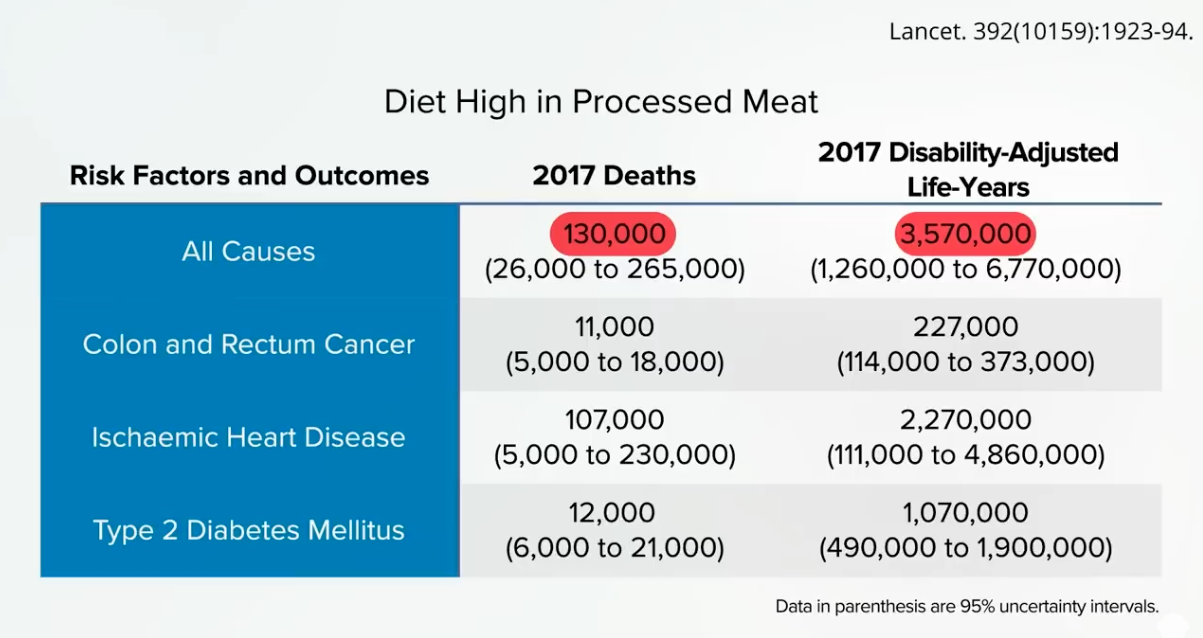
The core issue lies in the pervasive consumption of processed meats – a category encompassing popular items such as bacon, ham, hot dogs, lunch meats, and sausages. According to the comprehensive Global Burden of Disease Study, diets rich in these products are implicated in over 100,000 deaths annually worldwide. The primary culprits are heart disease, various forms of cancer, and diabetes, collectively leading to millions of healthy years of life being lost each year across the globe.
This alarming statistic underscores a critical public health challenge that, while perhaps less dramatic than acute events, accumulates into a profound burden on human health and healthcare systems. The danger is not confined to extreme consumption; even moderate intake contributes to this global health crisis.
Chronology: A Shifting Understanding of Dietary Risks
The scientific understanding of processed meat’s impact has evolved significantly, though not without controversy. For decades, general nutritional advice has leaned towards moderation or reduction of red and processed meats. However, recent years have seen debates that, at times, have muddied the waters for the public.
A notable chapter in this chronology involves the "NutriRECS meat papers," published in the Annals of Internal Medicine. These papers, while acknowledging associations between reduced meat consumption and lower health risks, controversially concluded that individuals should continue their current consumption patterns. This recommendation sparked widespread criticism from the scientific and public health communities, who argued that the panel’s methodology and interpretation of its own data were flawed.
Despite the panel’s contentious conclusions, a closer look at their underlying analyses revealed a consistent finding: a reduction in red and processed meat consumption was associated with a 13% lower risk of premature death. This internal inconsistency highlighted a disconnect between the data and the final recommendations, leading many experts to question the motivations and implications of the NutriRECS reports.
The Union of Concerned Scientists, for instance, estimated that if Americans alone could reduce their processed meat intake to a mere ounce per week, thousands of cancer deaths could be prevented annually. This population-level impact, while significant, often feels abstract to individuals. To bridge this gap and provide a more tangible understanding of personal risk, a powerful new concept has emerged: the "microlife."
Supporting Data: Quantifying Risk with Microlives
To truly grasp the individual implications of dietary and lifestyle choices, it’s essential to move beyond abstract percentages and embrace more relatable metrics. This is where the concept of "microlives" offers a revolutionary perspective.
Before delving into microlives, it’s helpful to understand its counterpart: the "micromort." A micromort is defined as a one-in-a-million chance of sudden death. This unit is typically used to compare acute risks, such as skydiving or riding a motorbike, where the outcome can be immediate and catastrophic. While fascinating for understanding instantaneous dangers, micromorts fall short when evaluating chronic risks that accumulate over time.
Chronic risks – the kind we encounter through lifestyle choices like smoking, excessive drinking, poor diet, and lack of exercise – don’t typically lead to sudden death. Instead, they gradually erode our health and shorten our lifespan. To quantify these chronic risks, researchers introduced the concept of a microlife, defined as 30 minutes of your life expectancy.
The logic behind the 30-minute increment is rooted in statistical averages. For a young adult, say a 22-year-old man or a 26-year-old woman, the average remaining life expectancy is approximately 57 years. This translates to roughly 20,000 days, 500,000 hours, or, crucially, one million half-hour segments. Thus, a microlife represents the loss of one of these million half-hour segments from one’s projected lifespan.
This metric allows for a direct comparison of diverse chronic health risks and benefits. Consider these examples of what, on average, might cost a 30-year-old man one microlife (30 minutes of life expectancy):
- Smoking one cigarette: A habit often demonized, and rightly so, yet its individual impact can now be precisely equated.
- Drinking a pint of strong beer: The enjoyment of a single alcoholic beverage can carry the same statistical life-shortening effect as a cigarette.
- Being 11 pounds overweight: This seemingly modest excess weight has a quantifiable impact on longevity, equivalent to a single cigarette or a pint of strong beer.
- Consuming one standard burger: The seemingly innocuous choice of a burger at lunch is associated with the loss of one microlife.
- Daily consumption of a standard serving of processed meat (e.g., two slices of bacon, one hot dog): This habit, if sustained, can accumulate multiple microlives lost per week, highlighting its insidious long-term impact.
- Living in a moderately polluted city for a certain period: Environmental factors, too, can be quantified, demonstrating how external elements contribute to microlife loss.
These comparisons are incredibly helpful in putting everyday decisions into perspective. If the idea of lighting up two cigarettes a day – one in the morning and one at night – seems utterly unthinkable due to its clear health implications, then by the same logic, carrying an extra 11 pounds or consuming a burger should also be viewed with similar gravity regarding personal health.
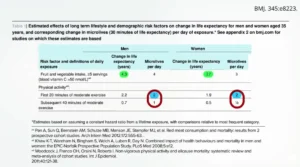
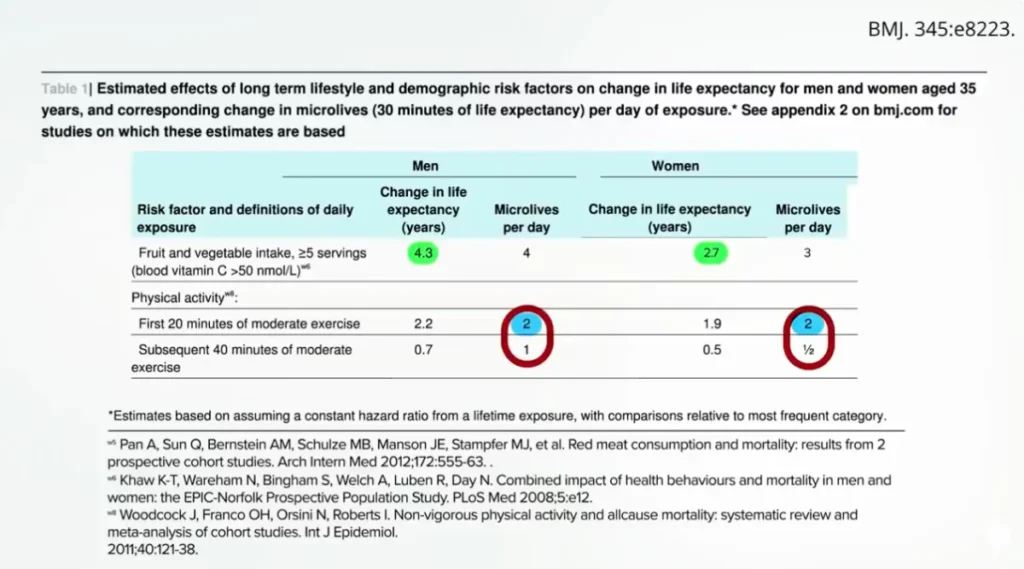
The microlife concept also elegantly illustrates life-extending behaviors. For instance, studies show that eating at least five servings of fruits and vegetables daily can add an average of four years to a man’s lifespan and three years to a woman’s. This translates to an immense gain in microlives over a lifetime, potentially twice as beneficial as exercising every day.
Speaking of exercise, the return on investment is remarkable. Engaging in just 20 minutes of physical activity can result in an extra hour of life – a gain of two microlives. This represents a 3-to-1 return on investment: dedicate 20 minutes of your life, and you get back 60 minutes. While there are diminishing returns beyond a certain point, exercising an hour a day still yields more time than you put in, offering a compelling incentive for those who claim they "don’t have time" to exercise.
Applying the microlife metric directly to meat consumption reveals stark realities:
- Each burger is associated with the loss of one microlife. This means that each burger effectively takes 30 minutes off your life expectancy. In terms of lifespan, one burger appears to equal the impact of two cigarettes. If the thought of lighting up a cigarette at lunch is unimaginable, then perhaps a bean burrito becomes a far more appealing and health-conscious choice.
Processed meat, in particular, stands out as a significant threat to longevity. To put its impact into perspective using microlives:
- A daily serving of processed meat (e.g., a hot dog, a few slices of bacon, or a portion of deli meat) can cost several microlives per week. This compounding effect means that consistent consumption of these items quickly adds up to substantial reductions in life expectancy over years.
- The consistent consumption of processed meat contributes significantly to the 13% increased risk of premature death observed even in the contested NutriRECS analyses, translating to a measurable loss of microlives over a lifetime.
Official Responses: Reaffirming Established Dietary Guidelines
The controversy surrounding the NutriRECS papers prompted strong "official responses" from leading health and nutrition experts, who sought to clarify the science and reaffirm established dietary guidelines.
The chair of nutrition at Harvard University, alongside his colleagues, published a direct rebuttal, stating that the NutriRECS meat recommendations "suffer from important methodological limitations and involve misinterpretations of nutritional evidence." They unequivocally concluded that "to improve human and planetary health, dietary guidelines should continue to emphasize dietary patterns low in red and processed meats and high in minimally processed plant foods such as fruits and vegetables, whole grains, nuts, and legumes." This means a clear endorsement of plant-centric eating, prioritizing foods like beans, split peas, chickpeas, and lentils.
Perhaps one of the most poignant "official responses" came from Dr. Dean Ornish, a pioneer in lifestyle medicine. Dr. Ornish’s groundbreaking Lifestyle Heart Trial, which demonstrated that a plant-based diet and comprehensive lifestyle program could reverse the progression of even severe coronary heart disease – a leading cause of death – was among the many studies largely ignored by the NutriRECS panel. He highlighted that his control group, who made modest reductions in meat similar to those recommended in the Annals review, actually showed continued worsening of their atherosclerosis.
Dr. Ornish’s powerful closing statement serves as a stark warning: "I take solace in knowing that the light drives out the darkness. But, these days, the light has to be very bright indeed. Caveat emptor. Don’t be fooled. Your life may depend on it." His words underscore the critical importance of critically evaluating health information and trusting robust, long-standing scientific evidence over potentially biased or flawed interpretations.
Implications: Reshaping Public Health and Personal Choices
The implications of these findings are far-reaching, impacting both public health policy and individual dietary decisions.
Firstly, the clear and quantifiable risks associated with processed meats demand a stronger, more consistent public health message. While campaigns against smoking have been highly successful, the insidious nature of dietary risks often goes unaddressed with the same urgency. The "microlife" concept provides a powerful tool for health educators to communicate these risks in a way that resonates with individuals, making abstract statistical probabilities tangible and actionable. It reframes the conversation from mere "good advice" to a direct consequence on one’s personal longevity.
Secondly, the critique of the NutriRECS papers highlights the constant need for vigilance against potential industry influence or flawed methodologies in scientific reporting. Public trust in scientific institutions is paramount, and ensuring that dietary guidelines are based on the strongest, most comprehensive evidence, free from conflicts of interest, is crucial. The expert consensus, as articulated by Harvard’s nutrition chair and Dr. Ornish, firmly supports a reduction in processed meat consumption and an increase in whole, plant-based foods for optimal health.
Thirdly, for individuals, these insights empower more informed decision-making. Understanding that a single burger can cost two cigarettes’ worth of life expectancy, or that 20 minutes of exercise yields an hour of life, can be a potent motivator for change. It encourages a shift from viewing healthy eating and exercise as burdensome chores to recognizing them as powerful investments in one’s future. The choice between a meaty and a bean burrito, or between a sedentary evening and a brisk walk, is no longer just about taste or convenience, but about actively reclaiming or preserving precious microlives.
Furthermore, the "side bonus" of planetary health, though briefly mentioned, holds significant implications. Reducing reliance on processed meats and embracing plant-centric diets benefits not only individual health but also contributes to a more sustainable food system, lessening environmental impact. This convergence of personal and planetary well-being offers an even more compelling reason to rethink our plates.
In conclusion, while the allure of convenient, processed foods remains strong, the growing body of evidence, especially when framed through the compelling lens of microlives, presents a powerful argument for change. Our daily food choices are not merely culinary preferences; they are profound determinants of our health, longevity, and quality of life. As Dr. Ornish warns, "Your life may depend on it." Making informed choices, guided by robust scientific understanding, is more critical than ever.
Further Expert Insights
For those intrigued by the concept of comparing different risks, a deeper dive into "micromorts" can provide additional fascinating context. The video, "Micromorts: How Risky Is It to Go Under Anesthesia?", explores the quantification of sudden death risks.
This article is the final installment in an eight-part series examining how various industries impact dietary and health guidelines. Previous articles delved into other facets of this complex interplay.
Additional resources on longevity and dietary impacts are available, including the popular video: "How to Increase Your Life Expectancy 12 to 14 Years." These resources underscore the transformative power of lifestyle choices on our health trajectory.