The Alpine Oenophile’s Sanctuary: Inside Switzerland’s Most Extensive Wine Cellar
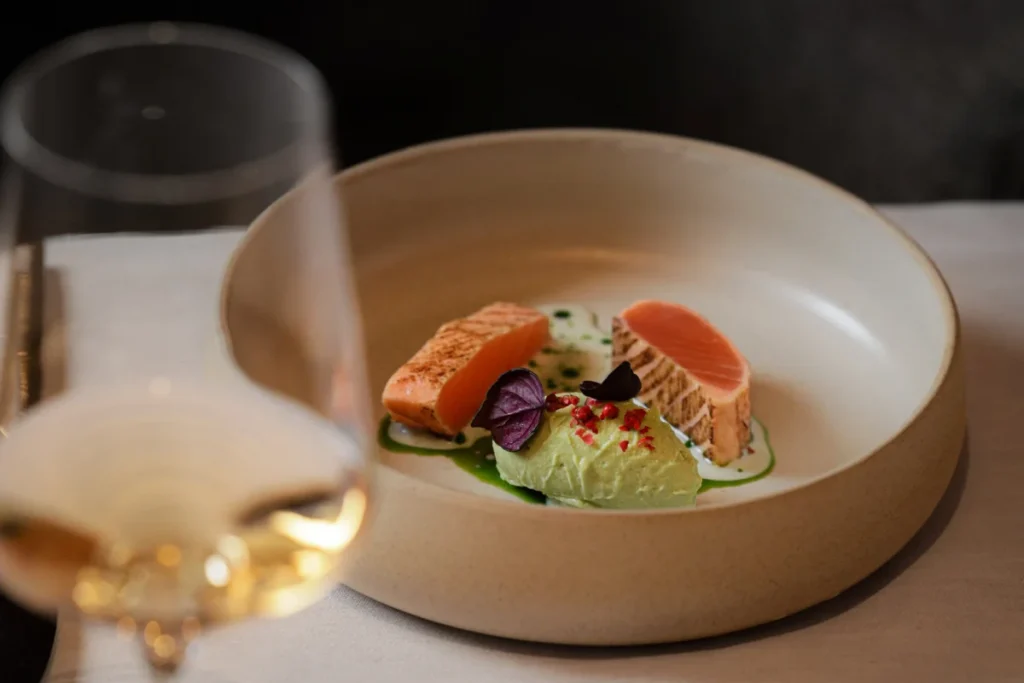
By Barbara Barrielle
September 24, 2026
Tucked away in the verdant, rolling hills of northeast Switzerland, approximately an hour’s drive from the bustling financial hub of Zurich, lies the Appenzell region—a place where time seems to fold in on itself. It is a landscape defined by charming curiosities: a distinct, rhythmic regional dialect, the thunderous spectacle of annual cattle parades where farmers don ceremonial regalia to guide herds through town, and, perhaps most surprisingly, a high-end wellness retreat housing the largest private wine collection in the country.
This retreat, known as the Appenzeller Huus, has effectively transformed the sleepy town of Gonten—a hamlet with a population of fewer than 1,500—into a pilgrimage site for serious oenophiles. The resort comprises three distinct hospitality concepts: the ultra-luxury wellness sanctuary Huus Quell, the design-forward boutique hotel Huus Löwen, and the historic Huus Bären, an inn that has stood in the valley since 1602.
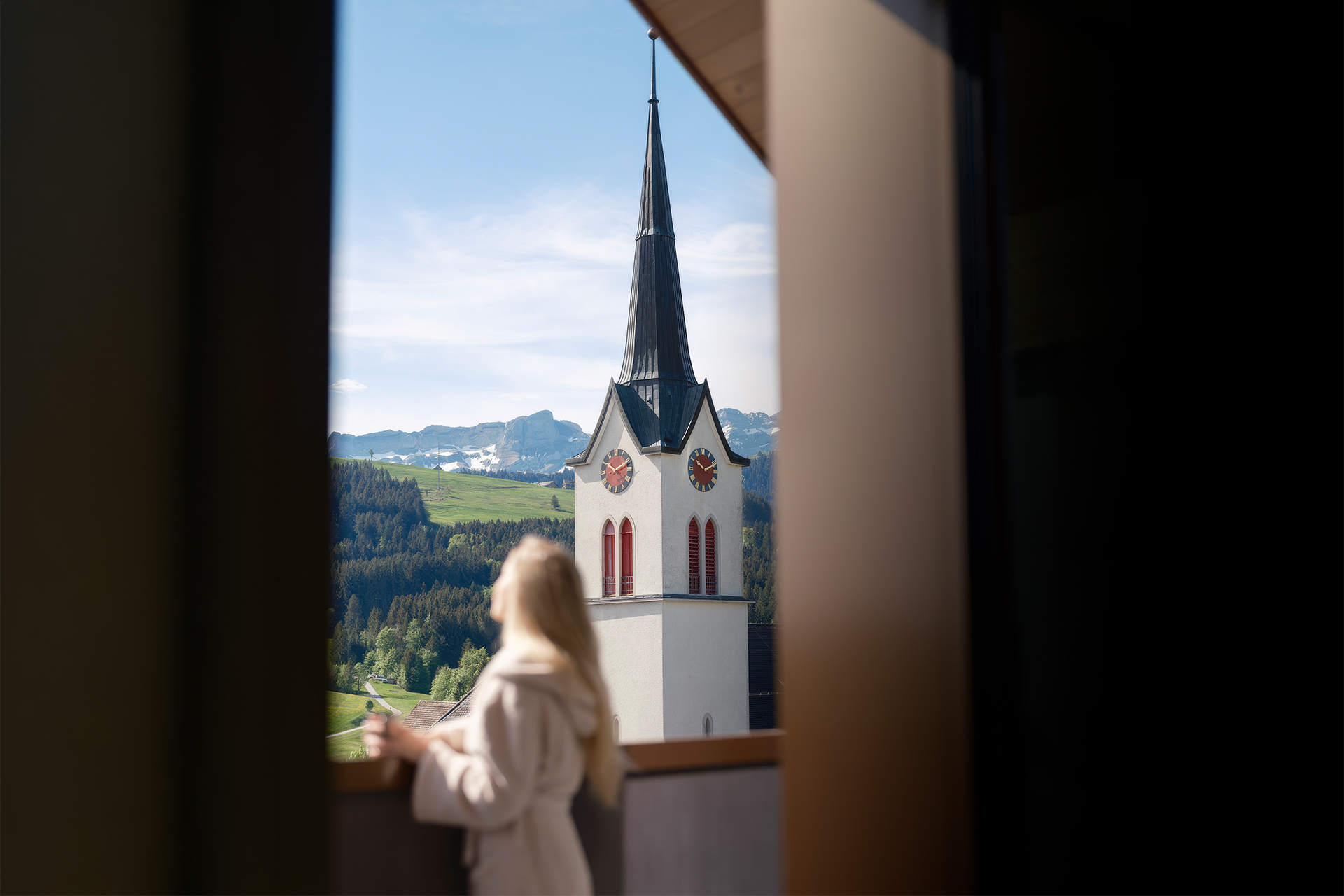
Beneath this alpine getaway lies a subterranean treasure trove of glass and stone, housing a staggering 18,000 bottles. It is a testament to the belief that true wellness is found not just in spa treatments and clean mountain air, but in the contemplative, sensory joy of a perfectly aged vintage.
The Architectural Masterpiece: A Design in Four Acts
The cellars at Appenzeller Huus are not merely storage spaces; they are an architectural masterclass in wine preservation and display. The collection is distributed across four distinct rooms, each engineered to maintain the precise microclimate required for its specific contents.
The primary trio of chambers, located directly beneath the Huus Quell property, are dedicated to the triumvirate of fine wine: red, white, and Champagne. These glass-encased structures surround the centerpiece of the facility: the "Barrel Room." As the name suggests, this space is shaped like a giant wooden barrel, with glass shelving lining its curved perimeter. It is a space of intimate, modern elegance, designed to host private dining experiences for up to nine guests. Those who secure a reservation in this sanctum are treated to a curated eight-course tasting menu, with every dish meticulously paired by the resort’s sommeliers.

Beyond the modern glasswork, the fourth room offers a stark, rustic contrast. It resides within the original stone foundations of the Huus Bären, a cellar that has existed for over a century. This space is dedicated exclusively to the unsung heroes of the collection: Swiss wines. While the rest of the facility embraces cutting-edge technology, this room maintains the "cave" aesthetic, serving as a bridge between the resort’s deep historical roots and its future-facing ambitions.
To ensure the integrity of these 18,000 bottles, the resort has implemented state-of-the-art security, including retinal scanning for entry. It is a marriage of old-world charm and futuristic security, ensuring that the liquid assets remain as pristine as the day they were vinted.
Chronology: From Railroad Tracks to Wine Immersion
The story of this cellar is inextricably linked to the journey of its cellar master, Hans Rhyner. Rhyner’s path to becoming the custodian of Switzerland’s largest wine collection was anything but traditional. He began his professional life working for the Swiss railroad, a career path far removed from the sensory nuances of viticulture.

His transition into the world of wine was organic and self-taught. He began by purchasing bottles that piqued his curiosity, tasting them, and documenting the results. His passion eventually led him to the Hotel Dorfhus Gupf in Rehetobel, where he established a reputation for excellence. It was at the Dorfhus that Rhyner gained acclaim for his championing of small, independent producers, with a particular focus on female winemakers—a group he credits with a unique, compassionate approach to vineyard management.
The development of the current facility at Appenzeller Huus was spearheaded by the resort’s owner, Jan Shoch. A former CEO of the Swiss financial technology firm Leonteq, Shoch returned to his roots to develop the property. The project was deeply personal; he purchased the very hotel where his parents celebrated their honeymoon—the property that is now Huus Bären. Under his vision, the cellar grew from a simple amenity into a defining pillar of the resort’s identity.
Supporting Data: The Anatomy of the Collection
The scale of the Appenzeller Huus collection is difficult to grasp until one sees the data. The cellar holds:

- Total Bottle Count: 18,000
- Total Labels: 2,160 distinct wines
- Inventory System: A comprehensive, real-time computerized database tracking every bottle by label, style, grape variety, producer, vineyard, and origin.
The collection is meticulously categorized to ensure that the cellar master can pull a bottle from a specific vintage or a specific micro-terroir in seconds. This level of data management is essential when handling such a vast inventory, ensuring that no bottle is lost to the obscurity of a dark corner.
Official Perspectives: The Philosophy of Savoring
When asked about his preference for small-scale, artisanal producers, Hans Rhyner remains steadfast. "There is a level of compassion and care in the vineyards of these smaller, often female-led estates that you simply cannot replicate in mass production," Rhyner notes. "It is about the human hand behind the wine."
Jan Shoch, the architect of this grand project, views the cellar through a broader lens of lifestyle and wellness. "In a world that is constantly accelerating, the act of sitting down to a great bottle of wine is a radical form of self-care," Shoch says. "When you are here, you are surrounded by the silence of the mountains and the history of the land. The wine is an extension of that landscape. It is not about consumption; it is about the pleasure of taking time."

Shoch’s philosophy is the guiding principle of the Huus Quell experience. By integrating a world-class wine program into a wellness-focused resort, he is challenging the traditional, often restrictive, definitions of health. To Shoch, the "detox" promised by the resort is not about deprivation, but about the elevation of the human experience through high-quality, mindful consumption.
Implications: A New Era for Swiss Wine Tourism
The existence of the Appenzeller Huus cellar signals a shift in Swiss luxury tourism. For years, Switzerland was seen as a transit country or a destination for skiing and alpine hiking. The investment in this cellar proves that the nation is ready to compete with the legendary wine cellars of France and Italy.
Furthermore, by highlighting Swiss wines in a 100-year-old stone cave, the resort is elevating the perception of local vintages. While global icons are present in the collection, the emphasis on local, independent, and creative winemakers ensures that visitors leave with a deeper understanding of the Swiss terroir.

For the traveler, the implications are clear: the destination is no longer just the mountains. It is the bottle. As climate change continues to impact traditional winemaking regions, the unique, cool-climate wines of the Appenzell region are gaining global attention. By housing them in a state-of-the-art facility, Appenzeller Huus is not just preserving wine; it is preserving a culture.
As the industry continues to evolve, the "Barrel Room" and its surrounding chambers will likely serve as a blueprint for other high-end boutique hotels. It proves that luxury, when combined with a genuine passion for craft and history, creates an indelible mark on the guest experience. In the quiet town of Gonten, the largest wine cellar in Switzerland is doing more than just storing wine—it is writing a new chapter for the future of the alpine luxury experience.