At a Crossroads: FDA Commissioner Nominee Dr. Heidi Overton Faces Scrutiny Amid Staffing Crisis and Food Safety Reform
Introduction: The Confirmation Challenge
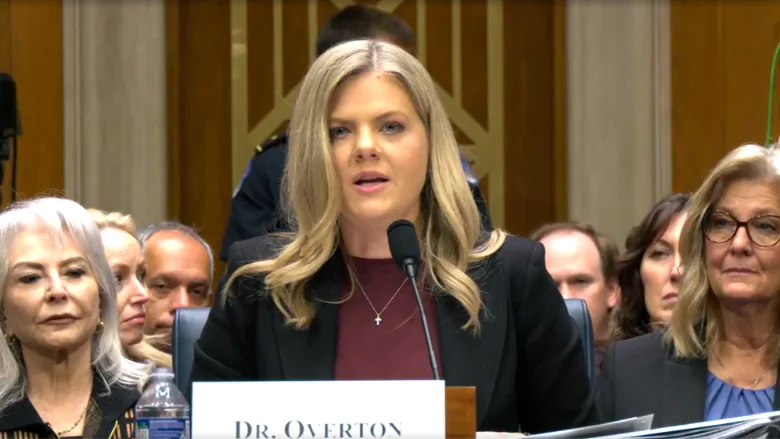
On September 24, the Senate Committee on Health, Education, Labor, and Pensions (HELP) convened to weigh the nomination of Dr. Heidi Overton, M.D., Ph.D., as the next Commissioner of the U.S. Food and Drug Administration (FDA). The hearing served as a high-stakes litmus test for the Trump Administration’s ambitious—and controversial—agenda regarding the nation’s food supply.
Dr. Overton, a board-certified public health and general medicine practitioner with extensive experience in previous Trump Administrations, enters the spotlight at a precarious time for the agency. With the "Make America Healthy Again" (MAHA) movement, championed by Health Secretary Robert F. Kennedy Jr., pushing for a radical overhaul of food ingredient oversight, the FDA finds itself grappling with an identity crisis. Dr. Overton’s testimony highlighted a glaring disconnect: while the Administration pushes for rigorous new safety standards, the agency is simultaneously navigating a period of unprecedented workforce reductions and diminished operational capacity.
Main Facts: The Resource Gap
The central tension of the confirmation hearing was the feasibility of the FDA’s new food safety mandates. Under the direction of Secretary Kennedy, the FDA proposed a rule in August 2026 to overhaul the "Generally Recognized as Safe" (GRAS) pathway. For decades, this pathway has been criticized by consumer advocacy groups as a regulatory "loophole," allowing manufacturers to introduce new ingredients into the food supply based on self-determined safety evidence without formal FDA premarket approval.
The proposed rule would mandate notifications to the FDA for any ingredient deemed GRAS. While this would provide the agency with critical data for post-market oversight, it places an immense administrative burden on the Human Foods Program (HFP). During the hearing, Dr. Overton was blunt when pressed by Sen. Jim Banks (R-IN) on whether the agency possessed the bandwidth to handle these evaluations. "To my understanding," Dr. Overton acknowledged, "the agency would need more resources in its Human Foods Program to properly be able to process or review all of those mandatory notifications."
Chronology of Institutional Strain
To understand the current crisis, one must look at the recent trajectory of the FDA’s internal stability.
- Early 2025: The FDA begins the year with a robust staff count, though already under pressure from consumer groups to address toxic additives.
- Mid-2025: The Trump Administration initiates broad Reductions in Force (RIFs) across federal agencies, impacting critical food safety personnel.
- Late 2025: Former Commissioner Jim Jones warns that the agency’s post-market chemical review efforts are severely under-resourced.
- Inauguration 2026: Following a wave of "indiscriminate" firings within the HFP, Commissioner Jones resigns, citing that the agency’s ability to address food safety had been rendered "fruitless."
- Summer 2026: The U.S. experiences a massive, record-breaking Cyclospora outbreak linked to Taylor Farms, highlighting gaps in the agency’s response infrastructure.
- September 2026: Dr. Heidi Overton faces the Senate HELP Committee, where she is unable to identify the Coordinated Outbreak Risk and Evaluation (CORE) Network—the very body responsible for responding to the summer’s outbreaks.
Supporting Data: A Declining Workforce
The numbers presented during the September 24 hearing paint a grim picture of the FDA’s current state. According to Sen. Patty Murray (D-WA), the HFP currently employs approximately 1,700 individuals—a staggering 13 percent decrease since the start of 2025.
Even more alarming were the statistics provided by Sen. Tim Kaine (D-VA). He noted that the FDA has lost roughly 4,500 staff members, or 20 percent of its total workforce, since the beginning of the current Administration. Perhaps most concerning is the precipitous drop in on-the-ground food inspectors, who currently number at their lowest levels since 2005.
The correlation between these staffing levels and public health outcomes has not gone unnoticed. Sen. Kaine pointed to a 16-fold increase in reported foodborne illness outbreaks in 2026 compared to 2025, suggesting that the erosion of the agency’s "boots on the ground" has had direct, measurable consequences for American consumers.
Official Responses and Strategic Vision
Dr. Overton’s responses to these challenges were a blend of administrative optimism and reliance on future funding mechanisms. When questioned about the lack of personnel for outbreak response and facility inspections, she repeatedly pointed to the agency’s ongoing hiring efforts. "FDA, as publicly reported, is hiring to have the best people in the best positions to be able to deliver on its core missions," she stated.
However, her primary solution to the funding gap lies in the expansion of "foreign facility user fees." By increasing the costs charged to international companies that export food to the U.S., Dr. Overton hopes to bridge the budget gap created by domestic RIFs.
Regarding the role of the states, Sen. Lisa Murkowski (R-AK) raised concerns about the federal government’s plan to shift more inspection responsibilities to state agencies. Currently, states perform roughly 60 percent of all food facility inspections. Dr. Overton committed to working with Congress to maintain federal-state inspection contracts, emphasizing that while the burden may shift, the safety of the food supply remains a top priority.
Implications: Preemption and the "National Standard"
A significant portion of the hearing was dedicated to the burgeoning conflict between federal authority and state-level food safety laws. Throughout 2026, states have increasingly taken the initiative to ban or restrict specific food additives, often acting faster than federal regulators. This has led to a fragmented regulatory landscape that creates compliance headaches for large-scale food manufacturers.
When asked about her stance on federal preemption—the idea that a federal law should override varying state regulations—Dr. Overton suggested a pragmatic middle ground. She indicated that there is a compelling need for a "strong national standard" to ensure uniformity across the industry. While this may appease industry stakeholders looking for regulatory clarity, it remains a point of contention for consumer groups who fear that a federal standard might be less stringent than the protections currently enacted by individual states.
Conclusion: The Road Ahead
Dr. Overton faces an uphill battle that extends far beyond the typical challenges of a cabinet-level confirmation. If confirmed, she will be stepping into an agency defined by a paradox: it is expected to enact the most aggressive food safety reform in a generation, yet it must do so with significantly fewer resources and a depleted talent pool than its predecessors.
Her lack of a specific background in food policy, combined with her unfamiliarity with key internal structures like the CORE Network, has provided ammunition to her critics. However, her focus on foreign facility user fees and her acknowledgment of the need for a national standard signal a willingness to engage in the structural overhaul the Administration desires.
Whether Dr. Overton can navigate the "MAHA" agenda while simultaneously rebuilding a morale-shattered and understaffed agency remains the central question of her potential tenure. As the nation watches the 2026 outbreak statistics rise, the pressure on the FDA to prove its relevance has never been higher. The coming months will determine if the FDA can pivot from a period of retrenchment back to its core mandate: ensuring the safety of the American food supply in an increasingly complex global market.