The Silent Crisis on the Slopes: Can a New Generation Save the Soul of the Mosel?
By Clara Dalzell
Updated: October 24, 2026
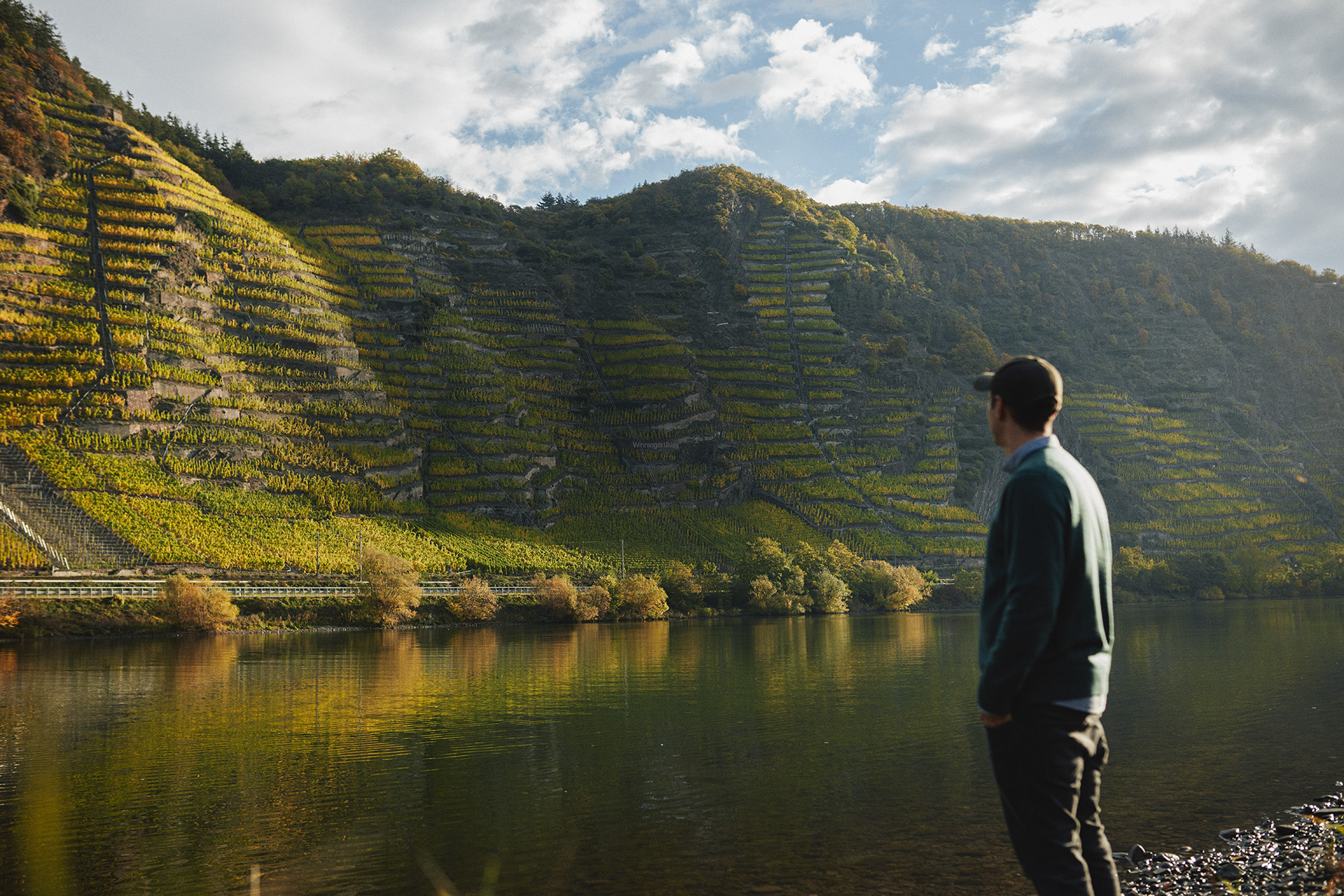
The Mosel River, a winding ribbon of slate and silver carving through the heart of Germany, has long been the global benchmark for Riesling. Its steep, terraced vineyards—some of the most treacherous and visually arresting landscapes in the world of viticulture—are home to ancient, own-rooted vines that have whispered stories of terroir for millennia. Yet, beneath the postcard-perfect veneer of these precipitous slopes, a quiet catastrophe is unfolding. The Mosel is on the brink of an existential collapse, battered by a financial storm that threatens to erase a significant chapter of winemaking history.
The Economic Mirage: High Costs, Low Returns
The reality of farming in the Mosel has become a sobering mathematical exercise. While Riesling remains a darling of the fine wine world, the economics of production have decoupled from the market value.
Matthias Knebel of the renowned Weingut Knebel recently laid bare the stark reality of the region’s fiscal health. According to his calculations, the cost to farm his steep, terraced vineyards averages $14.32 per liter. Contrast this with the current market reality: U.S. importers are paying an average of only $3.81 per bottle for German wine. This discrepancy is not merely a margin issue; it is a structural failure.
When asked if his own ledger reflected such grim figures, Philip Lardot of Lardot winery offered a haunting perspective. "He’s a brave man for doing that calculation," Lardot said. "No one wants to do it." The reluctance to face these numbers stems from the emotional toll of the answer: the realization that the lifeblood of the region is being bled dry by a market that refuses to value the labor-intensive, hand-tended nature of steep-slope viticulture.
A Chronology of Decline: From Expansion to Erosion
To understand the current crisis, one must look at the shifting landscape of German wine law and the changing tides of consumer demand.
The 1971 Turning Point
The 1971 German Wine Law was intended to modernize the industry, but it inadvertently set the stage for a loss of identity. By allowing flatter, more easily mechanized land to be brought into the appellation, the legislation incentivized mass production. These flat sites were not inherently inferior, but the focus shifted to high-yield, non-Riesling varieties and heavy fertilization.
The region’s reputation, built on the slow-ripening, complex grapes of the steep slopes, began to dilute. By 1989, vineyard acreage reached a peak of 12,509 acres, but the 1990s marked the beginning of a sharp nosedive. Today, the total vineyard acreage has shrunk to roughly 65% of that historic peak.
The Modern Erosion
The decline has accelerated in recent years. In 2024, the Mosel lost 1% of its vineyard land, followed by a further 2% in 2025. While these percentages may appear small to an outsider, they represent a profound loss of quality and heritage. The land being abandoned is almost exclusively the historic, steep, and terraced sites—the very locations that define the Mosel’s "Grand Cru" status. With vines ranging from 50 to 100 years old, this is not just land being lost; it is a genetically diverse, living library of viticultural history being ripped from the earth.
The Cost of Abandonment
The tragedy of the Mosel is underscored by the bizarre legal realities of the region. Many of these ancient vineyards are now effectively worthless in terms of resale value. However, the cost of simply walking away is high. Abandoning a vineyard leads to hefty, government-imposed fines.
Consequently, the only remaining option for many struggling families is to rip out the vines—a process that is labor-intensive, prohibitively expensive, and profoundly heartbreaking. For a family whose ancestors have worked the same patch of slate for centuries, the act of "clearing" a vineyard is akin to erasing their own lineage.
The Guardians: A New Wave of Vintners
Amidst the gloom, a handful of visionary winemakers are attempting to buck the trend, taking high-stakes risks to restore the region’s dignity.

The Adam Initiative
Andreas Adam of Weingut AJ Adam represents the resilience of the next generation. After a generational gap in his family’s winemaking, an 18-year-old Adam stepped in to reclaim his family’s parcels in the village of Dhron, where no other vintners remained. Today, along with his sister Barbara, they farm 6.7 hectares, including the prestigious Dhroner Hofberg and Häschen sites. Yet, even as they enjoy success, the temptation to expand is tempered by the reality of the market. "I am offered vineyards to purchase every week," Adam says. "But I can no longer afford to say yes."
The Haart and Keller Connection
Julian and Nadine Haart have become synonymous with the revival of forgotten, high-altitude sites like Schubertslay and Wintricher Ohligsberg. Their approach is one of uncompromising quality, yet even they have found the economics of the "steep slope" untenable. The labor requirements to farm these sites organically, combined with ultralow yields, resulted in a fiscal dead end.
In a testament to the community’s desperation, they struck an unconventional deal with Klaus Peter Keller of the legendary Weingut Keller. They swapped the grueling Schubertslay parcels for land in the Rheinhessen, treating the move as an insurance policy against both the economic and climatic volatility of the Mosel. Even for an estate as prestigious as Keller, the reality remains: when the lease ends, the site will likely be surrendered, as the labor-to-profit ratio remains impossible to balance.
The Lardot Philosophy
Philip and Rosalie Lardot offer a modern, international perspective on the crisis. As transplants—Rosalie from Minnesota and Philip from the Netherlands—they arrived in the Mosel not burdened by local tradition, but enamored with its potential. Their expansion was marked by a chilling realization: when they placed an advertisement in a local paper seeking land, they were flooded with offers for over 10 hectares within 36 hours. "Most of them for next to nothing or free," Rosalie recalls.
The Lardots now manage a patchwork of tiny, scattered parcels. By focusing on natural winemaking and shedding the rigid prädikat designations that define the traditional Mosel market, they are carving out a niche. However, even their passion was tested by the 2024 harvest, where catastrophic weather wiped out the majority of their fruit, forcing them to let go of their only employee. When asked why they persist in such a precarious environment, Rosalie’s answer is simple: "Have you seen the vineyards? They’re ungrafted vines and beautiful, historic vineyards."
Implications: The Need for a Paradigm Shift
The silence of the Mosel is not merely the absence of commerce; it is the slow death of a cultural landmark. With no meaningful government intervention to subsidize the preservation of these labor-intensive heritage sites, the onus rests entirely on the shoulders of these families.

The implications are clear: without a fundamental shift in how the world values wine, the Mosel will continue to shrink. The "steepness" that once guaranteed quality is now the primary driver of the region’s decline.
Andreas Adam offers a glimmer of hope, suggesting that the future of the Mosel may not lie in pure, industrial-scale viticulture, but in a return to the past. "I look back at my grandparents, it was mixed farming," he says. "Maybe we can go back to this again."
The dream is a return to a more diversified, resilient, and human-scale model of land management. Whether the market—and the next generation—will support this pivot before the last of the ancient vines are pulled from the slate remains the defining question for the Mosel. Until then, the region stands as a fragile monument to a way of life that is as beautiful as it is increasingly unsustainable.