A Tropical Treasure in the Pacific Northwest: The Evolution of Lila’s ‘Sparkling Burgundy’ Pineapple Lily
In the rolling landscapes of Mill Creek, Washington, long-time garden enthusiast and frequent Garden Photo of the Day (GPOD) contributor Lila has once again opened the gates to her private sanctuary. Having recently captivated the local community with an expansive, well-attended garden tour, Lila now offers a more intimate look at her horticultural progress as summer wanes into August. This season is particularly poignant for her and her husband, Dave, as they celebrate a milestone 60th wedding anniversary on August 27th, coinciding with the 55th birthday of their daughter. Amidst these dual celebrations, the crown jewel of her late-summer display—the Eucomis comosa ‘Sparkling Burgundy’—serves as a living testament to patience, strategic design, and the resilience of a gardener’s vision.
The Aesthetic and Botanical Significance of ‘Sparkling Burgundy’
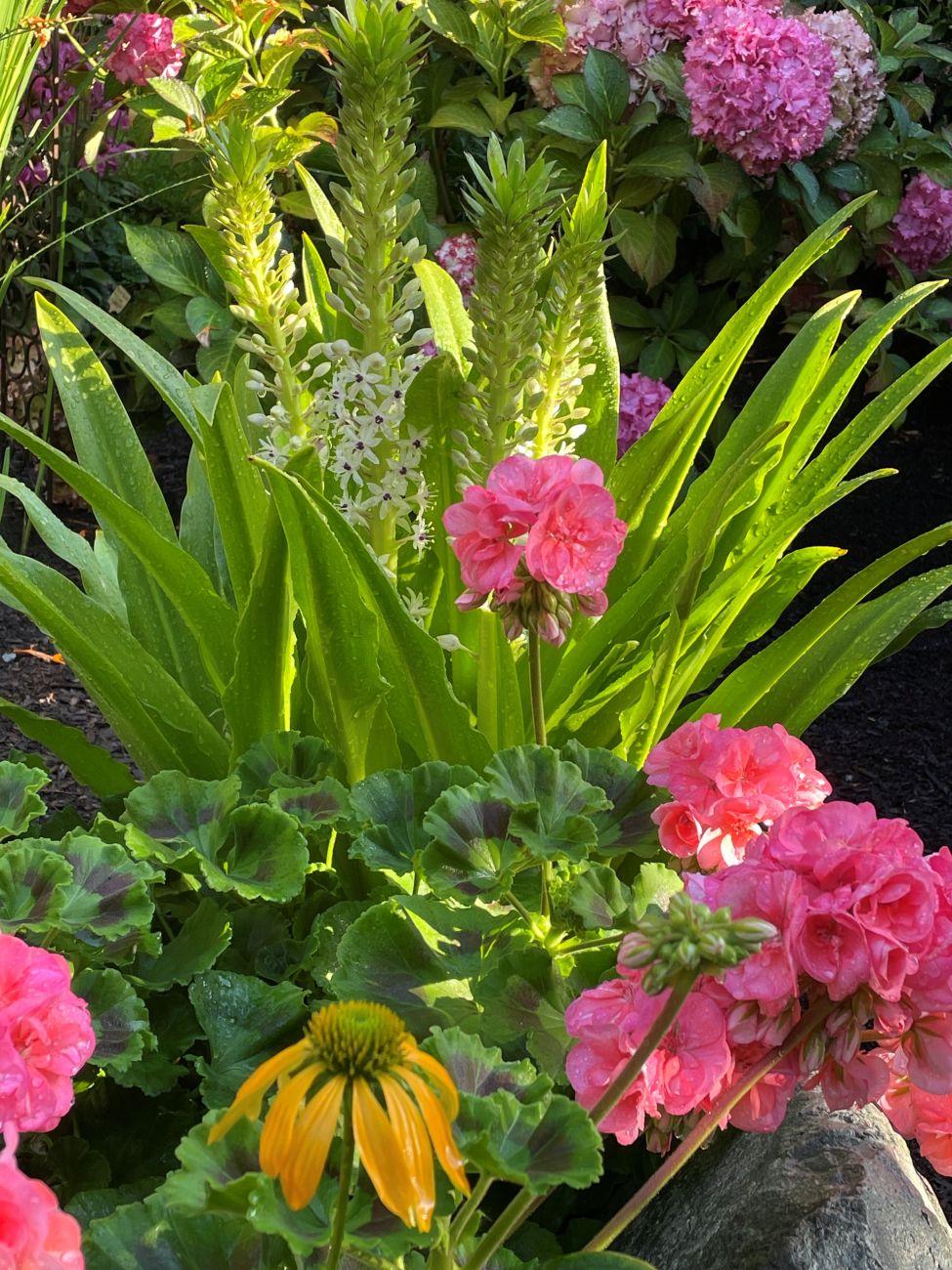
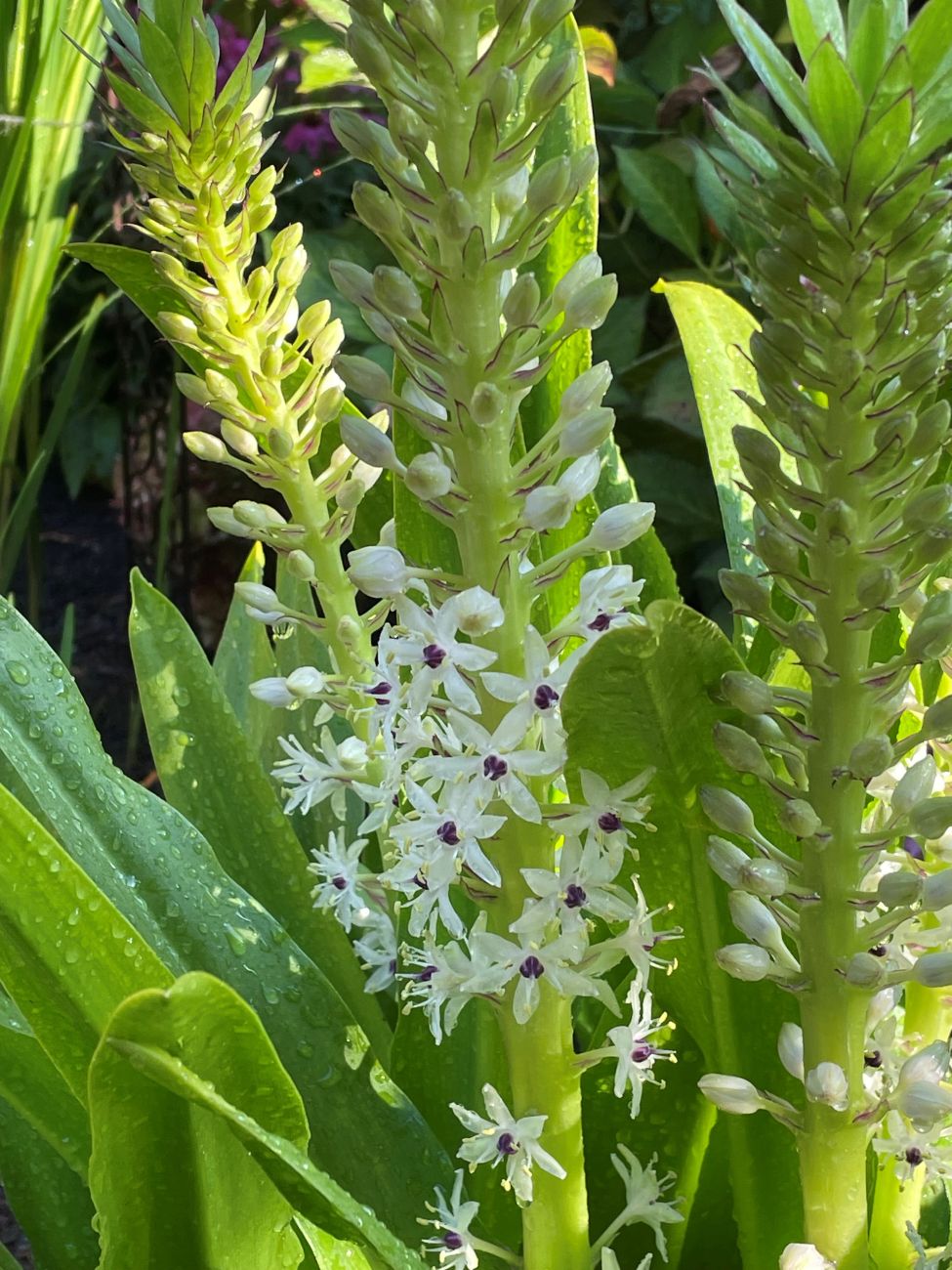
The pineapple lily (Eucomis comosa ‘Sparkling Burgundy’) is a striking perennial, typically hardy in Zones 6 through 9. While the Pacific Northwest is often associated with traditional woodland flora, hostas, and ferns, the ‘Sparkling Burgundy’ offers a dramatic, tropical flair that disrupts the expected palette. With its deep, burgundy-hued foliage and dense, cylindrical racemes of star-shaped flowers, it acts as a visual anchor in any landscape.
For Lila, the choice to incorporate this plant was deliberate. Having first encountered the species in a friend’s garden years ago, she was immediately struck by its architectural silhouette. "I knew I had to have one," she recalls. The challenge, however, lay in placement. She sought a site that offered high solar exposure to satisfy the plant’s requirements, while simultaneously ensuring it could be enjoyed as a focal point from both the main patio and the interior of her home.
A Chronology of Growth: From Nursery Pot to Garden Star
The journey of this particular specimen is a study in long-term cultivation. The plant’s development, documented by Lila over the past three years, illustrates the gradual transition of a nursery starter into a mature, self-sustaining centerpiece.
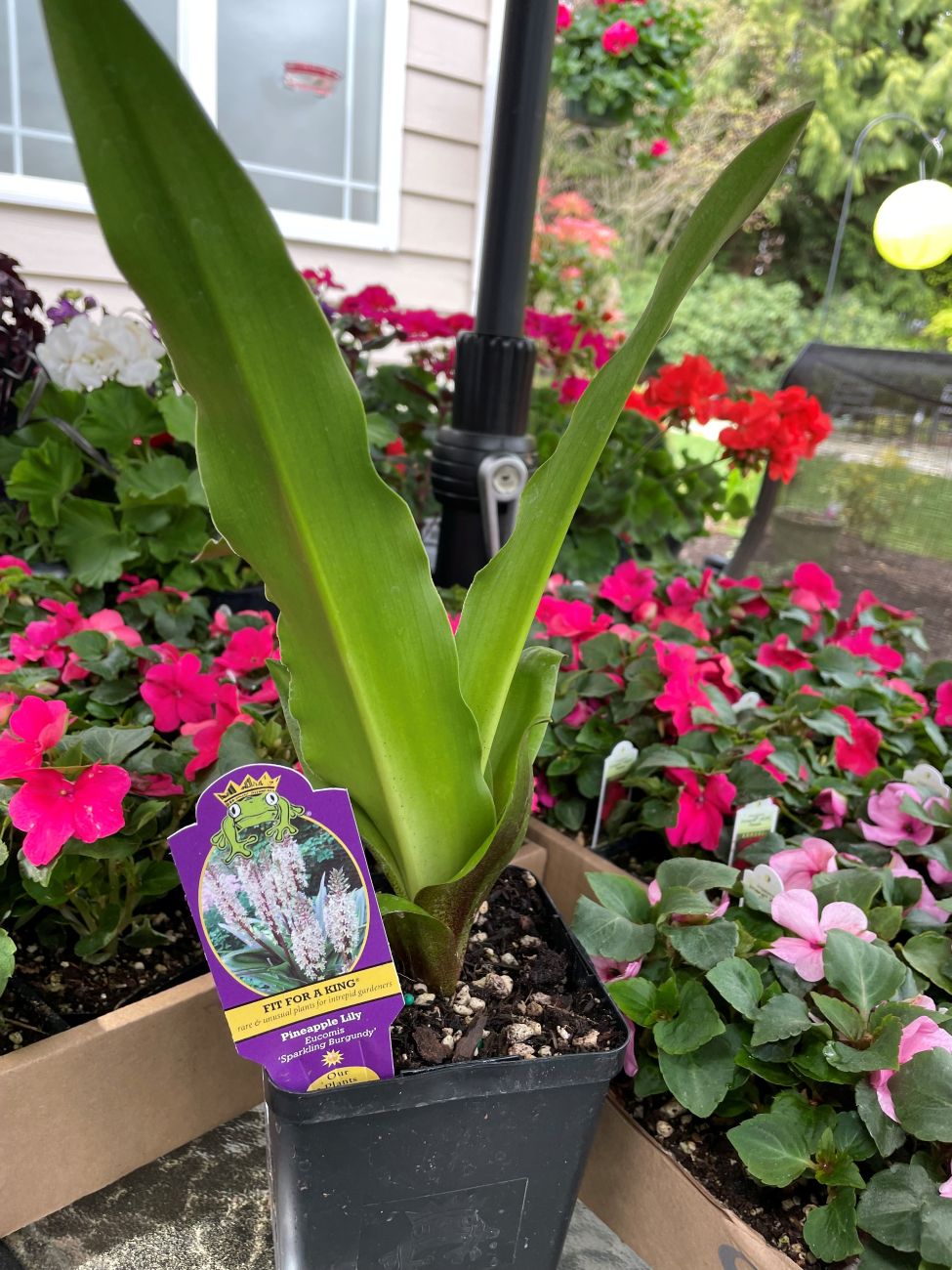
The Foundation (May 2022)
In May 2022, the ‘Sparkling Burgundy’ was acquired from a local nursery. At this stage, it was a modest, unassuming plant. Its success was not guaranteed, as the environment in Mill Creek—specifically the presence of local rabbit populations—posed an immediate threat to tender new growth.
The Era of Protection (2023)
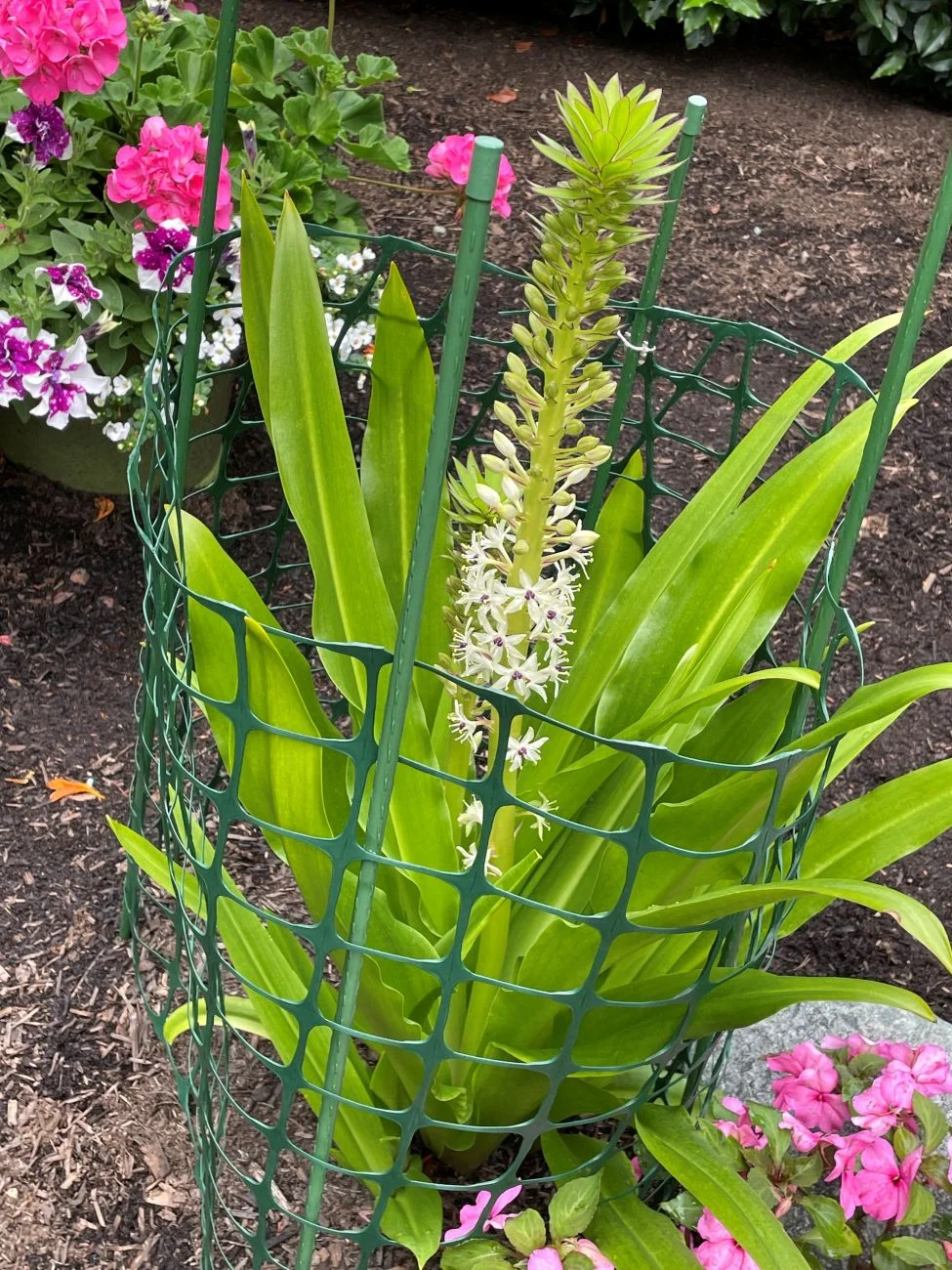
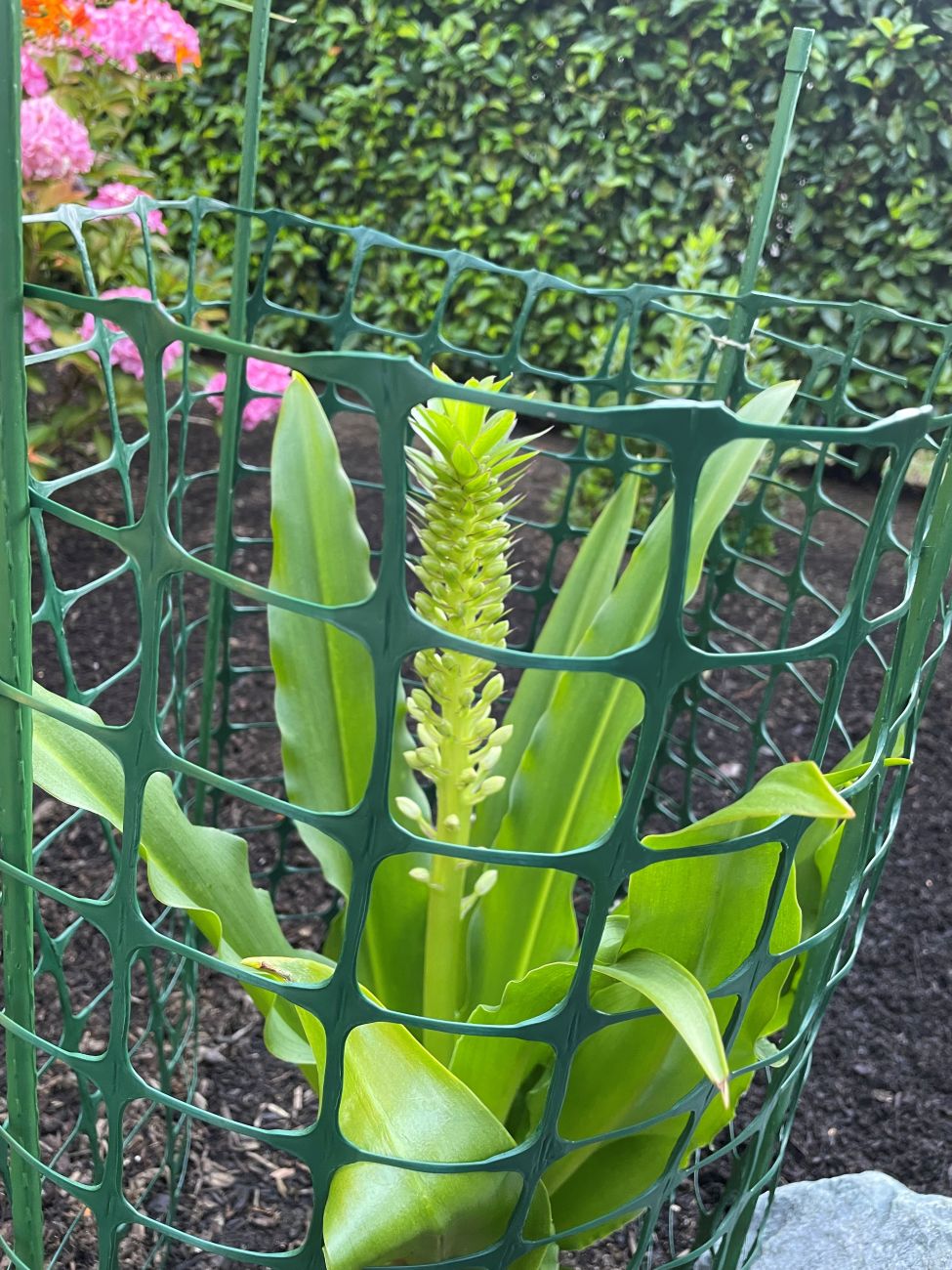
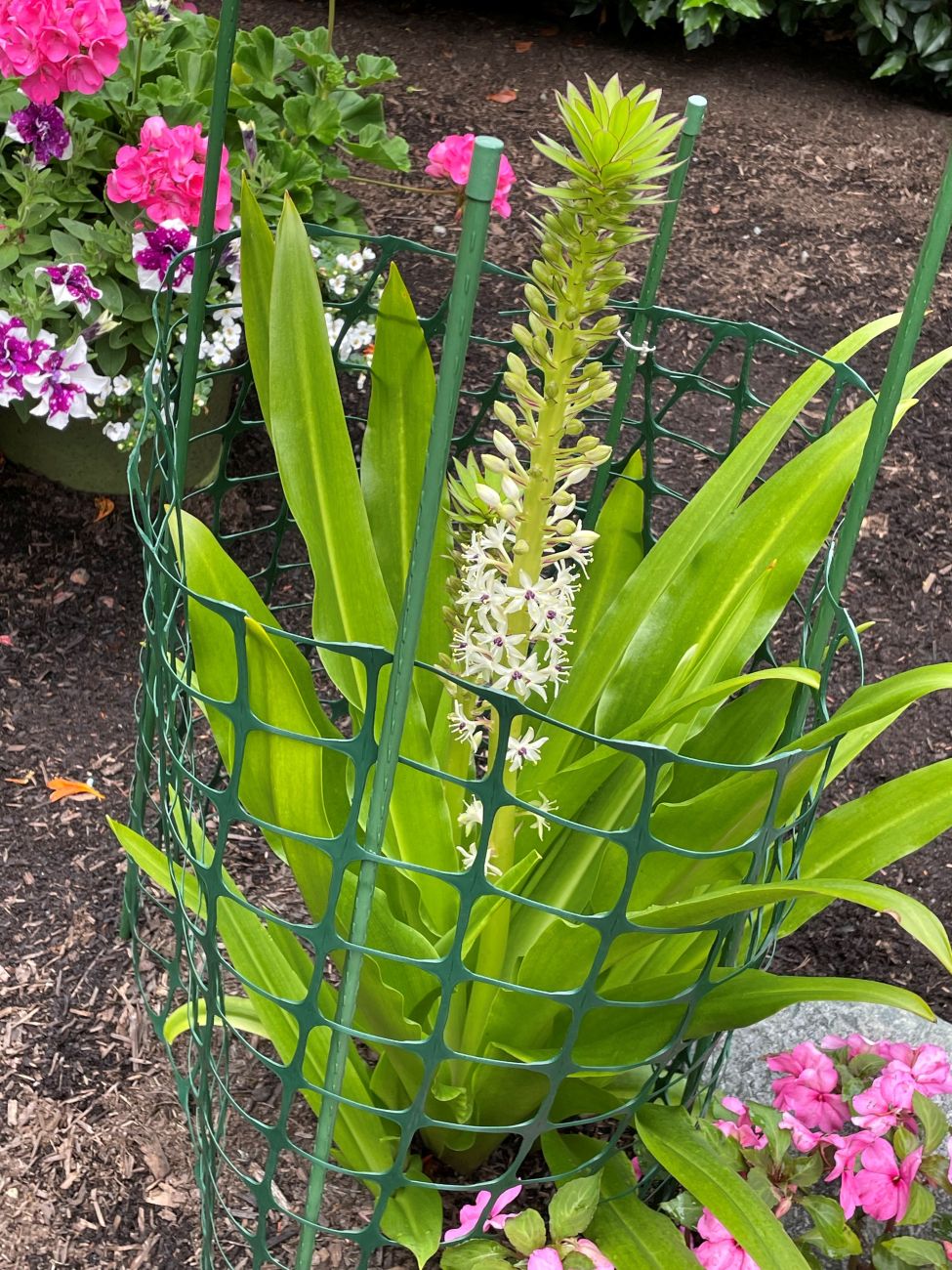
By August 2023, the plant had begun to establish itself, but it remained under a strict security regime. Lila and Dave utilized green fencing to surround the lily, a necessary intervention to deter rabbits from treating the perennial as a buffet. During this period, the plant showed steady, healthy growth, proving that with consistent protection, even the most vulnerable species can thrive in a suburban setting.
The Breakthrough (2024–2025)
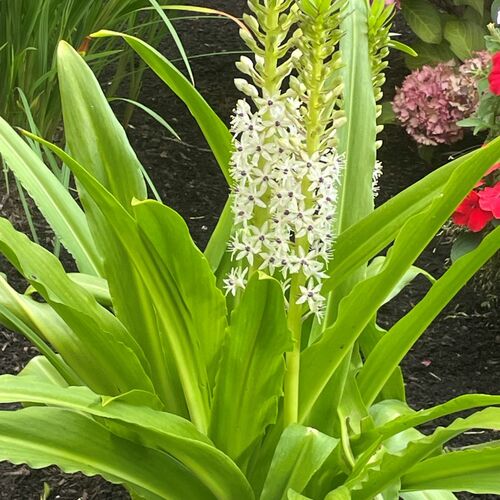
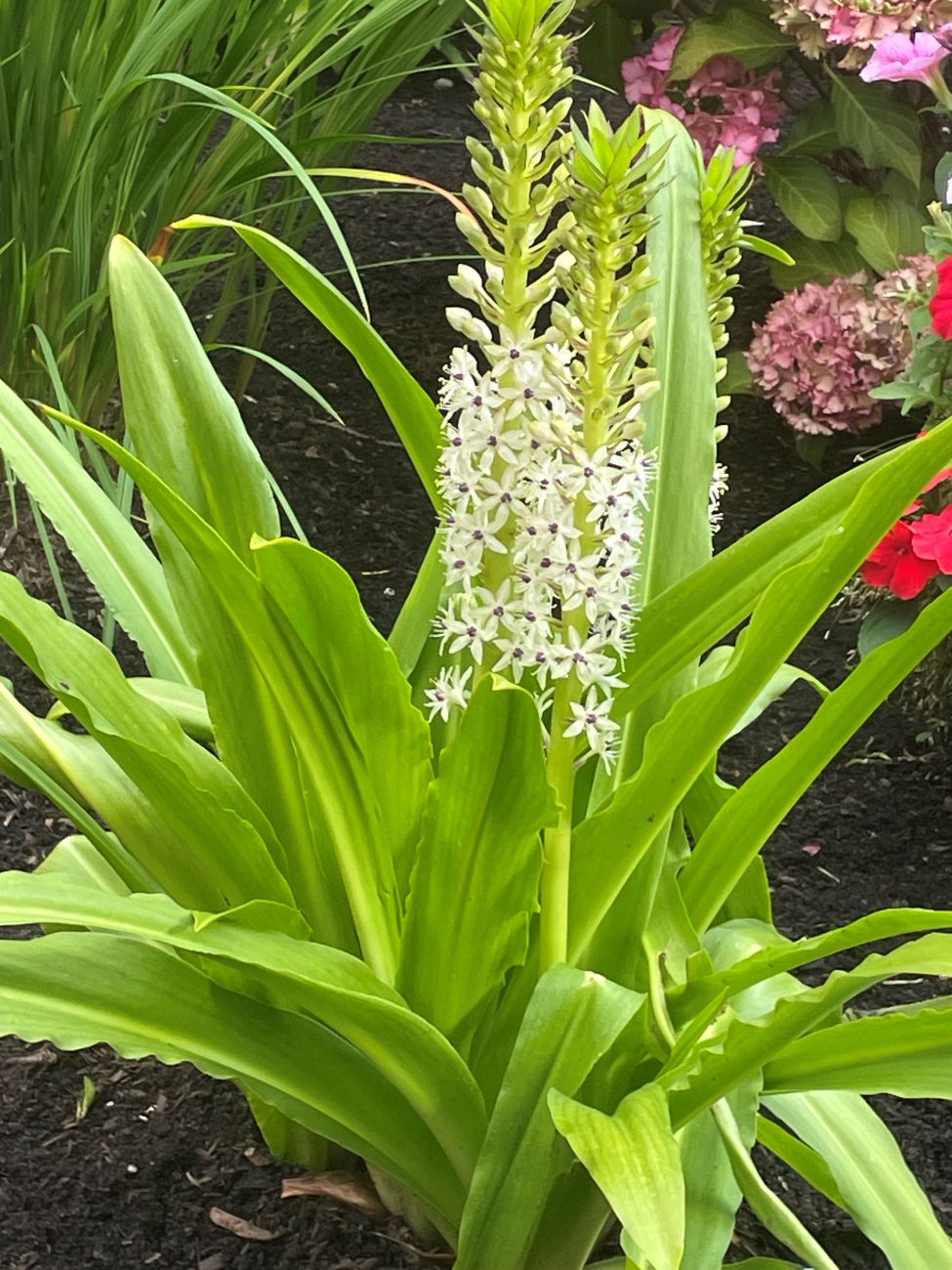
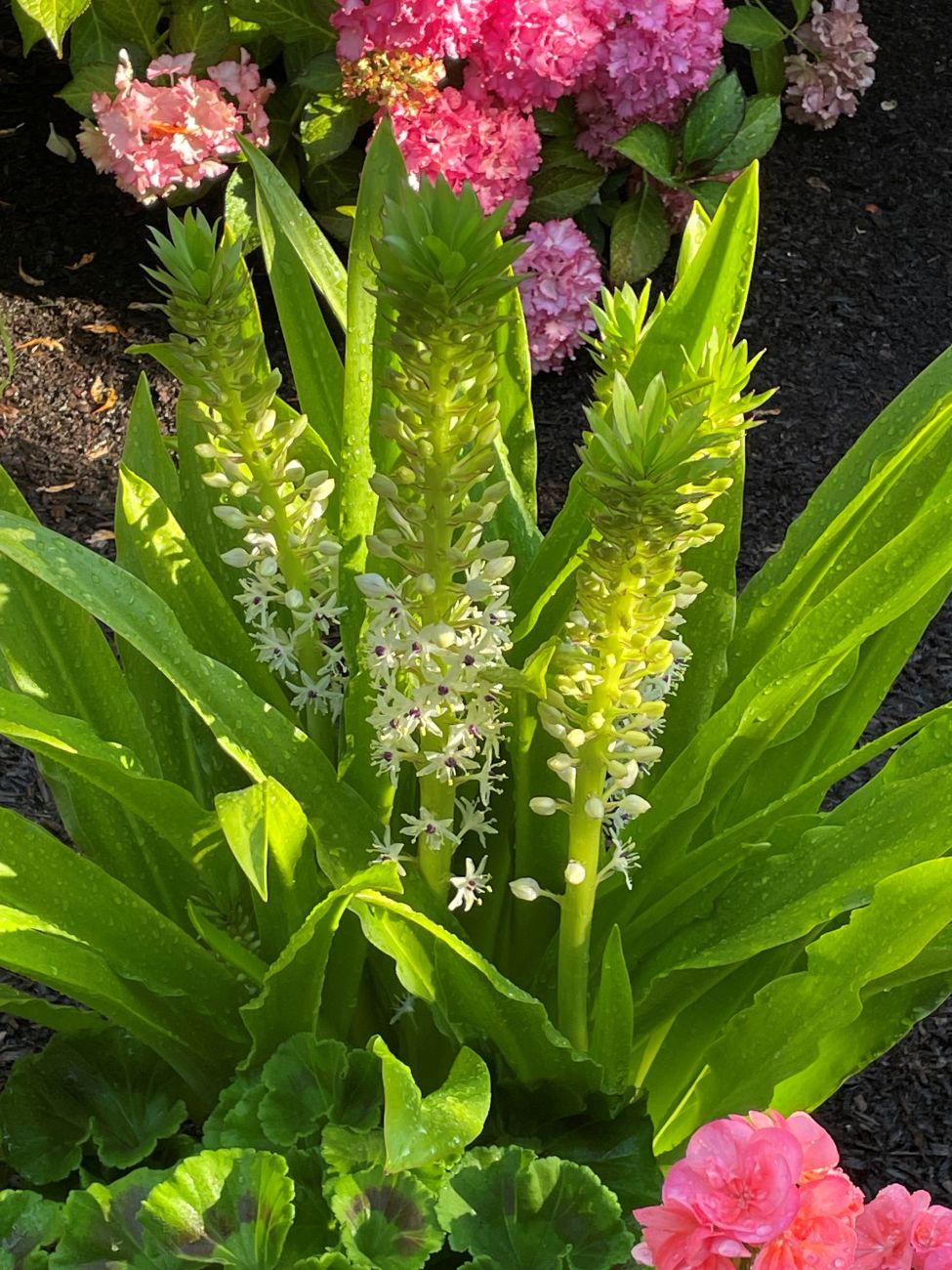
The summer of 2024 marked a turning point. A single, robust flower spike emerged, serving as a beacon of the plant’s vigor. By August 2025, the proliferation of flower stalks confirmed that the root system had fully settled into its environment. The plant had reached a state of maturity that required less intervention, shifting from a fragile newcomer to a dominant feature of the garden bed.
The Current Season (2026)
This year, the garden witnessed a significant milestone: the removal of the protective fencing in June. Taking a calculated risk, the gardeners observed that the mature pineapple lily was no longer the target of local wildlife. By late August, the plant remained in full, glorious bloom, demonstrating that the ‘Sparkling Burgundy’ has successfully integrated into the ecosystem without the need for physical barriers.
Supporting Data: Companion Planting and Design Strategy
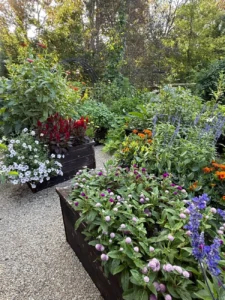
The visual impact of the pineapple lily is bolstered by its deliberate integration with surrounding flora. Lila has paired the Eucomis with a diverse array of plants that provide contrasting textures and complementary colors:
- Coneflowers (Echinacea hybrid): Providing a sturdy, upright contrast to the lily’s exotic structure.
- Zonal Geraniums (Pelargonium × hortorum): Adding vibrant, classic color notes to the bed.
- Bigleaf Hydrangea (Hydrangea macrophylla): Creating a soft, lush backdrop that emphasizes the sharp, star-shaped flowers of the pineapple lily.
This arrangement highlights the principles of "New Nature" design, where wild, exotic shapes are balanced with traditional, reliable perennials to create a landscape that is both resilient and aesthetically cohesive.
Expert Perspectives on Division and Propagation
One of the most common questions raised by experienced gardeners like Lila involves the long-term maintenance of mature clumps. As the ‘Sparkling Burgundy’ continues to multiply, the question of whether to divide the bulbs arises.
Botanical experts suggest that as long as the plant is flowering with such vigor, there is no immediate biological necessity to disturb the clump. However, division is a recommended practice for two reasons: managing the plant’s footprint and propagating new stock. Pineapple lilies naturally produce offsets—smaller bulb clusters—that can be carefully separated.
For those looking to expand their garden, the optimal time for this process is in the early spring. By waiting until the plant is dormant or just beginning its growth cycle, the gardener minimizes stress on the root system, ensuring that the offspring have the entire growing season to establish themselves.
Implications for the Pacific Northwest Gardener
Lila’s experience serves as a case study for gardeners in the Pacific Northwest who are interested in pushing the boundaries of their regional climate. The success of her ‘Sparkling Burgundy’ underscores three key takeaways:
- Strategic Patience: The transition from a nursery pot to a mature, focal-point perennial is a multi-year process. Success is not measured by the first season, but by the plant’s continued health over a three-to-five-year horizon.
- Mitigation of Wildlife Pressures: The use of temporary, discreet protective measures (like green fencing) can allow gardeners to grow plants that might otherwise be decimated by local fauna, providing them the time they need to reach a size where they are less palatable or more resistant.
- Site Selection is Paramount: The success of the pineapple lily in this instance was largely attributed to the initial planning—ensuring the plant had enough sun and was positioned in a location that invited daily interaction and observation.
A Call to the Community
As Lila continues to nurture her garden, her story serves as a reminder that every backyard, regardless of size or location, has the potential for a "big reveal." The GPOD platform encourages gardeners of all levels to share these narratives. Whether it is a collection of rare specimens, a lesson learned from a failed crop, or a triumph like the thriving pineapple lily, these personal histories provide the backbone of the gardening community.
For those inspired by Lila’s journey, the call to action remains clear: document your process. By photographing the stages of growth—the successes and the challenges—gardeners create a roadmap for others in their region. The simple act of sharing these photos and stories through official submission forms or email ensures that the collective knowledge of the gardening world continues to grow, one season at a time.
As for the immediate future, we join the entire gardening community in wishing Lila and Dave a wonderful 60th anniversary. Their garden is a living testament to the beauty that can be cultivated when passion, patience, and a bit of "sparkling" creativity are allowed to bloom.