Beyond the Dust: The Renaissance of Chile’s "Green North"
By Jesica Vargas | September 3, 2026
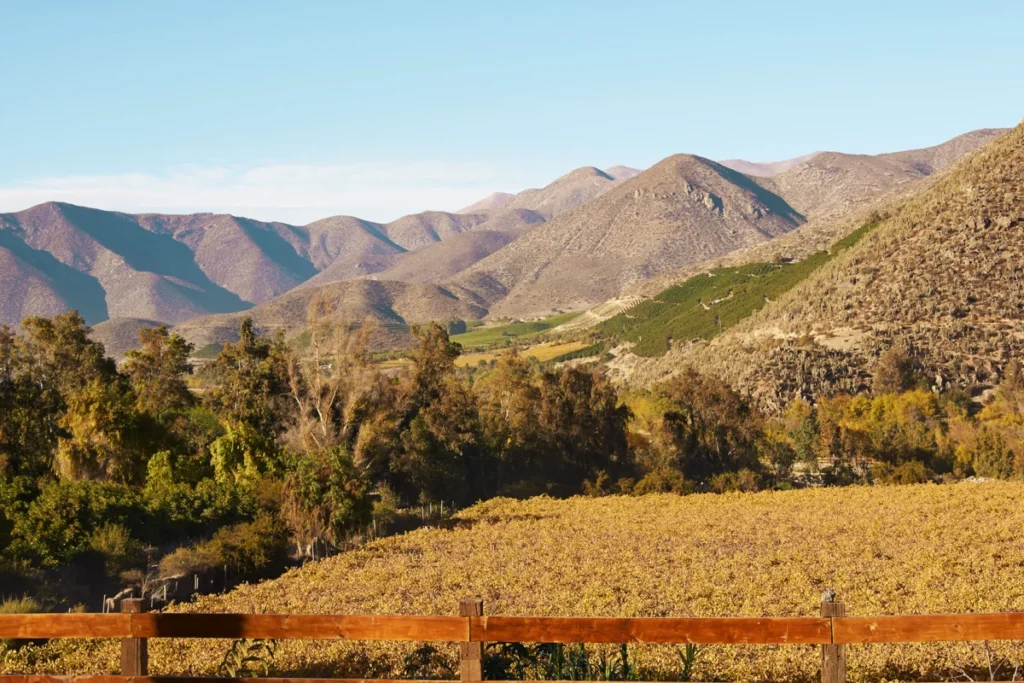
When you step off the plane in Copiapó, the gateway to Chile’s Atacama region, the landscape is deceptive. It is a vast, arid, and seemingly unforgiving expanse of dust and rock. To the uninitiated, the notion of viticulture here seems like a fool’s errand. Yet, tucked away in the transverse valleys that bridge the gap between the towering Andes Mountains and the Pacific Ocean, a quiet revolution is underway. This is the Norte Verde, or "Green North," an emerging frontier where winemakers are defying the world’s driest non-polar desert to craft wines of extraordinary tension, elegance, and distinct character.
The Geography of the Impossible
The survival of the vine in the Atacama is a masterclass in adaptation. While the region is technically part of the world’s driest desert, it is not a monolithic landscape of heat. The transverse valleys—specifically the Huasco, Elqui, and Limarí—act as natural cooling conduits.
The mechanism is twofold: cold, moisture-laden coastal breezes (often accompanied by the Camanchaca fog) roll in from the Pacific, while the extreme altitude of the Andes creates significant diurnal temperature shifts. This thermal oscillation allows grapes to ripen slowly, preserving the natural acidity that is often lost in the sweltering heat of more conventional wine regions.

A Chronology of Transformation: From Pisco to Pinot
The viticultural history of Northern Chile is ancient, though its modern identity is undergoing a rapid shift.
- 16th–20th Century: For nearly 500 years, the valleys of Huasco, Elqui, and Limarí were almost exclusively dedicated to the production of Pisco. The terroir was prized for its high-sugar grapes, perfect for distillation, rather than the nuance required for fine wine.
- Early 2000s: A nascent interest in the potential of these valleys for cool-climate viticulture began to emerge. Growers began to experiment with non-traditional varieties, moving away from distillation-focused cultivars.
- 2010: Ventisquero Wine Estates made a landmark move, planting vines in the Huasco Valley. This was a radical departure from the norm, proving that premium, low-intervention wine could thrive in the southern fringe of the Atacama.
- 2015–2020: The "Mountain Wine" movement gained momentum in the Elqui Valley. Producers like Viñedos de Alcohuaz began utilizing high-altitude granite sites, embracing ancient techniques like barefoot crushing in stone lagares.
- Present Day: The region has moved beyond experimentation. Powerhouse producers like Concha y Toro (via the Amelia label) and Santa Rita have established a footprint here, solidifying the Norte Verde’s reputation as a top-tier destination for high-end, terroir-driven viticulture.
Supporting Data: The Mechanics of the Norte Verde
What makes these wines distinct from the bold, fruit-forward expressions of Chile’s Central Valley? The answer lies in the soil and the sea.
The Huasco Valley Advantage
Ventisquero’s work in Huasco demonstrates that location is everything. Despite being located in a desert, the vineyards benefit from a maritime influence that keeps average annual temperatures between 62°F and 66°F. The soil profile is a complex mix of sandy loam and clay, but the defining element is the presence of limestone. This mineral backbone contributes to the "tension" and "purity" that experts now associate with the region’s signature style.
The Elqui Valley’s High-Altitude Expression
In the Elqui Valley, the viticulture is defined by altitude. Vineyards often sit at elevations exceeding 7,000 feet. At this height, the thinner atmosphere allows for intense UV radiation, which thickens grape skins and leads to concentrated, structured tannins. The combination of granite, silt, and clay soils, paired with the sheer verticality of the landscape, results in wines with remarkable "vibrancy."

Limarí’s Saline Character
The Limarí Valley, located in the Coquimbo region, is perhaps the most famous of the three for its "chemical balance." The coastal influence here is intense, leading to a slower ripening cycle that is ideal for Chardonnay and Pinot Noir. A unique challenge for growers here is managing salinity; because of the ocean proximity and the salt content in the soil, producers often implement sophisticated irrigation strategies—blending river water with aquifer sources—to ensure vine health without compromising the fruit’s delicate profile.
Official Perspectives: The Philosophy of Low Intervention
The winemakers of the Norte Verde share a common manifesto: respect the land by interfering as little as possible.
Horacio Fuentes, export director at Ventisquero, emphasizes that the goal is not to overpower the senses. "What surprises people most about these wines is not their power, but their elegance and freshness," Fuentes says. "You get purity, tension, minerality, and natural acidity." To achieve this, many producers employ native yeasts and eschew heavy-handed filtration, allowing the unique mineral fingerprint of the desert to remain intact.
Rosario Fillol, winemaker at Viñedos de Alcohuaz, echoes this sentiment. Her team relies on "mountain wine" techniques, such as the use of granite lagares and concrete eggs, which facilitate micro-oxygenation without the interference of oak flavors. "Making mountain wine limits you in many ways, but the grape quality is unique," Fillol notes. "Producers in the Norte Verde respect the land and work with less conventional winemaking approaches that reflect the region in the glass."

Felipe Müller, CEO and chief winemaker at Tabali, highlights the stylistic departure from the rest of the country: "Limarí Chardonnay tends to show a more restrained aromatic profile, less intense and less fruity, with a distinct flavor expression—sometimes slightly saline."
Implications: A New Standard for Chilean Wine
The emergence of the Norte Verde has profound implications for the Chilean wine industry at large.
- Elevating the Quality Floor: As Müller points out, because there are fewer wineries in this region compared to the crowded Central Valley, the focus remains squarely on premium output. The high barrier to entry—due to the harsh climate—naturally filters out mass-market producers, ensuring that what reaches the bottle is of exceptional quality.
- Redefining "Terroir": For decades, Chilean wine was often characterized by consistency and value. The Norte Verde challenges this narrative, offering wines that are site-specific, mineral-driven, and highly individualistic. This is a crucial step in moving Chilean wine into the realm of "fine wine" prestige.
- Climate Adaptability: As global temperatures rise, the knowledge gained from the Norte Verde—how to manage water scarcity, how to utilize fog for cooling, and how to work with salt-affected soils—may prove invaluable for the broader industry. The winemakers of the Atacama are essentially writing the playbook for viticulture in a warming world.
Conclusion
The wines of the Huasco, Elqui, and Limarí valleys are more than just a passing trend. They represent a fundamental shift in the Chilean identity. By turning toward the desert and embracing the challenges of the landscape, these producers have moved beyond the traditional boundaries of viticulture.
When you drink a glass of Limarí Chardonnay or an Elqui Valley red, you are tasting the intersection of the Andes and the Pacific—a confluence of forces that creates something entirely unique. Winemaking in Chile has never been easy, but in the shimmering heat and cooling mists of the Green North, it has certainly never been more exciting. The desert, once considered a barrier, has become the region’s greatest asset, proving that where life is most difficult, the expression of the land is often the most profound.